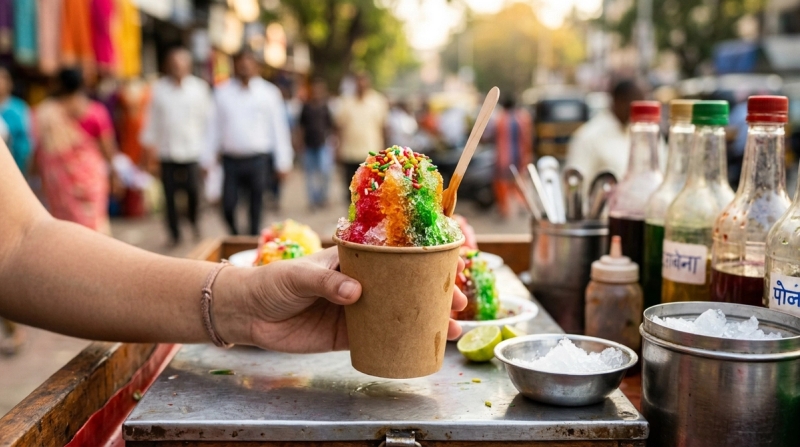
There are few things more tempting than a cold baraf ka gola on a brutally hot Indian afternoon. That first bite of shaved ice, the kala khatta dripping down, a bit of rose syrup, maybe some salt masala on top — it is pure childhood nostalgia.
But let’s be honest. The moment you notice the big ice block sitting near the cart, the sticky syrup bottles, the flies, or the vendor handling cash and then making the next gola, the craving comes with a very real question:
Is street baraf ka gola actually safe?
The honest answer is: it depends.
A street gola is not automatically unsafe. Plenty of vendors are careful. But the safety depends on a few very basic things — where the ice came from, how it is stored, how the syrup is handled, and whether the stall looks clean overall.
If the setup looks doubtful, it is better to skip it, especially for children, travellers, older people, pregnant people, or anyone with a sensitive stomach.
Quick Answer: When Is Street Baraf Ka Gola Okay, and When Should You Avoid It?
#Here is the simple version.
Street baraf ka gola may be okay when:
- The stall is busy and golas are being made fresh one after another.
- The ice is kept in a clean covered box, cooler, or container.
- The ice is not lying on the ground, a dirty sack, or an open cart surface.
- Syrup bottles are capped or have proper pourers.
- The vendor is not touching cash and ice with the same bare hands.
- The shaver, sticks, spoons, and serving area look reasonably clean.
- It is dry summer weather, not monsoon.
- You are a healthy adult and usually tolerate street food well.
Skip the gola when:
- The ice block is lying openly on the road, ground, or dirty cloth.
- The vendor is dragging the ice around or chipping it with dirty tools.
- Syrup bottles are sticky, uncapped, dusty, or surrounded by flies.
- The colours look extremely bright, almost like neon paint.
- The vendor is rinsing tools in cloudy standing water.
- The cart is near garbage, open drains, muddy water, or road splashes.
- It is monsoon or the area is waterlogged.
- You are buying for a small child, elderly person, pregnant person, traveller, or someone prone to stomach infections.
So when it comes to street baraf ka gola safety, the rule is simple: enjoy it only if the stall passes your basic hygiene check.
If you have to stand there and convince yourself, “It should be fine,” it is probably better to walk away.
Why the Ice Is the Biggest Safety Concern
#Most people look at the bright syrup first and worry about colours. That is fair. But with gola, the bigger issue is usually the ice.
A gola is mostly shaved ice. If that ice was made with unsafe water, or if it was handled badly after freezing, the syrup on top cannot fix it. Freezing does not magically make dirty water safe.
And once the ice is shaved, it melts straight into your mouth.
The problem is not just the water used to make the ice. It is also the journey of the ice block before it reaches your gola.
Large ice blocks used by roadside vendors may be loaded, transported, unloaded, dragged, wrapped in cloth, broken into pieces, and then placed near the shaver. Even if the water was okay at the start, poor handling can add dirt and germs later.
That is why ice gola hygiene begins long before the gola is made in front of you.
Ice Source and Handling Checks
#Before ordering, take a few seconds to look at the ice. You do not have to interrogate the vendor. Just observe.
Ask yourself:
- Is the ice stored in a clean container, cooler, or covered box?
- Is it covered when not in use?
- Is it kept away from the ground?
- Is the vendor using clean tongs, a clean cloth, or a tool to handle it?
- Does the ice look free from dirt, mud, black specks, or stains?
- Does the shaving machine look clean?
- Is melted water draining away, or is it pooling around the cart?
If the ice is sitting directly on a dirty surface, lying on a sack, or being handled with the same hands used for cash, skip it.
Also be careful when the same ice block has clearly been melting in the open heat for hours. A busy stall is not a perfect guarantee, but fast turnover is usually better than a cart where the same exposed block sits all afternoon.
For travellers, especially those not used to local water and ice, this becomes even more important. You can also read AllBlogs’ guide on Indian restaurant water and ice safety for foreign tourists.
Gola Syrup Safety: What to Notice
#The syrup is the fun part of gola. It is also where hygiene can quietly go wrong.
Most gola syrups are sugary, colourful, and kept at room temperature. That makes them magnets for flies, ants, dust, and sticky residue. If the bottle mouth is dirty, every pour can carry some of that dirt onto the ice.
Syrup and Colour Red Flags
#Be cautious if you notice:
- Syrup bottles left open without caps.
- Bottle necks covered with dried sticky syrup.
- Flies sitting on or around the bottles.
- Syrups stored in dirty reused bottles.
- Colours that look unusually bright or fluorescent.
- Syrup being diluted with water from an unknown source.
- The vendor wiping bottle tops with a dirty cloth.
- Syrup containers kept near garbage, drains, or stagnant water.
Food colour itself is not always the issue. Many packaged foods use permitted food-grade colours. The problem with small, unregulated stalls is that you often do not know what kind of syrup or colour is being used.
If the syrup looks strangely neon, stains everything heavily, or has a sharp chemical smell, avoid it.
Of course, a lighter syrup does not automatically make the gola safe. The ice still matters most. But if the stall already looks doubtful, overly bright syrup is one more reason to skip it.
The 30-Second Street Gola Hygiene Checklist
#You do not need to inspect the stall like a health officer. Just do a quick scan before ordering. It takes less than a minute.
1. Look at the vendor’s hands
#Is the vendor touching cash, phone, ice, sticks, and syrup with the same bare hands?
That is a red flag.
A better setup is one where the vendor uses tools, keeps hands reasonably clean, or separates money handling from food handling.
2. Check the ice shaver
#The shaving machine should not be covered in old syrup, rust, grime, or dirty melted water. If the blade area looks neglected, avoid the stall.
3. Watch where the sticks come from
#If the stick is taken from a clean covered bundle, good.
If sticks are lying uncovered near dust, cash, flies, or dirty cloths, not good.
4. Notice the rinse water
#Some vendors rinse tools in the same bucket again and again. If the water looks cloudy or has syrup bits floating in it, skip that stall.
5. Check the syrup bottles
#Capped bottles or closed pourers are better than open bottles. Sticky bottles with flies around them are a clear warning sign.
6. Look around the cart
#The surroundings matter too. A gola cart next to garbage, open drains, muddy puddles, or waterlogged corners is riskier.
7. Prefer busy but clean-looking stalls
#A busy stall does not prove perfect hygiene, but it usually means ingredients are moving faster. Still, do not trust the crowd alone. A popular stall can be unhygienic too.
For more general tips, you can also read this guide on street dessert safety while traveling.
Why Monsoon Gola Is Best Avoided
#Summer gola can be judged stall by stall. Monsoon gola is a different story.
During the rains, streets are wetter, drains overflow more often, dirty water splashes everywhere, and flies increase around food waste. Cold street foods, fresh juices, chutneys, cut fruits, and ice-based items become much harder to trust.
This does not mean every vendor is careless. It simply means the environment itself becomes harder to control.
So if you are thinking about chuski safety during monsoon, the practical answer is: avoid it outside.
If the craving is strong, make it at home or buy it from a cleaner indoor place. In rainy weather, hot freshly cooked food is usually a safer choice than cold, exposed, water-based street food.
Who Should Be More Careful?
#A healthy adult with a strong stomach may be fine with an occasional gola from a clean-looking stall. But risk is not the same for everyone.
Be extra careful if the gola is for:
- Young children.
- Elderly family members.
- Pregnant people.
- People with sensitive digestion.
- Anyone recovering from illness.
- People who often get acidity, diarrhea, or stomach infections.
- Travellers not used to local water and ice.
- Anyone with reduced immunity.
Children need special caution. They are naturally drawn to the colours and flavours, and one gola may seem harmless. But contaminated ice can cause stomach upset, vomiting, or diarrhea. Children can also get dehydrated faster than adults.
This does not mean kids can never enjoy gola. It just means street gola should not be the default choice. If your child loves it, homemade gola is the calmer and safer option.
Is Mall or Shop Gola Safer Than Street Gola?
#Usually, an indoor kiosk, restaurant, or established dessert shop may have better access to clean water, sinks, refrigeration, and covered storage. So yes, it can be safer than a roadside cart.
But do not assume blindly.
Still check:
- Is the ice stored properly?
- Are staff handling money and food separately?
- Are syrup bottles clean and covered?
- Is the counter free from flies and sticky spills?
- Does the place look generally clean and well maintained?
A clean street vendor can be better than a careless indoor counter. The same hygiene rules apply everywhere.
A Safer Homemade Gola Option
#If your family loves gola, making it at home is the easiest way to remove most of the guesswork.
You control the water, ice trays, utensils, syrup, storage, and serving hands. That makes a big difference.
A simple homemade gola can be made like this:
- Freeze drinking water that your family already trusts.
- Use clean ice trays or moulds.
- Shave or crush the ice with a clean appliance or manual shaver.
- Use clean sticks, bowls, or glasses.
- Add syrup from a trusted bottle, homemade fruit syrup, lemon, salt, or toppings you are comfortable with.
Keep the ice covered in the freezer and avoid touching it with unwashed hands. Wash the shaver or crusher properly after use, especially if syrup gets into it.
Homemade gola may not have the same street-cart charm, but it gives you that cold, crunchy, syrupy satisfaction without wondering where the ice block has been.
For flavour ideas, AllBlogs has a guide on baraf ka gola and chuski syrup ideas.
Practical Buying Rules for Indian Summer Street Food Lovers
#If you still want to buy from a street cart, keep these simple rules in mind.
Do not buy the first gola you see.Walk past once. Look at the setup. If it feels clean, go back.
Choose visibility.Buy from vendors who prepare the gola in front of you and do not hide the ice or syrup handling.
Avoid exposed ice.If the ice is open to dust, flies, road splash, or dirty cloth, leave it.
Keep it occasional.Even from a good stall, gola is still a sugary street treat. Enjoy it sometimes, not as a daily summer habit.
Do not take risks on travel days.If you have a train, flight, exam, meeting, or long drive ahead, skip risky cold street food. A stomach upset is not worth it.
When unsure, choose homemade or packaged.If the stall does not pass your basic checks, satisfy the craving later.
Final Takeaway
#So, is baraf ka gola safe?
It can be, but only when the ice, syrup, and vendor hygiene look trustworthy.
The biggest risk is usually not the flavour or the colour. It is the ice source and how the ice has been handled. Syrup hygiene also matters, especially when bottles are open, sticky, or surrounded by flies.
For healthy adults, an occasional gola from a clean, busy, well-kept stall in dry summer weather may be okay. For children, sensitive stomachs, travellers, and monsoon cravings, homemade gola is the safer choice.
Enjoy the nostalgia. Just let your eyes decide before your taste buds do.