I have a complicated love affair with hotel breakfast buffets. Honestly, I do. Give me a tray, a tiny spoon, and a row of mysterious jams in little glass bowls and I’m suddenly acting like I’m judging a cooking show. I’ve eaten fluffy tamagoyaki in Kyoto hotels, congee with ginger in Singapore, warm pão de queijo in Brazil, and those dangerously good Turkish breakfasts with olives, tomatoes, cheeses, honeycomb, and bread that makes you wonder why you ever bothered with cereal. But I’ve also stood in front of a lukewarm pan of scrambled eggs in a humid beach resort at 10:18 a.m. thinking, uh, this is how people lose two days of vacation. So this is not me being scared of food. I’m the person who will follow a line of locals into a tiny noodle shop without knowing the menu. But hotel breakfast buffets are their own weird little ecosystem, and if you travel enough, you learn what’s worth piling onto your plate and what’s better left looking pretty under the heat lamp.
The Buffet Is Usually My First Taste of a Place, for Better or Worse
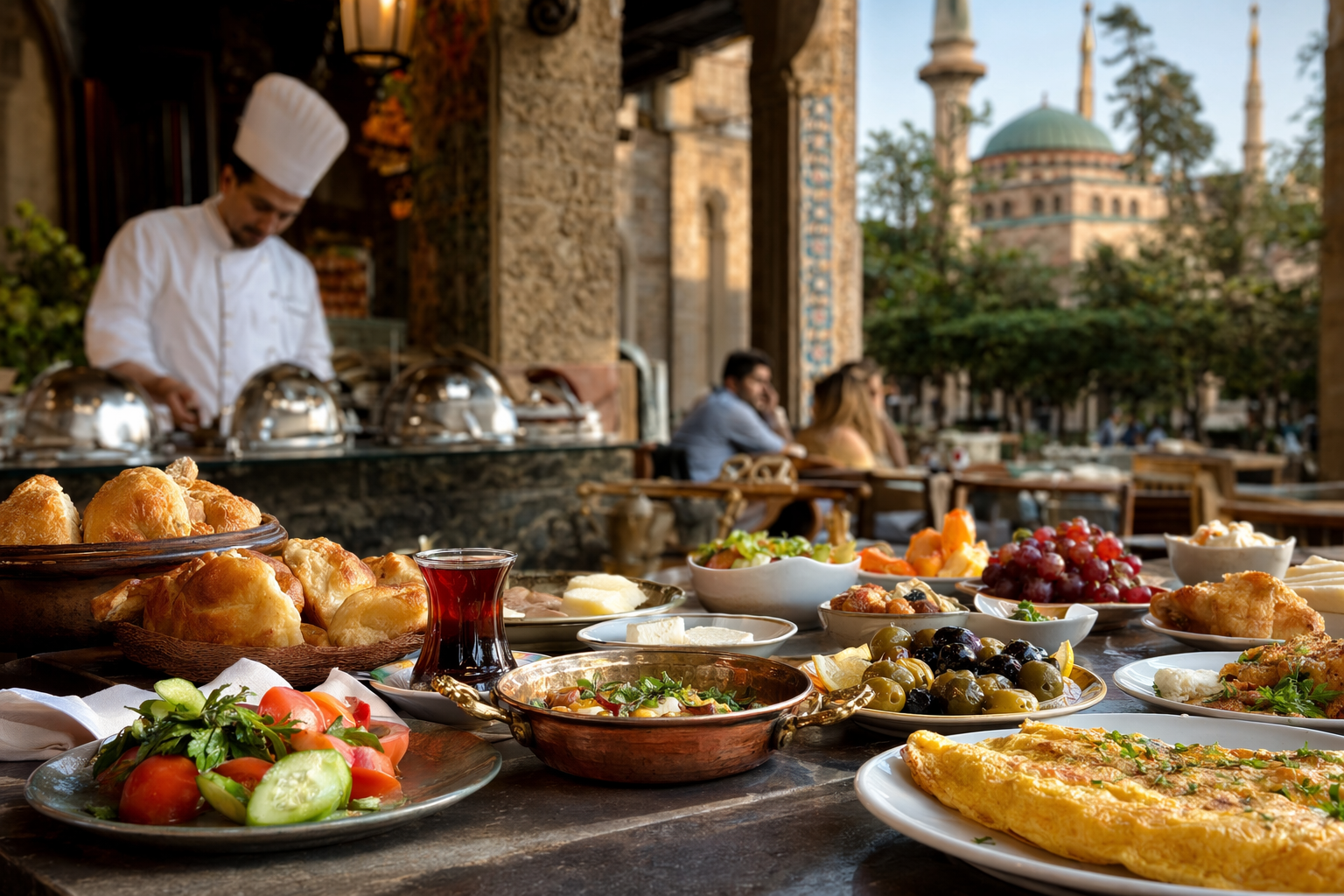
#There’s something oddly emotional about the first breakfast in a new country. You wake up too early because your body clock is broken, you shuffle downstairs in yesterday’s travel pants, and suddenly there’s a whole geography lesson on the counter. In Istanbul, I remember a hotel buffet that felt more like a village table than a hotel service: cucumbers, simit, white cheese, boiled eggs, kaymak with honey, olives in three shades, and strong tea in those tulip glasses. I still think about it. In Lisbon, the breakfast room smelled like espresso and buttery pastries, and I probably ate more pastel de nata before 9 a.m. than a doctor would approve of. In Bangkok, one hotel had a rice soup station with scallions, fried garlic, chile vinegar, and soft-boiled eggs, and it was genuinely better than some restaurant breakfasts I’ve paid for. But then there was that coastal hotel, I won’t name it because people were nice, where the fruit tasted like fridge and the yogurt had been sweating on crushed ice that had mostly melted. I ate toast. Very boring, very safe, no regrets.
My Basic Rule: Hot Should Be Actually Hot, Cold Should Be Properly Cold
#If you remember one thing from this whole ramble, make it this: temperature matters more than vibes. The U.S. FDA Food Code uses 135°F as the hot-holding minimum for many cooked foods, and the common traveler-friendly rule you’ll also see in food safety guidance is to keep hot foods hot, around 140°F or above, and cold foods at 40°F or below. The CDC also talks about that danger zone where bacteria grow faster, roughly between 40°F and 140°F. Food shouldn’t hang out there for hours, especially not eggs, dairy, meats, cut fruit, cooked rice, or creamy things. And yes, I know nobody brings a thermometer to the breakfast buffet, unless you are that person, in which case I respect your commitment. So you use your eyes and hands: is steam rising? Are the eggs fresh from the kitchen or crusty at the edges? Is the yogurt sitting in an actual chilled unit or just looking sad in a bowl of water? Is the melon cold or room-temp and glossy? These tiny clues matter.
What I Usually Eat Without Much Drama
#I’m not trying to ruin the joy of hotel breakfast. There are plenty of buffet foods I eat happily, especially if I’m early. Freshly cooked items are usually my safest bet: omelets made to order, eggs cooked in front of you, pancakes coming off the griddle, hot rice porridge, fresh dosa, miso soup, noodles, or beans that are still steaming. In Mexico City, I stayed at a small hotel that had chilaquiles every morning, and the cook would ladle warm salsa over the chips, add crema, onion, and eggs right there. That was breakfast heaven. In Vietnam, I’ll always choose a pho or noodle soup station over a tray of room-temperature sausage links. Broth that’s bubbling, herbs that look freshly put out, noodles handled cleanly, yes please. I also like whole fruit with peels: bananas, oranges, mandarins, apples if they’re washed and not bruised to death. Bread, sealed butter, packaged jam, hard cheeses that are properly chilled, hot coffee, tea, and individually packaged yogurts kept cold can all be fine. Not glamorous maybe, but solid.
| Buffet item | Eat or skip? | What I look for |
|---|---|---|
| Made-to-order omelet | Usually eat | Cooked fully in front of me, clean utensils, no raw egg drips near toppings |
| Hot porridge, congee, soup, beans | Usually eat | Steaming hot, ladled from a hot pot, not lukewarm at the top |
| Whole fruit with peel | Usually eat | Bananas, oranges, mandarins, fruit I can peel myself |
| Cut melon or fruit salad | Depends, often skip | Must be very cold and freshly replenished, no syrupy puddle |
| Scrambled eggs in a tray | Depends | Fresh, steaming, not dry edges or watery bottom |
| Cold meats or smoked fish | Often skip | Only if clearly chilled and high-turnover, otherwise nope |
| Yogurt bowl or milk jug | Depends | Cold unit or ice that’s still ice, not room-temp dairy soup |
| Pastries and bread | Usually eat | Covered or protected, not handled by everyone’s fingers |
| Raw sprouts or salad greens | Usually skip | Too much handling and washing uncertainty for breakfast, honestly |
| Leftover-looking rice or potatoes | Skip if lukewarm | Cooked starches need proper hot holding, not just sitting around |
The Foods I’m Side-Eyeing, Even If They Look Healthy
#Here’s where travel breakfast gets sneaky: the dangerous stuff often looks fresh and virtuous. A big bowl of cut papaya, melon, pineapple, and berries looks like the responsible choice after a night of airport snacks and salty airplane dinner. But cut fruit has more surface area, more handling, and more time to warm up. Melon is the one I’m especially careful with because it’s often cut in huge batches and it doesn’t have the protective peel anymore. Same with raw salad greens, cucumber slices, tomato wedges, and those little “healthy” cups with granola, yogurt, and fruit layered together. They’re beautiful. They’re also sometimes sitting out while 47 people breathe near them and one child pokes the spoon. I sound dramatic, I know, but I’ve been burned. If you’re curious why I’m so suspicious of cold greens and prepped produce on the road, this piece on Packed Salads While Traveling: Safe or Skip? gets into the same kind of travel food problem: raw, handled, cold foods are only as safe as their storage and handling.
Eggs: My Favorite Breakfast Food and My Biggest Buffet Argument
#Eggs are where I get picky. At home, I love a soft yolk. On the road, especially at a buffet, I don’t play the same game. If there’s an omelet station, that’s usually my move because I can see the egg hit the pan and I can ask for it cooked through. I’ve done this in hotel kitchens from Delhi to Dublin, and most cooks don’t mind, though sometimes they look at me like I’m ruining art. Fine. Ruin it for me, please. Scrambled eggs in a tray can be okay if the pan was just brought out and it’s hot enough that you can see steam. But if they’re sitting there in yellow folds with dry crust around the edges and watery liquid underneath, no thank you. Hard-boiled eggs are usually safer if the shells are intact and they haven’t been peeled and left out forever. Peeled boiled eggs in a lukewarm bowl? I walk away. It’s not personal, egg.
The Cheese, Yogurt, Milk, and Butter Situation
#Dairy at hotel breakfast can be delightful or sketchy, and there’s not much middle ground. In Greece, a properly chilled bowl of thick yogurt with honey and walnuts can make my whole morning. In Switzerland, the breakfast cheese spread is practically a reason to book the hotel. But dairy needs cold control. I want yogurt in individual containers or in a deep chilled well, not a decorative ceramic bowl sitting next to the croissants since sunrise. Milk jugs for cereal and coffee should feel cold, and if the pitcher has condensation but the milk tastes warm, that’s a bad little sign. Butter is usually lower-risk than milk or soft cheese, but I still prefer sealed portions, partly because I’ve watched too many people use the jam knife in the butter and then the butter knife in the peanut butter and then somehow the whole table becomes a sticky science project. If you’re thinking of taking buffet yogurt, eggs, cut fruit, or cheese back to your room for later, please don’t unless you truly know your fridge is cold enough. Hotel mini-fridges can be wildly unreliable, and this guide on Hotel Mini-Fridge Food Safety for Travelers is worth reading if you’re a snack-hoarder like me.
Coffee, Tea, Juice, and the Drink Station Drama
#I judge hotels by coffee. Sorry, I just do. Not the fancy lobby design, not the pillow menu, coffee. Hot coffee and tea are generally safe because they’re hot, though the cleanliness of the machine can vary. I’ve had beautiful espresso in Milan hotels where the breakfast attendant acted like a barista and terrible brown water in otherwise expensive hotels where I had to pretend to be grateful. Juice is more complicated. Sealed cartons or commercial dispensers are usually fine, but fresh-squeezed juice sitting in a big open pitcher can be risky if it’s not chilled or if it’s been handled a lot. Unpasteurized juice is one of those things certain travelers should avoid, especially pregnant travelers, older adults, young kids, and anyone immunocompromised. Also, the sliced lemons floating in water pitchers? I skip them most of the time. They’re handled, they sit around, and honestly they rarely add enough joy to justify the doubt. If the buffet drink station looks questionable, I’ll make tea in my room instead, but even then I think about kettle hygiene. This is a useful companion read: Hotel Electric Kettle Food Safety: Tea & Hygiene Tips. Because yes, hotel kettles have stories, and not all of them are cute.
Go Early, Watch the Turnover, and Don’t Be Shy About Leaving Something
#Timing is one of the least glamorous but most useful buffet safety tricks. I try to go early, not because I’m virtuous, because I’m hungry and because food is usually fresher at the start. At 7:15, the eggs may be newly cooked, the fruit is still cold, pastries haven’t been fingered by half the hotel, and staff are paying attention. At 9:55, when breakfast closes at 10, things get strange. Trays are half-empty, spoons migrate between dishes, bacon becomes chewy, and the “fresh” fruit has entered its warm hotel era. I also watch turnover. A busy buffet with staff replenishing small batches can be safer than a quiet buffet with enormous trays that sit forever. This is why a crowded Japanese business hotel breakfast can feel safer to me than a deserted luxury resort spread. People eat, staff refill, things move. Movement is good. Stagnant food is where my travel anxiety starts whispering.
Utensils, Tongs, and the Human Factor Nobody Wants to Talk About
#Food safety isn’t just about the kitchen. It’s also about us, the half-asleep travelers wandering around with plates. Norovirus, for example, spreads easily through contaminated hands, surfaces, and food, and cruise ships get all the headlines but hotels are not magic germ-free castles. I’ve seen a man pick up a croissant with his hand, inspect it, put it back, then pick another one. I’ve watched kids sneeze at pancake level. I once saw someone use the bacon tongs to grab watermelon. At that point I just had coffee and accepted my fate. My little routine is boring but helpful: wash hands before going down, use sanitizer if there’s a station, avoid serving spoons with sauce all over the handles, and choose foods from the back or from freshly replenished trays when possible. And if a dish has clearly been cross-contaminated, like cheese tongs sitting in raw smoked fish or egg spoon dropped into fruit salad, I skip it. No breakfast is worth spending the afternoon inspecting hotel bathroom tiles.
Local Breakfasts I’ll Chase, and How I Make Them Safer
#I don’t travel to eat toast everywhere. That would be sad. The trick is not to avoid local breakfast foods, it’s to choose versions that are freshly cooked or properly handled. In India, I’ll take idli or dosa from a live station over cold sliced fruit any day. In Thailand, jok or rice soup with hot broth feels comforting and safe when it’s steaming. In Turkey, I love the breakfast table, but I lean into bread, olives, tomatoes if they look freshly cut, boiled eggs, and cheeses that are actually chilled, not sweating under a lamp. In Morocco, msemen or beghrir made warm with honey is a dream, and I’ll choose that over a creamy dessert-looking thing that’s been sitting out. In the American South, hot biscuits, grits, eggs cooked to order, and properly hot sausage gravy can be great. The point is not “foreign food scary,” which is a lazy and wrong idea. The point is that all buffet food, anywhere, needs time, temperature, and clean handling. A lukewarm tray is a lukewarm tray in Paris, Penang, or Portland.
When the Buffet Looks Fancy but Feels Wrong
#Luxury can fool you. I’ve had safer-feeling breakfasts in modest guesthouses than in big resorts with marble counters and twenty-seven silver chafing dishes. A fancy buffet can still have food sitting too long. Sometimes the more beautiful the spread, the more worried I get, because decorative food is often food that has been arranged and admired for a while. Smoked salmon roses, little cups of mousse, parfaits in tiny glasses, open bowls of berries, soft cheeses, cold cuts fanned out like a magazine photo... all gorgeous, all things I evaluate hard. Are they on ice? Is the ice actually frozen? Is there a sneeze guard? Are staff replacing small portions or just fluffing the same tray? One of the best breakfast buffets I ever had was at a plain airport hotel in Seoul. Nothing dramatic, but everything was hot-hot or cold-cold, staff were constantly cleaning, and the soup station was busy. I trust that more than a lonely luxury salmon platter at 10:30.
Special Note for Travelers Who Can’t Afford to Get Sick
#I’ll eat a lot of things because I’m relatively healthy and, okay, sometimes too optimistic. But if you’re pregnant, older, traveling with small kids, immunocompromised, or recovering from something, the buffet math changes. The CDC and food safety agencies usually advise higher-risk people to be extra careful with undercooked eggs, unpasteurized dairy or juice, deli meats, smoked seafood, raw sprouts, and foods that haven’t been kept at safe temperatures. That doesn’t mean breakfast has to be miserable. It means go for freshly cooked hot foods, sealed items, whole fruit, packaged yogurt that is genuinely cold, and drinks that are hot or sealed. I traveled once with a friend who was pregnant, and she was more disciplined than me in a way I admired. She skipped the soft cheeses in a beautiful European breakfast spread, asked for eggs cooked hard, peeled her own oranges, and still had a lovely meal. Meanwhile I was negotiating with myself over a suspicious custard tart. She made better choices, definately.
My Personal Buffet Safety Checklist, Though I Don’t Always Follow It Perfectly
#- I try to arrive early, when the food is freshest and staff are still in full breakfast mode.
- I choose made-to-order or steaming hot dishes first: omelets, soups, congee, dosa, pancakes, beans, noodles, whatever is being cooked in front of me.
- I prefer whole fruit I can peel myself, especially bananas, oranges, mandarins, and sometimes apples if they look clean.
- I’m cautious with cut fruit, raw greens, cold meats, smoked fish, soft cheeses, pooled yogurt, and anything creamy that isn’t properly chilled.
- I avoid lukewarm food. Not warm-ish. Not “probably fine.” If it should be hot and it isn’t, I leave it.
- I look at the utensils and serving area. Messy handles, mixed spoons, spills, and uncovered food tell a story.
- I don’t take risky buffet leftovers back to the room for later, even if I paid for breakfast and feel like I’m owed a snack. Vacation stomach is more important than free melon.
What I Skip Almost Every Time
#There are a few buffet things I’ve basically broken up with. Raw sprouts, always. They can carry bacteria even when they look fresh, and I don’t need sprouts that badly at 8 a.m. Room-temperature smoked fish, especially if it’s been out a while. Big bowls of mayonnaise-y salads, like potato salad or tuna salad, unless I’m in a place where I can see it’s properly cold and fresh, which is rare at breakfast anyway. Pre-peeled hard-boiled eggs that look dry. Anything with a skin or crust forming on top, like custard, hollandaise, gravy, or oatmeal that’s been ignored too long. Lukewarm rice dishes are another one. Cooked rice can be risky if it’s cooled and held badly, so I want it hot. Also those communal jars of peanut butter and jam where everyone has been dipping crumbs into them? I know it’s not the highest-risk item on earth, but it makes me tired. Give me sealed jam and peace.
But Please Don’t Become So Careful You Miss the Joy
#This is the part where I contradict myself a little, because travel is not meant to be one long risk assessment. Some of my favorite food memories started at hotel breakfast. In Bali, I learned to love black rice pudding with coconut milk, served warm, sweet, and earthy. In Japan, I became obsessed with grilled fish, rice, miso soup, pickles, and nori for breakfast, which changed how I think about morning food entirely. In Spain, I rediscovered the pleasure of just bread, tomato, olive oil, and coffee. In Jordan, a hotel breakfast introduced me to labneh with za’atar before a driver took me out for falafel that was even better. The buffet can be a doorway into local cuisine, especially when you’re too sleepy to go exploring yet. I just think we should walk through that doorway with our eyes open. Eat the local dish that’s fresh and hot. Ask the staff what was just made. Choose the busy station. Skip the sad cold tray. That’s not fear, that’s experience.
If I Had to Build the Safest Delicious Hotel Breakfast Plate
#My ideal safe-ish breakfast plate changes by country, but the structure is usually the same. Something hot and freshly cooked: an omelet cooked through, a bowl of steaming congee, miso soup, hot beans, or fresh pancakes. Something simple and dry: toast, bread, a pastry from a covered case, or rice. Something fruit-based but low drama: a banana or orange I peel myself. Coffee or tea served hot. Maybe a sealed yogurt if it’s properly cold. If I’m in a place with a beloved local breakfast, I build around that. In Singapore, I’ll take kaya toast and hot kopi, though I watch the soft egg situation depending where I am. In Turkey, bread, olives, honey, boiled egg, and hot tea. In Mexico, chilaquiles from a station where the salsa and eggs are hot. In France, honestly, give me a croissant and coffee and I’m not complaining. The safest plate doesn’t have to be bland. It just needs to avoid the buffet danger zone drama.
Final Thoughts From a Buffet-Loving, Slightly Suspicious Traveler
#Hotel breakfast buffets are one of those funny travel rituals that can be magical, mediocre, or mildly dangerous depending on the day. I still get excited walking into a breakfast room in a new city. I still scan the room like a treasure hunter. I still take too many little plates because apparently I become a raccoon when presented with miniature pastries. But now I also notice the ice under the yogurt, the steam over the eggs, the staff replacing trays, the tongs lying where they shouldn’t. That awareness has saved me more than once, I’m sure of it. So eat the good stuff. Try the local breakfast. Don’t be rude or paranoid. Just be picky in the right ways: hot hot, cold cold, fresh, clean, busy, and cooked when possible. And if something looks off, you don’t need a dramatic reason to skip it. There’s always lunch, and lunch while traveling is usually where the real fun begins anyway. For more food-travel stories and practical little lessons I’ve picked up the hard way, I like browsing AllBlogs.in when I’m planning the next trip or recovering from the last one.