If you’ve ever reached into the pantry for rice paper wrappers and found a sad stack of cracked, bendy, sticky, or stale-smelling sheets, you’re not alone. Rice paper seems like it should be easy to store, but it’s surprisingly sensitive once the package is open.
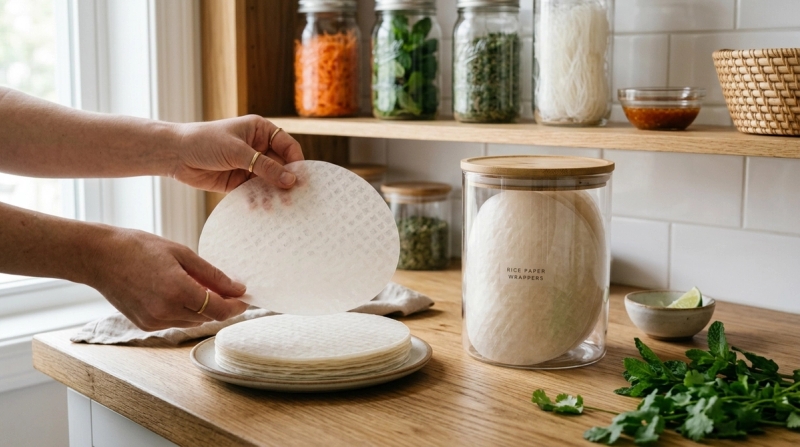
The short version? Store rice paper wrappers somewhere cool, dry, sealed, and protected from crushing. Unopened packs are usually fine in the pantry. Opened packs need a tighter setup: keep the wrappers in their original sleeve, seal it well, and place the whole thing in a hard airtight container.
Humidity is the big troublemaker. In very humid kitchens, you can store a well-sealed container in the fridge, but don’t put loose wrappers in there. They’ll absorb moisture and fridge smells fast, and nobody wants fresh rolls with a faint onion flavor.
This guide is for dry rice paper wrappers, the kind used for fresh rolls, summer rolls, lunchbox rolls, and quick no-cook meals. Finished rice paper rolls are a different story because they’ve already been soaked and need to be kept from drying out.
Quick Answer: How to Store Rice Paper Wrappers
#If you just need the basics, here’s what to do:
- Unopened rice paper wrappers: Store flat in a cool, dry, dark pantry or cupboard.
- Opened rice paper wrappers: Keep them in the original sleeve, seal the opening tightly, then place the pack in a hard airtight container.
- Best storage spot: A dry pantry is usually best. In humid weather, use an airtight container and consider refrigerating the sealed container.
- Avoid moisture: Rice paper absorbs humidity quickly, which can make it sticky, limp, rubbery, or moldy.
- Avoid crushing: Dry wrappers are brittle, so store them flat and away from heavy pantry items.
- Use opened packs fairly soon: For the best texture, try to use opened rice paper within 1 to 2 months.
- Throw away unsafe wrappers: Discard rice paper with mold, musty smells, pests, damp clumps, or unusual dark spots.
- Rescue slightly brittle sheets: If they’re only a little dry, lukewarm water or double-wrapping can sometimes help.
Why Rice Paper Wrappers Need Careful Storage
#Rice paper wrappers, often called banh trang, are thin dried sheets made from a rice-based batter. Because they’re mostly dried starch, they react quickly to the air around them.
Moisture is usually the biggest issue. Humid air, steam, wet hands, splashes from your dipping bowl, or even a damp counter can soften the wrappers before you’re ready to use them. Once that happens, they may start sticking together, tearing, or turning rubbery.
But the opposite problem can happen too. If wrappers get too dry, old, or crushed, they can crack and chip around the edges. Sometimes the rice paper isn’t spoiled at all; it’s just been sitting under a bag of flour for three months.
So the goal is simple: keep rice paper dry, sealed, flat, and protected.
That’s most of the battle.
How to Store Unopened Rice Paper Wrappers
#Unopened rice paper is the easiest to store because the factory packaging is still protecting it.
Keep the Pack in a Cool, Dry Pantry
#A closed cupboard or pantry shelf is usually perfect. Choose a spot away from:
- The stove
- Oven heat
- Dishwasher steam
- Kettle steam
- Rice cooker steam
- Direct sunlight
- Damp walls or windows
- The top of the fridge, if it gets warm
Heat and temperature swings aren’t great for dry pantry foods. They can weaken packaging and sometimes cause condensation. A steady, dry cupboard is much better.
Store the Pack Flat
#Dry rice paper wrappers crack easily before they’re soaked, so store the pack flat whenever possible.
Don’t wedge it upright between cans, jars, pans, or bags of flour. And when you bring rice paper home from the store, try not to bury it under bottles or heavy groceries.
This matters if you’re traveling with rice paper too. If you’re packing it for an Airbnb stay, picnic, or no-cook meal, slide the pack somewhere flat so it doesn’t bend in your bag.
Check the Package Date
#Unopened rice paper wrappers can last a long time when stored properly, often around 12 to 24 months. Still, always check the date printed on your package.
A best-by date is usually about quality, not an exact safety cutoff. But if the pack is old, inspect it before using. If it smells strange, has spots, or looks suspicious, don’t risk it.
How to Store Opened Rice Paper Wrappers
#Once the package is open, rice paper is much more exposed to air, humidity, and kitchen accidents. Every time you open the sleeve, a little moisture can sneak in, especially if you’re rolling near a bowl of water.
Here’s the best way to store an opened pack.
1. Keep the Sheets in the Original Sleeve
#If the original sleeve is still usable, keep the wrappers inside it. It keeps the stack neat and gives the sheets a first layer of protection.
Try not to store loose rice paper rounds in a drawer, bag, or random container. The edges chip easily, and loose sheets absorb moisture faster.
2. Seal the Open End Tightly
#Folding the plastic over and clipping it shut is better than leaving it open, but it’s not always enough for longer storage.
A better method is to fold the opening tightly, then wrap the pack in food-safe plastic wrap or slide it into a sturdy zip-top bag. Press out extra air before sealing.
If your kitchen is humid, double protection is worth it.
3. Put the Pack in a Hard Airtight Container
#This is the step people often skip, but it makes a real difference.
Place the sealed pack inside a hard airtight container. This protects the wrappers from both moisture and breakage. A wide food storage box, cake container, or flat airtight container works well, as long as the wrappers fit without bending.
Soft bags alone are not ideal in a crowded pantry. They may help with air exposure, but they won’t protect the sheets if a can or jar lands on top.
4. Keep the Pack Away From Wet Prep Areas
#When you’re making fresh rolls, it’s tempting to keep the whole pack right next to your dipping water. Try not to.
Take out only the number of sheets you need, close the pack, and move it away from the water bowl, sink, wet cutting board, or steamy stove. Even a small amount of moisture can make the remaining sheets start sticking together.
5. Use Opened Packs Within a Reasonable Time
#Opened rice paper doesn’t usually spoil immediately, but the texture can go downhill after repeated exposure to air and humidity.
For best quality, try to use an opened pack within about 1 to 2 months. If your kitchen is humid, or the pack wasn’t sealed tightly, use it sooner.
If the wrappers still look, smell, and feel normal after that, they may still be fine. Just inspect them carefully first.
Pantry or Fridge: Which Is Better?
#For most kitchens, the pantry is the best place for dry rice paper wrappers. A cool, dry cupboard keeps things simple and avoids fridge odors.
But humidity changes the situation.
If you live somewhere humid, coastal, or muggy, an opened pack can absorb moisture quickly. In that case, the fridge can help — but only if the rice paper is sealed very well.
The key point is this: the fridge only helps if the wrappers are inside an airtight container.
Don’t put loose dry rice paper in the fridge. It can absorb moisture and odors every time the door opens. And yes, onion-scented summer rolls really are as disappointing as they sound.
A good humid-weather setup looks like this:
- Keep the wrappers in the original sleeve.
- Seal the opening tightly.
- Put the pack in a hard airtight container.
- Refrigerate the sealed container if your pantry is too humid.
If humid pantry storage is a regular problem for you, you may also like this AllBlogs guide on rice flour storage in humid weather. Different ingredient, same annoying moisture problem.
Humidity Tips for Rice Paper Wrappers
#Humidity is the main reason rice paper wrappers go weird before you even soak them. A few small habits can save the whole pack.
Keep the Pack Closed While Rolling
#Only take out what you need. If you’re making six rolls, remove six wrappers, close the pack, and move it away from your rolling area.
If you need more later, open the pack again with dry hands.
Don’t Store Rice Paper Near Steam
#Rice paper should not sit near boiling pots, kettles, rice cookers, or bowls of hot water. Steam can slip into the packaging and soften the edges of the stack.
Use Dry Hands
#It sounds obvious, but wet fingers ruin a lot of top sheets.
Dry your hands before touching the stack every time.
Divide Large Packs Into Smaller Portions
#If you buy a big pack but only make a few rolls at a time, divide the wrappers into smaller stacks. Wrap each stack tightly, then store them together in a larger airtight container.
That way, you don’t expose the entire pack every time you make lunch.
Optional: Use Food-Safe Moisture Absorbers
#If you have a clean, food-safe desiccant packet from packaged dry foods, you can place it inside the airtight container.
Don’t put it directly inside the rice paper stack. Just place it in the container.
Make sure the packet is intact and labeled for food packaging. Don’t use random packets from shoes, electronics, handbags, or anything else not meant for food.
This step is optional. A good airtight container and a dry storage spot matter more.
Why Rice Paper Wrappers Crack
#Rice paper usually cracks for one of three reasons:
- The sheets were crushed in storage.
- The opened pack was left exposed and became too dry.
- The wrappers are old and have lost some flexibility.
A few chipped edges don’t always mean the whole pack is ruined. The sheets in the middle may still be perfectly usable.
To prevent cracking:
- Store wrappers flat.
- Use a hard container.
- Keep heavy pantry items away from them.
- Don’t bend the pack to fit a small shelf.
- Handle sheets gently by the edges.
If a wrapper shatters the moment you lift it, it may still hydrate, but it will be hard to roll neatly. Very broken pieces are usually more trouble than they’re worth unless you have another use for them and they still look and smell safe.
Why Rice Paper Wrappers Stick Together
#Dry rice paper sticking together usually means moisture got inside the pack.
Common causes include:
- Humid pantry air
- Wet hands
- Steam near your rolling station
- Water splashes from the dipping bowl
- Poorly sealed packaging
- Storing an opened pack without an airtight container
If only one or two sheets are stuck at the edges, you can try separating them gently with dry hands. Don’t force them too much, though. They may crack.
If the whole stack has fused into a damp block, it’s usually not worth saving. This is especially true if there’s any smell, mold, discoloration, or slimy texture.
How to Soften or Rescue Slightly Dry Rice Paper Sheets
#There’s a big difference between rice paper that’s slightly dry and rice paper that has spoiled.
Slightly dry or brittle wrappers may still be safe if they look clean, smell neutral, and have no signs of mold or pests. Spoiled wrappers should be thrown away, not rescued.
If your sheets are just a bit old or brittle, try these fixes.
Use Lukewarm Water
#Instead of cold water, use lukewarm water. Not boiling, not hot enough to hurt your fingers — just slightly warm.
Dip the sheet briefly, then let it soften on your plate or work surface. Rice paper continues softening after it comes out of the water, so don’t soak it until it feels completely limp in your hand. That’s how it gets gummy and tears.
Give It a Few Extra Seconds
#Older wrappers may need a little more time to hydrate.
Dip the sheet, place it down, wait a moment, then fill and roll once it feels flexible. If you rush, it may crack. If you oversoak, it may rip.
The sweet spot is flexible but still easy to handle.
Double-Wrap Fragile Sheets
#If the wrappers are clean but keep getting tiny tears, use two sheets together.
Dip one sheet, lay it down, dip another sheet, place it on top, then fill and roll them as one thicker wrapper. The roll will be a little chewier, but it can save the meal.
Check the Middle of the Stack
#The outside sheets usually take the most damage from air and handling. Check the middle of the stack before giving up on the whole pack.
Those inner sheets are often in much better shape.
Dry Wrappers vs. Assembled Rice Paper Rolls
#This is where storage can get confusing, because dry wrappers and finished rolls need opposite treatment.
Dry rice paper wrappers need to stay dry. Moisture makes them sticky, rubbery, and more likely to spoil.
Assembled rice paper rolls have already been hydrated. They need to be protected from drying out, especially in the fridge or a lunchbox. If finished rolls sit uncovered, the wrappers can turn tough, chewy, or leathery.
So don’t use dry-wrapper storage rules for finished rolls. Once a wrapper has been dipped and filled, treat it like prepared fresh food. Keep it covered, chill it when needed, and eat it within a safe, sensible time.
For lunch packing help, see AllBlogs’ guide to packing rice paper rolls fresh for a lunchbox.
How to Tell if Rice Paper Wrappers Have Gone Bad
#Rice paper is dry and shelf-stable when stored well, but it can still spoil if moisture or pests get in. Always check the package date and trust your senses.
Throw away rice paper wrappers if you notice any of these signs.
Mold
#Do not use rice paper with fuzzy spots, green or black specks, strange white patches, or anything that looks like mold.
Don’t cut off the moldy part and use the rest. Toss the pack.
Musty, Sour, or Damp Smells
#Dry rice paper should smell very mild, almost neutral. If the pack smells musty, sour, damp, or unpleasant, throw it away.
A stale smell can also mean the quality has gone downhill, even if you can’t see mold. When in doubt, it’s safer to discard it.
Pest Signs
#Like other grain-based pantry foods, rice paper can attract pantry pests if stored poorly.
Look for:
- Tiny insects
- Movement in the pack
- Webbing
- Small holes
- Powdery debris
- Unusual crumbs or dust
If you see pests, discard the pack and check nearby dry goods too.
Damp Clumping or Fused Sheets
#If the wrappers have turned into a sticky, damp mass, moisture got in.
If there’s any odor, discoloration, mold, or slimy feel, throw them away.
Unusual Dark Spots or Heavy Discoloration
#A little color change can happen with age, but unusual dark spots, heavy discoloration, or marks that weren’t there before are warning signs.
Don’t use wrappers that look suspicious.
Common Storage Mistakes to Avoid
#A few small mistakes can shorten the life of rice paper wrappers. Avoid these if you want smooth, flexible sheets when it’s time to roll.
- Leaving the open pack on the counter while cooking
- Storing wrappers above the stove
- Touching the stack with wet hands
- Keeping the pack beside the dipping water bowl
- Folding or bending the pack to fit a small drawer
- Storing opened wrappers with only a loose clip
- Putting loose wrappers in the fridge
- Ignoring musty smells because the pack “looks fine”
Rice paper isn’t hard to store. It just needs a dry, sealed, protected spot.