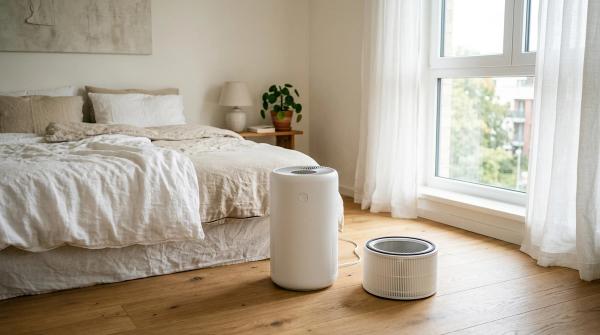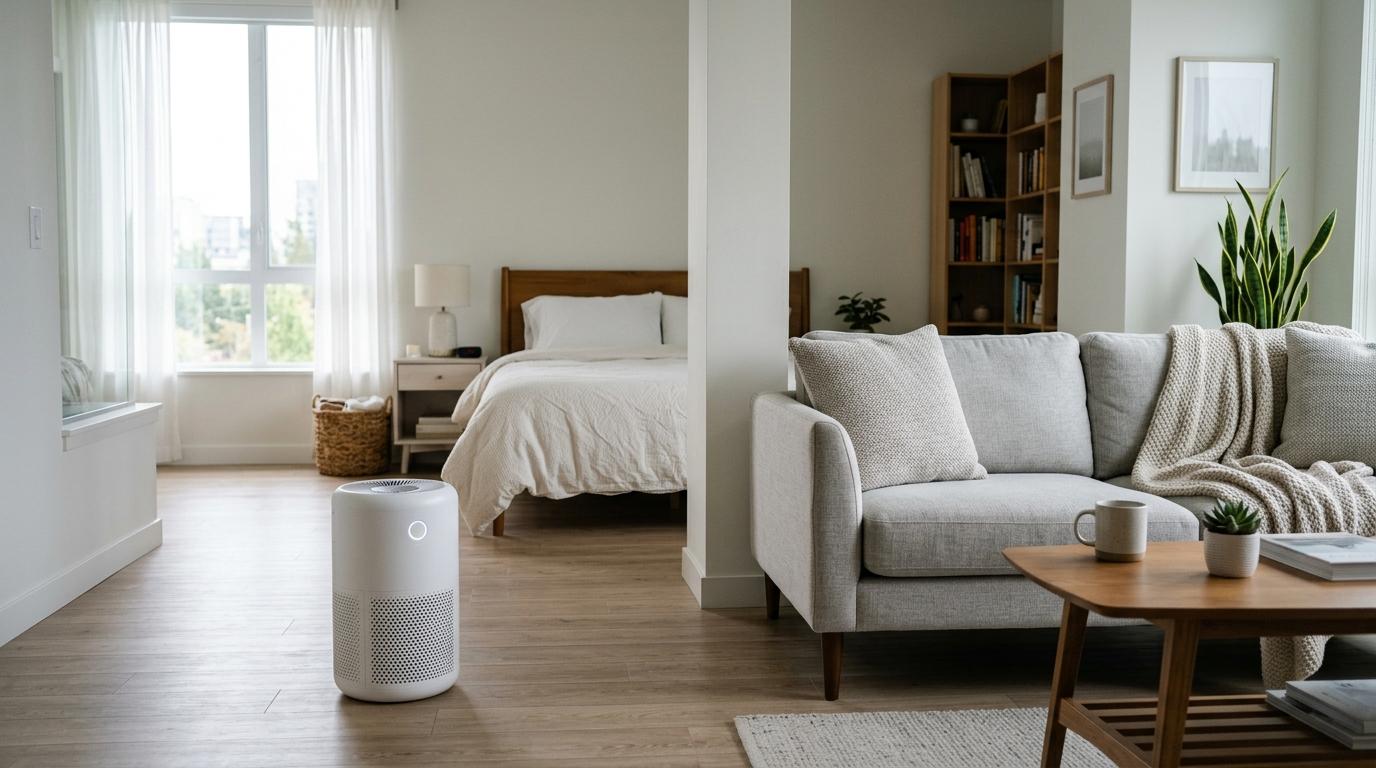
The best place for an air purifier is usually the room where you spend the most time. Keep it in an open spot with enough clearance around the intake and outlet vents so air can move freely. In a bedroom, that often means placing it a few feet from the bed; in a living room, place it near the seating area or between you and a common particle source such as a kitchen doorway, pet corner, balcony door or main entrance.
Why Air Purifier Placement Matters
#An air purifier pulls room air in, passes that air through filters, and pushes cleaner air back out. If the intake vents are blocked by a wall, curtain, sofa, cabinet or bed frame, the purifier may keep cleaning the same small pocket of air while the rest of the room stays dusty or stale.
Good air purifier placement improves intake, circulation and filter performance. Think of it like a fan: if you hide a fan behind a curtain, you would not expect it to move air across the room.
The Basic Rule for Air Purifier Placement
#Place the air purifier in an open part of the room, away from walls, furniture and curtains. Keep it close to where people spend time, or near the main source of dust, smoke, pet hair or odours.
Good places include:
- Beside the bed, but not pressed tightly against it
- Near the sofa or main seating area
- Near a kitchen doorway, but away from the stove
- Near a pet bed or litter area, with enough space around it
- Near the centre of a small room, if it is not a tripping hazard
- On a stable table, desk or dresser for compact models, if the manufacturer allows it
Avoid placing an air purifier:
- Tight against a wall
- Behind a sofa, chair or cabinet
- Inside a shelf, TV unit or closed cabinet
- Directly under heavy curtains
- Right beside an open window or balcony door
- In a damp bathroom area
- Beside heaters, fireplaces, stoves or strong heat sources
- Where the clean-air outlet blows straight into a wall
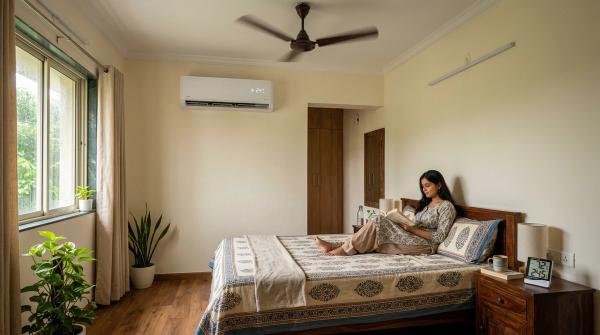
Where to Put an Air Purifier in a Bedroom
#The bedroom is often the best place to start because you spend many continuous hours there. For an air purifier in a bedroom, think about airflow, comfort and noise.
A good spot is usually close enough to support airflow near your sleeping area, but not so close that it blows directly on your face all night. Keep the unit near the bed or foot of the bed, with vents facing into the room rather than into a wall.
Good bedroom spots include:
- Beside a nightstand with space around the vents
- Near the foot of the bed, facing into the room
- On a stable dresser or table for smaller models
- Along an open wall, away from curtains, wardrobes and piles of clothes
If your purifier has a front air outlet, point it toward the room. If it has a top outlet, make sure there is open space above it.
Bedroom Placement Checklist
#Where to Put an Air Purifier in a Living Room
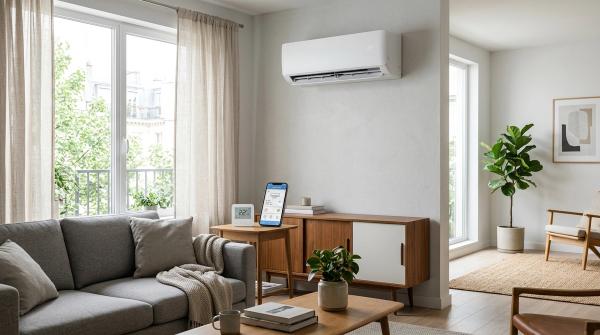
#Living rooms are usually bigger, busier and connected to kitchens, balconies, hallways or entry doors. Place the purifier where it can pull in mixed room air and send cleaner air toward the area where people actually sit.
Try placing it:
- Near the sofa, with clear space around it
- Between the sofa and the kitchen doorway
- Between the seating area and a pet bed
- Near the main walking path, but not where people will kick it
- Along an open wall, with the outlet facing into the room
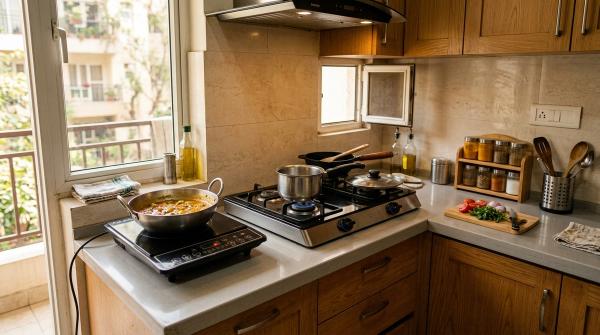
If cooking smells or particles are your main concern, do not leave the purifier in a far corner. Place it closer to the path between the kitchen and seating area. Do not place it beside the stove; heat, steam, oil droplets and grease can shorten filter life and affect the machine.
What If You Have an Open Kitchen?
#An air purifier can help with airborne particles and lingering smells, but it should not replace kitchen ventilation. Use an exhaust fan or chimney while cooking if you have one. After cooking, let the purifier run in the living area.
Avoid placing it beside the stove, sink or oily cooking zone. That can damage filters faster and reduce the life of the unit.
Air Purifier Placement in Apartments
#Apartment rooms are often smaller and packed with furniture, so one purifier is often expected to do too much. Air moves between rooms, but walls, doors, furniture and corners slow circulation. A purifier works best in the room where it is placed.
Start with the room where you spend the most time:
- Bedroom at night
- Living room during the day or evening
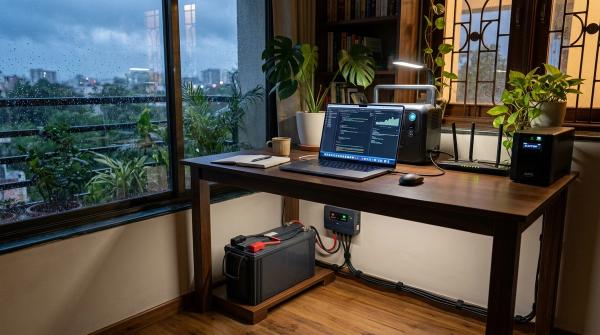
- Home office or study corner if you work there for long hours
If you have only one purifier, move it from room to room and give it time to clean each space. If you regularly deal with cooking particles, pets, road dust or high outdoor pollution, two smaller purifiers in important rooms may work better than one large purifier sitting far away in a corner.
India-Aware Placement Notes: Dust, Smog, Monsoon Humidity and Compact Rooms
#Air purifier placement can feel different in Indian homes because many homes deal with road dust, construction work, seasonal smog, compact rooms, balcony doors and monsoon humidity.
During high outdoor pollution, keep doors and windows closed while the purifier is running. If the purifier is right next to an open window, it keeps fighting incoming outdoor air and the filter may load faster.
For dusty homes, place the purifier in an open spot where it can catch circulating dust, but avoid making it pull large dust clumps from under beds, behind furniture or shoe racks. Clean the pre-filter as recommended by the manufacturer.
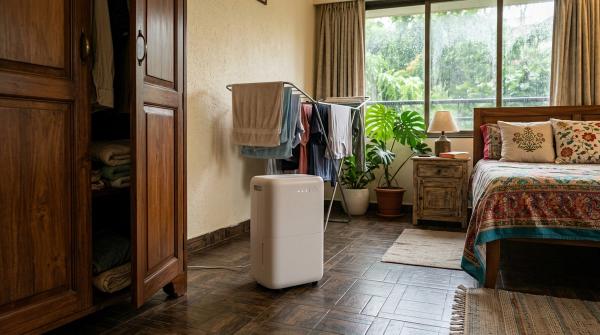
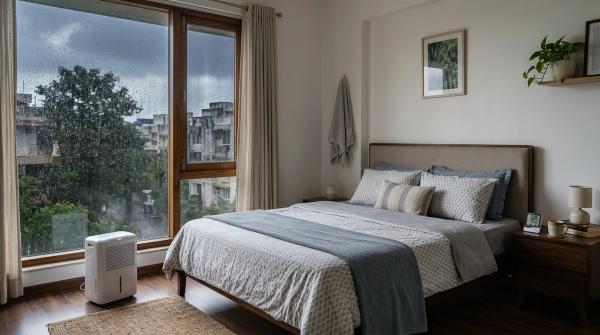
During monsoon months, avoid placing a HEPA purifier next to damp walls, bathrooms, rainy windows or musty corners. An air purifier is not a dehumidifier. If your room has moisture problems, manage humidity, leaks and ventilation too.
Common Air Purifier Placement Mistakes
#Is It a Placement Problem or a Room Size Problem?
#Sometimes the purifier is in the wrong spot. Sometimes it is simply too small for the room.
CADR, or Clean Air Delivery Rate, helps compare how much filtered air a purifier can deliver. A higher CADR generally means a purifier can clean a larger room faster, assuming the filters are in good condition and the unit is being used correctly.
Placement may be the issue if:
- The purifier is behind furniture
- The intake or outlet vents are blocked
- It is in a corner far from where people sit or sleep
- It is beside an open window or balcony door
- Air feels cleaner near the purifier, but not in the rest of the room
Room size may be the issue if:
- The purifier is designed for a much smaller room
- You are using a bedroom purifier in a large open-plan living room
- It only feels useful on the highest fan speed
- Air quality worsens quickly during cooking, cleaning or pollution spikes
- The room has high ceilings or connects to other open areas
Check the purifier’s rated room size and CADR against your room. If your room is much larger than the rating, consider a higher-CADR purifier or an additional unit.
How to Choose the Best Spot in Any Room
#Step 1: Choose the Room First
#Start with the room where cleaner air matters most. For many people, that is the bedroom. For families, it may be the living room. For people working from home, it may be a desk or study corner.
Step 2: Identify the Main Particle Source
#Ask what you are trying to reduce: outdoor dust, cooking particles, pet dander, high-traffic dust or general bedroom air while sleeping.
Step 3: Check the Airflow
#Look at the intake and outlet vents. Both should be clear. If clean air is hitting a wall, curtain or cabinet and bouncing back, move the unit.
Step 4: Close the Room When Possible
#Air purifiers work best in enclosed spaces. Close doors and windows while the unit runs, especially during outdoor pollution, dust storms, nearby construction or heavy traffic hours.
Step 5: Watch What Happens
#If your purifier has an air quality indicator, use it as a guide, but do not rely only on the light or number. Notice whether dust builds up more slowly, smells reduce faster and the room feels fresher after regular use.
Best Air Purifier Placement by Room: Quick Guide
#Final Takeaway
#The best air purifier placement is usually simple: put the purifier in the room you use most, keep airflow clear around it, and place it near the people or particle source you care about most.
For bedrooms, keep it near the sleeping area without direct face-level airflow. For living rooms, place it near the seating area or between you and a source such as a kitchen doorway, pet area or balcony door. For apartments, do not expect one small purifier to clean every room at the same time.
And if better placement does not help, check the CADR and room size. Sometimes the purifier is not in the wrong spot; it is being asked to clean more air than it was designed for.