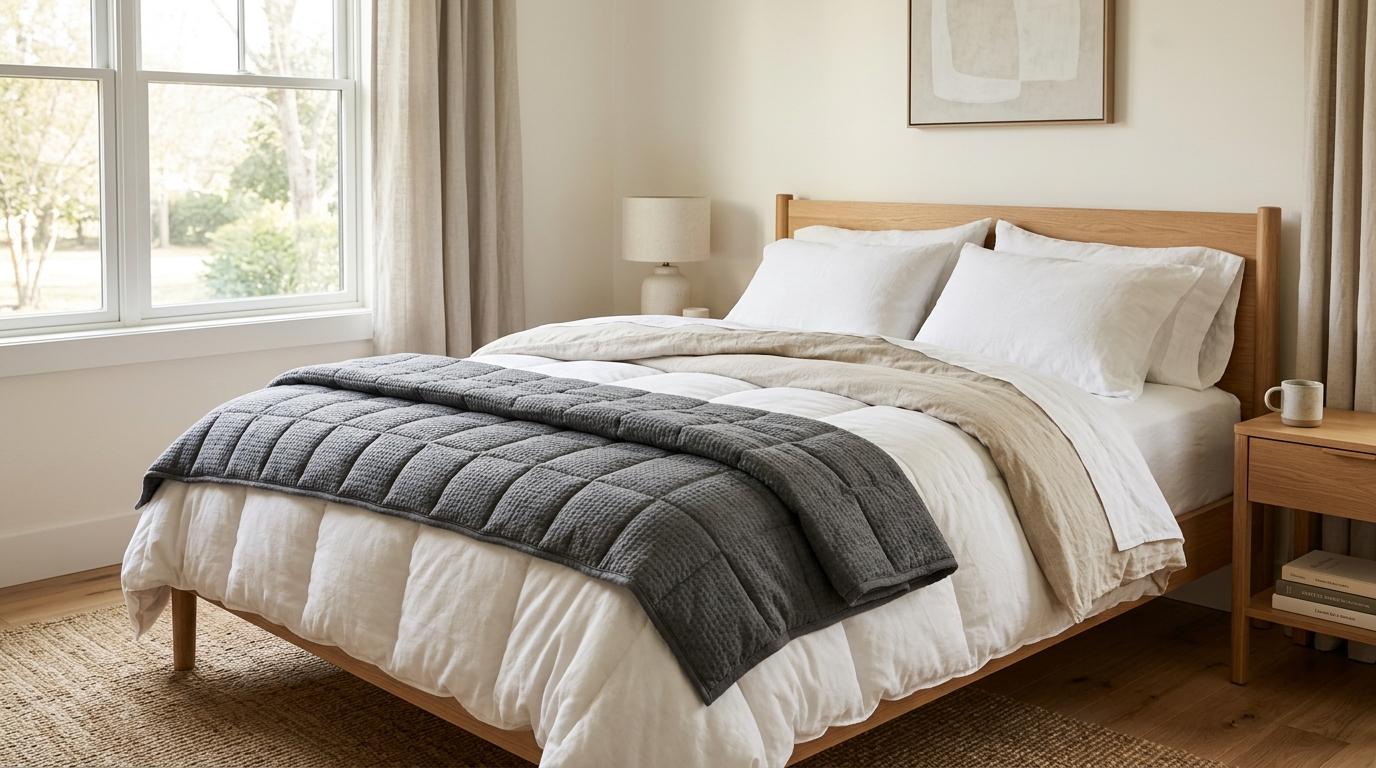
If you’re craving that calm, tucked-in feeling at night, a weighted blanket is probably the one you’re thinking of. If you mainly want easy warmth, a comforter is the simplest choice. And if you like a fluffy, hotel-style bed with covers you can wash and swap out, a duvet is hard to beat.
But the real question isn’t “which bedding is best?” It’s: what’s actually getting in the way of your sleep?
Are you cold? Restless? Overheating? Annoyed by laundry? Tired of fighting with too many layers every morning?
That answer matters way more than the name on the packaging.
Short Answer: Which Bedding Should You Buy?
#- Buy a weighted blanket if you want a heavier, secure feeling that may help you feel calmer in bed. Think twice if you sleep hot, feel trapped under weight, have breathing concerns, or need to move around easily.
- Buy a comforter if you want simple warmth in one ready-to-use layer. Think twice if your washer is small, or you like changing your bedding style often.
- Buy a duvet if you want fluffy warmth, a washable cover, and seasonal flexibility. Think twice if you hate putting duvet covers back on.
- Buy none, or use light blankets if you already sleep hot, live somewhere warm, or dislike heavy bedding.
Weighted Blanket vs Comforter vs Duvet: What’s the Difference?
#A weighted blanket, comforter, and duvet can all sit on top of your bed, but they don’t really do the same job.
A weighted blanket is mainly about pressure. It’s designed to feel heavy and grounding, usually with glass beads, plastic pellets, or thick woven yarn adding the weight.
A comforter is mainly about warmth and convenience. It’s one complete quilted piece: outer fabric, inner fill, done.
A duvet is about warmth, loft, and flexibility. It comes in two parts: a duvet insert and a removable cover.
So instead of asking which one is better, ask what you need your bedding to do.
If you’re cold, a comforter or duvet usually makes more sense.If you’re restless, tense, or comforted by pressure, a weighted blanket may be more helpful.If easy washing and seasonal flexibility matter, a duvet often wins.
Quick Comparison: Weighted Blanket vs Comforter vs Duvet
#- Main purpose: a weighted blanket is for calming weight and pressure; a comforter is for warmth and easy setup; a duvet is for warmth, fluff, and a washable cover.
- Structure: a weighted blanket is one heavy blanket, sometimes with a removable cover; a comforter is one sewn, quilted bedding piece; a duvet uses an insert plus removable cover.
- Typical feel: a weighted blanket feels heavy and tucked-in; a comforter feels soft, warm, and familiar; a duvet feels fluffy and adjustable.
- Best for: weighted blankets suit people who like pressure; comforters suit simple bedding and guest rooms; duvets suit people who want easier washing and seasonal options.
- Cleaning: weighted blankets can be difficult if heavy; comforters usually need whole-piece washing; duvet covers can be washed separately.
- Main drawback: weighted blankets may feel hot or restrictive, comforters can be bulky to wash, and duvet covers can be annoying to put back on.
What Is a Weighted Blanket?
#A weighted blanket is a heavy blanket designed to apply steady pressure across your body. Instead of relying mostly on fluffy insulation, it uses weight. Some are filled with tiny glass beads or plastic pellets. Others are made from thick, chunky woven yarn and don’t use beads at all.
People often describe the feeling as being gently hugged or firmly tucked in. For some sleepers, that pressure feels calming. It can make it easier to settle down, relax, and stop tossing around.
For others, it’s the opposite. Too heavy. Too warm. Too trapped.
That’s why a weighted blanket isn’t a magic sleep fix for everyone. It’s a specific tool for a specific kind of sleeper.
Choose a Weighted Blanket If
#You may like a weighted blanket if:
- Your mind races when you get into bed.
- You like feeling firmly tucked in.
- You pile on extra blankets for comfort, not just warmth.
- You toss and turn because your body feels unsettled.
- You want pressure more than fluff.
A weighted blanket can be great if your room isn’t too warm and you like the feeling of extra weight on your body.
Avoid a Weighted Blanket If
#A weighted blanket may not be right if:
- You sleep very hot.
- You feel claustrophobic under heavy bedding.
- You have respiratory issues or sleep apnea.
- You have severe joint pain or mobility concerns.
- You can’t easily move or remove the blanket yourself.
- You’re buying for an infant or toddler.
Infants and toddlers should not use weighted blankets because of suffocation risk. And if you have any medical concerns, it’s best to check with a qualified clinician before using one.
What Is a Comforter?
#A comforter is the easiest option to understand. It’s one complete piece of bedding, with fabric on the outside and insulating fill stitched inside.
You take it out of the package, put it on the bed, and that’s pretty much it.
No insert. No cover. No corner ties. No buttons. No standing at the foot of the bed trying to shake a duvet into place while questioning your life choices.
Comforters are usually lighter than weighted blankets but warmer than a thin throw or regular blanket. How warm they feel depends on the fill, thickness, and fabric.
Choose a Comforter If
#A comforter is a good choice if:
- You want simple, all-in-one bedding.
- You want warmth without extra setup.
- You’re buying for a guest room or child’s room.
- You dislike changing duvet covers.
- You want a more budget-friendly option.
- You want to make the bed quickly.
For many people, a comforter is the most practical everyday choice. It may not feel as fancy as a duvet or as calming as a weighted blanket, but it does the basic job really well.
Avoid a Comforter If
#A comforter may frustrate you if:
- Your washing machine is small.
- You have pets that dirty the bed often.
- You like changing your bedroom look frequently.
- You want separate summer and winter inserts.
- You prefer washing only a thin outer layer.
A large comforter can be awkward to clean. Depending on its size and fill, it may need a bigger machine to wash and dry properly.
What Is a Duvet?
#A duvet is a two-part bedding setup. The inside piece is the duvet insert, which provides warmth and loft. The outside piece is the duvet cover, which protects the insert and gives your bed its look.
This is why duvets are so common in hotel-style bedding. They look soft, full, and polished. They’re also more flexible than comforters. You can change the cover without replacing the whole thing, and you can swap inserts depending on the season.
A duvet is especially useful if you want a fluffy bed but don’t want to wash one huge comforter every time the bedding needs freshening up.
Choose a Duvet If
#A duvet is a good buy if:
- You want a fluffy, cloud-like bed.
- You like changing bedding colors or patterns.
- You want to wash the cover more often than the insert.
- You have pets on the bed.
- You want different inserts for different seasons.
- You prefer a more customizable bedding setup.
A duvet can be warmer or cooler depending on the insert you choose. That makes it more flexible than most one-piece comforters.
Avoid a Duvet If
#A duvet may not be ideal if:
- You hate putting covers back on.
- You want the lowest-maintenance bedding possible.
- You dislike bedding that shifts inside a cover.
- You don’t want to buy separate pieces.
The biggest duvet complaint is laundry day. Re-inserting the duvet, tying the corners, and closing the buttons or zipper can be irritating. Not impossible, just annoying enough that some people never want to do it again.
Weighted Blanket vs Comforter: Which Is Better?
#In the weighted blanket vs comforter comparison, there isn’t one winner.
A weighted blanket is better if your main issue is restlessness, stress, or wanting a firm, grounded feeling in bed.
A comforter is better if your main issue is staying warm with minimal effort.
They solve different problems. A comforter traps heat. A weighted blanket adds pressure.
Some weighted blankets are warm, especially ones with plush covers, but warmth isn’t really the point. Some comforters feel heavy, but they aren’t designed around evenly distributed pressure in the same way.
So the simple version is:
If you’re cold, buy a comforter.If you’re tense or restless, consider a weighted blanket.If you’re both cold and tense, you can use both, as long as the total heat and weight still feel comfortable.
Weighted Blanket vs Duvet: Which Is Better?
#The weighted blanket vs duvet choice comes down to pressure versus flexibility.
A weighted blanket gives you a heavier, more secure feeling. It’s usually a personal sleep item, chosen based on body weight and comfort preference.
A duvet gives you warmth, loft, and easier cover washing. It’s usually a shared bed layer and part of how the room looks.
Choose a weighted blanket if calming pressure matters most.Choose a duvet if adjustable warmth, washable covers, and a fluffy bed matter more.
If you sleep hot, a duvet with a lighter insert may be easier to manage than a weighted blanket. If you feel anxious at night but aren’t cold, a breathable weighted blanket might be more useful than a thick duvet.
Weighted Blanket Buying Guide: What to Check Before Buying
#If you’re leaning toward a weighted blanket, don’t just buy the heaviest one because it’s on sale. The right weight, size, fabric, and construction matter a lot.
1. Weight
#A common guideline is to choose a weighted blanket that’s about 10% of your body weight.
For example:
- If you weigh 68 kg, a blanket around 6.8 kg may be suitable.
- If you weigh 150 lb, a blanket around 15 lb may be suitable.
This is only a starting point, not a strict rule. If you’re between sizes or sensitive to pressure, the lighter option may feel better.
Too much weight can turn relaxing into uncomfortable pretty quickly.
2. Size
#A weighted blanket should usually cover your body, not hang far over the sides of the bed. If it drapes too much, the weight can pull downward and feel uneven.
For couples, one large shared weighted blanket isn’t always the best idea. Since weighted blankets are often chosen by individual body weight, two smaller blankets may be more comfortable than one big shared one.
3. Fill Material
#Common weighted blanket fills include:
- Glass beads: Small, dense, and usually quieter.
- Plastic pellets: Bulkier and sometimes noisier.
- Chunky woven yarn: No beads, more airflow, and a textured look.
Glass beads are often preferred because they distribute weight with less bulk. Chunky knit styles may be better if you want more airflow, though they may not feel as evenly weighted as bead-filled designs.
4. Outer Fabric
#Fabric affects warmth more than many people expect.
Consider:
- Cotton: Often a good choice if you want breathability.
- Plush, fleece, or velvet-like covers: Cozy, but may feel too hot.
- Bamboo viscose or similar cooling-style covers: Often chosen by hot sleepers who want a smoother, cooler feel.
If you already sleep warm, avoid thick plush covers unless you specifically want winter bedding.
5. Washability
#This is one of those practical details that matters more than you think.
Before buying, check:
- Whether the cover is removable.
- Whether the cover is machine washable.
- Whether the inner blanket can be washed at home.
- The maximum weight your washing machine can handle.
- The drying instructions.
A 20 lb weighted blanket is not something every home washing machine can handle well. A removable cover makes life much easier.
What to Check Before Buying Any Bedding
#Whether you choose a weighted blanket, comforter, or duvet, it helps to think through the boring-but-important stuff before you spend the money.
1. Your Main Sleep Problem
#Start with what you’re actually trying to fix.
- Too cold? Choose a comforter or duvet.
- Too warm? Choose lighter bedding, or none.
- Too restless? Consider a weighted blanket.
- Too much laundry hassle? Consider a duvet.
- Too much bed-making hassle? Choose a comforter.
Buying the wrong bedding for the wrong problem is one of the easiest ways to waste money.
2. Your Sleep Temperature
#Hot sleepers should be careful with heavy, plush, or high-loft bedding. A weighted blanket can feel warmer because it sits close to your body. A thick comforter or warm duvet insert can overheat you too.
If you sleep hot, look for lighter inserts, breathable fabrics, and layers you can remove.
3. Your Cleaning Setup
#A beautiful bed is great, but not if cleaning it becomes a whole project.
- Small washing machine? Be careful with large comforters and heavy weighted blankets.
- Pets or frequent spills? A duvet cover may be easier.
- Want low maintenance? A comforter may be simpler.
- Buying a weighted blanket? A removable washable cover is worth it.
4. Your Bed Sharing Situation
#If you share a bed, think beyond mattress size.
A comforter or duvet is easy to share. A weighted blanket is more personal. If one person loves pressure and the other person hates it, a shared weighted blanket can become annoying fast.
In that case, one person can use a smaller weighted blanket on their side while the bed still has a shared comforter or duvet.
5. Your Climate
#In warmer climates, or rooms without air conditioning, a heavy weighted blanket or thick comforter may not be practical all year.
In colder rooms, a comforter or duvet may be more useful than a weighted blanket alone.
Common Mistakes to Avoid
#Mistake 1: Buying a Weighted Blanket for Warmth Alone
#A weighted blanket is mainly for pressure, not insulation. Some are warm, especially plush-covered styles, but others, like open-knit designs, allow more airflow.
If your main problem is feeling cold, a comforter or duvet is usually the better first purchase.
Mistake 2: Choosing Too Much Weight
#Heavier does not mean better.
A weighted blanket that’s too heavy can feel restrictive, awkward, or just plain uncomfortable. Use the 10% body weight guideline as a starting point, and go lighter if you’re unsure.
Mistake 3: Ignoring Washing Instructions
#Large comforters, duvet inserts, and weighted blankets can be difficult to clean. Don’t assume everything can go into a standard home washer.
Check the care label before buying, not after the first spill.
Mistake 4: Buying One Shared Weighted Blanket Without Thinking
#A weighted blanket that feels perfect for one person may feel too heavy or too light for another. Couples with different body weights or sleep preferences may be better off with individual weighted blankets.
Mistake 5: Forgetting About Heat
#Weight and warmth are not the same thing, but they can overlap. A weighted blanket with a thick cover can feel hot. A duvet with a heavy insert can feel hot. A comforter with dense fill can feel hot.
If you overheat easily, choose bedding that can be layered and removed.
So, Which One Should You Buy?
#Buy a Weighted Blanket If...
#You want a calm, grounded feeling more than extra warmth. You like pressure. You don’t overheat easily. And you’re mostly buying it for yourself, not trying to solve bedding for the whole bed.
Best for: restless sleepers, people who enjoy firm tucked-in pressure, and anyone who wants a more secure sleep feeling.
Buy a Comforter If...
#You want the simplest option. You need warmth, you want to make the bed quickly, and you don’t want to deal with duvet covers.
Best for: practical buyers, guest rooms, children’s rooms, and anyone who wants one-piece bedding.
Buy a Duvet If...
#You want a fluffy bed and easier regular washing. You like the idea of changing covers or swapping inserts by season.
Best for: people who care about bedroom style, pet owners, and buyers who want long-term flexibility.
Buy None If...
#You already sleep well with light bedding. You sleep hot most nights. You dislike heavy layers. You live in a warm climate and don’t need extra insulation or pressure.
Sometimes the smartest purchase is no purchase. Your bed does not need more layers just because someone on the internet said it should.
Related AllBlogs Guides
#- If light is your main sleep problem, read Sleep Mask vs Blackout Curtains vs Sunrise Alarm: /post/sleep-mask-vs-blackout-curtains-vs-sunrise-alarm
- If noise keeps you awake, compare White Noise Machine vs App vs Fan: /post/white-noise-machine-vs-app-vs-fan-better-sleep
- If you track sleep with wearables, see Smart Ring vs Smartwatch for Sleep Tracking: /post/smart-ring-vs-smartwatch-sleep-tracking
- If you still wake up tired, start with Wake Up Tired After 8 Hours?: /post/wake-up-tired-after-8-hours-sleep-quality-habits
Final Takeaway
#The weighted blanket vs comforter vs duvet decision really comes down to what your sleep needs most.
Choose a weighted blanket if you want calming pressure and enjoy a heavier, tucked-in feel. Choose a comforter if you want simple warmth with no setup fuss. Choose a duvet if you want fluffy bedding, washable covers, and more seasonal flexibility.
And if you already sleep hot or dislike heavy bedding, don’t force an upgrade.
Better sleep sometimes comes from buying the right layer. Sometimes it comes from taking one away.