The little knobby root that keeps saving my dinners
#I buy fresh ginger the way some people buy flowers. Like, I see a fat, glossy hand of ginger at the market and suddenly I'm imagining gingery dal, sticky soy noodles, a pot of chicken soup that tastes like someone actually cared, and maybe chai if the day gets weird. Which it usually does. But for years I was absolutely terrible at storing it. I’d bring home this beautiful spicy little rhizome, use one thumb-sized piece, shove the rest in the fridge naked like a criminal, then find it two weeks later looking like a tiny haunted tree branch. Wrinkly. Sad. Sometimes fuzzy. Not my proudest kitchen era.
So this is my very real, tested-in-my-own-messy-kitchen guide to storing fresh ginger in the fridge, freezer, and, yes, knowing when it’s gone bad. I’ve wasted enough ginger to feel personally qualified, and I’ve also learned the tricks that keep it juicy and usable for weeks. Some are simple. Some are slightly fussy. One involves grating frozen ginger straight into a pan while feeling like a genius. We’ll get there.
First, choose ginger that actually wants to last
#Storage starts before you even get home, which is annoying but true. Fresh ginger should feel heavy for its size, with smooth-ish tan skin that’s tight against the flesh. It should smell bright and peppery when you snap a small nub or scratch the skin lightly. If it bends like a wet noodle or has damp spots, leave it. If it looks shriveled but still firm, it’s not evil, just older and probably a bit fibrous. I’ll still use that in broth, but not for a fresh ginger scallion sauce where ginger is basically the main character.
My favorite ginger usually comes from Asian or Indian grocery stores because turnover is fast and the pieces are often bigger and juicier. No shade to fancy supermarkets, but I have paid silly prices for ginger there and gotten a dry piece that tasted like spicy cardboard. Meanwhile the little produce shop near my old apartment had piles of ginger that smelled so loud I could almost taste my mom’s adrak chai before I even got to the register. That’s the good stuff.
- Look for firm, heavy pieces with tight skin and no wet, slimy patches.
- Avoid mold in the creases, especially fuzzy green, white, or blue spots.
- Choose bigger chunks if you can, because cut ends dry out faster than whole knobs.
- If you cook with ginger a lot, buy enough for two or three weeks, not an entire suitcase of it. I say this as someone who has absolutely overdone it.
Countertop storage: fine for a minute, not forever
#If I’m using ginger within a few days, I don’t panic about leaving it on the counter. Whole, unpeeled ginger can hang out in a cool, dry, dark spot for a short stretch, especially if your kitchen isn’t steamy. Think pantry basket, not beside the stove. The problem is that ginger loses moisture pretty quickly at room temp, and if your kitchen runs warm, it may sprout or wrinkle faster than you expect. Sprouting isn’t automatically a disaster, by the way. If the ginger is still firm and smells normal, I’ll trim the sprout and use the rest. It might be a little more fibrous, but it won’t ruin a curry.
I don’t store cut or peeled ginger on the counter. Not even for “just overnight,” because that’s exactly how I forget about it and discover a sticky little science project next to the onions. Once it’s cut, the exposed flesh dries out and picks up fridge smells or counter funk way faster. Also, food safety wise, cut produce just needs a little more respect. I’m casual, but not that casual.
The fridge method I use most: dry, unpeeled, and protected
#For everyday ginger storage, the fridge wins. The trick is keeping ginger from drying out while also not trapping a bunch of moisture around it. Moisture is where the trouble starts. I used to put ginger in a fully sealed plastic bag while it was still damp from the store misting system, and then act surprised when it got moldy. Honestly, past me was doing her best but not very well.
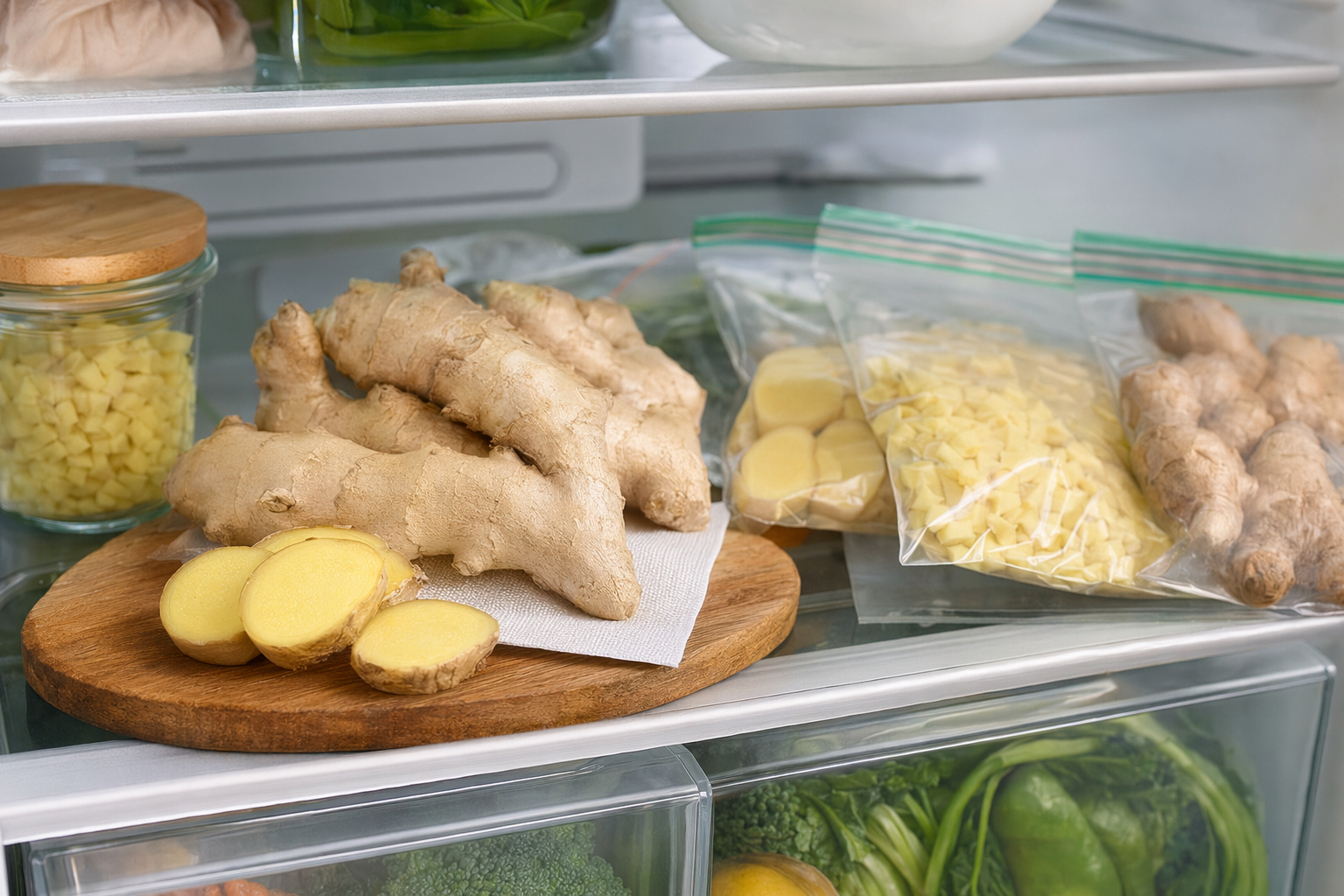
Here’s what works for me: I pat the ginger dry, leave it unpeeled, wrap it in a small piece of dry paper towel if it seems at all moist, then put it in a zip-top bag or container with the lid not aggressively airtight. Sometimes I leave the bag slightly open. Then it goes in the crisper drawer, away from the wettest greens. If your fridge has one sad drawer where cilantro goes to die, don’t put ginger there unless you’ve got moisture under control. Same principle I use for greens, actually, and if your fridge is a produce graveyard you might like my notes on How to Store Leafy Greens So They Stay Fresh Longer. Moisture management is boring until it saves your groceries.
Stored this way, a good fresh piece of ginger often lasts around two to four weeks in my fridge. Sometimes longer if it was really fresh when I bought it. The USDA’s FoodKeeper guidance and general food safety advice usually frames cold storage as slowing quality loss and spoilage rather than making produce immortal, which is a good mindset. Your nose, fingers, and eyes still matter. If it’s firm and smells gingery, you’re probably in business. If it smells sour or feels slimy, nope.
What about peeled ginger in the fridge?
#Peeled ginger is convenient, especially if you’re in a weeknight cooking groove, but it doesn’t keep as long as whole unpeeled ginger. Once peeled, ginger loses its protective skin and starts drying out. I wrap peeled pieces tightly or put them in a small airtight container, sometimes with a barely damp paper towel if it’s already drying, but not wet. Then I try to use it within a week. Realistically, it’s best in the first few days. After that it can still be okay, but the flavor starts getting a bit flat and the texture goes woody.
My laziness hack is to peel only what I need. And yes, I use a spoon. I know every food blog says that, and it sounds like one of those fake tips until you try it, but the edge of a spoon really does scrape the thin skin off without wasting too much flesh. A vegetable peeler takes big chunks, and I get weirdly emotional about wasting ginger. Don’t ask.
Cut, sliced, minced, and grated ginger: the clock is ticking
#The smaller you cut ginger, the faster it loses its sparkle. Sliced ginger keeps better than minced. Minced keeps better than grated, but not by much. Grated ginger is basically exposed to the world on every tiny surface, so it dries out, oxidizes, and gets funky faster. If I grate too much, I don’t keep it in the fridge for ages. I either use it within a couple days or freeze it.
For chopped or grated ginger in the fridge, use a clean jar or tiny container, press the surface down, and keep it cold. I aim for 3 to 5 days max, and if it smells fermented or alcoholic in a bad way, it goes. I know some people store minced ginger in oil, and I’m not here to police your grandmother’s methods, but please don’t leave homemade ginger-in-oil mixtures at room temperature. Low-oxygen oil environments can be risky for certain bacteria if handled badly. Keep homemade mixtures refrigerated and use them quickly, or freeze portions instead. Food should be exciting, not terrifying.
| Ginger form | Best storage spot | How long I’d expect good quality | Best use |
|---|---|---|---|
| Whole, unpeeled | Fridge crisper in a dry bag or container | About 2 to 4 weeks, sometimes more | Everything, from chai to stir-fry |
| Peeled chunks | Fridge, wrapped or airtight | A few days to 1 week | Quick weeknight cooking |
| Sliced coins | Fridge airtight or freezer | 3 to 5 days fridge, months frozen | Tea, broth, braises |
| Minced or grated | Fridge short term, freezer better | 3 to 5 days fridge, best quality 3 to 6 months frozen | Sauces, marinades, curries |
| Dried or powdered ginger | Cool dry pantry | Check package date and aroma | Baking, spice blends, emergency backup |
Freezing ginger is the move, and I will die on this tiny hill
#The freezer is where ginger becomes weeknight magic. If you only take one thing from this post, take this: freeze some ginger. Whole pieces, peeled chunks, sliced coins, grated little mounds, whatever fits your cooking life. Frozen ginger does change texture. It gets softer once thawed, so I don’t love it for raw crunchy garnishes. But for cooked food? Soups, fried rice, curry paste, marinades, dumpling filling, lentils, noodles, glaze for salmon, all of it. It’s fantastic.
USDA freezer guidance generally says food kept continuously frozen at 0°F stays safe, but quality changes over time. For ginger, I like using frozen pieces within 3 to 6 months for best flavor. Past that, it’s not suddenly poison, but it may taste freezer-ish or dull. Label the bag. I never think I’ll forget and then six months later I’m holding a frosty mystery nugget asking, “is this ginger or galangal or a very old piece of banana?” Not cute.
My freezer has become this little library of flavor starters. Ginger, garlic, curry leaves when I can find them, lemon zest, parmesan rinds, all the tiny things that make dinner taste less like an obligation. If you’re comparing what freezes well and what gets weird, I wrote about texture surprises in Can You Freeze Yogurt? Best Methods, Texture & Uses, and ginger is much easier than yogurt. Ginger doesn’t seperate into sadness. It just gets a bit softer and keeps going.
Three freezer methods, depending on your personality
#- Freeze it whole. Wash only if needed, dry it extremely well, and toss whole unpeeled knobs into a freezer bag. When you need some, grate it from frozen on a microplane. This is my favorite lazy method. The peel kind of stays behind, and the snowy ginger goes straight into the pan.
- Freeze peeled chunks or slices. Peel the ginger, cut into thumb-sized pieces or coins, freeze on a tray so they don’t clump, then bag them. This is great for tea, broth, pho-ish soup nights, and anything you plan to simmer.
- Freeze grated ginger in teaspoons. Grate a bunch, portion it into little piles on parchment, freeze solid, then move the nuggets to a bag. This is the meal-prep person’s method. I admire it deeply, even though I only behave this responsibly every other month.
One tip: squeeze air out of the bag. Freezer burn won’t usually make ginger unsafe, but it makes it dry and dusty tasting. I double bag if I’ve grated it because grated ginger is dramatic and likes to perfume everything nearby. Not always bad, unless your ice cubes start tasting like stir-fry.
How to tell if fresh ginger has gone bad
#This part matters because ginger can be confusing. It naturally has knobs, wrinkles, dry edges, and strange little rings inside. Not every ugly piece is spoiled. Some ginger just looks like it has lived through a lot, same honestly. The question is whether it’s dry and tired, or actually rotten.
- Wrinkly but firm: usually okay. Peel or slice off dry ends and use it in cooked dishes, tea, or stock.
- Soft and squishy: not great. If the whole piece collapses under your thumb, toss it.
- Slimy or wet skin: toss. Slime is not “extra moisture,” it’s a warning sign.
- Sour, fermented, musty, or rotten smell: toss. Fresh ginger should smell sharp, warm, citrusy, and spicy.
- Fuzzy mold: toss if it’s widespread, in creases, or paired with softness. If it’s one tiny dry mold spot on a very firm large piece, some cooks cut well around it, but I personally usually toss because ginger’s crevices hide things.
- Blue-green ring inside: this can be a natural variety trait in some ginger, especially if it smells normal and feels firm. It’s not the same as fuzzy mold.
The inside should be pale yellow to golden, moist but not wet, and fragrant. If you cut into it and the flesh is gray, glassy, mushy, or has dark watery patches, I wouldn’t use it. Also, if you ever have that little voice saying “hmm, I’m not sure,” listen to it. Ginger is cheaper than a ruined dinner or an upset stomach. I have ignored the voice before. Me and that questionable fried rice did not have a good evening.
My ginger routine after grocery shopping
#When I get home, I split my ginger into two groups: the “this week” piece and the “future me” piece. This week’s ginger goes in the fridge, whole and unpeeled, dry and tucked into a bag with a paper towel. Future me’s ginger goes straight into the freezer. If I’m in a very ambitious mood, I peel and grate some first, but most weeks I just freeze a whole knob and call myself organized.
I learned this after one cold rainy night when I was craving a bowl of ginger-heavy chicken congee. There’s a restaurant near where I used to live, nothing glossy, just a narrow little place with fogged windows and servers who moved like they had no time for your indecision. Their rice porridge had ribbons of ginger that warmed your chest before the spoon even hit your stomach. I tried making it at home and found my ginger had turned into a beige sponge. That was the moment. Never again, I said, very dramatically to an empty kitchen.
Now I always keep frozen ginger as backup. It makes simple food taste layered. Add grated frozen ginger to hot oil with garlic and scallions, and suddenly leftover rice becomes dinner. Simmer ginger coins with black tea and milk, and it’s a proper cup of chai. Stir it into tomato dal with cumin and mustard seeds, and the whole kitchen smells like someone’s auntie is about to compliment you but also tell you to add more salt.
Fresh ginger vs powdered ginger, because both have a place
#Fresh ginger and dried ginger are not the same thing, and I get oddly passionate about this. Fresh ginger is juicy, sharp, citrusy, a little floral. Powdered ginger is warmer, earthier, more bakery-ish. I use fresh ginger for stir-fries, chai, soups, marinades, and anything where I want that bright bite. I use powdered ginger in gingerbread, spice rubs, some masalas, and emergency moments when I thought I had fresh ginger but apparently used it all making noodles at midnight.
If you cook a lot of Indian food or spice-heavy food in general, it helps to know the pantry names too. Dry ginger powder is often called sonth or saunth in North Indian cooking, and it shows up in spice mixes, chutneys, and winter recipes. I keep a small jar around, but I replace it when the aroma fades because stale ginger powder is just tan dust with confidence issues. If regional spice names ever trip you up, this guide to Indian Spices in English: Regional Name Guide for Everyday Cooking is useful to keep handy.
Little mistakes that make ginger spoil faster
#I’ve made all of these, so please enjoy my shame as instruction. First, don’t store wet ginger in a sealed bag. Condensation gathers, and then mold moves in like it signed a lease. Second, don’t peel the whole thing unless you already have a plan. Peeled ginger is like cut avocado, the countdown begins. Third, don’t keep ginger loose in the fridge door where it gets temperature swings and dries out. The crisper is calmer.
Also, don’t store ginger right next to super wet produce without protection. I once had ginger in the same container as rinsed herbs, and it became soft in a way that felt personal. On the flip side, don’t let it sit uncovered in a dry fridge either, because then it shrinks into something that looks like it belongs in a museum of ancient snacks. Balance. Annoying, but true.
My rule is simple: whole ginger likes cool, dry protection. Cut ginger likes cold, clean containers. Grated ginger likes the freezer. Moldy ginger likes the trash.
Using up ginger before it goes questionable
#When my ginger is still good but starting to wrinkle, I stop treating it like a precious ingredient and start throwing it into everything. Thin slices go into water with lemon. A smashed chunk goes into broth. Grated ginger goes into pancake batter with cinnamon, which sounds odd but is honestly lovely. I make a quick sauce with soy sauce, rice vinegar, sesame oil, honey, ginger, and chili crisp, then pour it over cucumbers or noodles or whatever vegetable is looking lonely.
One of my favorite lazy dinners is ginger fried eggs: heat oil, add grated ginger and scallion whites for like 20 seconds, crack in eggs, spoon the sizzling gingery oil over the top, then eat with rice and chili sauce. Not fancy. Maybe not even a recipe. But the kind of food that makes you stand at the counter and go quiet for a second. Ginger does that. It wakes up humble ingredients.
And if you have a lot, make ginger tea concentrate. Slice a big handful, simmer with water for 20 to 30 minutes, strain, and keep the liquid in the fridge for a few days. Add honey and lemon when serving. Or freeze the concentrate in cubes. Future sick-day you will be so grateful, I promise.
Quick ginger storage cheat sheet
#If you’re skimming because there’s a knob of ginger on your counter right now and you need answers, here you go. Whole fresh ginger keeps best unpeeled in the fridge, dry and loosely protected in a bag or container. Peeled or cut ginger should be refrigerated and used soon. Grated ginger is best frozen unless you’ll use it within a few days. Frozen ginger is great for cooking and can be grated straight from the freezer. Toss ginger that’s slimy, mushy, sour-smelling, or moldy in more than a tiny dry surface spot.
That’s really it. Ginger isn’t difficult, it just hates being wet and forgotten. Which, honestly, same.
Final thoughts from my ginger-stained cutting board
#Fresh ginger is one of those ingredients that makes me feel richer than I am. A small piece can turn plain lentils into comfort, broth into medicine-ish magic, tea into something that hugs back, and weeknight noodles into a meal I’d happily pay restaurant money for. Storing it well means you get more of those moments and fewer sad discoveries in the back of the fridge.
So buy the firm, fragrant stuff. Keep some in the fridge. Freeze more than you think you need. Trust your nose. And please don’t feel bad if you’ve thrown away moldy ginger before, we’ve all been there, probably more than once. I’m still learning little kitchen things every week, which is half the fun. If you’re into these practical, slightly obsessive food notes, I’ve found more good reads and cooking rabbit holes over on AllBlogs.in.