Hotel mornings can be lovely. You wake up somewhere different, maybe make a loose plan for the day, and wander down for breakfast before the rush starts.
But if you have IBS, breakfast at a hotel can also feel a little high-stakes.
It’s not just, “What looks good?” It’s, “What can I eat before a long drive, a walking tour, a meeting, a flight, or a day where I’m not totally sure where the bathrooms are?”
That can take the fun out of it fast.
The good news is you don’t need the perfect buffet. You just need a simple, realistic plan. A quick look around, a few foods you trust, and something safe in your bag can make breakfast feel much less like a gamble.
Quick note before we get into it: this is general information, not medical advice. IBS triggers are very individual. If you’re following a low-FODMAP diet, your symptoms are changing, or your “safe foods” list keeps getting smaller, it’s worth working with a qualified clinician or registered dietitian.
Quick Answer Summary
#If you’re standing at the hotel buffet right now and just need a plan, try this:
- Walk the buffet first. Look at everything before you start filling your plate.
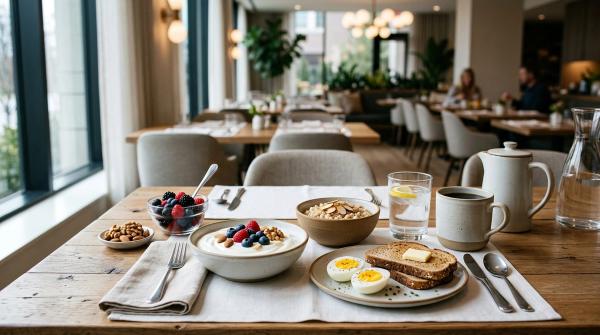
- Keep it simple. Aim for one gentle carbohydrate, one protein, a small amount of fat, and a drink you know you tolerate.
- Be cautious with hot buffet food. Scrambled eggs, potatoes, sauces, and mixed dishes can hide milk, cream, garlic, onion, wheat, or seasoning blends.
- Go easy on bakery items. Croissants, muffins, pastries, sweet breads, pancakes, and waffles can be rich, sugary, wheat-heavy, or full of hidden ingredients.
- Watch coffee, dairy, and fruit portions. These are common breakfast triggers, especially when you’re traveling.
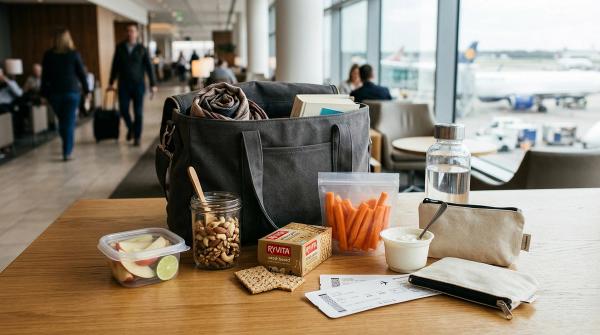
- Pack backups. Plain instant oats, rice cakes, peanut butter packets, tolerated nuts, crackers, or familiar bars can save the morning.
The goal is not a perfect IBS breakfast. The goal is a breakfast that feels safe enough for your body so you can get on with your day.
The Buffet Plate Formula
#Hotel buffets can be oddly stressful because there are so many choices. When everything is laid out at once, it’s easy to panic-grab something that looks harmless but isn’t actually great for your gut.
A simple formula helps:
Gentle carbohydrate + protein + small fat + tolerated drink
That’s it. You don’t need to build a beautiful brunch plate. You’re just trying to give your body something steady.
1. Choose a gentle carbohydrate
#Depending on what you personally tolerate, this might be:
- Plain oatmeal, if it’s made with water and not pre-sweetened
- Plain toast, if that bread works for you
- Gluten-free or wheat-free toast, if available
- Plain rice, if the hotel serves it
- Rice cakes from your own bag
- A firm banana
- A small portion of fruit you already know suits you
Carbs get trickier when they come with sweeteners, dairy, dried fruit, rich toppings, or mystery ingredients. Plain food might not be exciting, but it’s much easier to judge.
And on a travel morning, “easy to judge” is very underrated.
2. Add protein
#Protein can help breakfast feel more complete. It can also stop you from feeling hungry an hour later and grabbing a random pastry just because it’s sitting there looking friendly.
Possible hotel options include:
- Hard-boiled eggs
- Plain fried or poached eggs
- A plain omelet, if it can be made without milk, cream, onion, or garlic
- Plain smoked salmon, if you tolerate it
- Lactose-free yogurt, if available and suitable for you
- Your own tested protein bar or protein powder
Hard-boiled eggs are often easier to trust than scrambled eggs from a buffet tray. Scrambled eggs may contain milk, cream, butter, cheese, or seasoning.
3. Add a small amount of fat
#Fat isn’t bad. But a large amount of greasy or very rich food can be rough for some people with IBS, especially first thing in the morning.
You might add:
- Peanut butter, if tolerated
- A few walnuts, macadamias, or pumpkin seeds
- A little butter, if it suits you
- A small piece of hard cheese, if you tolerate it
Keep this part modest on travel days. Your stomach may be much happier later.
4. Choose your drink carefully
#Sometimes the drink causes more trouble than the food.
Lower-risk choices may include:
- Water
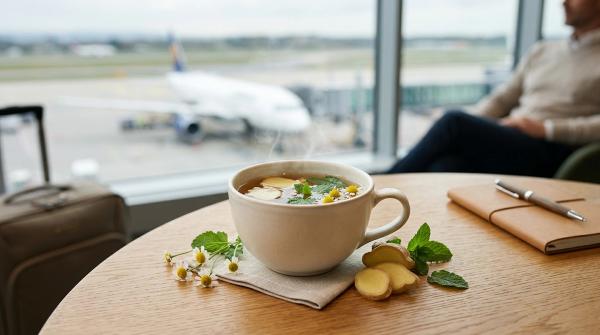
- Peppermint tea, if you tolerate it
- Ginger tea
- Coffee after food, rather than on an empty stomach
- Lactose-free milk, if available and suitable for you
Even a very basic breakfast, like toast, a hard-boiled egg, and water, is still a plan. It may not feel glamorous, but it can be exactly what you need.
Hot Buffet Tactics: Where Triggers Hide
#The hot food section can look like the safest part of breakfast because it feels more like “real food.” But for IBS, hot buffet dishes can be full of hidden extras.
Eggs
#Eggs themselves are naturally low FODMAP, but hotel egg dishes aren’t always just eggs.
Be cautious with:
- Scrambled eggs
- Omelets made from a pre-mixed base
- Egg casseroles
- Egg bakes
- Quiches
These can contain milk, cream, butter, cheese, wheat-based ingredients, garlic, onion, or seasoning mixes.
If there’s an egg station, you can ask for something simple:
“Could I have plain eggs without milk, cream, onion, or garlic?”
If that feels like too much, or if you don’t feel confident about the answer, hard-boiled eggs are often the clearer choice.
Potatoes and hash browns
#Breakfast potatoes look innocent. Unfortunately, they’re often seasoned.
Watch for:
- Garlic powder
- Onion powder
- Spice blends
- Butter
- Creamy additions
- Lots of oil
If staff can confirm they’re just potatoes with salt, they may work for you. If no one knows, it may be easier to choose toast, oats, rice cakes, or something from your own bag.
Oatmeal
#Oatmeal can be a great travel breakfast, but hotel oatmeal is worth checking before you commit.
Ask or look for:
- Is it cooked in water or milk?
- Is it plain or sweetened?
- Does it contain honey, apple, dried fruit, or flavoring?
- Are toppings separate?
Plain oats with toppings on the side are much easier to control. If the only option is a sweet mixed oatmeal, your own instant oatmeal packet might be the better choice.
Sausages, bacon, and mixed hot dishes
#Greasy breakfast meats can bother some people with IBS, especially early in the day. Processed meats and mixed dishes may also include garlic, onion, wheat fillers, or spice blends.
You don’t have to avoid them if you know they suit you. But if you’re trying to lower your risk before a flight, train, tour, meeting, or long car ride, smaller portions are usually the safer move.
Bakery Choices and Cautions
#The bakery table is often the prettiest part of hotel breakfast.
It is also one of the easiest places to overdo wheat, fat, sugar, and hidden ingredients before your gut is fully awake.
Approach these with caution:
- Croissants
- Muffins
- Danishes
- Sweet rolls
- Banana bread or fruit breads
- Pancakes
- Waffles
- Filled pastries
- Donuts
- Breakfast cookies or granola bars
These foods can be rich and heavy. Some may contain honey, apple puree, dried fruit, milk, cream, or other ingredients that don’t agree with your digestion.
What may work better
#Depending on your tolerance, these may be easier:
- Plain toast
- Gluten-free bread, if available
- Wheat-free bread, if available
- Plain sourdough, if you personally tolerate it
- A small piece of a simple bread item
- Your own rice cakes, crackers, or oats
Some people with IBS do better with traditionally fermented sourdough than regular wheat bread. But it depends on the bread, the portion, and the person.
Also, “sourdough-style” doesn’t always mean traditionally fermented, so don’t assume it’s automatically safe.
How to ask without making it awkward
#You don’t need to explain your whole digestive history to the breakfast staff. Simple questions are enough.
Try:
- “Is the oatmeal made with water or milk?”
- “Are the eggs mixed with milk or cream?”
- “Do the potatoes have garlic or onion?”
- “Do you have gluten-free or wheat-free bread?”
- “Is lactose-free milk available?”
Some hotels will know. Some won’t. Sometimes the staff genuinely want to help but don’t have the ingredient list.
That’s exactly why backups matter.
Coffee, Dairy, and Fruit Cautions
#Coffee, dairy, and fruit are normal breakfast foods. They’re also common IBS trouble spots, especially when you’re out of your usual routine.
Coffee
#Coffee can stimulate the gut. For some people, that means urgency, cramping, or loose stools. This isn’t really a FODMAP issue — it’s just how coffee can affect digestion.
If coffee tends to bother you, try:
- Eating a few bites first
- Choosing a smaller cup
- Avoiding very strong coffee before long transfers or tours
- Skipping regular creamers if lactose bothers you
- Having tea or water if your stomach already feels unsettled
You know your coffee tolerance better than anyone. But a travel morning is usually not the best time to test your limits.
Dairy
#Dairy tolerance is very personal. Some people with IBS also have lactose intolerance. Others handle certain dairy foods just fine.
Be careful with:
- Regular milk in cereal or coffee
- Creamers
- Sweetened yogurt
- Creamy porridge
- Cheesy egg dishes
- Milk-based smoothies
Options that may suit some people include:
- Lactose-free milk
- Lactose-free yogurt
- Small amounts of hard cheese, such as cheddar or Swiss
- A plant-based milk you already know works for you
Plant-based does not automatically mean IBS-friendly. Some oat milks, soy milks, and sweetened alternatives can bother people too, especially in larger servings.
If you’re following low FODMAP, it’s best to check your choices with a dietitian or clinician.
Fruit
#Fruit seems light and safe, but type and portion really matter.
Often better tolerated options for some people include:
- Firm banana
- Orange
- Kiwi
- Strawberries
- Blueberries
Fruits that often need more caution include:
- Apples
- Pears
- Mangoes
- Watermelon
- Cherries
- Big mixed fruit bowls
Mixed fruit bowls are tricky because you can’t control what ends up in your serving. A few berries might be fine for you, but a bowl heavy on apple, pear, mango, or watermelon might not be.
Fruit juice can also be a problem. Apple juice is a common trigger for some people, and a large glass of juice can be a lot of sugar at once. If you want juice, a small amount may be easier than a full glass.
Low-FODMAP-Aware Backups
#The easiest hotel breakfast with IBS is one where you don’t have to depend completely on the hotel.
Backup foods take the pressure off. If the buffet is mostly pastries, creamy eggs, mystery potatoes, and fruit salad, you still have something familiar. That alone can make the morning feel less stressful.
Good breakfast backups are usually:
- Shelf-stable
- Easy to pack
- Familiar to your body
- Not messy
- Simple to prepare
- Suitable for your personal IBS pattern
Consider packing:
- Plain instant oatmeal packets
- Rice cakes
- Peanut butter packets
- Tolerated nuts or seeds
- Low-FODMAP-aware protein bars you have already tested
- A small bag of tolerated cereal
- Familiar protein powder, if you use it
- Plain crackers that work for your digestion
Try not to test a brand-new “IBS-friendly” bar on a travel morning. The label may look reassuring, but your body gets the final vote.
A simple backup breakfast
#If the buffet isn’t working for you, you might have:
- Instant oatmeal made with hot water
- Peanut butter or tolerated nuts
- A firm banana or a small portion of berries
- Water or tea
It’s not fancy. But it can be very useful.
And sometimes useful is exactly what breakfast needs to be.
Check what your room has
#Before you travel, it helps to know whether your hotel room has:
- A kettle
- A mini fridge
- A microwave
- A nearby supermarket or convenience store
Don’t assume these will be there. If they matter to your food plan, ask before you arrive.
A Gentle Step-by-Step Hotel Breakfast Plan
#Here’s a calmer way to handle hotel breakfast.
Step 1: Pause before plating
#Walk around once without a plate.
Look for:
- Plain foods
- Made-to-order stations
- Ingredient labels
- Staff you can ask
- Backup options if the buffet doesn’t suit you
This helps you avoid the classic rushed plate of “I hope this is fine.”
Step 2: Choose the plainest base
#Start with the carbohydrate you trust most.
Maybe that’s plain oats. Maybe toast. Maybe rice cakes from your bag. Maybe a firm banana and a small yogurt, if you tolerate it.
Start with what feels boringly reliable.
Step 3: Add protein
#Choose the clearest protein option.
Hard-boiled eggs are often easier to judge than mixed eggs. If there’s an egg station, ask simple questions. If the answer feels uncertain, choose something else.
Step 4: Keep portions moderate
#Large portions can be harder on sensitive digestion, even if the food itself is usually fine for you.
This matters even more before sightseeing, meetings, flights, or road trips.
You can always have a snack later.
Step 5: Save experiments for low-pressure mornings
#If you really want to try the local pastry, maybe do it on a slower morning when you have time and bathroom access.
If your train leaves in 45 minutes, boring breakfast is probably the better choice.
Honestly, boring is underrated when your gut is unpredictable.
Common Trigger Traps at Hotel Breakfast
#Everyone with IBS is different, so none of these are automatic “no” foods. But they are worth watching.
“Healthy” granola
#Granola can contain wheat, honey, dried fruit, chicory root, inulin, high-fat nuts, or sweeteners that don’t suit everyone. It’s also very easy to eat a large portion without realizing it.
Smoothies
#Smoothies may include milk, yogurt, apple juice, mango, honey, protein powders, or large fruit servings. Unless the ingredients are clear, they’re hard to judge.
Pancakes and waffles
#These often contain wheat and milk, plus sweet toppings. Syrups and fruit compotes add even more uncertainty.
Breakfast sauces
#Ketchup, chutneys, gravies, salsas, and savory sauces may contain onion, garlic, sweeteners, or spice blends. A little might be fine for some people, but sauces are not always predictable.
“Just a little” cream
#If lactose bothers you, milk and creamers in coffee can add up quickly. Especially if you have more than one cup.
And on holiday, that second cup has a way of appearing.
When to Seek Medical Advice
#IBS can be really disruptive, but some symptoms should not be brushed off as “just IBS.”
Seek medical advice promptly if you have:
- Blood in your stool or black stools
- Unexplained weight loss
- Severe abdominal pain that feels different from your usual IBS symptoms
- Persistent fever with digestive symptoms
- Ongoing vomiting
- Signs of dehydration
- New or worsening symptoms that worry you
It’s also worth speaking with a clinician or registered dietitian if your safe food list keeps shrinking, you’re avoiding travel because of food anxiety, or you’re trying to follow low FODMAP without guidance.
A low-FODMAP travel breakfast plan should help you feel more prepared. It should not make travel feel impossible.
Final Thoughts
#Hotel breakfast with IBS does not have to be perfect. It just needs to be workable.
Start plain. Ask simple questions. Be careful with mixed hot dishes, bakery foods, coffee, dairy, and large fruit portions. Pack backups so the buffet doesn’t control your whole morning.
Some days, the best breakfast is not the most exciting one.
It’s the one that lets you leave the hotel feeling steady enough to enjoy your day.