Travel constipation is one of those unglamorous travel problems that people often don’t talk about until they are already uncomfortable, tired, and wondering why their body suddenly refuses to cooperate. It can happen on flights, road trips, train journeys, hotel stays, pilgrimages, business travel, theme park weekends, and even relaxing holidays where the whole point was supposed to be feeling good. The usual pattern is pretty simple: your routine changes, your meals change, your sleep is off, you sit for longer, you may drink less water because bathrooms are inconvenient, and then digestion slows down. This guide is not a diagnosis or a treatment plan, but a practical food and fluid checklist that may help support more regular bowel habits while traveling. If symptoms are severe, persistent, worsening, or unusual for you, it’s worth checking in with a qualified healthcare professional instead of trying to tough it out.
First, What Counts as Constipation While Traveling?
#Constipation is commonly described as having fewer than three bowel movements a week, hard or lumpy stools, straining, feeling like you cannot fully empty, or needing more effort than usual. Travel constipation can be short-lived, but that doesn’t mean it feels minor. Even a couple of days of bloating, pressure, or discomfort can affect appetite, mood, sleep, and how much you enjoy the trip. Health organizations such as the U.S. National Institute of Diabetes and Digestive and Kidney Diseases, the NHS, and gastroenterology groups generally point to diet, hydration, movement, routine, medications, and underlying health conditions as important factors. That’s why the food checklist matters, but it is only one piece of the picture. Fiber and fluids may support bowel regularity, yet they work best when paired with bathroom access, gentle movement, and not ignoring the urge to go.
Why Travel Throws Digestion Off So Easily
#The gut likes rhythm more than most people realize. Breakfast at a different time, skipping lunch, eating mostly airport snacks, sleeping poorly, drinking more coffee than water, holding stool because the public restroom looks questionable, sitting for six hours, then eating a heavy dinner late at night — all of that can slow things down. Long flights and air-conditioned spaces can also make people feel drier, even if true dehydration varies from person to person. Road trips have their own problem: people may intentionally drink less so they don’t need as many stops. Some travelers also eat fewer fruits, vegetables, beans, and whole grains because those foods are harder to find or feel risky when bathrooms are unpredictable. If food timing is a big part of your travel stress, this family-focused guide on Theme Park Food Timing for Families: Snacks & Rides has useful overlap, especially around breakfast, snacks, and water planning.
The Simple Travel Constipation Formula: Fiber Plus Fluids, Not One Without the Other
#Fiber gets a lot of attention, and fairly so, but fiber without enough fluids can backfire for some people. Dietary fiber adds bulk, holds water, and can help stool move more comfortably through the bowel. Soluble fiber, found in foods like oats, apples, chia seeds, psyllium, beans, and some fruits, forms a gel-like texture. Insoluble fiber, found in wheat bran, many vegetables, fruit skins, nuts, and whole grains, adds bulk and may help speed transit. Most adults are advised to aim for roughly 25 to 38 grams of fiber daily, depending on age, sex, and calorie needs, but many people eat less than that. The trick during travel is not to suddenly double fiber overnight. A big fiber jump can cause gas, cramps, or bloating. A steadier approach, with enough water, is usually easier on the gut.
The Pre-Travel Food Check: Start Before You Leave
#If someone is prone to travel constipation, waiting until day three of the trip may be too late. The day before travel and the morning of travel are good times to keep meals familiar, balanced, and not overly dry. A useful pre-travel plate might include oats or whole grain toast, fruit, yogurt or another protein, and water. For lunch or dinner, something like dal and rice with vegetables, a bean wrap, khichdi with veggies, a grain bowl, or a simple sandwich with fruit can be easier than a greasy, low-fiber meal. This is not about eating perfectly. Travel is travel. But arriving already low on fluids and fiber sets the gut up for trouble. If you’re planning a road journey without refrigeration, the ideas in Road Trip Breakfast Without a Cooler: Safe Food Guide can help with safer, practical morning foods.
Fiber Foods That Travel Better Than You’d Think
#The best constipation-friendly travel foods are the ones you will actually eat and can carry safely. Fresh fruit is the obvious choice, but not every fruit travels well in a backpack. Apples, oranges, pears, guava, bananas that are not overripe, and firm plums are usually easier than delicate berries. Dried fruits can be helpful too, especially prunes, figs, apricots, raisins, and dates, but portions matter because they are concentrated and can cause gas or loose stools in some people. Whole grain crackers, roasted chana, trail mix, nuts, seeds, unsweetened muesli cups, instant oats, and shelf-stable high-fiber bars can be useful. Look for bars with recognizable ingredients and enough fluid alongside them. A bar with lots of added fiber but no water is not magic. It may just sit there and make you feel more stuffed.
- Pack one fruit that survives rough handling, such as an apple, orange, pear, or guava.
- Carry one dry fiber option, such as roasted chana, nuts, seeds, whole grain crackers, or oats.
- Add one “backup” food, such as prunes, dried figs, or a high-fiber bar, but use small portions first.
Fluids: What to Drink, How Much, and What Counts
#Hydration advice gets confusing because people want one exact number. In reality, fluid needs change with body size, climate, sweating, altitude, pregnancy, breastfeeding, medications, illness, and activity level. The National Academies’ often-cited adequate intake for total water is about 2.7 liters per day for women and 3.7 liters per day for men, including water from all drinks and foods, but that is not a personal prescription. For travel, a more practical approach is to sip regularly and check simple signs: very dark urine, dizziness, dry mouth, or headache may suggest you need more fluids, although these signs can have other causes too. Water is the easiest choice. Milk, soups, coconut water, herbal tea, and water-rich fruits also contribute. Coffee and tea count toward fluid intake for many people, but too much caffeine can worsen jitters, sleep, or urgency. Alcohol is less helpful, especially in hot weather or on long travel days.
A Gentle Morning Routine Can Help More Than Random Snacking
#Many people have a stronger natural bowel reflex after waking and after breakfast. Travel often wrecks that window. Someone wakes late, rushes to checkout, skips breakfast, and decides they’ll “go later,” but later becomes a crowded train station or a bus stop bathroom with no soap. Not ideal. A travel-friendly morning routine may include drinking water soon after waking, eating something with fiber and protein, and giving yourself ten unrushed minutes near a bathroom before heading out. Warm drinks may help some people feel the urge, though they are not a guaranteed fix. Breakfast does not need to be fancy: oats with nuts, curd with fruit, whole grain toast, idli with sambar, poha with peanuts and vegetables, or even fruit plus a handful of nuts is better than nothing. The point is consistency, not perfection.
Hotel and No-Kitchen Foods That Support Regularity
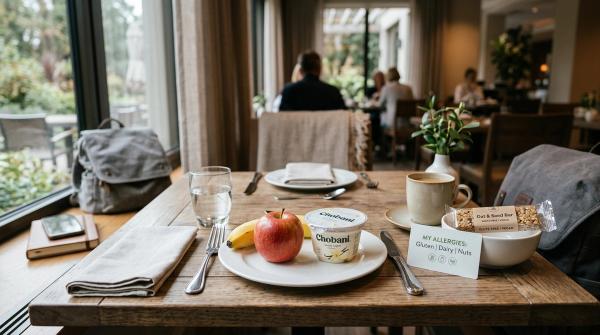
#Hotel eating can become a loop of pastries, fried snacks, late dinners, and tiny water bottles. That’s enjoyable sometimes, and honestly, food is part of travel. But if constipation is a concern, the hotel room can also be stocked with a few helpful basics. Instant oats can be made with hot water if available. Fruit can sit on the desk. Nuts, seed mixes, roasted makhana, roasted chana, peanut butter sachets, and whole grain bread can make a quick breakfast or snack. If there is a mini-fridge, yogurt, cut fruit, hummus, or milk may be options, as long as storage is safe and the fridge is cold enough. For no-kitchen trips, grocery stores are often easier than restaurants for fiber. This guide on Grocery Store Dinner Ideas While Traveling No Kitchen has practical ideas that fit hotel travel without turning dinner into a full cooking project.
Restaurant Choices: Small Swaps That Don’t Ruin the Fun
#Nobody wants a vacation food checklist that sounds like punishment. The goal is not to avoid every rich food or dessert. It’s more about adding helpful foods around the fun foods. At restaurants, consider choosing one fiber-rich side: salad, cooked vegetables, beans, lentils, brown rice, millet, whole grain bread, fruit, or soup with vegetables. If the main meal is pizza, pasta, biryani, burger, or a fried platter, adding vegetables or fruit somewhere in the day may keep things more balanced. Cooked vegetables may be easier on the stomach than raw salads for some travelers, especially where food safety is uncertain. If you have a sensitive gut, beans and cruciferous vegetables like cabbage, cauliflower, and broccoli can be very helpful for some people but gassy for others. Travel is not the best time to test a huge new portion.
The “Constipation-Smart” Snack Bag
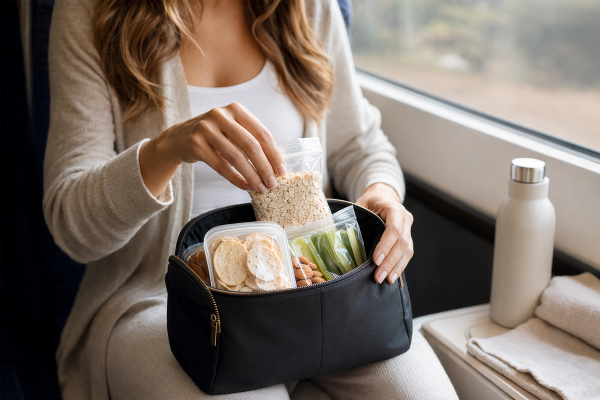
#A snack bag can make the difference between steady digestion and a day of dry, salty foods. Think of it as a little gut-support kit, not a medical kit. Good options include a refillable water bottle, an apple or orange, prunes in a small zip pouch, roasted chana, unsalted nuts, seed mix, whole grain crackers, nut butter, and maybe instant oats. If you use fiber supplements like psyllium, it’s smart to ask a healthcare professional or pharmacist if it is appropriate for you, especially if you take medications, have swallowing problems, bowel narrowing, kidney disease, or a history of bowel obstruction. Psyllium must be taken with enough fluid. Dry scoops or too little water can be unsafe. Also, keep snacks food-safe. Nuts and dry snacks are easy, but dairy, cut fruit, and cooked foods need temperature control.
Foods and Drinks That May Make Travel Constipation Worse
#This part needs nuance. Foods do not affect everyone the same way, and labeling foods as “bad” can get unhelpful fast. Still, some travel patterns are more likely to be constipating: lots of refined grains, low fruit and vegetable intake, too much cheese for your own tolerance, frequent fried foods, large meat-heavy meals without fiber, and not enough fluids. Some people notice constipation when they eat more ultra-processed snacks than usual. Others are fine with those foods if the rest of the day is balanced. Iron supplements, some antacids containing aluminum or calcium, opioid pain medicines, certain antidepressants, some antihistamines, and other medications may also contribute to constipation. Don’t stop prescribed medication on your own. If constipation starts after a new medication, ask a qualified healthcare professional or pharmacist what is safe.
A Practical One-Day Travel Constipation Food Checklist
#Here’s a realistic checklist for a travel day. Not perfect, not fancy, just doable. Before leaving, drink water and eat a breakfast with fiber, such as oats, fruit, whole grain toast, poha with vegetables, or idli with sambar. During travel, sip water regularly instead of waiting until you feel very thirsty. Add one fruit and one dry fiber snack. At lunch, include a vegetable, dal, beans, whole grain, or fruit if available. During long sitting periods, stand, walk the aisle when safe, stretch at rest stops, or take a short walk after meals. At dinner, avoid making the whole plate low-fiber if you already had a dry snack day. Before bed, drink enough to feel comfortable, but don’t force large amounts if it will disturb sleep. And importantly, use the bathroom when the urge appears. Repeatedly delaying can make stool harder and more difficult to pass.
What About Probiotics, Fermented Foods, and Trendy Gut Health Products?
#Gut health is everywhere right now: probiotic drinks, prebiotic sodas, fermented foods, synbiotic powders, greens powders, and fiber gummies. Some may be useful for certain people, but the evidence depends on the strain, dose, product quality, and the person’s health situation. Probiotics are not all the same. A yogurt with live cultures is not the same as a specific probiotic studied for a specific condition. Fermented foods like yogurt, kefir, idli, dosa, kanji, kimchi, sauerkraut, and miso can be part of a balanced diet, but they are not guaranteed to prevent constipation. Prebiotic fibers may support beneficial gut bacteria, yet they may also increase gas or bloating, especially when started suddenly. For travel, familiar foods are usually safer than experimenting with a brand-new gut health product the night before a flight. Boring advice, maybe, but often sensible.
Special Situations: Kids, Older Adults, Pregnancy, and Medical Conditions
#Travel constipation needs extra caution in children, older adults, pregnant people, and anyone with chronic health conditions. Children may avoid unfamiliar bathrooms or get too distracted to drink water. Older adults may have lower thirst cues, mobility limits, or medication-related constipation. Pregnancy can slow gut movement, and not all laxatives or supplements are appropriate. People with irritable bowel syndrome, inflammatory bowel disease, diabetes, thyroid disease, neurological conditions, kidney disease, eating disorders, or prior bowel surgery should be especially careful with sudden fiber changes or supplements. If you are caring for someone else, avoid pushing large amounts of fiber or fluids without considering their medical needs. General wellness tips can support comfort, but they should not replace individualized medical advice. A clinician or registered dietitian can help tailor a plan when constipation is frequent, painful, or complicated by other symptoms.
When Constipation Is Not Just “Travel Stuff”
#Most mild travel constipation improves when normal eating, hydration, movement, and bathroom routines return, but some symptoms deserve prompt medical attention. Seek medical advice urgently for severe or worsening abdominal pain, vomiting, fever, a swollen or rigid abdomen, inability to pass gas, blood in the stool, black tarry stool, unexplained weight loss, fainting, signs of dehydration, or constipation after a significant injury. Also check with a healthcare professional if constipation is new and persistent, keeps recurring, or is a major change from your normal bowel pattern, especially in adults over 50. If a child has severe pain, persistent vomiting, blood in stool, poor feeding, lethargy, or signs of dehydration, get medical help. Online checklists are helpful for planning, but they are not designed to rule out bowel obstruction, infection, inflammatory disease, medication side effects, or other medical issues.
A Simple Packing List for Fiber and Fluids
#If you like lists, keep this one in your notes app before a trip: refillable bottle, oral rehydration packets if recommended or useful for hot climates, fruit that travels well, oats or whole grain cereal, roasted chana or nuts, seed mix, prunes or figs in a small portion, and any usual medications in original packaging. If you already use a fiber supplement safely, pack it with clear instructions and enough water access. If you do not usually use one, don’t make travel the testing ground without asking a professional, especially if you have health conditions. For international travel, also consider food allergy cards, medication rules, and safe food storage. Constipation prevention should not come at the cost of food poisoning risk, allergy risk, or dehydration. Practical beats perfect every single time.
A Flexible 3-Day Travel Eating Pattern
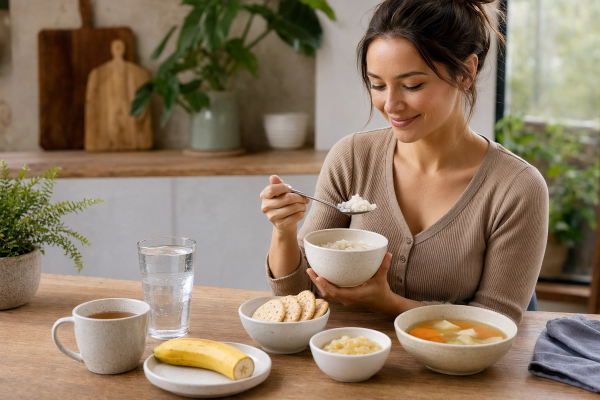
#For a short trip, think in patterns rather than strict meal plans. Day one, protect breakfast and water because travel days are where routines disappear. Day two, add produce early instead of waiting until dinner. Day three, check whether you’ve had enough fluids, movement, and bathroom time. A sample pattern could be oats, banana, and water in the morning, dal or beans with rice and vegetables at lunch, fruit or roasted chana as a snack, and a dinner that includes cooked vegetables or whole grains. Another version could be curd with fruit, whole grain toast, nuts, soup, and a normal local dinner. If local food is the highlight of the trip, enjoy it, then add supporting foods around it. The gut usually does better with steady nudges than with one dramatic “healthy” meal after two days of ignoring it.
The Bottom Line: Be Kind to Your Gut, and to Yourself
#Travel constipation is common, uncomfortable, and usually very human. Fiber-rich foods and steady fluids may help support regularity, but they work best when added gently and paired with movement, routine, and not delaying bathroom urges. Pack a few reliable foods, drink regularly, include fruits or vegetables when you can, and avoid turning travel eating into a stress project. If constipation is severe, persistent, painful, new for you, or comes with warning signs like blood, vomiting, fever, weight loss, or inability to pass gas, get medical care. For everyday travel planning, the best checklist is the one you’ll actually use: water, breakfast, fruit, fiber snack, movement, bathroom time. Simple, not glamorous, but useful. For more practical, food-first travel and wellness guides, have a look around AllBlogs.in.