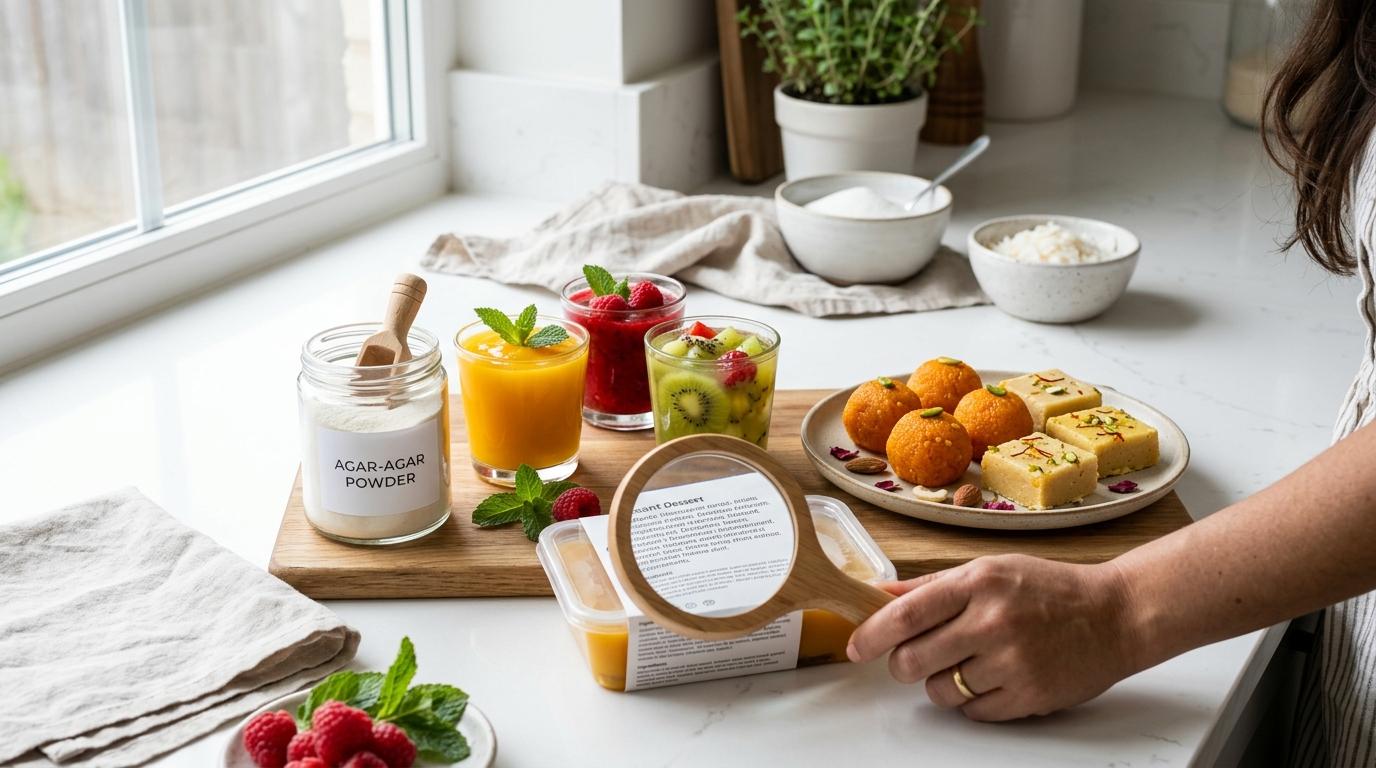
If you are vegetarian in India, you probably already know the routine: turn the packet around, look for the green dot, scan the ingredients, and then decide.
But one ingredient still confuses many people: gelatin.
You may find it in jelly mixes, gummy candies, marshmallows, cheesecakes, mousse cups, bakery glazes, imported chocolates, frozen desserts, and even capsule shells. It sounds harmless, but for vegetarians, it is an ingredient worth checking carefully.
So, Is Gelatin Vegetarian in India?
#No. Regular gelatin is not vegetarian.
Gelatin is made from animal collagen, which is usually obtained from the skin, bones, tendons, or ligaments of animals such as cows, pigs, or fish. So if a food label simply says “gelatin”, it should be treated as non-vegetarian unless the brand clearly says it is a vegetarian substitute.
Vegetarian alternatives include:
- Agar-agar
- Pectin
- INS 440
- Carrageenan
- Clearly labelled vegetarian gelling agents
- Some products sold as veg gelatin powder
The important thing to remember is this: true gelatin is animal-derived. “Veg gelatin” is usually not gelatin at all, but a plant-based substitute that performs a similar job.
Quick guide:
- Gelatin: Non-vegetarian, animal-derived
- Agar-agar: Vegetarian, made from seaweed
- Pectin / INS 440: Vegetarian, fruit-derived
- Veg gelatin powder: Usually vegetarian, but always check the ingredients
- Capsule gelatin: Often animal-derived unless labelled vegetarian
Also, don’t rely on memory. Brands change recipes, suppliers, and packaging from time to time. Even if you bought a product earlier, it is still a good idea to check the current label.
Gelatin Veg or Non-Veg: Why Do People Get Confused?
#A lot of people search for “gelatin veg or non veg”, and the short answer is simple: gelatin is non-veg.
The confusion starts because gelatin is used in many foods that do not look “non-veg” at all. A fruit jelly, a shiny cake topping, or a strawberry mousse may look completely vegetarian, but the setting agent inside could still be animal gelatin.
Gelatin is commonly used because it gives food a soft, smooth, wobbly, or chewy texture. You may find it in:
- Jellies
- Gummies
- Marshmallows
- Mousse
- Panna cotta
- Cheesecakes
- Mirror glaze cakes
- Fruit jelly toppings
- Some frozen desserts
- Soft-gel capsules
Another reason for confusion is the term “veg gelatin powder.” Many shops and online sellers use this phrase for vegetarian substitutes made from agar-agar, carrageenan, or similar ingredients. That is why the name can be misleading.
A good rule is:
If the ingredient list says only “gelatin,” assume it is non-vegetarian.
If it says agar-agar, pectin, INS 440, vegetarian gelling agent, china grass, or plant-based stabilizer, it is more likely to be vegetarian. Still, read the complete label because one vegetarian ingredient does not automatically make the whole product vegetarian.
How to Use the Green Dot and Brown Dot in India
#In India, packaged foods usually carry vegetarian and non-vegetarian symbols. These are very helpful, especially when buying sweets, snacks, jellies, chocolates, desserts, and bakery items.
What the symbols mean
#- Green dot / green veg symbol: The product is vegetarian.
- Brown non-veg symbol: The product contains non-vegetarian ingredients.
For most Indian vegetarians, the green dot is the first and fastest check. But it should not be the only check, especially if you are strict about ingredients.
Why? Because sometimes labels use broad words like “stabilizer,” “gelling agent,” or “thickener.” Sometimes imported products follow different labelling styles. Sometimes recipes change. And sometimes the front of the pack looks vegetarian, but the ingredient list tells a different story.
Better way to check a label
#When buying packaged food, do this:
- Look for the green vegetarian symbol.
- Read the ingredient list.
- Search specifically for the word gelatin.
- Look for vegetarian alternatives like agar-agar, pectin, or INS 440.
- If the label is unclear, avoid it or contact the brand.
If a product has a green symbol but the ingredients mention gelatin, do not ignore it. It may need clarification from the manufacturer. For strict vegetarians, the safest approach is to ask or choose another product.
Where Gelatin May Be Found in India
#Traditional Indian food is usually quite vegetarian-friendly. Most mithai does not need gelatin because it sets or holds shape through milk solids, ghee, sugar syrup, flour, nuts, khoya, chhena, or slow cooking.
The bigger risk is usually with packaged desserts, imported sweets, modern bakery items, fusion mithai, and Western-style desserts.
1. Traditional Indian Sweets
#Most traditional Indian sweets are generally made without gelatin.
Examples include:
- Laddu
- Jalebi
- Gulab jamun
- Kaju katli
- Sandesh
- Besan barfi
- Mysore pak
- Peda
- Rasgulla
- Soan papdi
These sweets are usually made with ingredients like milk, khoya, chhena, ghee, besan, nuts, sugar, flour, and syrup.
That said, it is still worth asking if you are buying from a large commercial chain, a packaged brand, or a shop selling fusion sweets. Modern versions may include jelly layers, glaze, fillings, stabilizers, or decorative toppings.
If the sweet looks traditional, it is usually safer. If it looks like a cake, mousse, jelly, or fancy refrigerated dessert, ask once.
2. Fusion Sweets and Modern Desserts
#This is where vegetarian buyers need to be more alert.
Gelatin is more likely to appear in:
- Mousse cups
- Panna cotta
- No-bake cheesecakes
- Creamy layered desserts
- Jelly-topped cakes
- Mirror glaze cakes
- Marshmallow-based sweets
- Gummy candies
- Fruit jellies
- Refrigerated dessert cups
One common mistake is assuming “eggless” means fully vegetarian. It does not always.
A cake or dessert can be eggless and still contain animal gelatin. This is especially common in mousses, cheesecakes, jelly toppings, and glossy glazes.
If you are buying such desserts, ask clearly:
“Does this contain animal gelatin, or is it made with agar-agar or another vegetarian gelling agent?”
It may feel like a small detail, but it makes a big difference if you are vegetarian.
3. Bakery Items
#Most plain cakes, biscuits, breads, and regular bakery snacks do not need gelatin. But gelatin may be used in bakery products that need a set, glossy, creamy, or jelly-like texture.
Be careful with:
- Cheesecakes
- Mousse cakes
- Cream cakes with jelly layers
- Mirror glaze cakes
- Fruit tarts with glaze
- Marshmallow toppings
- Imported cake fillings
- Dessert mixes
At bakeries, don’t just ask whether something is eggless. Ask whether it is gelatin-free too.
Good questions to ask:
- “Is this cake eggless and gelatin-free?”
- “Is the mousse made with gelatin?”
- “Is the glaze made with agar-agar or gelatin?”
- “Is this suitable for vegetarians?”
A good bakery should be able to check with the kitchen or ingredient supplier.
4. Packaged Jellies, Gummies, and Dessert Mixes
#This is one of the most common places where gelatin may appear.
Check the labels of:
- Jelly crystals
- Jelly cups
- Gummy bears
- Chewy fruit candies
- Marshmallows
- Pudding mixes
- Dessert topping mixes
- Imported candies
Some brands use gelatin. Others use vegetarian gelling agents. The front of the packet may not tell you much, so always check the back.
Look for words like:
- Gelatin
- Gelling agent
- Stabilizer
- Agar-agar
- Pectin
- INS 440
- Carrageenan
If you see only “gelatin,” strict vegetarians should avoid it.
5. Ice Creams, Yogurts, and Frozen Desserts
#Many dairy and frozen dessert products use stabilizers or thickeners. Most of these are vegetarian, but gelatin can be used in some products.
Check labels for:
- Gelatin
- Stabilizers
- Gelling agents
- Thickening agents
- Emulsifiers
If the product has a green dot and the stabilizers are clearly plant-based, it may be fine for vegetarians. But if gelatin is listed, avoid it unless the company clearly confirms that it is a vegetarian substitute.
6. Capsules, Vitamins, and Supplements
#Gelatin is not only used in food. It is also commonly used in capsule shells, especially soft-gel capsules.
This matters if you are checking medicines, vitamins, fish oil alternatives, supplements, or nutraceutical products.
Look for:
- Gelatin
- Soft gelatin capsule
- Capsule shell
- Vegetarian capsule
- HPMC
- Cellulose
Vegetarian capsules are often made from HPMC or cellulose. If the packaging is unclear, ask the pharmacist or contact the manufacturer.
For medicines prescribed by a doctor, do not stop taking them on your own. If gelatin is a concern, speak to your doctor or pharmacist about vegetarian alternatives.
Agar-Agar vs Gelatin: What Is the Difference?
#For home cooking and baking, the most common comparison is agar-agar vs gelatin.
Gelatin
#- Made from animal collagen
- Non-vegetarian
- Gives a soft, elastic, wobbly texture
- Common in jellies, mousse, marshmallows, gummies, and capsules
- Melts smoothly in the mouth
Agar-agar
#- Made from seaweed
- Vegetarian and vegan
- Also called china grass in India
- Sets more firmly than gelatin
- Common in puddings, jellies, falooda-style desserts, and vegetarian cheesecakes
Agar-agar is a very useful vegetarian substitute, but it does not behave exactly like gelatin. It usually gives a firmer, cleaner set and less bounce. So if you replace gelatin with agar-agar in a recipe, the texture may change a little.
Still, for vegetarian desserts, agar-agar is one of the easiest and most widely available options in India.
Vegetarian Gelatin Alternatives to Look For
#If you want to avoid animal gelatin, these are the main alternatives you should know.
1. Agar-Agar
#Agar-agar is one of the most popular vegetarian setting agents in India. It is sold as powder, strips, flakes, and sometimes as china grass.
You may see it labelled as:
- Agar-agar
- Agar
- China grass
- Vegetarian gelling agent
It works well in:
- Jellies
- Puddings
- Custards
- Falooda-style desserts
- No-bake cheesecakes
- Vegetarian mousse-style desserts
Agar-agar needs to be heated properly to dissolve and activate. Once it sets, it is usually firmer than gelatin.
2. Pectin / INS 440
#Pectin is a plant-based gelling agent found naturally in fruits, especially apples and citrus peels.
On labels, it may appear as:
- Pectin
- INS 440
- E440
Pectin is commonly used in:
- Jams
- Marmalades
- Fruit jellies
- Fruit-based sweets
- Some candies
Pectin itself is vegetarian.
3. Carrageenan
#Carrageenan is made from seaweed and is used as a thickener, stabilizer, or gelling agent in some foods.
You may find it in:
- Dairy products
- Plant-based desserts
- Jellies
- Some vegetarian confectionery
- Ice creams and frozen desserts
Carrageenan is vegetarian, but as always, check the full ingredient list of the product.
4. Other Vegetarian Thickeners and Stabilizers
#Some products use plant-based gums, starches, or stabilizers. These may include ingredients such as guar gum, xanthan gum, locust bean gum, starch, modified starch, or cellulose-based ingredients.
These are usually used for thickness and texture rather than a firm jelly-like set.
If you are strict vegetarian, don’t guess. Look for the green symbol, read the full ingredient list, and choose products that clearly mention vegetarian ingredients.
Shopping Checklist for Vegetarians
#Use this quick checklist when buying packaged foods, sweets, bakery items, desserts, or supplements.
At the grocery store
#- Check for the green vegetarian symbol.
- Read the ingredient list carefully.
- Avoid products that simply say gelatin.
- Prefer products with agar-agar, pectin, INS 440, or clearly vegetarian gelling agents.
- Be extra careful with imported candies, gummies, marshmallows, jelly cups, and dessert mixes.
- Recheck labels even for products you have bought before.
At sweet shops
#- Traditional mithai is usually safer.
- Ask about jelly, glaze, cream layers, and modern fillings.
- Be more careful with fusion mithai and refrigerated desserts.
- Ask whether any setting agent is used.
- If the staff is unsure, choose a simpler sweet.
At bakeries
#Ask direct questions such as:
- “Is this cheesecake gelatin-free?”
- “Do you use animal gelatin in this mousse?”
- “Is the jelly topping made with agar-agar or gelatin?”
- “Is this suitable for vegetarians?”
- “Can you confirm with the kitchen?”
Remember: eggless does not always mean gelatin-free.
At restaurants and hotels
#Be careful with buffet desserts and Western-style sweets, especially:
- Panna cotta
- Mousse
- Cheesecake
- Jelly desserts
- Marshmallow toppings
- Set custards
- Glossy fruit tarts
- Mirror glaze cakes
If you are unsure, ask the staff to check with the kitchen. Servers may not always know the exact ingredients, so it is better to ask them to confirm.
For capsules and supplements
#- Check whether the capsule shell contains gelatin.
- Look for vegetarian capsule labels.
- Search for HPMC or cellulose capsules.
- Ask a pharmacist if the label is unclear.
- For prescribed medicines, ask your doctor before changing anything.
Quick Bottom Line
#So, is gelatin vegetarian in India? No. Regular gelatin is not vegetarian because it is made from animal collagen.
If you are vegetarian, the safest habit is simple:
Check the green dot, read the ingredient list, and watch for the word “gelatin.”
Be especially careful with:
- Jellies
- Gummies
- Marshmallows
- Cheesecakes
- Mousses
- Bakery glazes
- Mirror glaze cakes
- Frozen desserts
- Imported sweets
- Soft-gel capsules
For vegetarian options, look for agar-agar, pectin, INS 440, china grass, or clearly labelled vegetarian gelling agents.