Japan or South Korea for your first trip? My very desi answer after doing both
#This Japan vs South Korea travel question comes up a LOT in my inbox, especially from Indian travellers planning their first proper East Asia trip. And honestly, I get the confusion. Japan has that clean-train, anime, sushi, cherry blossom, Kyoto-temple dream vibe. South Korea has Seoul cafés, K-drama streets, skincare shopping, street food, Busan beaches, and that “arre this feels modern but also emotional” feeling. Both are safe, both are exciting, both are not exactly cheap-cheap like Thailand or Vietnam, and both can make you feel like you have landed inside another universe.
I travelled to Japan first, then South Korea later, and if you ask me today which one is better for a first trip from India, my answer is slightly annoying: it depends on your travel personality. But if you want the short version, South Korea is easier and usually more budget-friendly for a first East Asia trip. Japan is more magical, more layered, and more “once in a lifetime” feeling, but it needs more planning, more walking, more money, and a bit more patience. Not scary planning, but you can’t just land and wing it like Goa. Well, you can, but then your wallet will cry.
If you’re still comparing Asia trips in general, btw, I had the same mental fight while looking at Sri Lanka and Vietnam too. This guide on Sri Lanka vs Vietnam: Which First Trip Is Better? is useful if your bigger question is “which country should be my first international trip?” rather than only Japan vs Korea.
Quick comparison: Japan vs South Korea for Indian travellers
#| Factor | Japan | South Korea | My honest take |
|---|---|---|---|
| Visa for Indians | Indian passport holders generally need a tourist visa. Japan also introduced an eVISA route for Indian residents in 2024, but process and eligibility should be checked before booking. | Indian passport holders generally need a visa before travel through the official visa application route. | Both need paperwork. Korea felt a little simpler to understand, Japan felt more documentation-heavy. |
| Typical trip length | 7 to 10 days minimum feels right for Tokyo, Kyoto, Osaka. | 5 to 8 days works well for Seoul plus Busan or Jeju if planned properly. | Korea is easier for a short leave from office. |
| Budget style | Higher daily cost, especially transport and hotels. | Slightly cheaper overall, especially food and city transport. | Korea wins for budget, unless you are very disciplined in Japan. |
| Food for Indians | Amazing, but vegetarian options need planning. Convenience stores are lifesavers. | Street food and cafés are great, but veg and seafood-free food can still be tricky. | Non-veg travellers will enjoy both. Vegetarians need homework in both. |
| Transport | World-class trains, but can feel confusing on day one. | Metro and buses are excellent, more app-friendly once you understand the system. | Japan is better, Korea is easier. |
| First-time comfort | Polite, safe, super organised, but language can feel intimidating. | Safe, social, fast, fashionable, and a bit more casual. | Korea felt less overwhelming to me. |
| Wow factor | Very high. Temples, trains, food, culture, landscapes, everything. | High in a modern-cool way. Seoul energy is addictive. | Japan wins for dream-trip feeling. Korea wins for easy fun. |
Visa, flights, and the boring stuff we Indians actually need to know
#Let’s start with the practical headache. For Indian citizens, both Japan and South Korea are not visa-free holiday destinations in the normal tourist sense. You need to apply before you go, and you should always check the latest rules on the official embassy or visa centre pages because these things change quietly and then suddenly one WhatsApp group is full of panic. Japan has had an eVISA option for Indian residents since 2024, but don’t assume it means “instant visa”. You still need documents, itinerary, proof of funds, flights or hotel details depending on the application requirement, and proper planning. South Korea also usually needs bank statements, employment proof or business documents, itinerary, photos, passport copies, the usual adulting drama.
Flights from India are another big factor. Delhi, Mumbai, Bengaluru, Chennai, Hyderabad and Kolkata travellers usually find one-stop options via Singapore, Bangkok, Kuala Lumpur, Hong Kong, Vietnam, or the Gulf, depending on airline routes and season. Direct flights can exist on some routes and periods, but they are not always cheap or convenient, so don’t build your whole plan around “direct only”. For Japan, Tokyo and Osaka are the usual entry points. For Korea, Seoul Incheon is the main gateway and it is honestly one of the smoothest airports I’ve used. Immigration was calm, signs were clear, and I didn’t get that lost-new-country anxiety which I got in Tokyo for the first one hour.
The first feeling: Japan feels like a film, Korea feels like a friend’s cool neighbourhood
#Japan hit me like a proper cinematic moment. The first time I stepped out near Shinjuku, I just stood there looking at the crossings, the lights, the vending machines, the people walking with such purpose. It was busy but not messy. Coming from India, where traffic has its own emotional soundtrack, Japan felt almost too disciplined. Like even the chaos had a timetable. I loved it, but I was also constantly aware of rules. Stand this side. Don’t talk loudly. Don’t eat while walking in some places. Keep your ticket. Queue properly. I mean, all good rules, but first day I was like, bhai please let me breathe.
South Korea, especially Seoul, felt more relaxed to me. Still super organised, still safe, still fast, but less silent. People talk in cafés, students laugh in the metro, aunties bargain in markets, fashion kids are doing full runway looks near Hongdae, and some uncle is loudly enjoying soju with fried chicken at 10 pm. It felt closer to city life we understand in India, only cleaner and more efficient. If Japan is a beautifully folded origami paper, Korea is a stylish tote bag with snacks, lipstick, metro card, and emotional K-drama playlist inside. Weird comparison, but you get me.
Budget reality: which country is cheaper for a first trip?
#For a budget Indian traveller, South Korea usually comes out cheaper. Not dramatically cheap, but enough that you feel it. In Japan, a simple business hotel in Tokyo or Kyoto can easily be around ¥8,000 to ¥18,000 per night for a small room, sometimes more in peak seasons like cherry blossom or autumn foliage. Hostels and capsule hotels can be around ¥3,000 to ¥6,000 per bed, but if you’re travelling as a couple or family, capsule hotels are not always practical. In Korea, Seoul hostels and guesthouses can start around ₩25,000 to ₩50,000 per bed, while decent hotels often sit around ₩80,000 to ₩180,000 per night depending on area and season. INR conversions keep changing, so I won’t pretend one fixed number is forever, but Korea gave me more room for the same money.
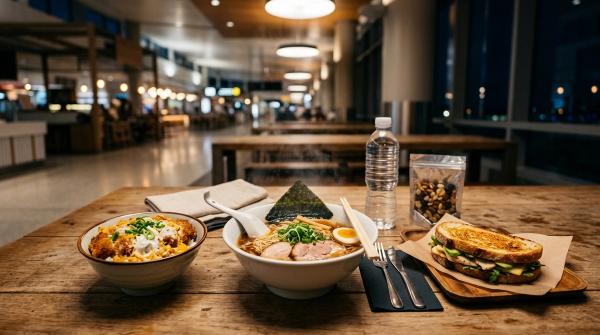
Food also affects the budget. In Japan, convenience store meals are brilliant and actually tasty. Onigiri, sandwiches, egg salad, coffee, bento boxes, desserts... I became a FamilyMart person very quickly, no shame. A basic ramen or curry meal can be reasonable, but sit-down restaurants add up. In Korea, street snacks, kimbap, convenience store meals, local canteens, and cafés make it easier to eat without spending too much. But then Seoul shopping attacks you. Skincare, cute socks, stationery, Olive Young, pop-up stores... you go in for lip balm and come out with a bag that looks like you are opening a small shop in India.
Transport: Japan is perfect, Korea is friendlier on the brain
#Japan’s transport is probably the best I’ve seen. Trains are clean, punctual, and connected to almost everything. But for a first timer, Tokyo station names, multiple rail companies, platform changes, and ticket systems can feel like a puzzle your school teacher forgot to explain. You will figure it out, don’t worry. Google Maps works well, station staff are helpful even with language gaps, and IC cards like Suica or Pasmo make local travel easier where available. Long-distance bullet trains are expensive but fantastic. The Shinkansen experience from Tokyo to Kyoto or Osaka is one of those things I still think about randomly while stuck in Indian traffic.
Korea’s metro, especially Seoul, felt more straightforward after the first ride. T-money card, numbered exits, good signage, buses that actually make sense after a day or two, and affordable fares. Seoul is huge, though. Don’t underestimate distances. You may look at two neighbourhoods on the map and think “near only”, then spend 45 minutes underground like a mole. Busan also has a good metro, and trains between Seoul and Busan are fast and comfortable. For staying connected, both countries are app-heavy, and Japan especially becomes ten times easier with data from the airport itself. If you are confused between rental Wi-Fi and SIM options, this Japan-specific guide on Japan eSIM vs Pocket Wi‑Fi: Best Choice for Travelers explains the exact kind of thing I wish I had read before landing.
Food: amazing, confusing, and sometimes vegetarian people will suffer a bit
#If you eat chicken, fish, egg, seafood, pork, beef, both countries are food heaven. Japan gave me ramen, sushi, udon, tempura, okonomiyaki in Osaka, fluffy pancakes, matcha desserts, and convenience store snacks that honestly deserve their own fan club. Korea gave me tteokbokki, hotteok, Korean fried chicken, bibimbap, kimbap, jjigae, BBQ, café cakes, strawberry milk, and those ridiculous cheese coin breads that tourists keep buying because, yes, they are fun.
But if you are vegetarian, Jain, or strict about no fish sauce, no broth, no egg, then please plan. In Japan, even “vegetable” dishes may have dashi, which is fish-based stock. In Korea, kimchi can contain fish sauce or shrimp paste, soups may have anchovy broth, and street food vendors may not understand vegetarian in the Indian way. I travelled once with a vegetarian friend in Seoul and we spent one evening reading labels using translation apps like we were solving a murder mystery. Indian restaurants exist in Tokyo, Osaka, Kyoto, Seoul and Busan, but they are not always near your hotel and can be expensive. Best trick? Save vegetarian-friendly places on maps before you go, carry some theplas or ready snacks for emergency, and don’t be shy to use translation cards. Also, 7-Eleven coffee and banana milk have saved many emotional breakdowns, I’m telling you.
Where to stay: location can make or break both trips
#Please don’t choose the cheapest hotel sitting far away from the metro. I made this mistake in Japan for two nights because the hotel looked “only 20 minutes from city centre” on the booking site. What they didn’t mention clearly was 12 minutes walking to station, one train change, then another walk, and after a full day of walking 25,000 steps, that last 12 minutes felt like Kedarnath trek. In Japan, stay near a major station or at least a direct metro line. Tokyo areas like Ueno, Asakusa, Shinjuku, Shibuya, Ginza, Tokyo Station side, or Ikebukuro work depending on budget. Kyoto is better near Kyoto Station, Kawaramachi, or Gion if you want evening walks. Osaka around Namba, Umeda, or Shin-Osaka can be practical.
In Seoul, I liked staying around Myeongdong for a first trip because it is central, easy for shopping and airport access, though touristy. Hongdae is younger and fun, Insadong is cultural, Gangnam is stylish but not always convenient for every sightseeing plan. In Busan, Seomyeon is practical, Haeundae is beachy, Nampo is good for markets. Before booking, I now follow one rule: central to my itinerary, not central to the city. This Hotel Location Checklist: How to Choose Where to Stay Before You Book AllBlogs category. Travel & Adventure Region scope: Global evergreen / Region-neutral / India-specific / Destination-specific. Global evergreen Why this scope was chosen. Hotel-location decisions apply globally and should not be narrowed to India. Search intent. Informational / travel planning Primary keyword. how to choose hotel location Natural search queries people may use. how to choose where to stay what to check before booking a hotel best hotel location for tourists Long-tail keywords. hotel location checklist before booking how to choose a hotel near public transport hotel area safety and convenience checklist SEO meta title. Hotel Location Checklist: Choose Where to Stay Smartly SEO meta description. Learn how to choose the best hotel location by checking transport, safety, noise, food access, airport transfers and total trip cost. Suggested URL slug. hotel-location-checklist-choose-where-to-stay Short description. A decision checklist that helps travelers avoid cheap hotels that cost more in time, taxis, stress, and poor sleep. Why this topic today. GSC shows travel planning and hotel/stay-related pages getting traction; Sanity has sleep/quiet hotel guides but not a full location decision checklist. GSC signal or adjacent GSC signal. Adjacent to hotel breakfast, refundable hotel booking, sleep tourism, quiet travel, and airport-to-city transfer signals. Why this fits AllBlogs. It is evergreen, practical, and useful for broad modern-living travel planning. Why this is not duplicate or cannibalizing. Existing hotel posts focus on sleep, food, refunds, or safety; this focuses on location choice before booking. Adjacent expansion reason. Expands from hotel comfort to pre-booking trip-friction prevention. Novelty score: High Cannibalization risk: Low AI SEO / AEO / GEO angle. Can win AI answers with a “map-check framework” and “central to your trip, not central to the city” decision model. CTR hook. “A cheap hotel can become expensive twice a day.” Demand signal. Web validation shows recent and evergreen search coverage for hotel-location decision checklists, and travel sites advise checking maps, walkability, transit, and points of interest before booking. is a bit long-titled, haan, but the logic is solid. A cheap hotel can become expensive twice a day.
Sightseeing style: Japan is slow beauty, Korea is fast energy
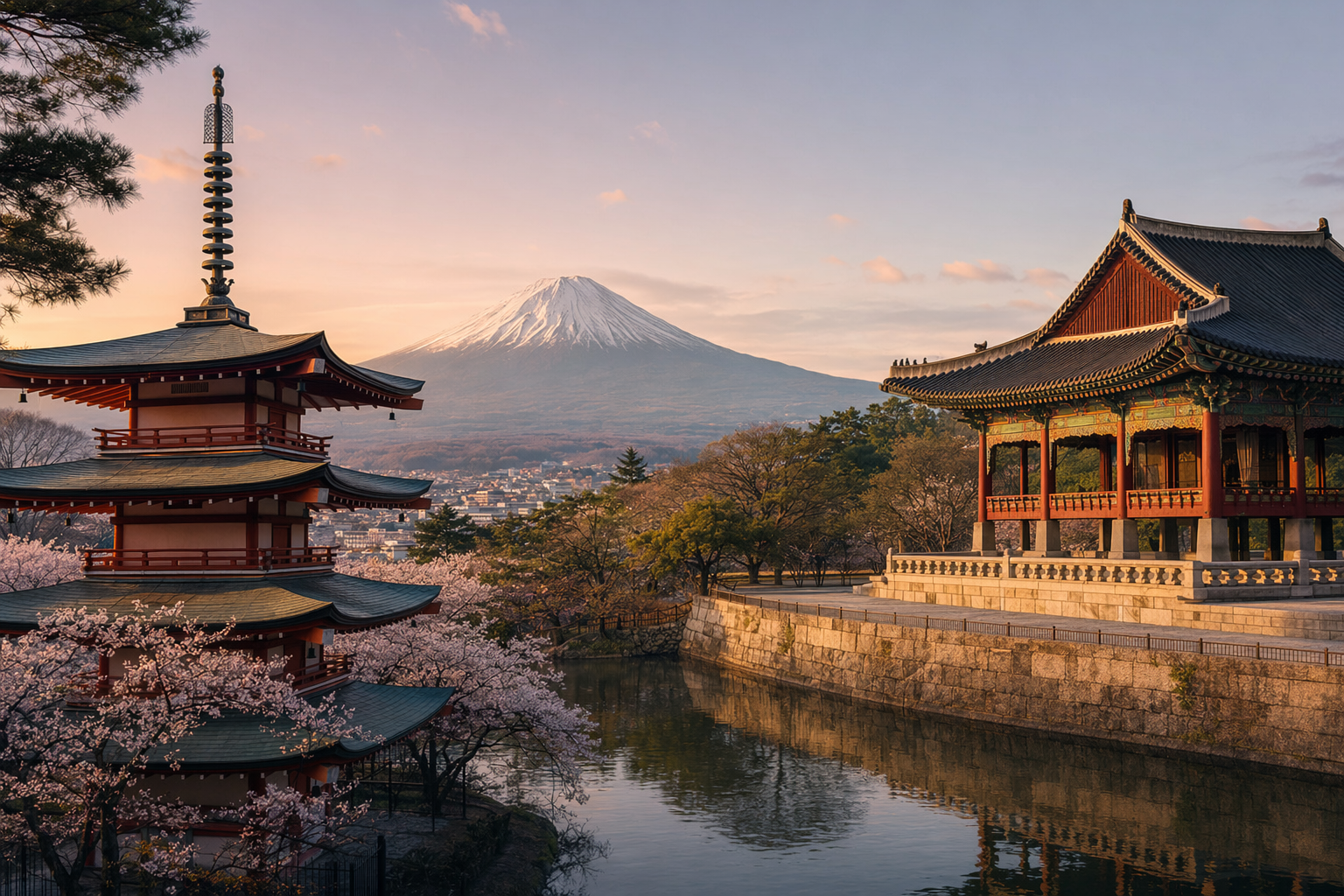
#Japan rewards slow travel. Yes, Tokyo has big city energy, but the best Japan moments are often quiet ones. A shrine lane in Kyoto early morning. A tiny ramen shop with six seats. A train passing near a mountain town. A department store basement full of food you can’t even identify but want to eat. Nara deer being cute and also slightly mafia-like if you have crackers. Osaka people laughing loudly compared to Tokyo. Japan’s famous route for first timers is Tokyo, Kyoto, Osaka, maybe Nara or Hiroshima if you have more days. Add Mt Fuji area like Kawaguchiko if weather is clear and you want that postcard view.
South Korea is more compact for classic sightseeing. Seoul alone can fill 4 to 5 days easily: Gyeongbokgung Palace with hanbok rental, Bukchon Hanok Village, Insadong, Myeongdong, Namsan Tower, Hongdae, Seongsu cafés, Dongdaemun, Han River picnic, plus maybe a DMZ tour if it is operating and you are interested in history. Busan gives a different mood with Gamcheon Culture Village, Haeundae, Gwangalli Bridge views, seafood markets, temple by the sea, and coastal walks. If Japan is like reading a beautiful long novel, Korea is like binge-watching a very good series. You keep saying one more episode.
Seasons: please don’t ignore weather, it changes everything
#For Japan, spring cherry blossom season around late March to early April is famous, but exact timing changes by region and weather. It is beautiful, no doubt, but also crowded and hotel prices jump like crazy. Autumn, especially around November in many popular areas, is my favourite because the red and yellow leaves are unreal and the weather is comfortable. Summer can be hot, humid, and tiring, especially if you are walking all day. Typhoons can affect travel in late summer and autumn, so keep buffer time. Winter is lovely if you want snow in Hokkaido or the Japanese Alps, but cities can be cold and days are short.
For South Korea, April to May and October to November are very pleasant for first timers. Spring has blossoms and pretty parks, autumn has golden ginkgo trees and crisp air. Summer in Korea can be humid and rainy, with monsoon-like conditions around mid-year, so pack accordingly. Winter is proper cold, like your Delhi winter jacket may not be enough if the wind decides to slap you. But winter also brings Christmas lights, ski resorts, warm street food, and that romantic K-drama look where everyone is wearing long coats and somehow not shivering like us.
Safety and comfort: both are safe, but different safe
#As an Indian traveller, I felt safe in both countries, even at night in busy areas. Japan is extremely orderly and low on petty theft compared to many tourist destinations, though obviously don’t become careless. Korea also felt safe, especially in Seoul and Busan, and I saw many women travelling solo, taking late metros, sitting in cafés alone. But safe doesn’t mean zero risk. Keep your passport safe, watch your drink, avoid empty lanes very late, follow local emergency alerts, and don’t ignore weather warnings.
Japan has earthquakes, and hotels often have safety instructions. Don’t panic, just read what to do. Korea has occasional public demonstrations, especially in Seoul, but they are usually organised and easy to avoid if you don’t want crowds. Both countries are clean, but Japan takes public behaviour more seriously. Don’t be loud on trains, don’t litter, don’t block escalators, and please don’t do that tourist thing of filming people too closely. Korea is also etiquette-conscious, but it felt a little more forgiving when I messed up small things.
Shopping, pop culture, and those extra experiences everyone wants now
#Japan is unbeatable for anime, gaming, stationery, kitchen knives, matcha, vintage finds, Uniqlo, Muji, Don Quijote madness, character cafés, Ghibli-related experiences, and theme parks like Universal Studios Japan or Tokyo Disney Resort. But many popular attractions need advance booking, especially limited exhibitions, museums, and theme park passes. Don’t assume you can just turn up everywhere. I learnt this the sad way when one attraction was fully booked and I stood outside pretending I didn’t care. I cared.
Korea is currently very strong for beauty shopping, K-pop related spots, photo booths, cafés, fashion, personal colour analysis, hair and skin clinics, and pop-up stores around Seongsu, Hongdae and Gangnam. Some travellers also book cooking classes, perfume-making, hanbok photoshoots, and K-pop dance classes. It can feel very social-media friendly, but not in a fake way always. Seoul genuinely has nice design everywhere. Even a small café looks like someone spent six months deciding the chair angle. For Indian shoppers, Korea is dangerous because products feel affordable one by one, then your final card bill looks like a medical report.
Language: Japan is more polite silence, Korea is more app-and-smile
#English is not something you should depend on heavily in either country, though tourist areas are manageable. In Japan, people are very helpful but may hesitate if they don’t speak English. They’ll still try, sometimes with gestures, maps, or walking you halfway to the place, which is honestly sweet. In Korea, younger people in Seoul often understand some English, but not always. Translation apps are your best friend in both places. Learn basic words: hello, thank you, excuse me, sorry. It changes the mood instantly.
One thing I noticed as an Indian is that both countries value quiet public behaviour more than we’re used to. We are expressive people, boss. We discuss everything loudly, from train timing to who packed the charger. In Japan, I became very conscious of my volume. In Korea, I relaxed a bit, but still, metros are not the place for full family conference call. Also, cash is still useful in Japan, though cards are widely accepted in cities. Korea is very card-friendly, but having some cash helps for markets and small places. UPI won’t save you here, so carry forex card, international card, and some local currency.
Lesser-known places I’d add if you hate only doing tourist spots
#In Japan, if you have time beyond Tokyo-Kyoto-Osaka, look at Kanazawa for gardens and old districts, Kamakura for temples and seaside day-trip vibes from Tokyo, Okayama and Kurashiki for a calmer old-town feel, or Kobe if you want an easy add-on from Osaka. Even within Tokyo, places like Yanaka, Kichijoji, Daikanyama, or Shimokitazawa feel more local than only Shibuya crossing and Tokyo Tower. Kyoto also becomes much better if you wake up early and don’t only go where every Instagram reel sends you at 11 am.
In South Korea, Seoul has so many neighbourhoods beyond Myeongdong. Seongsu is trendy, Mangwon has market and local food energy, Ikseon-dong is pretty and slightly touristy but still nice, Euljiro has old-school alleys with hidden bars and eateries, and Yeonnam-dong is lovely for walking. Busan’s coastal walks are underrated if weather is good. Gyeongju is beautiful for history and feels like Korea’s open-air museum in parts. Jeonju is great for hanok stays and food if your itinerary allows it. Korea is not only Seoul, though Seoul will behave like it is the main character.
So, which first trip is better for YOU?
#- Choose South Korea first if your leave is short, your budget is controlled, you love cafés, shopping, K-dramas, skincare, nightlife, easy city travel, and you want a softer landing into East Asia.
- Choose Japan first if this is your dream destination, you love trains, temples, design, anime, food culture, history, theme parks, and you don’t mind spending more for a richer, slower experience.
- Choose Korea first if you are travelling with friends and want fun, photos, food, shopping, and a trip that doesn’t need too much intercity complexity.
- Choose Japan first if you are travelling as a couple or solo and want that deep travel feeling, where even a vending machine in a quiet lane feels interesting. Sounds dramatic, but Japan does that.
- For families with parents, I’d pick Korea if they prefer easier food flexibility and less walking intensity. I’d pick Japan if they are okay with walking, trains, and have interest in culture, gardens, and organised sightseeing.
My final verdict, no diplomatic nonsense
#If someone from India asks me “Japan or South Korea, first international-ish big trip, what should I do?” I usually say: go to South Korea first if you want easier, cheaper, fun and modern. Go to Japan first if your heart has been stuck there for years and you are ready to plan properly. Japan is the better destination in a grand, unforgettable way. South Korea is the better first trip in a practical, comfortable way. See, contradiction only, but travel is like that.
For me, Japan stayed in my mind longer. The quiet streets, the train sounds, the old temples, the food halls, the way everything worked with such care. But Korea made me feel more relaxed and less like I was constantly trying to “do it correctly”. I enjoyed Seoul like I enjoy a city I could maybe live in for a month. Japan felt like a place I wanted to understand slowly over many trips. So if this is your first East Asia holiday and you’re nervous, pick Korea. If this is your dream and you’ve saved for it, pick Japan and don’t overthink.
Either way, don’t rush. Don’t pack 8 cities in 7 days because some reel said “ultimate itinerary”. Eat slowly, sit in parks, get lost near stations, buy random snacks, and leave space for the place to surprise you. That’s where the real trip happens, not only in the checklist. And if you want more practical travel comparisons and planning stories with an Indian point of view, keep browsing AllBlogs.in — I keep finding genuinely useful stuff there before my own trips too.