The seeds I used to throw away, and then felt slightly stupid about
#Every summer, my kitchen has this one smell that makes me feel like I’m 11 again: chilled kharbuja cut into thick orange-ish wedges, a little sticky juice running down the plate, and someone in the family yelling from the other room, “Don’t throw the seeds!” I ignored that advice for years. Honestly, I thought kharbuja seeds were just wet, slippery waste. The fruit was the main event, the seeds were the annoying part you scraped out with a spoon. Then one afternoon at my nani’s house, she collected the seeds from two muskmelons, washed them in a steel bowl, and spread them on an old newspaper near the window like she was drying some precious spice. I remember thinking, okay, this is either genius or very old-school frugal aunty behavior. Turns out, it was both. Kharbuja seeds, also called muskmelon seeds or magaz in some Indian kitchens when dried and peeled, are totally edible when handled properly. You can eat them, roast them, blend them, sprinkle them, even turn them into that creamy paste that makes gravies taste like you secretly hired a wedding caterer.
But, and this is the part people skip in those quick kitchen reels, they need a bit of care. Fresh kharbuja seeds are wet, wrapped in fruit pulp, and basically sitting in sugar-water. That means they can spoil if you just leave them in a dabba on the counter and forget about them. Ask me how I know. I once saved a bowl of seeds after a Sunday lunch, got distracted by a bad movie and two cups of chai, and the next morning they had that weird sour smell. Not dramatic rotten, but enough to make my stomach say no thanks. So yes, kharbuja seeds are edible. Yes, roasted kharbuja seeds can be delicious. But safe? Only if you clean, dry, store, and roast them properly. Food is joy, but food poisoning is not a vibe.
So, can you eat kharbuja seeds or not?
#Short answer: yes, you can eat kharbuja seeds. They are commonly used in Indian cooking, especially dried melon seeds in sweets, thandai-style drinks, rich kormas, creamy curries, and festive snacks. If you’ve eaten certain North Indian gravies that taste nutty and silky without being too heavy, there’s a decent chance melon seeds were involved somewhere in the paste. They don’t scream for attention like peanuts or sesame. They’re quieter. Soft, mild, a little nutty when roasted, and kind of buttery if you grind them after soaking. I actually love that about them. Not every ingredient needs to enter the room with a drumroll.
Raw fresh seeds straight from the fruit are not poisonous or anything scary like that, assuming the melon is fresh and clean. But I don’t really love eating them straight from the cavity, pulp and all. Some people do, especially if they grew up chewing the seeds with the fruit, and fair enough. Me, I prefer washing off the slimy pulp because that sugary film spoils quickly. Also, the texture is just... no. Slippery little tadpole vibes. Sorry. Once washed and dried, they become a proper ingredient. If you’re already thinking about kharbuja from a health angle, especially sugar and portions, the fruit itself matters too. I’d point you to this practical guide on Is Kharbuja Good for Diabetes? Sugar, Portion Size & Safe Summer Eating Guide, because seeds are one thing but the juicy fruit is where people usually overdo it without noticing.
What kharbuja seeds taste like, because nobody talks about that enough
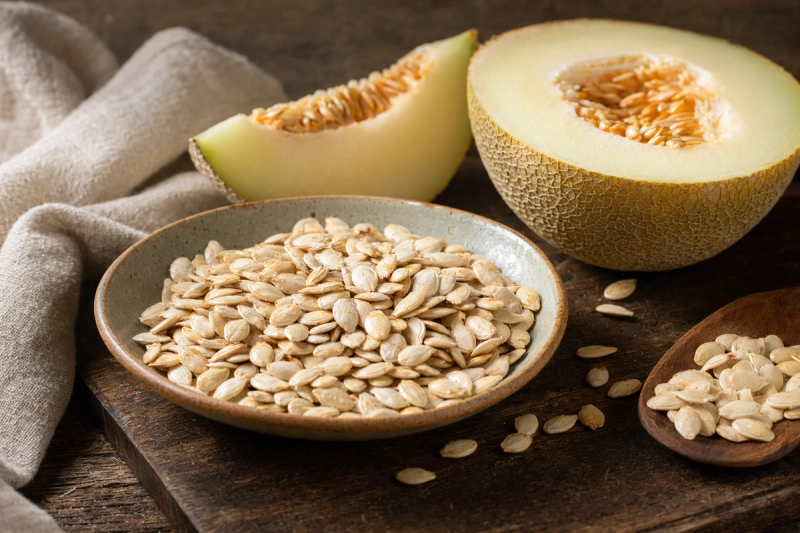
#Unroasted dried kharbuja seeds are mild. Like, very mild. If sunflower seeds are the friend who has opinions about everything, kharbuja seeds are the friend who sits quietly but gives excellent advice after everyone leaves. They have a gentle nuttiness, a creamy center, and a thin outer shell if you’re using whole seeds from home. Store-bought magaz is usually peeled melon kernels, so it’s softer and more delicate. Whole roasted seeds are crunchier, a little popcorn-ish if you roast them hard enough, but not exactly like pumpkin seeds. Pumpkin seeds have more attitude. Kharbuja seeds are softer around the edges.
My favourite way is salty and lightly spiced, eaten warm from the pan. A little ghee or oil, a pinch of salt, black pepper, maybe chaat masala if I’m in that mood. Sometimes roasted jeera powder. Sometimes chilli powder, but not too much because then you lose the tiny sweet-nutty thing they have going on. I’ve also added crushed roasted kharbuja seeds on curd rice once, which sounds odd, I know, but it worked. It gave that lazy lunch a bit of crunch. Another time I sprinkled them on a fruit chaat and felt like I had invented something, even though thousands of grandmothers probably did it before me.
The safe way to clean kharbuja seeds at home
#This is the boring bit, but it’s the bit that decides whether your roasted seeds taste like a cute summer snack or like regret. First, wash the kharbuja before cutting it. I know we don’t eat the outer skin, but the knife travels from outside to inside, and melons grow close to soil, get handled in markets, sit in crates, all that. Give the fruit a proper rinse under running water and rub the surface. Then cut it open and scoop the seeds with the surrounding pulp into a bowl. Add water, squish everything gently with your fingers, and the seeds will start separating from the stringy bits. Drain, rinse again, and pick out any stubborn pulp. If a seed looks black, moldy, unusually shriveled, or smells off, don’t be heroic. Throw it.
After washing, spread the seeds in a single layer on a clean cloth or tray. Not a thick pile. A single layer. I say this like a strict school teacher because I have absolutely made this mistake. A heap of wet seeds looks innocent, but the middle stays damp and funky. If the weather is hot and dry, you can sun-dry them for a day or two, bringing them indoors at night. If it’s humid or rainy, use a low oven or air-dry under a fan and roast the same day. The main goal is simple: get rid of moisture. Moisture is where spoilage starts. Also, don’t store wet seeds in a jar because it “looks fine.” It does not remain fine. It becomes a science experiment.
My basic roasted kharbuja seeds method, the one I actually use
#- Wash the whole kharbuja before cutting, then scoop out the seeds and pulp into a bowl.
- Rinse the seeds in plenty of water, rubbing them between your fingers until most of the pulp is gone.
- Drain well and spread them on a clean towel. Pat dry if you’re impatient, which I usually am.
- Let them dry until they don’t feel wet or sticky. In summer this can be a few hours to a day, depending on your kitchen. In humid weather, don’t push your luck.
- Roast in a dry pan on low to medium heat, stirring often, until they smell nutty and look lightly golden. It takes patience. Don’t blast them on high heat, they go from pale to burnt in a very annoying way.
- Add salt and spices near the end. If using oil or ghee, use just a few drops. They don’t need a bath.
- Cool completely before storing in an airtight jar. If there’s any warmth or steam trapped inside, they can lose crunch and spoil faster.
I like pan-roasting because I can hear and smell what’s happening. There’s a tiny crackle when the seeds dry out, and the smell changes from fresh-melon bland to warm and nutty. If you roast in the oven, keep it gentle and stir once or twice. Some people use an air fryer too, and it works, but watch carefully because the small seeds can overbrown quickly. Also, don’t expect them to puff up dramatically. This isn’t makhana. It’s more subtle than that.
Are roasted kharbuja seeds safer than raw ones?
#Generally, I’m more comfortable with roasted seeds than raw fresh ones, especially if I’m serving them to guests, kids, older people, or anyone with a sensitive stomach. Roasting reduces moisture, improves flavor, and makes storage easier. It’s not magic, though. If the seeds were moldy or already smelling sour before roasting, heat doesn’t turn them into good food. That’s like spraying perfume on a wet sock. Please don’t.
Raw dried seeds, like the magaz you buy for gravies or sweets, are commonly used after soaking and grinding, or lightly cooking in a dish. If you buy them, check the packet for freshness, no rancid smell, no insects, no clumps, no weird powdery mold. Nuts and seeds are oily foods, and oily foods can go rancid. Rancid kharbuja seeds smell stale, bitter, paint-like, or just old. I hate that taste so much. One bad spoon in a gravy and the whole thing feels dusty. Buy small amounts unless you cook with them regularly.
A tiny safety table, because my brain likes lists when food can go wrong
#| Situation | Is it okay? | What I’d do |
|---|---|---|
| Fresh seeds straight from a clean, fresh kharbuja | Usually edible | Wash well first, or roast if you want better taste and safety |
| Seeds with sour smell or slimy pulp after sitting out | Nope | Discard. Don’t roast and hope for the best |
| Dried seeds with mold, insects, or bitter rancid smell | No | Throw them away, sadly |
| Roasted seeds stored in an airtight jar | Yes, for a short period | Cool fully before storing, keep dry, smell before eating |
| Seeds for small children | With caution | Crush or grind them, since whole seeds can be a choking risk |
| Seeds for people with allergies | Careful | Try a tiny amount first, or avoid if seed allergies are known |
The table makes it look very neat, but real kitchens aren’t neat. Sometimes you’re cutting fruit while answering the door, the phone is ringing, someone wants tea, and the seeds sit around longer than planned. My rule is: when in doubt, throw it out. I know that sounds wasteful, especially when the whole point is using something we usually discard, but saving twenty rupees worth of seeds is not worth a bad stomach. I’ve had one of those nights where you lie awake bargaining with your digestive system, and no roasted snack is worth that drama.
What about the nutrition part?
#Kharbuja seeds are one of those small foods that carry more nutrition than their size suggests. Like many edible seeds, they contain plant-based fats, some protein, and minerals. Exact numbers vary depending on the melon variety, whether the seeds are hulled, dried, roasted, salted, and how they’re measured. I’m always suspicious when someone on the internet says “one spoon cures this and that.” Food doesn’t work like a magic button. But as a crunchy add-on, kharbuja seeds can definitely make a snack more satisfying. They bring fat and protein to an otherwise watery fruit plate, which is probably why old kitchens knew to save them.
Portion still matters. Seeds are small, but they’re calorie-dense compared to the fruit itself. A tablespoon or two of roasted seeds is a nice snack topping. A full bowl while watching cricket? Been there, and my stomach was not impressed. Salted versions can also make you thirsty and puffy if you go wild. If you’re eating kharbuja at night or you get bloating from melon, the timing and portion of the fruit can matter more than the seeds, so this guide on Can You Eat Kharbuja at Night? Best Time, Digestion & Acidity Guide is actually useful before you turn your midnight fruit bowl into a whole event.
How I use kharbuja seeds in actual food, not just as a snack
#My most repeated use is in chutney. I soak dried kharbuja seed kernels for 20 to 30 minutes, then blend with coriander, mint, green chilli, lemon, salt, and a little ginger. It becomes creamy without needing coconut or too much peanut. Not exactly traditional in every house, but tasty. I’ve served it with parathas, and my cousin, who claims to hate “healthy experiments,” ate half the bowl. That felt like a small award. Another good use is in gravies. Soak magaz, blend it into a paste, and add it to tomato-onion masala for paneer or mixed veg. It thickens the sauce and gives that restaurant-style softness without dumping cream into everything.
There’s also the sweet route. Roasted kharbuja seeds on kheer? Lovely. On shrikhand? Very nice, especially with pistachio and cardamom. In homemade granola? Works if you mix it with oats, almonds, coconut flakes, and a little jaggery syrup. I once tried adding them to banana bread, and okay, that was not my best work. They got a bit lost. Maybe I used too little. Maybe banana bread doesn’t need my constant meddling. But in laddoos, especially with sesame or peanut, they are fantastic. They don’t dominate. They just make everything feel fuller.
My salty masala version, written the messy way I cook it
#Take about half a cup of cleaned, dried kharbuja seeds. Heat a heavy pan, low to medium, and add the seeds dry. Stir, stir, stir. Don’t wander off to check Instagram because they will burn right when someone posts a nice dosa. Once they smell roasted and look slightly golden, add a few drops of ghee, salt, black pepper, chilli powder, roasted cumin powder, and a tiny pinch of amchur. Toss for maybe 30 seconds. Turn off the heat. Let them sit in the hot pan for a minute, then spread on a plate. Eat warm. If you want them extra crisp, cool fully before storing. If you eat half of them while “testing,” welcome to my life.
A few things I would not do with kharbuja seeds
#- I would not store freshly scooped seeds with pulp for days in the fridge and assume they’re fine. They might be okay for a short while, but clean them sooner rather than later.
- I would not eat seeds from a kharbuja that tastes strongly bitter, fermented, fizzy, or just wrong. A good muskmelon should smell sweet and fresh, not boozy.
- I would not give whole roasted seeds to toddlers. Crush them or skip them, because choking risk is real and kids are chaos with legs.
- I would not treat kharbuja seeds like medicine. Nice food, useful ingredient, yes. Miracle cure, no yaar.
- I would not buy a giant packet of peeled melon seeds unless I had a plan. They can go stale, and stale seeds make food taste like cupboard.
That last one comes from personal embarrassment. I once bought a big bag because the shopkeeper gave me that “madam this is best quality” confidence, and then I used two spoons and forgot the rest behind the besan. Months later I opened it and the smell was so flat and old. Not rotten exactly, but not alive either. Good seeds should smell gently nutty, not like they’ve been waiting since the last election.
Can you eat the seed shell too?
#If you roast whole kharbuja seeds from home, you’re usually eating the thin seed coat along with the inside. It’s edible, just a bit fibrous. Some people prefer cracking or chewing and spitting the outer bit, like sunflower seeds, but these are smaller and honestly I don’t have that kind of patience. If the seeds are properly dried and roasted, I chew the whole thing. If you want a smoother texture for chutneys, sweets, or gravies, use peeled melon seed kernels, the white magaz you get in grocery stores. Those blend better and don’t leave little bits.
For digestion, whole seeds can feel heavy if you eat too many, especially salted and roasted ones. Start small. This is boring advice but it saves you. A tablespoon on a salad or fruit bowl is different from a handful after dinner when your stomach is already full. Also drink water, because dry roasted seeds plus masala can be thirsty business. My dad eats them with chai, which I find odd but also charming. He says everything roasted tastes better with chai. He’s not entirely wrong.
Buying dried kharbuja seeds: what to look for
#When buying dried kharbuja seeds or magaz, I look for clean, pale seeds with no dampness. If they’re packed, I check the date and avoid packets with condensation or clumping. If buying loose from a dry fruit shop, I ask to smell them. This sounds fussy, but good shopkeepers don’t mind. The smell should be mild and fresh. If it smells oily in a bad way, stale, bitter, or musty, leave it. At home, store them in an airtight jar away from heat. In hot Indian summers, I honestly prefer keeping expensive nuts and seeds in the fridge, especially if I’m not using them quickly. The freezer works too for longer storage, but label the packet unless you enjoy playing “what is this frozen white thing” three months later.
One thing I appreciate about kharbuja seeds is how humble they are. They don’t have the fancy reputation of pine nuts or the gym-bro fame of pumpkin seeds, but they do real work in Indian cooking. They make sauces creamy, snacks crunchy, sweets richer, and fruit waste smaller. That’s a pretty good résumé for something most of us scrape into the bin.
My final answer, after many summers and a few smelly mistakes
#Can you eat kharbuja seeds? Yes. Can you roast them safely? Also yes, and honestly you should try it at least once if you’re a person who likes using the whole fruit. Clean them well, dry them properly, roast gently, season with some common sense, and don’t store anything damp. Avoid seeds that smell sour, bitter, musty, or rancid. Keep portions reasonable. Crush them for little kids. Use peeled magaz when you want creamy gravies or chutneys. That’s basically the whole story, no scary drama needed.
The best kitchen habits are often the old ones that looked boring when we were kids. Saving kharbuja seeds is one of them. Not glamorous, not fancy, but so satisfying when you get it right.
Now when I cut a kharbuja, I still eat the cold slices first because come on, that’s the joy. But I don’t throw the seeds away automatically. I rinse them, dry them, roast them if I have the patience, and feel weirdly proud of my little jar of crunchy summer treasure. Food does that to me. It turns scraps into snacks and ordinary afternoons into memories. If you’re into these small, practical, very desi food discoveries, wander around AllBlogs.in sometime. I keep finding good rabbit holes there, and you probably will too.