Medical disclaimer: This article is for general food guidance and education only. It should not be taken as medical advice. If you have diabetes, GERD, severe acidity, kidney problems, or any ongoing digestive issue, please talk to your doctor or a registered dietitian before making major diet changes.
Quick Answer
#Yes, you can eat kharbuja at night, but it is usually better to avoid eating it too late or immediately after dinner.
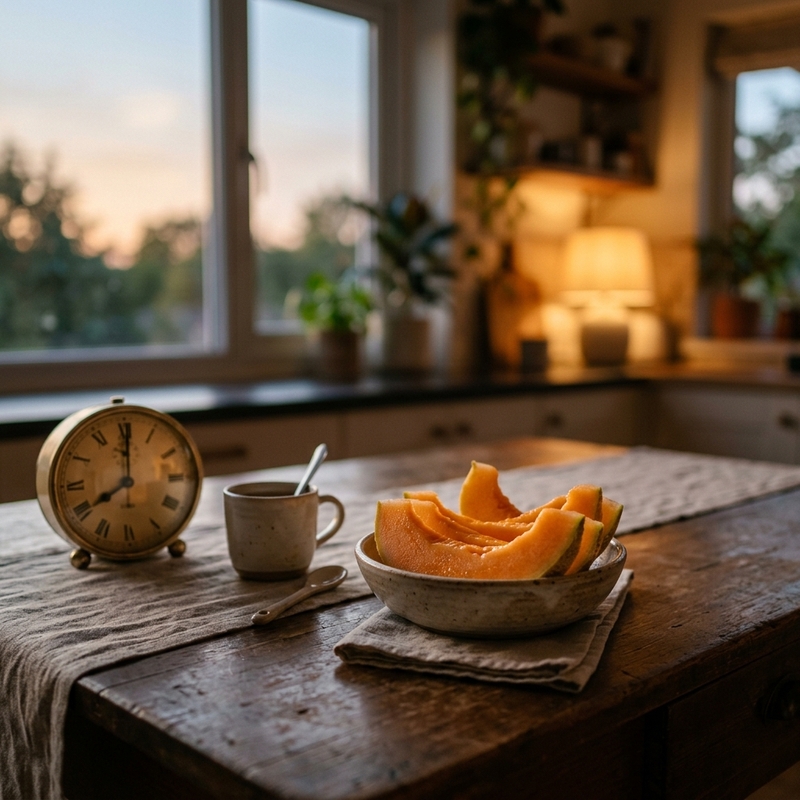
For most healthy people, a small bowl of kharbuja, also known as muskmelon, is fine in the early evening. The safer rule is simple: eat it at least 2 to 3 hours before sleeping and try to have it as a separate snack, not as dessert after a heavy meal.
So, if you are wondering, can we eat kharbuja at night, here is the practical answer:
- Yes, if you eat it in the early evening.
- Avoid it just before sleeping.
- Avoid eating kharbuja immediately after dinner.
- Keep the portion small to moderate.
- Choose whole fruit instead of kharbuja juice.
Kharbuja is watery, cooling, mildly sweet, and refreshing, which is why it is such a popular Indian summer fruit. But because it contains a lot of water and natural sugar, eating a big bowl late at night may disturb sleep, cause bloating, or feel heavy for people whose digestion slows down after dinner.
What Happens If You Eat Kharbuja at Night?
#Kharbuja, or muskmelon, is also called sakar teti in some regions. It is loved during summer because it feels cooling, hydrating, and light. It contains plenty of water, natural sugars, some fibre, and useful micronutrients.
The issue is usually not the fruit itself. The issue is mostly when and how much you eat.
If you eat kharbuja very late at night, a few things may happen.
First, because kharbuja has high water content, eating a large bowl close to bedtime may make you wake up at night to urinate. This can be more noticeable in older adults or in people who already have disturbed sleep.
Second, digestion tends to slow down for many people at night. After a typical heavy Indian dinner with roti, rice, dal, sabzi, curd, paneer, fried food, or non-veg dishes, your stomach is already doing a lot of work. Adding watery, sweet fruit on top of that may cause burping, gas, heaviness, or bloating in some people.
Third, kharbuja has natural sugars. For most healthy people, this is not a problem when the portion is sensible. But if you have diabetes or are watching your blood sugar, late-night fruit may not be the best regular habit. Fruit is often easier to manage earlier in the day, when you are more active and meals are spaced out better.
So, can we eat muskmelon at night? Yes, but keep it early, light, and separate from dinner.
Best Time to Eat Kharbuja
#The best time to eat kharbuja is usually during the day, when digestion is active and your body can make good use of its water content.
Good timings include:
- Mid-morning, around 10:30 AM to 11:30 AM
- Afternoon, around 4:00 PM to 5:30 PM
- Early evening, if dinner is still a few hours away
These timings work especially well during Indian summers. A bowl of kharbuja can feel much better than fried namkeen, biscuits, sugary cold drinks, or packaged juice.
If you know this fruit as sakar teti, the sakar teti best time to eat is also the same: mid-morning or afternoon, preferably when your stomach is not too full. This way, you enjoy the cooling and hydrating effect without adding extra load after dinner.
For more summer-specific guidance, you can also read allblogs’ guide on Cool Kharbuja Muskmelon Ideas.
One more useful tip: whole kharbuja is better than kharbuja juice. When you eat the fruit, you also get fibre and have to chew it, which naturally slows you down. Juice is very easy to drink in large amounts and may not keep you full for long.
Can Kharbuja Cause Acidity or Bloating?
#Many people ask about kharbuja and acidity, especially if they feel burping, gas, or reflux after eating it.
Kharbuja is not usually considered a highly acidic fruit. In fact, many people find it gentle and cooling. Still, it can cause discomfort in some situations.
The most common reason is eating it at the wrong time.
Kharbuja is watery and light when eaten on its own. But if you eat it right after a heavy meal, especially dinner, it may not sit well. Your stomach may already be busy digesting grains, pulses, dairy, oil, spices, and protein-rich foods. Adding sweet, watery fruit immediately after that can make some people feel bloated or heavy.
That is why kharbuja after dinner is not ideal for many people, even though it feels like a healthy dessert. Yes, it may be lighter than mithai, but timing still matters.
You may be more likely to feel acidity, gas, or bloating if you:
- Eat kharbuja immediately after dinner
- Eat a large portion late at night
- Eat it with milk, curd, cream, or heavy desserts
- Eat it when you already have gas or indigestion
- Lie down soon after eating it
If you often struggle with acidity, try eating kharbuja earlier in the day and notice how your body responds.
Should You Eat Kharbuja Before or After Meals?
#Kharbuja is best eaten between meals, not immediately after meals.
A simple rule:
- Eat kharbuja as a standalone snack
- Keep a gap of around 1.5 to 2 hours after a meal
- If eating it before a meal, keep a gap of around 30 to 45 minutes
- Avoid eating it right after a heavy dinner
Fruit after meals is a common habit in many Indian homes. After lunch or dinner, someone brings out mango, watermelon, papaya, grapes, or kharbuja. It feels like a healthy ending to the meal, and sometimes it is fine. But for people with sensitive digestion, this habit can cause heaviness.
If you want kharbuja in the evening, try eating it before dinner instead of after dinner. For example, a small bowl around 5:30 PM or 6:00 PM is usually much better than eating it at 10:00 PM after a full meal.
If you buy kharbuja often in summer, choosing a ripe one also makes a difference. A sweet, properly ripe melon tastes better, so you are less likely to add sugar or turn it into juice. You can check this guide on How to Pick a Sweet Kharbuja.
Kharbuja at Night for Diabetes, Weight Loss, and Digestion
#Whether kharbuja at night is a good idea also depends on your health goal.
For weight loss, kharbuja can be a helpful summer snack because it is water-rich and can feel filling. If your usual evening snack is fried, salty, or packaged, a bowl of whole muskmelon is a much better option. But portion size still matters. Eating a very large bowl late at night just because it is fruit is not necessary.
For diabetes-conscious eating, timing and quantity are important. Kharbuja contains natural sugar, so people with diabetes should not treat it like “free food.” It may fit into a diabetes-friendly diet for some people, but it is usually better eaten earlier in the day and in a measured portion. Kharbuja juice is best avoided because it is easier to consume more sugar quickly when the fruit is in liquid form.
For a more focused discussion, read Is Kharbuja Good for Diabetes?.
For digestion, muskmelon often feels light when eaten alone. Its water and fibre can support regular eating patterns, especially in summer when appetite may be lower. But if your digestion is weak at night or you often feel gassy after dinner, keep kharbuja for the morning or afternoon.
In short:
- Weight loss: good as a whole-fruit snack, not for late-night overeating
- Diabetes: portion-controlled, preferably earlier in the day
- Digestion: best eaten alone, not after a heavy meal
- Juice: avoid regular kharbuja juice; whole fruit is better
Who Should Avoid Kharbuja Late at Night?
#Kharbuja is generally safe for many people, but some people should be more careful with eating it late.
You may want to avoid kharbuja at night if you:
- Have frequent acidity or GERDIf you often get reflux, sour burps, or burning after dinner, late-night fruit may make you uncomfortable. Try eating it earlier in the day instead.
- Feel bloated after watery fruitsSome people are sensitive to melons, especially at night. If kharbuja gives you gas or discomfort, do not force it just because it is considered healthy.
- Wake up often to urinateSince kharbuja contains a lot of water, eating a big bowl before bed may disturb your sleep.
- Have diabetes and unstable blood sugarLate-night fruit may not suit everyone with diabetes. Speak to your doctor or dietitian about the right fruit portion and timing for you.
- Eat very late dinnersIf your dinner itself happens at 10 PM or later, adding kharbuja after that is not a great idea. In that case, shift the fruit to afternoon or early evening.
This does not mean kharbuja is one of the fruits to avoid at night for everyone. It simply means some people should avoid eating it too late, especially after dinner or close to bedtime.
Practical Indian Summer Eating Tips
#Here are some easy ways to enjoy kharbuja without upsetting your stomach:
- Eat it fresh and cut only what you need. Kharbuja tastes best when freshly cut. In summer heat, avoid leaving cut fruit outside for too long.
- Do not eat it immediately after dinner. If you love kharbuja, plan it as an evening snack instead of treating it like dessert.
- Keep portions moderate. A small to medium bowl is enough for most people. More is not always better.
- Prefer whole fruit over juice. Whole kharbuja gives fibre and feels more filling. Juice is easier to overconsume.
- Avoid mixing it with milk or heavy desserts. If you are prone to bloating or acidity, keep muskmelon simple and separate.
- Do not eat it ice-cold if it bothers you. Many people enjoy chilled fruit in summer, but if very cold kharbuja irritates your throat or stomach, let it sit for a few minutes before eating.
- Choose ripe fruit. A ripe kharbuja has better flavour, so you are less likely to add sugar or blend it into juice.
- Understand local melon names. Local names can be confusing. If you want to understand the difference between sakar teti, muskmelon, and cantaloupe, read Sakar Teti vs Muskmelon vs Cantaloupe.
The easiest habit is this: eat kharbuja in the morning, afternoon, or early evening, and keep it away from heavy meals.