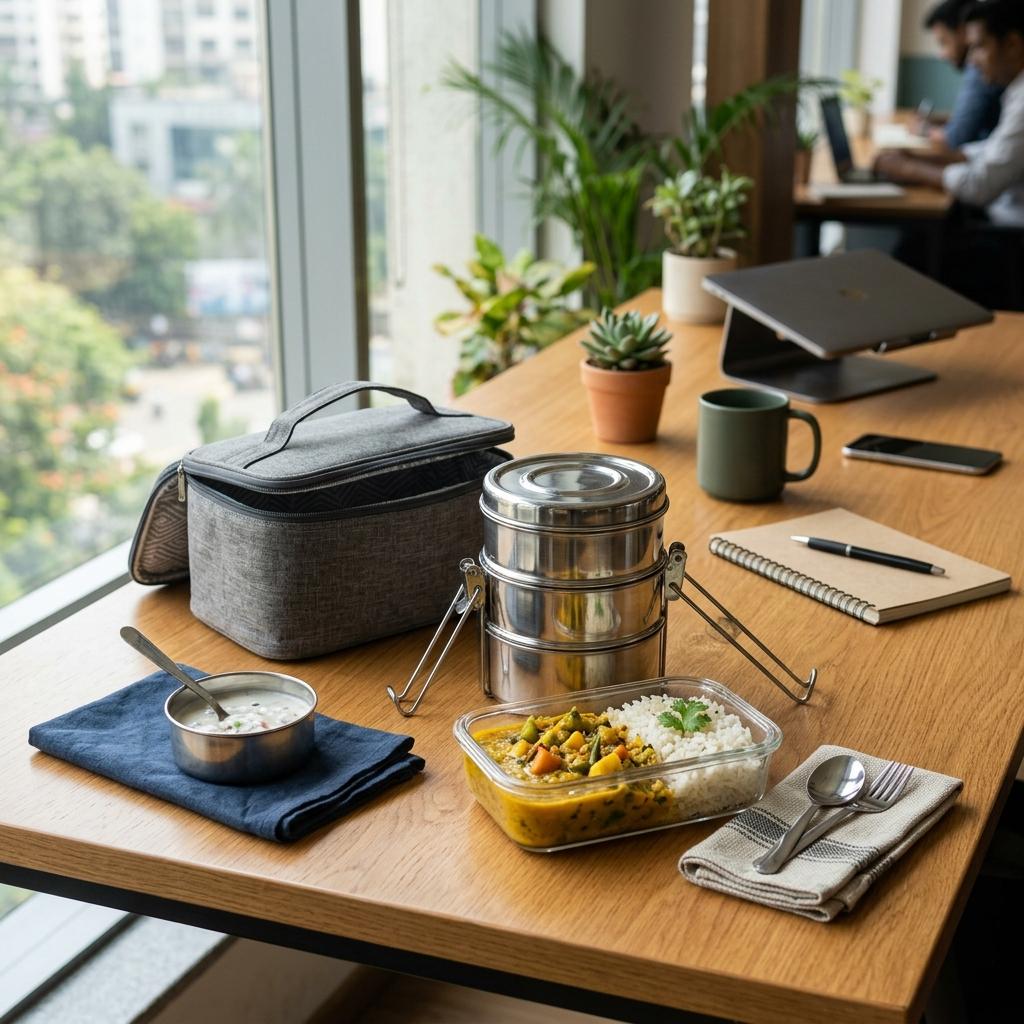
The best lunch box for Indian summer office tiffin is usually a Grade 304 stainless steel tiffin. For most people, it is the easiest everyday choice: strong, light, simple to wash, and suitable for regular Indian meals like roti-sabzi, dal-rice, poha, idli, upma, paratha and khichdi.
But there are a few exceptions.
If you reheat lunch in the office microwave, a borosilicate glass lunch box is more convenient. If your lunch stays outside the fridge for hours, especially during peak summer, an insulated steel lunch box is a better option. Plastic is fine for dry snacks and short use, but it is not the best choice for hot, oily or acidic Indian food.
Quick Answer: Which Lunch Box Should You Buy?
#- Crowded commute by bus, train, Metro, bike or auto: choose a Grade 304 stainless steel tiffin because it is tough, light and suitable for daily Indian food.
- Office microwave available: choose a borosilicate glass lunch box because the glass base is usually microwave-friendly and does not hold smells like plastic.
- Lunch sits outside a fridge till afternoon: choose an insulated steel lunch box because it helps slow heat exposure.
- Dry snacks, fruit, biscuits or backup food: good-quality food-grade plastic can work, but it is not ideal for hot curries.
- Dal, sabzi, sambar, rasam, tomato curry or tamarind rice: steel or glass is usually better for hot, oily and acidic food.
If you want the simplest answer, buy a stainless steel tiffin for office. If microwave reheating matters, buy glass. If there is no fridge at work and your lunch waits for hours, insulated steel is the smarter choice.
Why Indian Summer Tiffins Need a Little More Thought
#Buying a lunch box in India is not just about size, colour or whether the box says “leak-proof”. Our food, weather and commutes are different.
A normal office tiffin may carry dal, rice, sabzi, curd rice, lemon rice, sambar, rajma, chole, paneer, chutney, pickle, paratha, poha, upma, idli or khichdi. Many of these foods are packed warm. Many are oily, wet, spicy, acidic or smell-heavy.
Then the lunch box sits in a bag, office drawer, scooter storage, school bag, train bag or a room without AC for 4 to 5 hours. In April, May and June, that matters.
So the best lunch box is not always the prettiest one. You need to think about real-life things like heat, leakage, food smell, turmeric stains, microwave use, cleaning of seals, weight during travel, and whether the food will stay without refrigeration.
This office tiffin box buying guide is written for actual Indian use. Not showroom photos. Not fancy claims. Just what works when food is packed at 8 AM and eaten at 1:30 PM.
Steel vs Glass vs Insulated vs Plastic: Quick Comparison
#Stainless steel
#- Best for: daily office tiffin, commuting, school lunch and regular Indian meals.
- Avoid if: you need to microwave food in the same box.
- Microwave safe: no.
- Summer suitability: very practical.
Borosilicate glass
#- Best for: office microwave users and people who dislike stains and smells.
- Avoid if: your commute is rough or your bag is already heavy.
- Microwave safe: usually the glass base only, if stated by the brand.
- Summer suitability: good if handled carefully.
Insulated steel
#- Best for: long hours without fridge, field work and late lunch.
- Avoid if: you want something compact and light.
- Microwave safe: no.
- Summer suitability: best for slowing heat exposure.
Plastic
#- Best for: dry snacks, light foods and short use.
- Avoid if: you pack hot curries, oily food or acidic food.
- Microwave safe: only if clearly labelled, and still use caution.
- Summer suitability: least preferred for hot Indian tiffin.
1. Stainless Steel Tiffin for Office: The Best Daily Choice for Most People
#For most Indian office workers, students, parents and commuters, stainless steel is the most practical lunch box material.
It is light enough to carry every day. It is strong enough for public transport. It does not break if your bag gets pushed around in a crowded train or bus. And it handles most Indian food without absorbing smell or getting badly stained.
A good stainless steel tiffin for office can carry roti and sabzi, dal and rice, paratha, poha, upma, idli, pulao, lemon rice, dry snacks and khichdi.
Why Steel Works Well in Indian Summers
#Steel does not turn yellow-orange after a haldi-heavy sabzi. It does not hold on to garlic or pickle smell the way many plastic boxes do. It is also easier to scrub properly, which is a big advantage in summer.
In hot weather, leftover oil and moisture can start smelling very quickly. Steel is simpler to wash, rinse and dry, so it is more forgiving for daily use.
When buying, look for Grade 304 stainless steel or 18/8 stainless steel. These are generally better for food storage because they resist rust and corrosion better than cheap, unknown-grade steel.
If a product listing only says “premium steel” and gives no grade, be a little careful. “Premium” is just a marketing word. It does not tell you what the steel actually is.
Where Steel Falls Short
#Steel cannot go into a microwave. That is its biggest drawback.
If you want hot food at lunch and your office has a microwave, you either need to transfer the food to another bowl or buy a glass lunch box instead.
Also, not all steel tiffins are leak-proof. A traditional dabba with loose lids is fine for roti and dry sabzi, but it may leak if you carry dal, rasam, sambar, kadhi, curd rice or watery curry.
For liquid foods, choose steel boxes with locking clips, a silicone gasket, a tight lid and a proper liquid-safe design.
Best For
#- Office commuters
- College students
- School children
- People who eat lunch at room temperature
- Daily Indian meals
- Roti-sabzi, rice-dal, paratha, poha, upma and idli
Avoid If
#- You want to microwave food in the same box
- You carry watery curries without a leak-proof lid
- You want to see the food without opening the box
2. Borosilicate Glass Lunch Box: Best If You Reheat Lunch
#If you regularly use the office microwave, a borosilicate glass lunch box is probably the best choice.
Glass does not absorb masala smell easily. It does not stain like plastic. It also feels cleaner for reheating because the food is sitting in glass, not plastic.
This is where the glass lunch box vs steel lunch box question becomes simple: steel is better for commuting, glass is better for microwaving.
Glass works well for dal and rice, rajma, chole, kadhi, sambar, paneer curry, pasta, noodles, leftover sabzi and meal-prep bowls.
Be Careful With the Lid
#Most glass lunch boxes come with plastic lids. So in real life, the full lunch box is not completely plastic-free.
A simple rule: microwave the glass base only. Remove the plastic lid before reheating, unless the brand clearly says the lid is microwave-safe.
Even then, do not tightly seal the lid while heating. Steam needs space to escape. Otherwise, the lid can bend, pop open or get damaged.
Where Glass Is Not So Convenient
#Glass is heavy. And yes, it can break.
If you travel in a packed Mumbai local, Delhi Metro rush hour, bus, bike or auto every day, glass may feel risky. It is also not ideal for young children who throw bags around.
Best For
#- Office workers with microwave access
- People who eat hot lunch daily
- Fridge-to-office routines
- People who dislike stains and container smells
- Dal, curry, rice, paneer, rajma and chole
Avoid If
#- Your commute is crowded or rough
- You are buying for young children
- You want a very light lunch bag
3. Insulated Lunch Box for Summer: Best When There Is No Fridge
#An insulated lunch box for summer is useful when your food stays outside the fridge for many hours.
This is common. Field workers, sales staff, drivers, teachers, students, site workers and many office employees do not always have fridge access. Sometimes the tiffin stays in a bag during travel and only gets opened in the afternoon.
Insulation helps, but it is not magic. It does not make food safe forever. It only slows down temperature change.
What Insulation Actually Does
#A regular lunch box adjusts quickly to the outside temperature. If your bag is kept in a hot room, the food inside also gets warmer.
An insulated steel tiffin creates a barrier. It helps the food stay closer to its packed temperature for longer. This can be useful during Indian summers, especially if lunch is eaten late.
But be realistic. If food is very perishable and sits for many hours in heat, insulation can only help up to a point.
Good Foods for Insulated Tiffins
#Insulated steel boxes are better for foods like roti and dry sabzi, paratha, lemon rice, tamarind rice, pulao, idli without watery chutney, upma, poha, khichdi eaten within a sensible time, and dal-rice packed carefully.
Be Careful With These Foods
#Some foods need extra caution in summer:
- Fresh coconut chutney
- Watery dairy-based foods
- Cut fruit kept for too long
- Curd rice without cooling
- Paneer curry packed hot and eaten very late
- Egg or seafood dishes in very hot weather
This does not mean you can never pack them. It just means you should think about timing, weather and storage.
Best For
#- No-fridge workplaces
- Long commutes
- Field jobs
- Drivers
- Teachers
- Site staff
- People who eat late lunch
Avoid If
#- You need a very compact box
- You want microwave reheating
- You dislike heavier lunch bags
- You already have a fridge and microwave at office
4. Plastic Lunch Boxes: Convenient, But Not Best for Hot Indian Meals
#Plastic lunch boxes are popular because they are light, colourful, affordable and often quite leak-proof when new. For some uses, they are fine. But for hot Indian meals in summer, plastic is the weakest option.
That does not mean every plastic box is bad or useless. It simply means plastic should be used for the right foods.
Where Plastic Is Acceptable
#Plastic can be practical for dry snacks, biscuits, nuts, makhana, chivda, sandwiches eaten soon, short-duration fruit boxes, backup snack boxes and small school snacks that are not packed hot.
Choose food-grade plastic from a known brand. Avoid old, scratched, cloudy, sticky, smelly or badly stained plastic containers.
Where Plastic Is a Poor Fit
#Avoid plastic for hot dal, hot rice, oily sabzi, tomato gravies, tamarind-heavy food, rasam, sambar, kadhi, pickle-heavy meals and food sitting in summer heat for hours.
Hot, oily and acidic Indian food is tough on plastic. Over time, plastic can stain, smell, scratch and degrade. If your plastic box permanently smells of garlic, pickle or last week’s curry, it is time to stop using it for food.
Microwave Caution
#Even if a plastic container says microwave-safe, be careful. Microwave-safe does not always mean ideal for daily heating of oily, spicy food.
If possible, reheat in glass or ceramic. It is a better habit.
Best For
#- Dry snacks
- Short-duration use
- Lightweight side boxes
- Non-hot foods
Avoid If
#- You pack hot cooked meals
- You carry acidic curries
- The box is scratched, stained or smelly
- You want one main lunch box for Indian summer office use
What to Check Before Buying a Lunch Box
#Before buying a leak-proof lunch box India shoppers can rely on, look beyond photos and discounts. A shiny lunch box can still leak, smell, rust or become annoying to clean.
1. Clear Material Details
#Do not buy a lunch box if the material is vague.
Look for clear terms like Grade 304 stainless steel, 18/8 stainless steel, borosilicate glass, food-grade plastic and silicone gasket.
If the product only says “premium quality material” or “high-grade lunch box” but gives no details, do not trust it blindly.
2. Leak-Proof Design
#A proper leak-proof box usually needs a tight lid, locking clips, silicone gasket and a strong body that does not bend easily.
For Indian food, leak-proofing is important. Dal, rasam, sambar, kadhi, curd, chutney and curry can ruin a laptop bag in one bad commute.
If you carry liquid foods, check whether the lid has a gasket and whether the brand clearly says the box can handle liquids.
3. Removable Silicone Seal
#This sounds like a small detail, but it matters.
The silicone ring inside the lid traps oil, food particles and moisture. If it cannot be removed, cleaning becomes difficult. In summer, that trapped moisture can start smelling quickly.
Choose a box where the gasket can be removed, washed, dried properly and fitted back.
4. Number of Compartments
#More compartments are not always better.
A three-compartment lunch box looks nice, but it may not fit real Indian portions. If you eat roti, sabzi, rice and dal, check the capacity properly.
Useful formats for Indian meals include one large box plus one small curry container, a two-tier steel tiffin, a three-section box, a single glass box, or an insulated jar-style tiffin for khichdi and one-pot meals.
Do not buy only because it looks like a fancy bento box. Our lunch is not always that neat.
5. Weight
#Glass is heavier than steel. Insulated steel is usually bulkier than normal steel. Plastic is light, but not great for hot meals.
If you walk a lot, travel by public transport, carry a laptop or pack lunch for a child, weight matters more than you may think.
7. Easy Cleaning
#A lunch box used in Indian summer should be easy to clean properly.
Avoid designs with too many corners, hidden grooves, decorative ridges, fixed silicone rings or lids that trap oil. A box that looks fancy but starts smelling after two weeks is not a smart buy.
Who Should Buy What?
#Buy Stainless Steel If You Want One Reliable Daily Tiffin
#Choose a stainless steel tiffin for office if you want a durable, low-fuss lunch box for daily Indian meals.
Good for office workers, college students, school children, public transport commuters, roti-sabzi meals, rice-dal meals and people who do not microwave lunch.
Avoid if you must reheat in the same container or you often carry watery curries without a leak-proof lid.
Buy Borosilicate Glass If You Microwave Lunch
#Choose glass if your office has a microwave and you like eating hot food.
Good for microwave users, meal prep, fridge-to-office routines, people sensitive to container smells, and meals like dal, curry, rice, pasta, paneer, rajma and chole.
Avoid if your commute is crowded or rough, you are buying for young children, or you want a very light lunch bag.
Buy Insulated Steel If Lunch Stays Out for Hours
#Choose insulated steel if your workplace has no fridge or your lunch sits in a hot place until afternoon.
Good for no-fridge offices, field workers, drivers, teachers, site staff and late lunch eaters.
Avoid if you already have a fridge and microwave, need a compact lunch box, or want microwave use.
Use Plastic Only for Suitable Foods
#Plastic can be useful, but not as the main hot-meal tiffin in summer.
Good for dry snacks, short-duration fruit, biscuits, nuts and chivda, and sandwiches eaten soon.
Avoid if you pack hot curries, carry oily or acidic foods, or the box is scratched, stained, sticky or smelly.
Common Mistakes to Avoid
#1. Buying Only Because It Looks Stylish
#A lunch box can look premium and still leak. It can have a nice colour and still be hard to clean. Always check material, lid design, gasket quality and cleaning access.
2. Assuming All Steel Is the Same
#Steel quality varies. For daily use, look for Grade 304 or 18/8 stainless steel. If the grade is not mentioned, be careful.
3. Packing Very Hot Food and Sealing It Immediately
#Very hot food releases steam. If you close the lid immediately, the inside becomes wet and warm. Let food cool slightly before sealing, especially in summer.
But do not leave it open for too long either. The goal is to avoid trapping too much steam, not to let food sit outside carelessly.
4. Treating Insulated Boxes Like Refrigerators
#Insulated boxes slow temperature change. They do not replace a fridge. If the food is highly perishable and the day is very hot, choose the menu carefully.
5. Microwaving Plastic Lids
#Many glass boxes have plastic lids. Remove the lid before heating unless the brand clearly says otherwise. Even then, avoid tight sealing while reheating.
6. Ignoring the Gasket
#The silicone ring is where smell often starts. Remove it, wash it, dry it and clean the lid groove. If the ring becomes loose, blackened, sticky or cracked, replace it if possible.
7. Buying Too Many Compartments
#A bento-style box may look neat, but it may not suit Indian portions. If you eat rice, dal, sabzi, curd, salad and roti, check the capacity properly.
8. Using Old Plastic for Everything
#If a plastic box is scratched, cloudy, smelly, sticky or deeply stained, do not keep using it for hot meals. Retire it for non-food storage or discard it responsibly.
Best Lunch Box Format by Indian Meal Type
#- Roti and dry sabzi: steel is light, durable and easy to clean.
- Rice and dal: leak-proof steel or glass works better because the lid matters; glass is better if reheating.
- Sambar rice or rasam rice: leak-proof steel, glass or insulated steel is safer because liquid risk and heat exposure both matter.
- Curd rice: insulated steel if no fridge is available, glass if fridge access exists.
- Lemon rice or tamarind rice: steel or glass is better because acidic food is not ideal in plastic for long hours.
- Paratha and pickle: steel handles oil and pickle smell better.
- Paneer curry: glass if reheating, steel if eating as packed.
- Idli with chutney: steel with a separate chutney container is more practical.
- Poha or upma: steel is simple and easy to carry.
- Salad or cut fruit: glass or short-duration plastic can work, but it is best eaten fresh and not left in heat.
Final Buying Recommendation
#If you want one lunch box for most Indian summer office tiffins, buy a Grade 304 stainless steel tiffin with a proper leak-proof lid and removable silicone gasket.
If you reheat lunch daily, choose a borosilicate glass lunch box and remove the lid before microwaving.
If your food stays without refrigeration for long hours, choose an insulated steel lunch box for summer. But still pack sensible foods and do not treat it like a fridge.
If you use plastic, keep it mostly for dry snacks or short-duration foods. For hot, oily and acidic Indian meals, steel or glass is the better long-term choice.
The smartest lunch box is not always the most expensive one. It is the one that matches your commute, your office facilities, your food and the heat your tiffin actually faces.