Besan chilla feels like the perfect Indian summer tiffin on paper. It is quick, filling, protein-rich for a vegetarian meal, easier than paratha, and less messy than sabzi-roti when you are rushing out in the morning.
But there is one small problem: a chilla is still a cooked, moist food. Once it is shut inside a warm lunchbox, carried through a hot commute, or left in a school bag near a window, the question changes from “Is this healthy?” to “Is this still safe to eat?”
The short answer: plain besan chilla can work for a short summer tiffin if it is cooled properly, packed dry, and eaten early. It becomes riskier when you add wet chutney, paneer, cheese, cooked vegetables with moisture, or leave it in a hot car, train bag, or non-air-conditioned room for hours.
Food safety guidance from authorities like the FDA and USDA generally treats cooked perishable food cautiously once it sits at room temperature: the common rule is to avoid leaving such food out for more than about two hours, and to be stricter in very hot conditions. That does not mean every chilla instantly becomes unsafe at a fixed minute, but it is a sensible boundary for Indian summer packing.
Let’s make this practical.
Why besan chilla spoils faster than dry snacks
#A dry khakhra, roasted makhana, thepla without wet filling, or plain mathri can handle a bag better because there is less moisture for spoilage to work with. Besan chilla is different.
It has three things that matter in summer:
- Moisture from the batter and cooked surface
- Warmth from cooking and then packing too soon
- Optional fillings that may spoil faster than the chilla itself
A plain chilla made with besan, water, spices, and a little oil is not as risky as a mayo sandwich or paneer roll, but it is still not a true shelf-stable food. Once you add onion, tomato, grated paneer, cheese, chutney, or curd-based dip, the risk moves up.
This is why the same chilla can be perfectly fine at 9:30 AM and questionable by 2:30 PM if it has been sitting in heat.
The safest timing: when should you eat it?
#For Indian summer, think in scenarios, not exact promises.
Best case: short commute, air-conditioned office, early lunch
#If you cook the chilla in the morning, cool it before packing, keep chutney separate, and eat it by late morning or early lunch, it is usually a reasonable tiffin choice.
This is the kind of day where besan chilla makes sense:
- Cooked around 7:30 AM
- Cooled for 10–15 minutes on a clean plate
- Packed in a clean steel box or breathable lunch container
- Carried in a bag away from direct sun
- Eaten around 11:30 AM or 12:00 PM
If your office has a fridge, even better. Refrigerate the box when you arrive and reheat only if the chilla still smells and looks normal.
Riskier case: school bag or office bag without cooling
#School and office bags can get surprisingly warm. If the tiffin is packed hot, steam collects inside the box, the chilla turns soggy, and the food sits in a damp mini-greenhouse until lunch.
This is where people make mistakes. The chilla was safe when it left the tawa, but it gets packed while steaming, stuffed with chutney, and eaten after several hours.
If there is no fridge and lunch is late, keep the chilla plain and dry. Skip paneer, cheese, and wet chutney inside the roll.
Highest risk: hot car, train platform, bus, road trip bag
#A hot car is not “room temperature.” A lunchbox in a parked vehicle, bus luggage rack, sunny train seat, or road-trip backpack can heat up quickly.
If your chilla will sit in this kind of heat, treat it as a short-window food. Eat it early or choose something drier. For longer journeys, AllBlogs has a separate no-fridge travel food guide here: No-Fridge Travel Food for Indian Summers.
Plain, stuffed, or rolled: which version is safest?
#Not all besan chillas behave the same in a tiffin.
Plain besan chilla
#This is the safest version for summer packing. Use besan, water, salt, turmeric, ajwain, chilli if you like, and a little oil. Add coriander if it is washed and dried well.
Let it cool before packing. Stack with a small piece of parchment or banana leaf only if it does not trap too much steam. If the chilla is still hot, leave the box slightly open for a few minutes before closing.
Onion-tomato chilla
#Onion and tomato make chilla tastier, but they also add moisture. Tomato especially can make the center wet.
If packing for summer:
- Use less tomato or skip it
- Cook the chilla a little longer on medium heat
- Avoid thick, undercooked centers
- Eat earlier in the day
If you want freshness, pack cucumber separately instead of cooking very wet vegetables into the batter.
Paneer or cheese-stuffed chilla
#This is where I would be more cautious. Paneer and cheese are dairy foods, and dairy plus summer heat plus a closed lunchbox is not a great combination.
If you really want paneer chilla:
- Use fresh paneer
- Cook the filling properly
- Cool before packing
- Keep the lunchbox chilled if possible
- Eat early
For a no-fridge tiffin, plain chilla is a better idea than paneer-stuffed chilla.
Chilla roll with chutney inside
#This is convenient but not ideal for summer. Chutney makes the chilla soggy, and soggy food usually spoils faster than dry food. Coconut chutney, curd chutney, and watery mint chutney are especially poor choices for a hot bag.
If you want chutney, pack it separately in a small leak-proof container. Use only a small amount. If it smells fermented, looks watery in a strange way, or tastes off, skip it.
How to pack besan chilla safely for summer
#Here is the simple packing routine I would follow.
1. Cook it fully, not just lightly browned
#A chilla that looks golden outside but is still pasty in the middle will not hold well. Keep the flame medium, spread the batter evenly, and let both sides cook through.
You do not need to make it hard like papad. Just avoid thick, damp centers.
2. Cool it before closing the box
#This is the biggest tiffin mistake. Hot chilla releases steam. Steam becomes condensation. Condensation makes the food wet.
Place the chilla on a clean plate or rack for 10–15 minutes. Once it is warm rather than hot, pack it.
3. Keep chutney and salad separate
#Do not spread chutney inside the chilla if it will sit for hours. Do not pack sliced tomato directly against it. Keep cucumber, carrot sticks, or dry salad in a separate compartment.
4. Use an insulated lunch bag if lunch is late
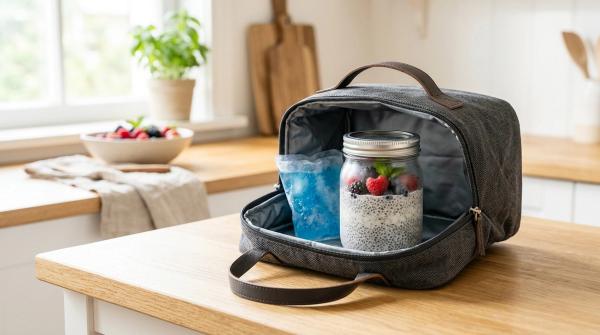
#If the tiffin will be eaten after several hours, a small insulated bag with an ice pack is useful. It is not magic, but it slows warming.
This is especially helpful for school lunches, office commutes, and short train trips.
5. Do not reuse yesterday’s chilla casually
#Leftover refrigerated chilla can be reheated and packed, but only if it was cooled and refrigerated properly the first time. If it sat out after dinner and then went into the fridge late, do not turn it into tomorrow’s tiffin.
What about reheating at office?
#Reheating can improve texture, but it does not reverse bad storage.
If the chilla was packed well, kept cool, and still smells normal, reheating in an office microwave or tawa can be fine. If it smells sour, feels slimy, has unusual wet patches, or has been sitting in heat for hours, reheating is not a rescue plan.
This is the same logic as leftovers generally: heat helps when food has been handled safely; it does not make spoiled food safe again.
If your office lunch often sits out in summer, you may also like this broader guide: Office Lunch in Indian Heat: Safe Foods and Tiffin Rules.
When should you throw it away?
#Do not taste-test a questionable chilla just to “check.” Use your senses, but be conservative.
Throw it away if:
- It smells sour, fermented, or stale
- It feels slimy or unusually sticky
- The chutney has separated, bubbled, or smells off
- The paneer filling smells sour
- The lunchbox sat in a hot car or sunny bag for hours
- The chilla was packed hot and is now wet, warm, and stale-smelling
A wasted lunch is annoying. A stomach upset during office, school, or travel is worse.
Better summer versions of besan chilla
#If you still want chilla in summer, make it tiffin-friendly rather than fancy.
Safer add-ins
#- Ajwain
- Turmeric
- Coriander leaves, washed and dried well
- Grated carrot, squeezed lightly
- Finely chopped capsicum, used sparingly
- Roasted jeera powder
Add-ins to be careful with
#- Tomato
- Paneer
- Cheese
- Coconut
- Curd-based dips
- Wet chutneys
- Leftover cooked sabzi as filling
Better pairings
#Instead of stuffing the chilla, pair it with:
- Dry peanut chutney powder
- Roasted chana
- A small fruit that stays whole until eating
- Cucumber sticks in a separate box
- Plain chaas only if it can stay chilled
For another cooked tiffin comparison, see: Can Upma Stay Outside in Summer? Safe Tiffin Rules.
Office, school, train: quick decision guide
#Is besan chilla better than roti for summer tiffin?
#It depends on how you pack it.
Plain roti is drier, so it usually handles heat better than a moist chilla. But roti with wet sabzi, paneer, or curd can become risky too. Besan chilla has more moisture from the batter, so it needs better cooling and earlier eating.
If you are deciding between the two for a very hot day, plain roti with a dry sabzi may be safer than a stuffed chilla. For roti timing, read: How Long Can Roti Stay Out in Summer?.
Final verdict
#Besan chilla is a good summer tiffin only when you treat it like a fresh cooked food, not a dry snack.
For the safest version, make it plain, cook it fully, cool it before closing the box, keep chutney separate, avoid paneer or cheese stuffing in no-fridge situations, and eat it early. If your lunchbox will sit in heat for half the day, choose a drier travel food instead.
The practical rule is simple: besan chilla is fine for a short, well-packed summer tiffin; it is not ideal for long, hot, no-fridge storage.