I’ll be honest, I never thought makhana would become one of my “serious travel planning” items. Passport, charger, boarding pass, foreign currency… and then, right before zipping the bag, one packet of roasted makhana tucked between socks and a sweater. Very glamorous, I know. But if you’ve ever sat through a long international flight from India with only sad airplane bread rolls and tiny butter squares for company, you’ll understand why this matters.
So, can you carry makhana on international flights from India? Short answer: yes, usually you can carry makhana, especially if it’s dry, roasted, commercially packed, sealed, and meant for personal consumption. But — and this is the bit people forget — the final answer depends not just on Indian airport security or your airline, but on the customs and biosecurity rules of the country you’re landing in. That’s where things get a little spicy, like the peri-peri makhana my cousin once tried to take to Melbourne and then panicked about for 11 hours straight.
I’ve carried makhana from Delhi to Dubai, Mumbai to Singapore, and once from Patna to London via Delhi because my aunt had packed enough fox nuts to feed half the aircraft. Nobody at Indian security cared. But I’ve also learnt, sometimes by standing awkwardly in customs lines, that “allowed on the plane” and “allowed into the country” are two different things. Big difference.
First, What Exactly Is Makhana and Why Are We All Suddenly Carrying It?
#Makhana, also called fox nuts or popped lotus seeds, is one of those Indian snacks that went from old-school fasting food to fancy wellness snack almost overnight. Well, not overnight exactly, but you know what I mean. My nani used to roast it in ghee with black pepper during Navratri, and now airport shops sell it in shiny zip-lock packs with flavours like cheese jalapeño, Korean chilli, tandoori, caramel, mint, and some “protein power” version that tastes suspiciously like diet namkeen.
The heartland of makhana is Bihar, especially the Mithila region around Darbhanga and Madhubani. If you ever travel through that belt, you’ll see how deeply makhana is part of daily life — not just as a snack, but in kheer, sabzi, vrat food, wedding sweets, everything. I once had makhana kheer in a small home near Darbhanga, cooked slowly with milk and cardamom, and honestly it ruined packaged desserts for me for a while. Soft, nutty, creamy, not too sweet. The kind of food that makes you quiet for a minute.
In 2026, makhana also fits perfectly into the big food-travel mood: lighter snacks, functional foods, plant-based munchies, regional Indian ingredients getting global attention, and travellers wanting snacks that don’t smell up the cabin. That last one is important. Nobody wants to be the person opening fish pickle at 38,000 feet. Makhana is crunchy, dry, filling, and doesn’t leak into your laptop bag. Basically, travel gold.
So, Is Makhana Allowed in Cabin Baggage?
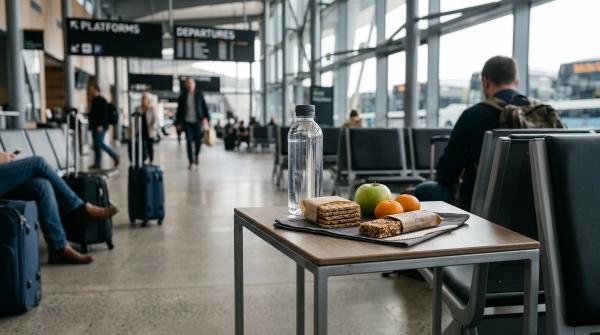
#Yes, in most cases you can carry makhana in your cabin bag on international flights from India. Indian airport security mainly worries about dangerous items, liquids over the limit, sharp objects, batteries, that sort of thing. A sealed packet of roasted makhana is not a security threat, unless you count the emotional damage of finishing it before takeoff.
I usually carry one small sealed packet in my backpack, especially on night flights when airport food is either closed, overpriced, or weirdly dry. On a Delhi to Doha flight once, I had eaten at the airport thinking I was full — big mistake. Two hours later I was wide awake, hungry, and extremely thankful for the masala makhana packet I’d bought near the gate. The guy next to me asked what I was eating, I gave him some, and then we had a whole conversation about Indian snacks versus Middle Eastern nuts. This is why I love food travel. Snacks become diplomacy.
- Cabin baggage is usually fine for dry, roasted, sealed makhana packets.
- Avoid carrying loose makhana in random plastic bags, especially internationally. It just looks suspicious and messy.
- Keep the original label if possible — ingredients, brand name, manufacturing details, expiry date.
- Don’t carry huge commercial quantities unless you enjoy explaining yourself to customs officers.
What About Checked Baggage?
#Checked baggage is also usually okay for makhana, and honestly it’s better if you’re carrying more than one or two packets. I do this when I’m visiting family abroad. Indian relatives have this emotional belief that anyone living outside India is surviving on boiled potatoes and loneliness, so bags must be filled with snacks. Makhana, khakra, thepla, masala peanuts, chikki, banana chips, sometimes 8 types of achar if nobody stops them.
For checked baggage, pack makhana properly. The packets can burst if squashed, and then you’ll open your suitcase in Zurich or Toronto and find roasted fox nuts rolling around inside your jeans. Happened to me once with a badly sealed packet of plain makhana. Not tragic, but not elegant either. Put them in a hard-sided box or between clothes. Vacuum-sealed packs travel better.
One small thing people don’t think about: flavoured makhana with oil or masala can sometimes leave smell or stains if the packet tears. So don’t pack it next to white shirts, silk sarees, or that one expensive jacket you bought for the trip and never wore.
The Real Issue: Destination Country Customs Rules
#This is where the answer changes from “haan haan le jao” to “please check before flying.” Every country has its own food import rules, especially for plant products, seeds, nuts, grains, spices, dairy, meat, and fresh produce. Makhana is a plant-based dry processed food, so it’s generally less risky than fresh fruit, raw seeds for planting, homemade pickles, or meat snacks. But customs officers care about whether it is processed, packaged, labelled, and declared when required.
My personal rule is simple: if the arrival card asks about food, I declare it. Always. Even if it’s just makhana and tea. Declaring doesn’t automatically mean they confiscate it. Usually it means they ask, inspect, and wave you through if it’s allowed. Not declaring food in strict countries can create real trouble, and frankly no snack is worth a fine after a 14-hour flight.
United States
#For the USA, many commercially packaged dry foods are generally allowed for personal use, but you must declare food items when entering. The US is strict about agricultural products, fresh fruits, vegetables, meat, and seeds that can grow or carry pests. Roasted packaged makhana is usually safer than raw agricultural produce, but still declare it. I’ve carried sealed roasted makhana to New York and Chicago without drama, but I wrote “packaged snacks” on the form and told the officer when asked.
United Kingdom and Europe
#The UK and many European destinations generally focus heavily on meat, dairy, fresh produce, and certain plant products. A sealed, processed snack like roasted makhana for personal use is usually not an issue, but rules can vary and change. If your makhana has milk powder, cheese seasoning, or ghee listed, it may raise a different question because dairy rules can be stricter. This is why I prefer plain roasted or simple salted packets when travelling to Europe. Less headache.
Australia and New Zealand
#Australia and New Zealand are famously strict about biosecurity. And honestly, they should be — they protect their farms and ecosystems very seriously. If you’re taking makhana there, declare it. Commercially processed and sealed plant snacks may be allowed after inspection, but loose, unlabelled, homemade, or raw food can be a problem. My friend flying to Sydney once declared two packets of makhana, one masala and one plain. They checked the packet, asked if it was roasted, and let it through. But she said the stress was enough to make her finish half the packet at the airport before landing.
Middle East, Singapore, and Southeast Asia
#Dubai, Doha, Abu Dhabi, Singapore, Bangkok — in my experience and from what frequent travellers say, sealed dry snacks like makhana are usually fine for personal use. Singapore is clean and efficient but also particular, so don’t carry weird homemade powders in reused zip pouches. In Dubai, I’ve carried makhana many times, mostly because the flight is short but my hunger has no respect for distance. Still, if customs asks, be clear: it’s roasted fox nuts, packaged snack, personal use.
My Airport Food Ritual: Makhana, Chai, and People Watching
#Every traveller has some airport ritual. Some people buy perfume. Some people take selfies with the boarding gate screen. I walk around looking for snacks I don’t need. At Indian airports, especially Delhi T3 and Mumbai, the snack shelves have become such a fun little map of modern Indian eating. Millet chips, ragi cookies, seed mixes, dehydrated fruit, artisanal chivda, and now makhana in every possible flavour. It’s like our dadi’s pantry got a startup pitch deck.
The 2026 food travel scene feels very snack-forward. People want things that are healthier but still tasty, local but portable, and easy to share. Airport restaurants are also leaning into regional Indian food more than they used to. You’ll find better chaat, decent South Indian breakfasts, kebabs, biryani bowls, and branded Indian cafés instead of only bland sandwiches. Are they overpriced? Absolutely. Do I still buy them? Also absolutely, because travel hunger is a different creature.
One of my favourite pre-flight meals is still a simple masala dosa at the airport, followed by filter coffee, then a packet of plain makhana for later. It sounds boring but it works. On long-haul flights I avoid anything too oily before boarding, because turbulence plus chole bhature is not a spiritual experience I recommend.
Best Types of Makhana to Carry on International Flights
#Not all makhana travels equally. Some packets are perfect. Some are basically masala dust bombs waiting to explode. After a few years of snack smuggling — legal snack carrying, relax — I’ve developed opinions.
- Plain roasted makhana: safest option. Light, simple, least likely to smell, and customs-friendly because ingredients are minimal.
- Salt and pepper makhana: my personal favourite for flights. It feels like a snack but doesn’t make you drink 3 litres of water.
- Peri-peri or tandoori makhana: tasty, but pack carefully. The masala gets everywhere if the seal breaks.
- Caramel or chocolate makhana: good for kids or dessert cravings, but can melt or get sticky depending on storage.
- Homemade ghee-roasted makhana: delicious, emotional, very Indian parent coded — but not ideal for customs unless packed properly and labelled, which homemade food usually isn’t.
If I’m travelling to a strict country, I skip homemade. I know, painful. Homemade makhana with curry leaves and peanuts is superior to most packaged stuff. But airport practicality beats sentiment sometimes. I said sometimes.
How to Pack Makhana So Nobody Troubles You
#The best way is boring but effective: sealed commercial packets, preferably unopened, with clear labels. Put one in cabin baggage for eating during the flight and the rest in checked baggage. If the packet is already open, finish it before landing or keep it minimal. Customs officers don’t love mystery snacks.
- Choose factory-sealed packets with ingredient labels in English if possible.
- Carry small quantities for personal use — like 1 to 4 packets, not a wholesale carton.
- Avoid mixing makhana with fresh curry leaves, fresh coconut, homemade masalas, or anything moist.
- If the country has an arrival declaration form, mention food items.
- Check your airline baggage allowance, because makhana is light but snack shopping gets out of control fast.
Also, don’t argue with customs. This sounds obvious, but I’ve seen people get weirdly emotional about food at airports. If an officer says something isn’t allowed, let it go. I love makhana, but I’m not fighting a biosecurity department for roasted lotus seeds.
Food Travel and the Emotional Side of Carrying Snacks
#There’s something very Indian about carrying food across borders. It’s not just hunger. It’s comfort, memory, family, habit. A packet of makhana can taste like home when you’re in a hotel room in a city where dinner costs too much and everything closes early. I remember landing in London one rainy evening, exhausted and slightly cranky, and eating makhana with hotel-room tea while watching buses go past the window. Not exactly a Michelin-starred moment, but it felt perfect.
Food travel isn’t always about famous restaurants or tasting menus. Sometimes it’s about the snacks in your bag, the thing your mother forced you to carry, the local ingredient you discover on a train, the street-side chai before a flight. I’ve eaten at beautiful restaurants, sure, but I remember tiny food moments more clearly: roasted corn outside Patna airport, misal pav in Pune before an early flight, kaya toast in Singapore after landing, za’atar manakish in Dubai at 2 a.m., and yes, makhana eaten straight from a crinkly packet while waiting at Gate 14.
Makhana as a Culinary Souvenir from India
#If you’re visiting India and flying back abroad, makhana is actually a lovely edible souvenir. It’s lighter than sweets, lasts longer than fresh snacks, and feels regional without being too difficult to explain. I’ve gifted flavoured makhana to friends abroad and the reactions are funny. Some people think it’s popcorn. Some think it’s a nut. One friend in Amsterdam called it “cloud chips,” which honestly is not wrong.
For a more food-lover style gift, look for makhana from Bihar or brands that mention Mithila sourcing. The regional identity matters. India has so many ingredients that are still under-appreciated globally, and makhana is one of them. It’s also part of the larger movement toward GI-tagged foods, regional grains, traditional snacks, and farm-to-pack storytelling. Travellers in 2026 are not just buying generic souvenirs anymore. They want origin stories. They want to know where the ingredient came from, who grows it, why it matters. I love that shift.
A good travel snack should do three things: survive the journey, taste like somewhere, and make you feel less lonely between time zones.
Quick Country-Smart Checklist Before You Fly
#Before packing makhana on an international flight from India, I quickly check three things: is it sealed, is it allowed, and do I need to declare it? That’s it. Not very romantic, but travel is half romance and half admin.
- Flying to the USA? Carry sealed roasted makhana, declare food at arrival.
- Flying to Australia or New Zealand? Definitely declare. Keep it commercially packed and labelled.
- Flying to UK or Europe? Usually okay if processed and sealed, but avoid dairy-heavy flavours if unsure.
- Flying to Dubai, Qatar, Singapore, Thailand? Usually fine for personal use, but sealed packets are still the smart move.
- Carrying homemade makhana? Eat it on the flight if you’re unsure about destination rules.
One more thing: rules change. Airlines update policies, customs departments revise lists, and sometimes individual officers interpret things differently. Before a big trip, especially to strict countries, check the official customs or biosecurity website of your destination. Not a random WhatsApp forward from someone’s uncle who “took 12 kg achar and nothing happened.” That uncle is not a legal source.
Final Verdict: Yes, But Pack Like a Sensible Foodie
#So yes, you can carry makhana on international flights from India in most situations. In cabin baggage, it’s usually fine. In checked baggage, also fine if packed properly. The bigger question is whether the country you’re entering allows that particular food item, and whether you need to declare it. Stick to sealed, dry, roasted, labelled packets meant for personal use and you’ll avoid most problems.
For me, makhana has become more than a snack. It’s part of how I travel now — light, crunchy, familiar, and just practical enough to justify buying three flavours when I only needed one. It carries a little bit of Bihar, a little bit of Indian home-kitchen wisdom, and a lot of modern snack energy. And on a long flight, when the cabin lights go dim and everyone is half-asleep, that small handful of roasted makhana can feel ridiculously comforting.
If you’re flying soon, pack the makhana. Just pack it smartly, declare it when needed, and maybe don’t finish the whole packet before takeoff like I keep doing. For more food-travel stories, snack debates, and those oddly specific travel questions we all secretly Google before a trip, I like browsing AllBlogs.in — it’s the kind of place where food and travel naturally end up in the same suitcase.