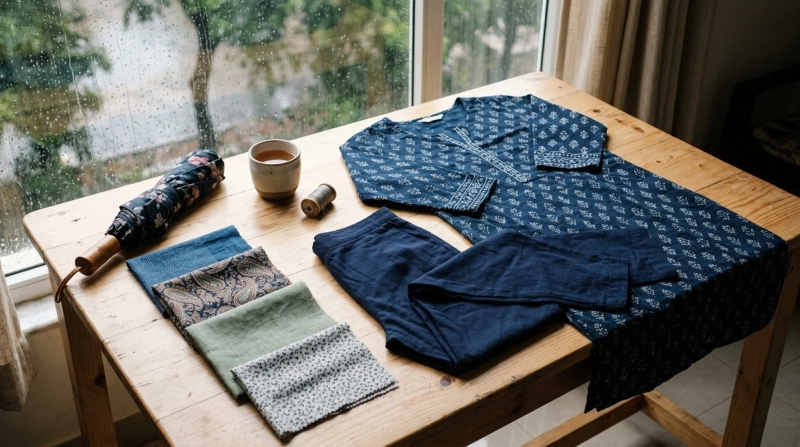
Short answer: For everyday monsoon wear, a rayon or viscose kurti is usually the easiest choice. It feels soft, drapes well, and handles humid weather better than many heavier fabrics. Light cotton is great when the weather is sticky but not too rainy. Linen feels breezy, but it wrinkles almost immediately in damp weather. Polyester dries fast, but if it is thick or tight, it can feel hot, sweaty, and clingy.
So the best monsoon kurti fabric is not just the one that looks pretty on the hanger. It is the one that lets your skin breathe, dries without too much fuss, and does not make you look like the rain personally attacked you on the way to work.
Because honestly, monsoon dressing in India is its own challenge. You leave home in a fresh kurti, and within minutes there is rain, traffic, muddy water, wet auto seats, sticky humidity, and absolutely no sunlight when you need your clothes to dry.
The good news? You do not need to buy a whole new rainy-season wardrobe. You just need a few smart kurtis, tunics, kurta sets, and office-friendly ethnic pieces that actually work in this weather.
Here is a simple, practical kurti fabric guide for monsoon.
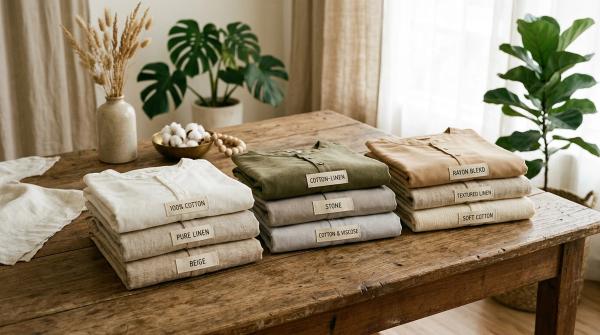
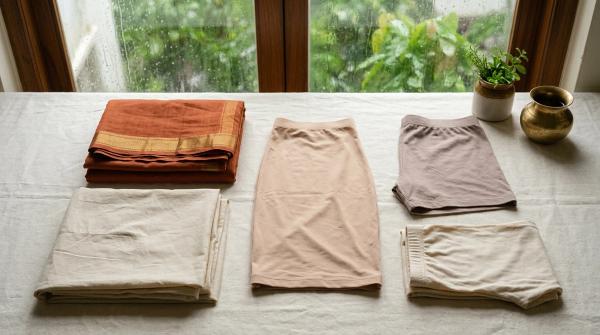
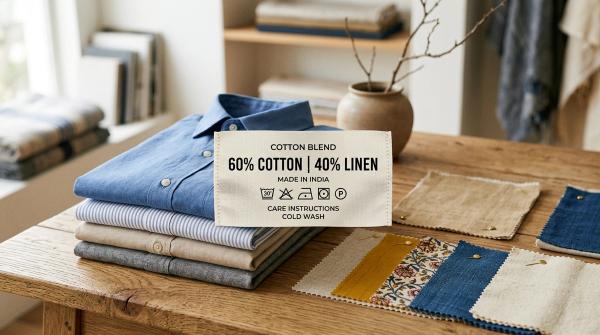
Fabric Comparison: Cotton, Rayon, Linen and Polyester in Monsoon
#So, Which Fabric Should You Actually Buy?
#If you want one safe option, go for a rayon kurti for monsoon.
Rayon usually sits nicely on the body, feels softer than stiff cotton, and does not become too heavy when the weather gets damp. It works for office, college, errands, casual lunches, and even small family plans. Basically, it is the kind of fabric that does not create extra problems on an already messy rainy day.
If you love cotton, you do not have to stop wearing it. A cotton kurti for rainy season can be very comfortable, especially on humid days when you are mostly indoors or travelling by car. Just avoid thick cotton, heavy embroidery, and very long hems. Once cotton gets properly wet, it can take its own sweet time to dry.
A linen kurta in humidity feels fresh and airy, no doubt. But once rain enters the picture, linen creases fast. Very fast. Some people enjoy that relaxed, slightly crumpled look. Some people feel untidy in it. If you have a formal office day or a long commute, linen may not be your most reliable friend.
A polyester kurti in monsoon sounds practical because it dries quickly. But thick polyester can trap heat and make you feel sweaty. If you choose polyester, pick a light blend, a loose fit, and something you will not be stuck wearing for ten hours straight.
What to Buy for Monsoon Ethnic Wear
#1. Pick light fabrics, not necessarily thin fabrics
#Light and thin are not the same thing.
A kurti can be light in weight and still give proper coverage. That is what you want in the monsoon. If possible, feel the fabric before buying. If it feels bulky, stiff, too layered, or heavy in your hand, it will probably feel worse in humid weather.
Good picks for monsoon:
- Rayon or viscose kurtis
- Lightweight cotton kurtis
- Cotton blends
- Light georgette or chiffon-style kurtis with breathable lining
- Light chanderi-style festive pieces, if the lining is not heavy
Be careful with:
- Thick cotton
- Heavy silk-style fabrics
- Dense polyester
- Fully lined kurtas with synthetic inner fabric
- Heavy mirror work or embroidery for daily commutes
2. Keep the length practical
#Monsoon is not the best season for hems that almost sweep the road.
They may look graceful in photos, but in real life they collect mud, catch water splashes, and take forever to dry. If you walk, take autos, use public transport, or climb wet stairs, a practical length makes a huge difference.
For daily wear, choose:
- Knee-length kurtis
- Calf-length kurtas
- Short tunics
- Straight kurtas with ankle-length pants
Avoid:
- Floor-length anarkalis for commuting
- Long trailing dupattas
- Wide palazzos that brush against wet roads
- Very long flared kurtas on rainy days
A shorter hem is simply easier to manage. You can walk faster, sit comfortably, climb stairs, and avoid that horrible muddy line at the bottom of your kurti.
3. Check the lining before buying
#This is where many outfits trick us.
A kurti may look light from the outside, but the lining can completely change how it feels. A thick or synthetic lining can make the whole outfit hot, sticky, and slow to dry.
Before buying, turn the garment inside out and check what will actually touch your skin.
Better options:
- No lining, if the kurti is opaque
- Thin cotton lining
- Mulmul-style lining
- Light lining only where needed
Avoid:
- Thick synthetic lining
- Full lining in already heavy fabrics
- Layered kurtas for everyday rainy-season wear
4. Choose colours that can handle rain and mud
#White and pastel kurtis look fresh and beautiful, but monsoon roads are not exactly gentle with them.
Light colours show mud spots quickly. Some pale fabrics can also become slightly transparent when wet, which is never fun when you are already dealing with rain and traffic.
Practical monsoon colours:
- Navy
- Charcoal
- Olive
- Bottle green
- Maroon
- Rust
- Deep brown
- Dark printed bases
Prints are also very useful in the rainy season. Small prints, block prints, darker florals, and busy patterns hide tiny water marks and splash stains much better than plain light fabrics.
Buying Checklist for Monsoon Kurtis
#Before you add one more kurti to your cart, ask yourself:
- Is the fabric light enough for humid weather?
- Will it dry overnight if the weather stays damp?
- Does it feel breathable, or does it trap heat?
- Is the lining thin and comfortable?
- Is the length practical for daily wear?
- Can I walk, sit, and commute without the hem touching wet roads?
- Is the colour safe for mud splashes?
- Can I wash it at home, or does it need dry cleaning?
- Will it crease badly if I get caught in drizzle?
- Can I wear it with at least two bottoms I already own?
If a kurti fails too many of these points, skip it. Monsoon ethnic wear should make your life easier, not give you one more laundry headache.
Best Fabric Choices by Use Case
#For Office
#For office wear, rayon or viscose is usually the safest choice. A straight kurta in a darker shade or small print looks neat, feels comfortable, and handles humid commutes better than thick cotton or fussy linen.
Good office combinations:
- Rayon straight kurta with ankle pants
- Dark printed kurti with slim trousers
- Lightweight cotton kurta on days with less rain
- Short dupatta or no dupatta if your commute is messy
Avoid heavy linen if you hate visible creases by lunchtime. Because yes, it will crease.
For College
#College outfits need to survive a lot: walking, buses, autos, wet staircases, canteen chairs, long lectures, and sudden rain.
Short kurtis, rayon tunics, and light cotton kurtis are the easiest options.
Good college combinations:
- Short rayon kurti with jeans
- Cotton-blend tunic with cropped trousers
- Printed kurti with ankle-length leggings
- Dark cotton kurti on humid but not very rainy days
Avoid floor-length styles, pale bottoms, and anything that needs constant adjusting.
For Daily Errands
#For errands, comfort matters more than anything else.
You want something that can be washed easily, dried quickly, and worn again without too much ironing.
Good choices:
- Rayon kurtis
- Light cotton kurtis
- Simple printed tunics
- Loose polyester blends, only if they feel light and breathable
You do not need to overbuy here. Two or three practical monsoon kurtis can cover most daily errands if they dry fast enough.
For Festive Wear
#Monsoon festive dressing needs a little planning.
Heavy fabrics, delicate silk-style pieces, and long hems can become stressful if you have to travel through wet roads. Instead, choose festive pieces that look dressed up without feeling heavy.
Better options:
- Lightweight festive kurta sets
- Chanderi-style pieces with light lining
- Cotton-silk-style blends that are not too heavy
- Dark festive colours instead of cream, white, or powder pink
Save your heavier outfits for indoor events or occasions where you know the travel will be easy.
What to Avoid in Monsoon Kurtis
#If you want fewer wardrobe regrets during the rainy season, avoid:
- Very thick polyester kurtis
- Heavy cotton that stays wet for hours
- Long anarkali hems for outdoor wear
- White or pale kurtis for rainy commutes
- Heavy lining under lightweight fabrics
- Dense embroidery that becomes difficult to dry
- Clothes that need dry cleaning after every wear
- Bottoms that drag close to wet roads
This does not mean these fabrics or styles are bad forever. It only means they may not be right for a wet, humid, traffic-filled monsoon day.
Care and Drying Tips for Humid Weather
#Monsoon laundry needs a little patience. Clothes dry slowly, and if you fold them even slightly damp, they can start smelling musty later.
Wash or rinse soon after a wet commute
#If your kurti gets splashed with muddy water, rinse that area as soon as possible. Mud stains become more stubborn once they dry deeply into cotton, rayon, or pale fabrics.
Do not wring rayon harshly
#Rayon and viscose can stretch or lose shape if you twist them too hard. Instead of wringing, gently press the water out.
Try the towel roll method
#For cotton and rayon kurtis, place the washed kurti on a clean dry towel. Roll the towel with the kurti inside and press gently. This removes extra water without damaging the fabric. Then hang the kurti in an airy spot.
Leave space between clothes
#Do not crowd wet kurtis on one rod. Leave gaps between clothes so air can move properly. It sounds small, but it makes a real difference in humid weather.
Dry dark and printed kurtis inside out
#Turn printed or dark kurtis inside out before drying. This helps protect the colour, especially if you dry clothes near a window or balcony.
Iron according to the fabric
#Cotton and linen usually need ironing. Rayon may need low heat. For blends, printed pieces, or decorated kurtis, check the care label first. If you are unsure, test the iron on a small inside area.
Store only when fully dry
#Before folding your kurti into the wardrobe, check the seams, underarms, cuffs, and hem. These areas often stay damp longer than the main fabric.
Air festive wear before storing
#If you wear festive kurta sets during the monsoon, air them properly before putting them back into covers. Do not pack them tightly right after wearing.
Simple Monsoon Kurti Formula
#If you want a small but useful rainy-season wardrobe, try this:
- 2 rayon or viscose kurtis for office or daily wear
- 1 lightweight cotton kurti for humid indoor days
- 1 darker printed tunic for errands or college
- 1 light festive kurta set with minimal lining
- 2 ankle-length bottoms that do not drag in the rain
That is enough for most people. You do not need a completely separate monsoon wardrobe. You just need clothes that are easier to manage when the weather is sticky, damp, and unpredictable.
Related AllBlogs Reads
#- Best Fabrics for Monsoon Office Wear in India — for office-specific fabric choices.
- What to Wear to College in Monsoon: Indian Student Guide — for campus and commute outfits.
- Colour Bleeding in Clothes: Monsoon Laundry Fixes — for protecting prints and dark colours.
- Dry Clothes in Monsoon Without Smell or Fungus — for drying clothes indoors in damp weather.