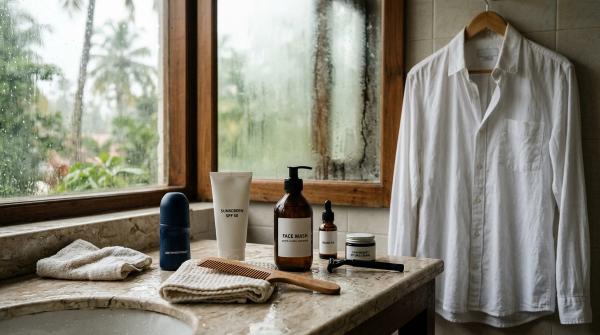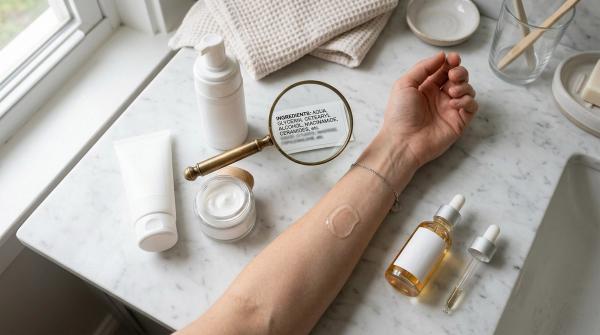
A travel skincare kit for a 3-day trip does not need to be complicated. You’re not moving your whole bathroom into a suitcase. You’re just trying to keep your skin clean, comfortable, moisturized, and protected while you’re away.
For most people, that means packing:
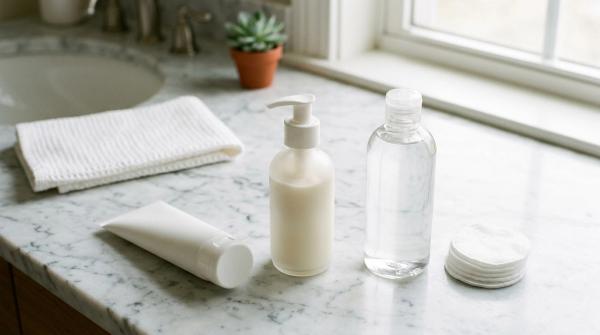
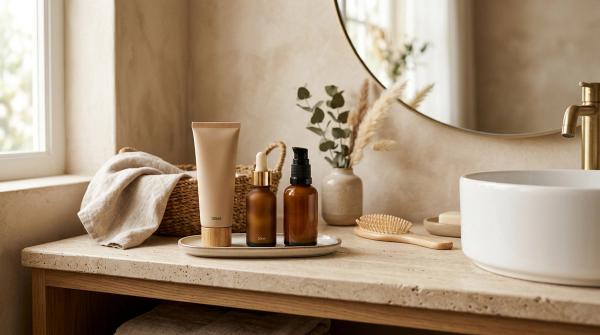
- A gentle cleanser
- A moisturizer your skin already likes
- Broad-spectrum sunscreen with SPF 30 or higher
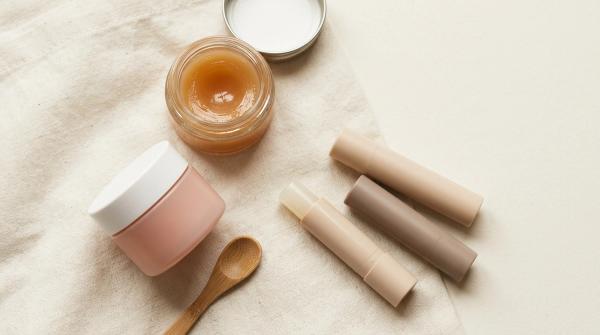
- Lip balm
If you have a little extra room, you can add a simple hydrating serum or makeup remover, but only if you already use them at home.
That’s really it.
The hard part is not knowing what to bring. The hard part is standing over your open bag and suddenly wondering if you need toner, eye cream, night cream, exfoliating pads, facial oil, a clay mask, and those three tiny samples from the back of your drawer.
You probably don’t.
For a short trip, your skincare goal is not to transform your skin. It is to keep things steady while everything else changes: weather, sleep, hotel air, flights, hard water, long days, late nights, and maybe more restaurant food or alcohol than usual.
A simple weekend skincare routine is almost always better than a packed toiletry bag full of products you barely use at home.
Here’s how to build a practical, carry-on friendly skincare kit for a 3-day trip without overthinking it.
The Simple Travel Skincare Kit Checklist
#Use this as your starting point. These are the real travel skincare essentials for most weekend trips.
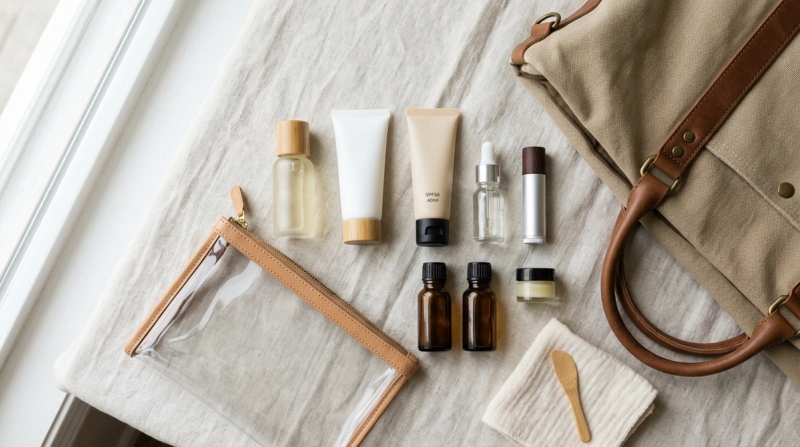
Pack these basics
#- Gentle cleanser, either travel size or poured into a small bottle
- Moisturizer, one familiar formula you can use morning and night
- Broad-spectrum sunscreen, SPF 30 or higher
- Lip balm, especially for flights, cold weather, or dry hotel rooms
- Hydrating serum, optional, if your skin already likes it
- Small spot patches, optional, if you normally use them
- Reusable travel bottles, if your regular products are too large
- Quart-size clear bag, if you’re flying with liquids, gels, creams, or pastes
That is enough for a weekend skincare routine.
If you wear makeup or heavy sunscreen, add a small cleansing balm or makeup remover. Just make sure it is something your skin already knows. A trip is not the time to test a new remover, peel, scrub, or “wake up glowing” product.
What to Pack vs. What to Skip
#For a 3-day trip, every product should earn its spot in your bag. Ask yourself one question: will I actually use this while I’m away?
If the answer is no, leave it at home.
The 3-Day Rule: Don’t Start Something New
#A weekend trip is a terrible time to experiment with skincare.
Even products labeled “gentle” can still bother your skin. And if you add travel stress, different weather, less sleep, flights, hotel towels, and rushed mornings, it becomes much harder to tell what caused a breakout or reaction.
For travel skincare, boring is a good thing.
Bring the products your skin already knows. If you have never used something before, do not make it part of your travel skincare kit unless you are genuinely okay with the risk of irritation.
Save the fun new serum for when you’re back home and can pay attention to how your skin reacts.
Carry-On Skincare Rules: What Fits in Your Bag?
#If you’re flying, liquid rules matter.
TSA allows liquids, gels, creams, and pastes in 3.4 oz or 100 ml containers, and they should fit inside a quart-size bag.
That means your cleanser, moisturizer, sunscreen, serum, cleansing balm, toothpaste, and similar products may all count as liquids or creams at screening.
A few practical packing tips:
- Use containers that are 3.4 oz or 100 ml or smaller.
- Keep liquids, gels, creams, and pastes together in a clear quart-size bag.
- Make sure every lid is fully closed.
- Do not fill bottles all the way to the top.
- Label decanted bottles so you do not mix up cleanser, moisturizer, and sunscreen.
- Put anything that might leak in a small zip bag, even inside your toiletry kit.
You do not need to buy expensive travel-size skincare. If your regular products work for you, decanting them into small reusable bottles is usually easier and cheaper.
AM Weekend Skincare Routine
#Your morning routine should be quick, comfortable, and focused on sun protection. Keep it simple enough that you’ll actually do it before breakfast, sightseeing, meetings, or checkout.
Morning routine
#- Cleanse lightly or rinseIf your skin feels fine, a splash of water may be enough. If you feel oily, sweaty, or sticky, use your gentle cleanser.
- Apply hydrating serum, optionalUse this only if it is already part of your regular routine. Apply it before moisturizer.
- MoisturizeUse a light, even layer. If your sunscreen is already moisturizing, you may not need much.
- Apply sunscreenUse a broad-spectrum sunscreen with SPF 30 or higher. This is the most important morning step, especially if you’ll be outside, walking around, sitting near windows, driving, or spending time at the beach.
- Add lip balmLip balm is tiny, useful, and easy to reapply throughout the day.
PM Weekend Skincare Routine
#Nighttime skincare is about taking off the day and keeping your skin comfortable while you sleep. It does not need to turn into a 10-step routine in a tiny hotel bathroom.
Evening routine
#- Cleanse wellRemove sunscreen, sweat, makeup, and whatever your face picked up during the day. If you wear heavy makeup or water-resistant sunscreen, use your usual makeup remover or cleansing balm first, then follow with your gentle cleanser if that’s what you normally do.
- Apply hydrating serum, optionalAgain, only use this if your skin already tolerates it well.
- MoisturizeApply your moisturizer evenly. If your skin feels dry from travel, use a slightly thicker layer than usual.
- Use lip balmThis is especially helpful in dry hotel rooms, cold weather, or after flights.
That’s the whole routine. Simple, repeatable, and easy to do even when you’re tired.
Sunscreen for Travel: What to Look For
#For a travel skincare kit, sunscreen is not optional. The American Academy of Dermatology recommends a broad-spectrum sunscreen with SPF 30 or higher.
The best travel sunscreen is usually the one you already like enough to wear. If it feels greasy, pills under makeup, stings your eyes, or leaves a finish you hate, you probably will not use enough of it.
For a 3-day trip, choose sunscreen that is:
- Broad-spectrum
- SPF 30 or higher
- Comfortable on your skin
- Easy to reapply
- Small enough for your carry-on liquids bag, if you’re flying
If you’re going somewhere sunny, hot, or beachy, do not assume one morning application will last all day. Pack enough so you can apply it generously and reapply when needed.
Humidity and Dry-Climate Swaps
#You do not need a totally different skincare routine for every destination. Most of the time, a few small swaps are enough.
If you’re going somewhere dry
#Dry weather, cold weather, long flights, and air-conditioned rooms can make skin feel tight and uncomfortable.
Pack:
- A richer moisturizer instead of a very light lotion
- Lip balm
- Your usual gentle cleanser
- Sunscreen SPF 30 or higher
Skip:
- Strong exfoliants
- Drying masks
- New active products
- Over-cleansing
A richer cream can simplify your whole routine. Instead of packing several extra hydrating layers, bring one moisturizer that feels good enough for both morning and night.
If you’re going somewhere humid
#Humidity can make skin feel sticky or oily faster, but that does not mean you should skip moisturizer completely.
Pack:
- A lightweight moisturizer or gel cream
- Gentle cleanser
- Broad-spectrum SPF 30 or higher
- Lip balm, if your lips still get dry
Skip:
- Heavy creams if they feel uncomfortable in humidity
- Thick sleeping masks
- Extra facial oils you do not normally use
- Complicated layering routines
In humid places, texture matters. Choose lighter products you will not mind applying, especially under sunscreen.
How Much Product Do You Actually Need for 3 Days?
#A 3-day trip usually means about six face-washing moments: three mornings and three nights.
That is not much.
You probably do not need full-size bottles unless you are sharing products or the trip might get extended. Small travel bottles are usually enough for cleanser and moisturizer. Sunscreen may need a little more room because you should use it generously and may need to reapply.
A practical carry-on skincare setup might look like this:
- Cleanser: 1 to 2 oz
- Moisturizer: 1 to 2 oz
- Sunscreen: up to 3.4 oz or 100 ml for carry-on
- Serum: 0.5 to 1 oz, optional
- Lip balm: full stick or small pot
- Makeup remover or cleansing balm: small amount, if needed
If you’re checking a bag, you have more flexibility, but the same rule still applies: more space does not mean you need more skincare.
What to Leave at Home
#This is where overpacking usually happens. A short trip can make you feel like you need a backup for every possible skin emergency.
For most weekend trips, skip:
- Full-size cleanser
- Full-size moisturizer
- Multiple serums
- Strong exfoliating acids
- Peel pads
- Retinol if you do not already tolerate it well
- Clay masks
- Sheet masks
- Bulky jars
- Facial tools
- New hotel or duty-free skincare
- Separate eye cream, unless you use it daily and truly want it
- Backup products for problems you rarely have
If you would not use it at least once during the trip, it probably does not belong in your travel skincare kit.
A Simple Packing Plan
#Here’s a calmer way to pack without second-guessing everything.
- Put your daily cleanser, moisturizer, sunscreen, and lip balm on the counter.
- Add one optional product only if you use it regularly, like a hydrating serum or makeup remover.
- Check container sizes if you’re flying carry-on.
- Decant into 3.4 oz or 100 ml containers if needed.
- Place liquids, gels, creams, and pastes in a quart-size bag.
- Leave behind anything new, harsh, bulky, or rarely used.
That’s it.
Your skincare does not need to look impressive in your luggage. It just needs to be easy to use.
When to Check With a Dermatologist
#This guide is for everyday skincare packing and general travel comfort. It is not medical advice.
Talk to a dermatologist if you have persistent rashes, allergic reactions, severe acne, burns, or medication- or pregnancy-related skincare concerns. If something feels painful, intense, or unusual, do not try to fix it with random travel products.