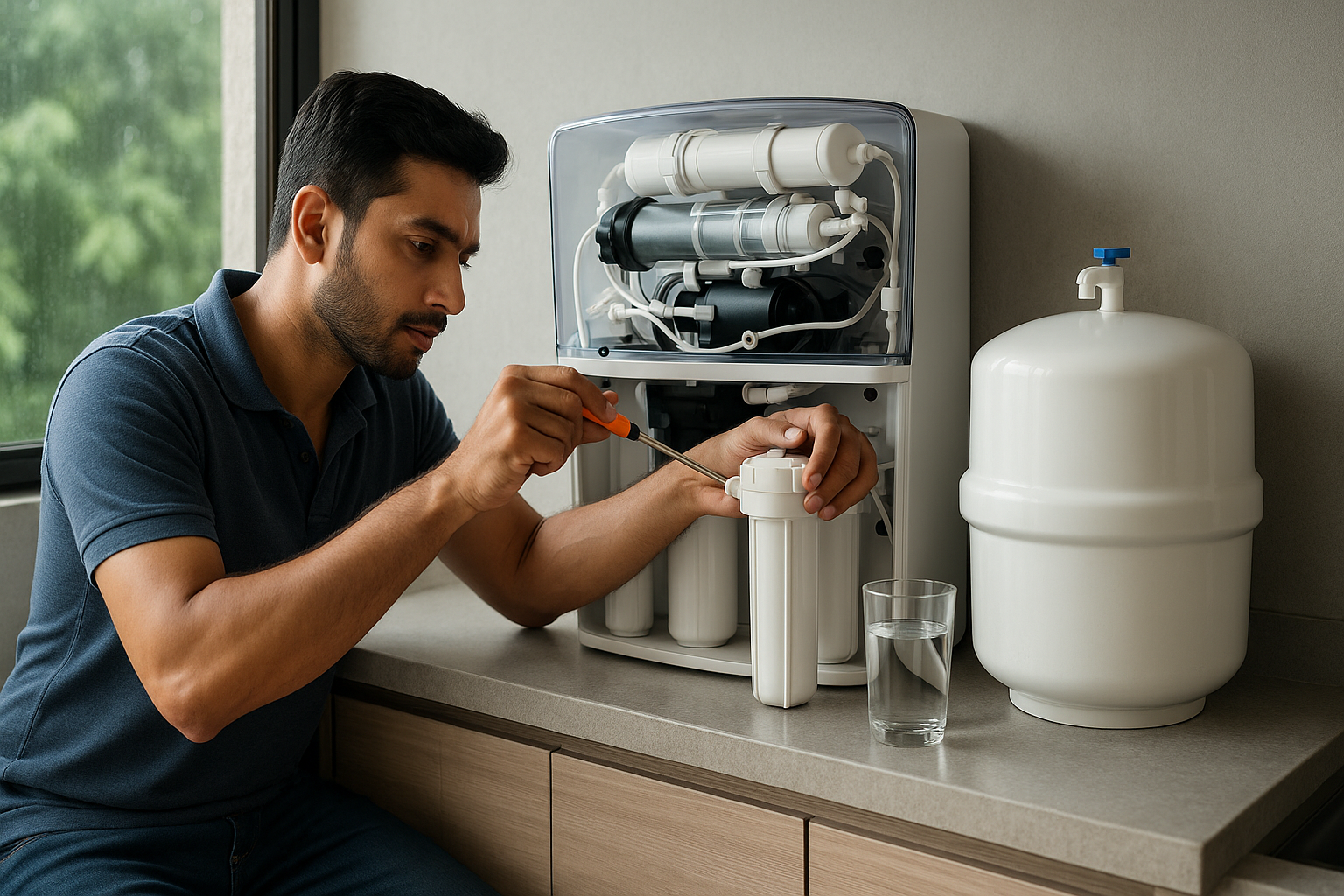
Every monsoon I become a little bit obsessive about drinking water. Not in a dramatic wellness-influencer way, just in a very normal Indian-household way where the rain starts, the taps get weird, somebody in the family says the water smells "different", and suddenly me and my mom are boiling, filtering, storing, arguing, and wiping down the purifier like our life depends on it. Which, okay, a bit extreme maybe... but also not really. Monsoon season in India genuinely changes water quality risk. You get runoff, sewage mixing in some places, muddy supply, higher microbial contamination, biofilm buildup in storage tanks, all that not-so-fun stuff. And if you already use an RO, UV, or RO+UV purifier, monsoon is when maintenance matters way more than people think.
I started taking this seriously after one rainy season when three people in my building had stomach infections in the same month. It wasn't some huge outbreak, but enough to make all of us nervous. Since then I've gotten weirdly interested in safe drinking water as part of wellness. We talk so much about protein, gut health, supplements, sleep trackers, seed cycling, magnesium glycinate, whatever the 2026 wellness trend is this week... and still plenty of families forget the machine that's literally handling the water we drink all day. Honestly, clean water is more foundational than half the fancy health stuff we spend money on.
Why monsoon changes the game, health-wise
#During monsoon, the problem isn't only "dirty looking water". Sometimes the water looks clear and is still risky. Heavy rains can disturb municipal lines, increase turbidity, and in some areas allow microbial contamination from damaged pipelines or overflow. The health side of this is pretty straightforward but easy to ignore until someone gets sick. Unsafe water can contribute to diarrhoeal disease, vomiting, stomach cramps, and can be especially rough for kids, older adults, pregnant women, and anyone with weaker immunity. Public health guidance has said this forever, but it still hits different when your own house is dealing with it.
And in the last couple years, a lot more Indian households seem to be paying attention to preventive health at home, not just treatment after the fact. That's one big 2026 wellness shift I actually like. People are doing home air quality checks, tracking sleep, paying attention to metabolic health, and yes, asking better questions about water TDS, filter replacement, and tank hygiene. Some of it gets too gadget-y for me, but some of it is genuinely useful.
First things first: know what purifier you actually have
#This sounds dumb, but loads of people don't fully know. They'll say, "We have Aquaguard type" or "it's UV one I think" when it's actually RO+UV+UF with a storage tank and a TDS controller. That matters because monsoon maintenance is a bit different depending on the system.
- RO, or reverse osmosis, uses a membrane to reduce dissolved solids, heavy metals, and many contaminants. Good where TDS is high, but it needs regular servicing and wastes some water.
- UV systems use ultraviolet light to inactivate many microorganisms, but the water needs to be relatively clear for UV to work properly. If the incoming water is very turbid in monsoon, performance can suffer.
- UF or sediment stages help with particles and some microbes depending on setup, and pre-filters become extra important when rain makes water muddy.
- Storage tanks inside purifiers are often ignored. Big mistake. A clean filter with a slimy tank is still... not great, to put it mildly.
If you don't know your model, check the sticker, manual, or service app. Seriously. Ten minutes now saves a lot of confusion later.
My personal monsoon checklist, the one I actually use
#I'm not super perfect with routines, I miss things, but this is what I try to stick to once the rainy season starts. It has helped a lot, and it keeps me from doing that thing where I panic only after the water tastes odd.
- Get the purifier serviced before or at the start of monsoon, not after it starts acting up. Preventive is cheaper than emergency visits, usually.
- Ask specifically about sediment filter, carbon filter, RO membrane condition, UV lamp status, and tank cleaning. If you don't ask, some technicians do the bare minimum, sad but true.
- Check for unusual taste, smell, slower flow, extra noise, or more frequent auto cut-off issues. These are small clues and I used to ignore them.
- Wipe the tap/nozzle area every day or two, especially if lots of hands touch it. This tiny habit matters more than people think.
- Empty and clean the storage tank if your brand recommends user-safe cleaning, or schedule sanitization through authorised service. I don't DIY anything risky with electrical parts.
- Replace candles, cartridges, or filters on schedule based on water quality and actual usage, not just "it still works so leave it." That's how we all postpone stuff forever.
One thing I learned the hard way: a purifier can keep dispensing water even when one key component is overdue for replacement. Functioning isn't the same as functioning well. Kinda annoying, but yeah.
RO maintenance in monsoon — where most people get lazy
#RO systems are brilliant in the right setting, especially where dissolved solids are high, but monsoon can stress the pre-filtration stages. If incoming water gets muddier, sediment filters clog faster. When that happens, flow drops, the pump can strain, and the membrane may not be protected the way it's supposed to be. A lot of households wait till the water trickles out and then call service. By then the machine has been struggling for a while.
The broad, practical rule is this: if your area sees visible change in water clarity during rains, ask the technician whether the sediment filter needs earlier replacement than your usual schedule. Same for the carbon stage if taste or odour changes. RO membrane life varies a lot depending on feed water quality and maintenance, so no one-size-fits-all number is perfectly honest. But if the system hasn't been checked in ages and your TDS rejection has become poor, don't just keep guessing.
Also, a small but important wellness angle people are talking about more now in 2026 is not over-purifying low-TDS water. If your source water is already low in TDS, an RO may not always be necessary, and very low mineral water all the time isn't automatically "healthier" just because it sounds pure. The right purifier should match your water source. This is where a basic water test or local water quality info can help way more than random internet advice.
UV purifier safety — great tech, but only when the basics are right
#I used to think UV means germs are handled, full stop. Not exactly. UV can be effective against many microorganisms, but it depends on the water being clear enough and the lamp working properly. During monsoon, turbidity can rise. If the water has too many suspended particles, UV light may not penetrate as effectively. Which is why pre-filtration matters so much. If your purifier uses UV, don't skip checks on the quartz sleeve, lamp life, and the filter stages before the UV chamber.
And please don't assume a glowing indicator light means everything is perfect. Some systems alert well, some don't, some users never notice the warning. If the UV lamp is near end-of-life, replace it as advised by the manufacturer or service engineer. I know, it feels like one more expense, but it's one of those things where "chalta hai" is not the vibe.
Tank safety is the most ignored part, and honestly the grossest
#Can I be blunt for a second? A lot of purifier tanks are kinda disgusting because no one thinks about them. People replace filters, maybe. But the storage tank inside the purifier, plus external household water tanks on terraces or basements, often get neglected until there is smell, slime, insects, or visible sediment. Monsoon makes that risk worse because moisture, contamination, and fluctuating supply conditions create a nice little party for microbes and gunk.
For the purifier's own storage tank, sanitization matters. Follow manufacturer guidance or get an authorised service person to do it, especially if your model is not designed for easy user cleaning. For the building or home overhead tank, regular cleaning and proper sealing are huge. Cracks, loose lids, nearby drains, mosquito access, and stagnant low-use water all increase problems. If your purifier is doing its best but the source tank is filthy, that's an uphill battle.
One of the simplest health upgrades in any Indian home is this: treat water storage hygiene like kitchen hygiene. You wouldn't cook in a dirty pot every day and call it wellness.
How to tell if your drinking water may not be okay
#This isn't for self-diagnosis or panic, but these are practical red flags I pay attention to now. Water that turns cloudy after rain. A sudden earthy, metallic, sewage-like, or chlorine-heavy smell. Sliminess around the purifier tap. Much slower output. Family members suddenly getting repeated loose motions or stomach discomfort around the same time. None of these prove the purifier is the cause, obviously, but they do mean it's worth checking fast.
If someone in the house has vomiting, severe diarrhoea, signs of dehydration, fever, blood in stool, or symptoms in a small child or elderly person, don't just blame the weather and wait. Get medical advice. Safe water is prevention, not a replacement for proper care. I feel like in wellness spaces this gets blurred sometimes, and I hate that.
What about boiling water? And those trendy mineral drops everyone talks about
#So this is where I slightly contradict myself because I love practical old-school habits and also modern filtration. In monsoon, boiling can be a useful backup if water safety is uncertain or your purifier is under service. It's not silly, it's sensible. But boiling doesn't remove all dissolved contaminants the way an RO system can. On the other hand, RO doesn't make dirty storage practices magically okay. The best approach depends on your source water and setup, which is annoyingly unsexy but true.
As for adding electrolyte or mineral drops to every bottle because social media says modern life demineralises us... ehhh, not for everyone. In 2026 there's definitely a huge hydration trend, and some of it is useful, especially for heavy exercise, heat, or illness. But for most healthy adults, plain safe drinking water is still the main thing. If you have a specific health condition, kidney issue, blood pressure concerns, or you're using specialised products regularly, ask a clinician instead of taking wellness reels as gospel.
A few mistakes I made, so maybe you don't have to
#I once delayed service for nearly four months because the purifier was still "basically fine". It wasn't. Another time I cleaned only the outside body and felt very productive, meanwhile the real issue was inside. And me and my family used to ignore the overhead tank completely unless the plumber brought it up. That's probably more common than people admit. We focus on visible cleanliness because it feels satisfying. The invisible stuff is where the risk often is.
Another mistake — trusting unofficial technicians too easily. Look, some local repair people are excellent. But counterfeit filters and poor-quality replacement parts are a real thing in many markets. If a component is fake or badly fitted, performance and safety both can drop. These days I prefer authorised service or at least verified parts. Costs more sometimes, yes. Still worth it, in my opinion.
Simple monsoon wellness habits around water that are actually realistic
#Not everything has to be a big project. A few small habits make a difference in real life.
- Keep drinking-water containers covered and wash them properly, not just a quick rinse that makes us feel good.
- Use clean hands or clean utensils when handling stored water. Sounds obvious, but we all get careless.
- Don't keep water sitting forever in low-use guest room bottles or gym shakers. Fresh refill is better.
- If you're away from home for days, flush the purifier as per brand guidance before drinking from it again.
- If your society has repeated contamination complaints in monsoon, push for tank cleaning and line inspection instead of only buying fancier personal filters.
That last one matters a lot. Individual wellness is nice, but public health systems and building maintenance matter too. Sometimes the healthiest thing isn't a supplement, it's asking awkward questions in the residents' WhatsApp group... which nobody enjoys, lol.
Final thoughts — clean water is boring, basic, and honestly one of the best health habits
#I know water purifier maintenance doesn't sound as exciting as gut microbiome testing or wearable recovery scores or all the glossy health stuff that's trending right now. But when monsoon hits India, this boring topic becomes very real. Safe drinking water supports digestion, helps lower infection risk, protects vulnerable family members, and just gives peace of mind. That's huge. If you have an RO, UV, or tank-based system, don't wait for a bad taste or a sick day to pay attention. Service it, clean it, check the tank, and match the purifier to your actual water source. Simple, not glamorous, but super important.
Anyway, that's my yearly monsoon rant and I stand by it. Take care of your water setup before the rains get messy, and your stomach may thank you later... mine definitely has. If you're into practical health and home wellness stuff like this, you can poke around AllBlogs.in too, they've usually got more down-to-earth reads on everyday wellbeing.