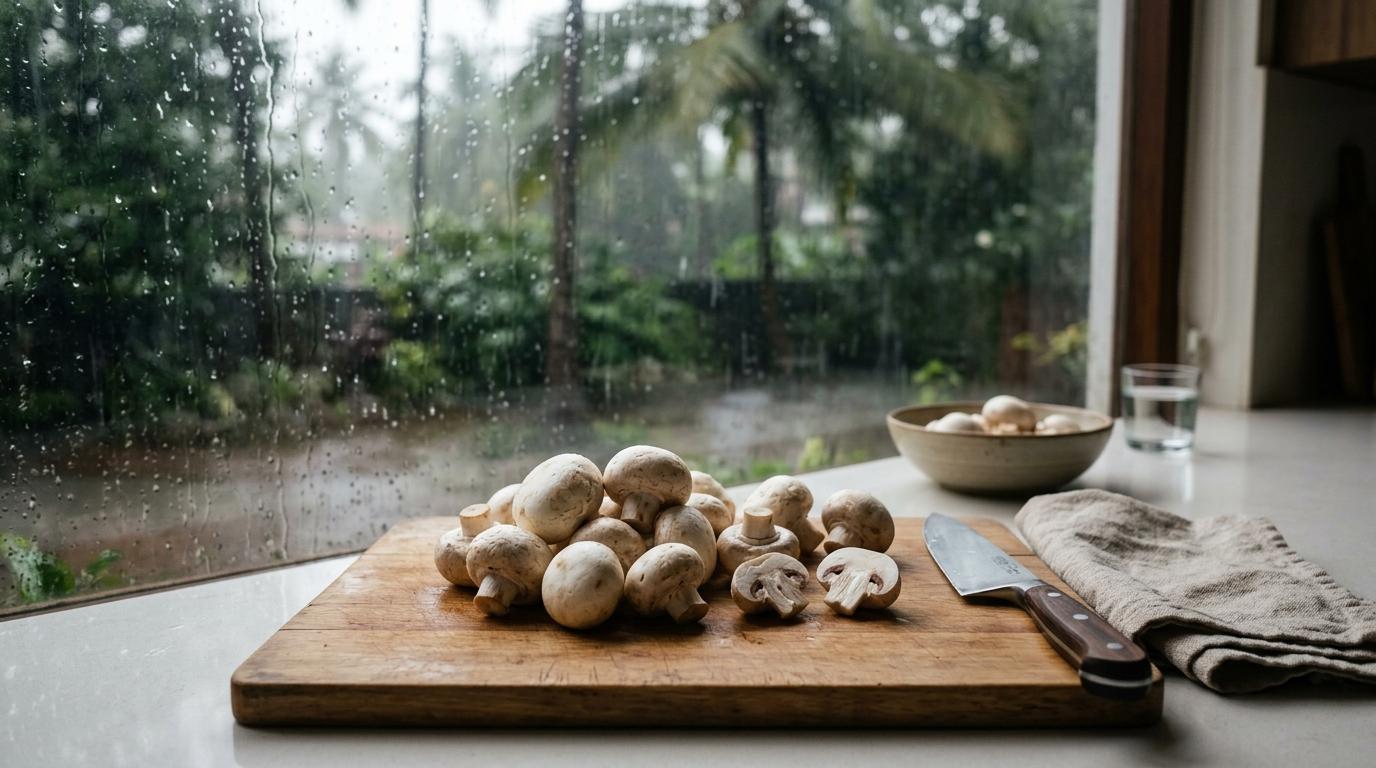
There is something about rainy weather and mushrooms that just fits. A hot bowl of mushroom soup, mushroom masala with rotis, mushroom pulao, noodles, sandwiches, stuffed parathas — everything feels a little more comforting when it is cool and wet outside.
But monsoon also brings that familiar kitchen doubt. Vegetables spoil faster, the air feels damp, and every family has at least one person saying, “Don’t eat this in the rainy season.”
So, the question is fair: can you eat mushrooms in monsoon, or should you avoid them?
The simple answer is: yes, you can eat mushrooms during monsoon. You just need to be more careful than usual.
Buy fresh mushrooms from a clean, reliable place. Keep them refrigerated. Clean them only when you are ready to cook. Cook them well. And if they look, smell, or feel even slightly wrong, throw them away.
Mushrooms are not something to be scared of, but they are also not something to handle casually in humid weather.
This Food & Recipes safety guide is written for everyday Indian kitchens — for people who cook mushroom sabzi at home, pack mushroom dishes in lunchboxes, or buy mushrooms from local markets during rainy days.
A quick health note before we begin: if someone has severe diarrhea, repeated vomiting, fever, dehydration, pregnancy, weak immunity, or if the person is elderly or a young child, it is better to speak to a qualified doctor instead of trying home fixes.
Quick answer: are mushrooms safe in monsoon?
#Yes, mushrooms can be safe in monsoon if they are:
- Commercially grown
- Fresh
- Bought from a trusted seller
- Cleaned properly
- Cooked thoroughly
- Stored in the fridge
Rain itself does not make mushrooms unsafe. The real problem is moisture, heat, and poor handling.
Mushrooms already have a lot of water in them. They are soft, delicate, and slightly porous. In humid weather, they can spoil quickly if they are left outside, packed tightly in sweaty plastic, exposed to dirty water, or washed and stored for later.
So if you are wondering can you eat mushrooms in monsoon, the answer is yes — but with stricter kitchen rules.
Think of mushrooms the way you think of leafy greens in the rainy season. You do not have to avoid them completely, but you do need to buy carefully, clean properly, cook well, and discard anything doubtful.
When you should not eat mushrooms in rainy weather
#This is the most important part of mushroom food safety.
If mushrooms look wrong or smell wrong, do not try to “save” them with extra masala, deep frying, boiling, or pressure cooking. Spoiled food does not always become safe just because it is cooked.
Avoid mushrooms in monsoon if you notice any of these mushroom spoilage signs.
1. They feel slimy or sticky
#Fresh mushrooms may feel slightly moist, but they should not feel slippery, sticky, or coated with slime.
If they feel slimy, it usually means they are no longer fresh enough to eat. This can happen quite fast in monsoon, especially when mushrooms are kept in plastic and moisture gets trapped inside.
2. They smell bad
#Fresh mushrooms usually have a mild, earthy smell.
Throw them away if they smell:
- Sour
- Rotten
- Fishy
- Chemical-like
- Like ammonia
- Just “off” in any way
Do not taste them to check. Smell is enough.
3. They are mushy, soggy, or collapsed
#Good mushrooms should feel firm and slightly springy.
Do not use them if they are:
- Very soft
- Soggy
- Watery
- Collapsing when touched
- Breaking down in patches
A small bruise is not always a problem. But mushy, wet patches are a clear warning sign.
4. They have dark, wet, or sunken spots
#A few light brown marks can happen because of handling or age.
But dark, wet, sunken, or spreading spots are different. If many mushrooms in the packet have these marks, it is safer to discard the whole pack instead of picking and choosing.
5. You can see mold
#If you see fuzzy growth, coloured patches, or anything that looks like mold, throw the mushrooms away.
Do not cut off the moldy part and use the rest, especially during humid monsoon weather.
6. They were kept outside for too long
#If mushrooms have been sitting on the kitchen counter for many hours in a warm, damp room, it is safer to avoid them.
This matters even more if they were already washed, chopped, or cooked.
7. They are wild or unknown mushrooms
#Never eat wild mushrooms collected during monsoon unless they have been identified by a trained expert.
Rain makes many types of fungi grow, and some poisonous mushrooms can look very similar to edible ones. For home cooking, stick to commercially grown mushrooms from trusted sellers.
How to buy, clean, cook, and store mushrooms safely
#Good mushroom safety starts before the pan is even on the stove.
In monsoon, every step matters — buying, carrying home, storing, cleaning, cooking, cooling, and reheating.
1. Buy mushrooms from a clean and reliable place
#Choose mushrooms from a shop, supermarket, or vendor where they are kept clean, covered, and preferably cool.
Look for mushrooms that are:
- Firm
- Fresh-smelling
- Not slimy
- Not wet or dripping
- Free from dark mushy patches
- Packed properly, without leakage or swelling
If you are buying loose mushrooms, be extra careful. Avoid mushrooms kept in open baskets near muddy water, flies, drain splashes, or direct rain.
Also avoid vendors who keep sprinkling water on mushrooms to make them look fresh. That extra water can make them spoil faster.
For packed mushrooms, check the packet from all sides. A little condensation is common, but water collected at the bottom is not a good sign.
2. Buy only what you can cook soon
#Mushrooms are not ideal for long storage during rainy weather.
Buy a small quantity and try to cook them within 1 to 2 days. This is especially useful if you pack lunchboxes or cook in small batches.
Repeatedly opening the same packet, taking out a few mushrooms, closing it again, and storing it back can make them lose freshness faster.
3. Keep mushrooms cool after buying
#Once you buy mushrooms, do not leave them in a hot car, scooter storage box, or shopping bag for hours.
Take them home and refrigerate them as soon as possible.
If you are doing a big grocery trip, buy mushrooms near the end so they spend less time outside the fridge.
4. Store raw mushrooms unwashed in the fridge
#Do not wash mushrooms before storing them. Extra water makes them spoil faster.
If the mushrooms are in a clean sealed pack and you plan to cook them soon, you can keep them in the fridge as they are.
If the packet is open or has too much moisture inside, shift the unwashed mushrooms to a clean paper bag or wrap them loosely in a paper towel before refrigerating.
Avoid putting raw mushrooms in airtight boxes unless they came packed that way. Trapped moisture can make them sweat and turn slimy.
And yes, they belong in the fridge — not on the kitchen counter.
5. Clean mushrooms only just before cooking
#This is where many people get confused.
Should mushrooms be washed? Should they only be wiped?
In dry weather, wiping clean mushrooms with a damp cloth may be enough. But in monsoon, a quick rinse is more practical for most home kitchens, especially if there is visible dirt.
If you are wondering how to clean mushrooms, keep it simple:
- Trim the muddy or dry stem end if needed.
- Rinse the mushrooms quickly under clean running water.
- Rub gently with your fingers to remove dirt.
- Do not soak them in a bowl of water.
- Pat them dry immediately with a clean towel or paper towel.
- Cook them right away.
The main rule is simple: quick rinse, dry well, cook soon.
Do not wash mushrooms and then keep them in the fridge for later. Washed mushrooms spoil much faster.
6. Do not soak mushrooms for “extra cleaning”
#Soaking mushrooms is not a good idea.
They absorb water, become soggy, and it does not make them safer than rinsing under running water.
If mushrooms are so dirty that they need long soaking, they are probably not the best choice for monsoon cooking.
7. Cook mushrooms properly
#During monsoon, avoid eating raw mushrooms in salads or cold dishes.
Cooking is an important part of mushroom food safety.
Cook mushrooms until:
- They soften properly
- They release moisture
- The released water reduces
- The whole dish becomes hot throughout
Whether you are making sabzi, curry, pulao, soup, noodles, fried rice, sandwich filling, or paratha stuffing, make sure the mushrooms are properly cooked — not just lightly warmed.
If you are adding mushrooms to a quick stir-fry, give them enough time in the pan before adding sauces and finishing the dish.
8. Be extra careful with creamy mushroom dishes
#Creamy mushroom soup, white sauce pasta, malai mushroom, and cheesy mushroom dishes are perfect for rainy evenings. But they also need more care.
These dishes contain moisture, dairy, and other perishable ingredients, so do not leave them outside for long.
If there are leftovers, cool them quickly and refrigerate them in a clean, covered container.
9. Store cooked mushrooms safely
#Cooked mushrooms should not sit at room temperature for hours, especially in a warm and humid kitchen.
A simple home rule:
- Eat freshly cooked mushroom dishes as soon as possible.
- If saving leftovers, refrigerate them once they stop steaming.
- Use clean, dry containers.
- Do not mix fresh hot food into old leftovers.
- Avoid keeping mushroom leftovers for too long during monsoon.
If cooked mushroom curry or sabzi smells sour, looks unusually watery, has bubbles, feels sticky, or tastes odd, discard it.
10. Reheat mushroom dishes until steaming hot
#When reheating mushroom sabzi, curry, rice, soup, or pasta, heat it until it is steaming hot throughout.
Stir once or twice while reheating so the centre heats properly too.
Do not reheat only until it is slightly warm, especially if the food was kept in the fridge or carried in a lunchbox.
Also avoid reheating the same dish again and again. Take out only the portion you need, heat it well, and keep the rest refrigerated.
11. Pack mushroom lunchboxes carefully
#Mushroom dishes can be packed for school or office, but monsoon needs extra caution.
For lunchboxes:
- Pack only freshly cooked mushrooms.
- Let the food cool slightly before closing the box.
- Do not trap too much steam inside.
- Keep the lunchbox in a cool place if possible.
- Avoid packing mushrooms for very long days in hot, non-AC conditions.
- If reheating is available, heat the food until steaming hot before eating.
If the lunchbox has been sitting for many hours in a warm, humid place and the food smells strange, looks odd, or feels sticky, do not eat it.
A simple monsoon mushroom safety checklist
#Use this quick checklist before cooking mushrooms in the rainy season.
Before buying
#Ask yourself:
- Are the mushrooms firm?
- Do they smell fresh and earthy?
- Is there no slime?
- Is there no excess water in the packet?
- Were they kept clean and cool?
Before cleaning
#Check:
- Are you cleaning them only just before cooking?
- Are you avoiding soaking?
- Are you drying them well?
- Are you using a clean knife and chopping board?
Before eating
#Make sure:
- The mushrooms are fully cooked.
- The dish is hot throughout.
- You are avoiding raw mushroom salads in humid weather.
- The taste and smell are normal.
Before storing
#Check:
- Were raw mushrooms kept unwashed in the fridge?
- Were cooked leftovers refrigerated soon?
- Are leftovers reheated properly?
- Are doubtful mushrooms discarded?
If you cannot confidently say yes, it is better to skip them.
Common mistakes to avoid with mushrooms in monsoon
#Washing mushrooms and storing them for later
#This is one of the most common mistakes.
Washing feels like meal prep, but with mushrooms it usually reduces freshness. Wash them only when you are ready to cook.
Ignoring the smell because the packet looks fine
#A packet may look okay from the outside and still smell bad once opened.
Trust your nose. If mushrooms smell sour, rotten, or strange, throw them away.
Cooking slimy mushrooms to avoid waste
#Please do not do this.
Slime is a spoilage warning. Extra masala, frying, boiling, or pressure cooking should not be used to rescue spoiled mushrooms.
Leaving mushroom curry out overnight
#This is risky in any season, and even more during monsoon.
Refrigerate leftovers properly or discard them.
Buying too much because it is on discount
#Discounted mushrooms may already be close to the end of their freshness.
During rainy weather, buying less and cooking sooner is safer than buying extra and hoping they last.
Final word
#You do not have to give up mushrooms in monsoon.
You just need to treat them like a quick-spoiling ingredient.
Buy fresh mushrooms from a reliable source. Keep them cold. Clean them only just before cooking. Cook them properly. Store leftovers in the fridge. Reheat until steaming hot.
Most importantly, learn the signs of mushroom spoilage. Throw away anything slimy, smelly, moldy, mushy, unusually wet, or doubtful.
That is the safest way to enjoy mushroom soup, mushroom masala, pulao, stir-fry, noodles, or lunchbox sabzi during rainy and humid weather — without turning food safety into fear.