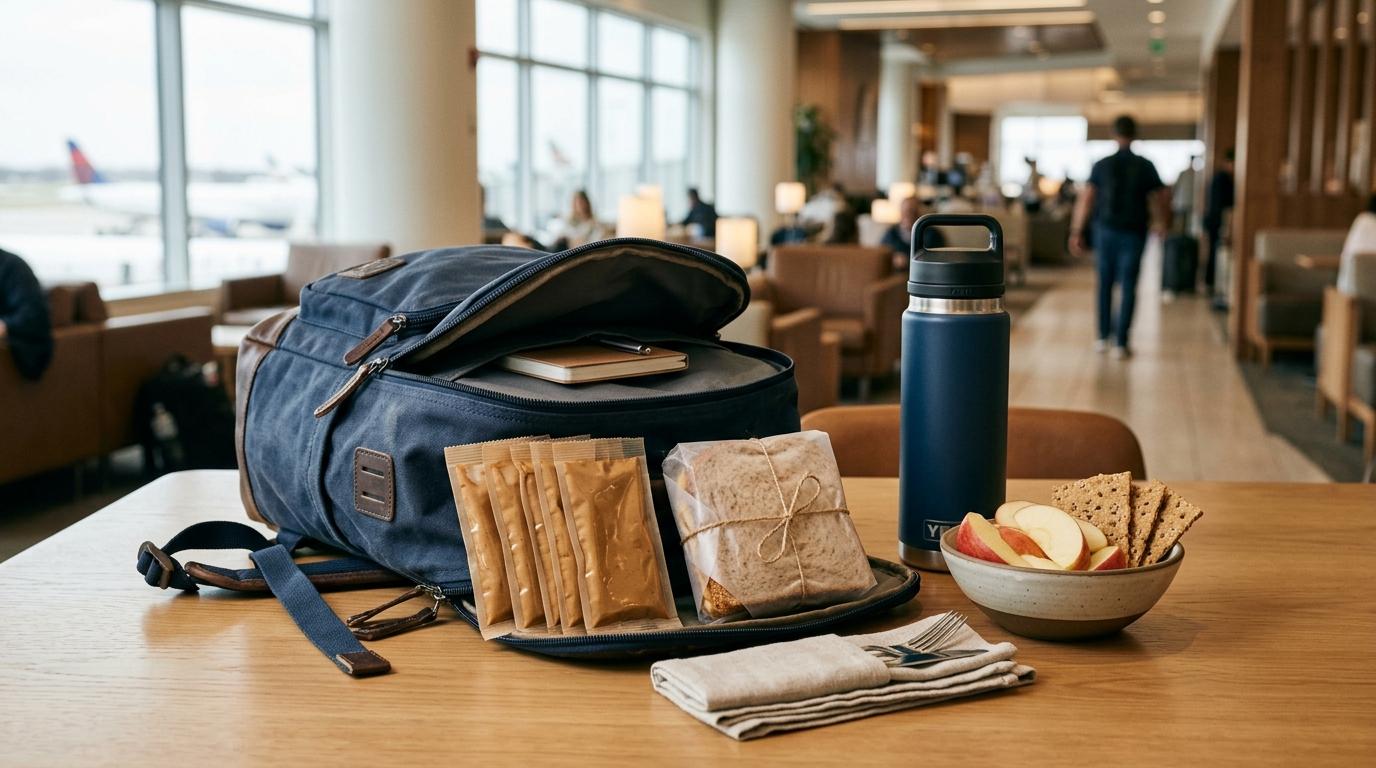
Peanut butter feels like it was made for travel.
It is filling, affordable, easy to find, and does not need a fridge. You can spread it on bread, scoop it into oatmeal, eat it with crackers, pair it with fruit, or keep a few packets in your bag for the kind of travel day where lunch somehow becomes a granola bar at 4 p.m.
For backpackers, parents, hostel guests, road trippers, train travelers, and anyone trying to save money on food, peanut butter while traveling can be a lifesaver.
But it is not completely hassle-free.
Airport security may treat it differently than you expect. Jars can leak. Natural peanut butter can separate and leave oil over your bag. And in tight shared spaces like planes, buses, trains, and hostel kitchens, peanut allergies are something to handle with real care.
Here is how to travel with peanut butter, or other nut butters, without losing it at security, wrecking your clothes, or making life harder for the people around you.
Quick answer
#If you just need the short version, here it is:
- Can you bring peanut butter on a plane? Yes, but in carry-on bags, TSA treats peanut butter as a liquid, gel, or paste. It needs to be in a container that is 3.4 ounces / 100 ml or smaller and fit inside your liquids bag.
- Can peanut butter go in checked luggage? Yes. TSA allows peanut butter in checked bags, though international food and customs rules may still apply when you arrive.
- Best travel option: Single-serve nut butter packets for travel are usually easier than jars. They are cleaner, smaller, and easier to fit within carry-on liquid limits.
- What about a peanut butter sandwich? A pre-made sandwich is usually treated as solid food, which makes it simpler for airport security than carrying a jar.
- International trips: Rules vary by airport and country. Check current airport, airline, security, and customs rules before packing peanut butter for an international trip.
- Allergy etiquette matters: If there is an allergy announcement on a plane, train, bus, tour, or school trip, keep peanut products sealed and eat something else.
When peanut butter is actually useful
#Peanut butter is at its best when you need food that is compact, filling, and does not need refrigeration.
It is perfect for those travel days when meals are uncertain. Maybe you have an early train before cafés open. Maybe your hostel breakfast is just toast and instant coffee. Maybe you are on a road trip where every stop is a gas station. Or maybe you just do not want to spend airport prices on a sad sandwich.
Peanut butter is especially handy for:
- Backpackers who want calorie-dense food without carrying a cooler
- Parents packing easy snacks for kids
- Hostel guests making quick breakfasts
- Train and bus passengers who need something more filling than chips
- Travelers putting together no-fridge travel snacks from simple grocery-store ingredients
The best thing about it is how flexible it is. Peanut butter can turn plain bread into breakfast, make oatmeal more satisfying, or work with apples, bananas, rice cakes, pretzels, crackers, and whatever else you can find nearby.
That said, it is not ideal in every situation.
A full jar can be heavy. Natural peanut butter can leak if the oil separates. Sticky spreads are annoying to clean off your hands, tray tables, hostel counters, and reusable utensils. And in enclosed public spaces, peanut products can be a serious concern for people with allergies.
So the real question is not just, “Can I bring peanut butter?”
It is also, “What is the least messy, least annoying, most considerate way to bring it?”
Peanut butter and airport security
#Airport security treats peanut butter differently from solid food because it is spreadable. Under TSA rules, peanut butter in a carry-on bag falls under the liquid, gel, and paste category.
That means:
- Carry-on bags: Peanut butter must be in a container of 3.4 ounces / 100 ml or less.
- Liquids bag: It should fit inside your allowed liquids bag with your other small liquids, gels, and pastes.
- Larger jars: A regular jar of peanut butter is not allowed through TSA screening in a carry-on.
- Checked bags: TSA allows peanut butter in checked luggage.
- Final call: TSA screening officers make the final decision at the checkpoint.
This does not only apply to peanut butter. Almond butter, cashew butter, sunflower seed butter, tahini, and similar spreads are generally treated the same way because they are pastes.
What about peanut butter sandwiches?
#A pre-made peanut butter sandwich is usually treated as solid food, so it is often easier than carrying a jar.
If you want peanut butter for your flight, spreading it on bread before you go through security is one of the simplest options. It avoids the carry-on paste issue and gives you an easy snack or meal later.
Just keep it reasonable. Wrap the sandwich well, use bread that will not fall apart, and do not overfill it. A thin, tidy layer is better than a sandwich that squishes peanut butter into your bag, your seat, or your hands.
Travel is already messy enough.
What about powdered peanut butter?
#Powdered peanut butter is not a liquid or paste, so it does not fall under the 3.4-ounce carry-on liquid limit.
It can be a good option if you want something lightweight, dry, and leak-proof for oatmeal, hostel breakfasts, camping meals, or longer trips. It is especially useful if you do not want to deal with oily jars or sticky utensils.
Just know that powder-like substances in larger amounts may need extra screening. Pack it somewhere easy to reach in case security wants to take a closer look.
What about international airports?
#Do not assume TSA rules apply everywhere.
Many airports use similar liquid rules, but security rules vary by country and airport. On top of that, some destinations have strict customs or agricultural rules about bringing food across borders, especially opened, unsealed, or plant-based food products.
For international trips, check the current airport security rules and arrival-country customs guidance before packing peanut butter, nut butter packets, or powdered peanut butter.
Yes, it is boring. But it is less annoying than having your snacks thrown away after a long flight.
How to pack peanut butter without a fridge
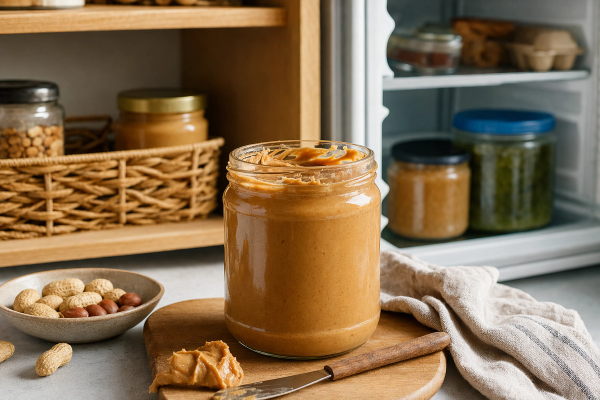
#The biggest travel problem with peanut butter usually is not spoilage.
It is leakage.
Peanut butter, especially natural peanut butter with a layer of oil on top, can make a horrible mess if the lid loosens, a packet punctures, or a jar gets squeezed inside your backpack. Warm weather can make it softer and oilier, which does not help.
For most travelers, the easiest choice is nut butter packets for travel. They are small, sealed, portioned, and easier to carry through airport security. They also mean you do not have to pack a knife or spoon just to make a snack.
Here is how the main options compare.
Single-serve packets
#Single-serve packets are usually the most travel-friendly option.
They are best for:
- Flights
- Day trips
- Kids’ snack bags
- Hiking snacks
- Carry-on packing
- Avoiding leaks and dirty utensils
Look for factory-sealed packets and keep them together in a zip-top bag. Do not pack opened packets. They can leak, attract pests, and create a sticky mess that is much more irritating than you think it will be.
Small travel containers
#Small containers can work well if you only need a little peanut butter.
They are best for:
- Short trips
- Carry-on travel within liquid limits
- Travelers who already use refillable containers
- Small portions for breakfast or snacks
If you are flying with peanut butter in a carry-on, make sure the container is clearly within the 3.4-ounce / 100 ml limit. Use a container that seals tightly, then put it inside a separate bag.
Even if you trust the lid, bag it anyway. Peanut butter is not something you want to discover loose in your backpack.
Full jars
#Full jars make the most sense when you are not dealing with carry-on airport security.
They are best for:
- Road trips
- Checked luggage
- Long hostel stays
- Domestic travel where the jar is not going through security in your carry-on
If you pack a jar, choose carefully. No-stir peanut butter is usually less risky than natural peanut butter with a visible oil layer. Plastic jars are more practical than glass because they are lighter and less likely to break.
To reduce leaks:
- Make sure the rim is clean before closing the lid.
- Tighten the lid firmly.
- Place the jar inside a sealed zip-top bag.
- Pack it upright when you can.
- Keep it away from clothes, electronics, books, and important papers.
If you are staying in a hostel or guesthouse, think about cleanup too. Peanut butter is sticky, and washing it off a travel spork in a tiny sink gets old fast. Use a clean knife, spoon, or spreader, and do not leave residue in shared kitchens.
Nobody wants to find peanut butter on a cabinet handle.
Easy peanut butter travel snacks
#The best peanut butter travel snacks are tidy, sturdy, and easy to eat without refrigeration. You want snacks that do not crumble everywhere, drip, smell too strong, or require a full kitchen setup.
Here are a few simple ideas that work well on the road.
1. Peanut butter sandwich
#There is a reason this one is a classic.
Use bread, flatbread, a bagel, or a wrap. Spread a modest layer of peanut butter, then wrap it tightly. If you add jam, honey, or banana, remember that the sandwich may get softer and messier as it sits.
Good for:
- Airport meals
- Train rides
- Packed breakfasts
- Kids’ snacks
- Long bus days
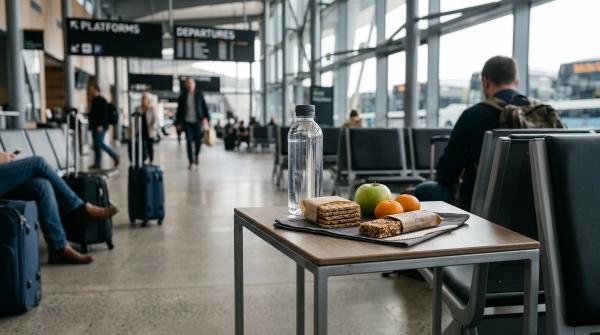
For flights, a peanut butter sandwich is often easier than carrying a jar because the peanut butter is already part of a solid food.
2. Nut butter packet with fruit
#Pair a sealed packet with an apple or banana. It is simple, filling, and does not require utensils if you squeeze the peanut butter directly onto each bite.
Good for:
- Road trips
- Hostel breakfasts
- Train snacks
- Day tours
- Quick no-fridge snacks
Pack napkins or wipes. This combo can get sticky quickly, especially with kids or when you are eating in a moving vehicle.
3. Nut butter packet with pretzels or rice cakes
#Choose sturdy dippers that will not turn into crumbs at the bottom of your bag. Pretzel rods, thick rice cakes, and firm crackers usually work better than delicate crackers.
Good for:
- Transit snacks
- Kids’ snack boxes
- Long waits at stations or gates
- Road trip snack bags
Open the packet carefully and squeeze out a little at a time. Dipping directly into the packet sounds convenient, but it often gets messy fast.
4. Powdered peanut butter in oatmeal
#Powdered peanut butter is useful if you want a lightweight breakfast option. Stir it into instant oatmeal with hot water. This works well in hostels, hotels with kettles, airport lounges, or anywhere you can safely get hot water.
Good for:
- No-fridge breakfasts
- Backpackers
- Hostel kitchens
- Longer trips
- Lightweight packing
Keep the powder sealed and pack it somewhere accessible in case airport security wants to inspect it.
5. Peanut butter with bakery bread
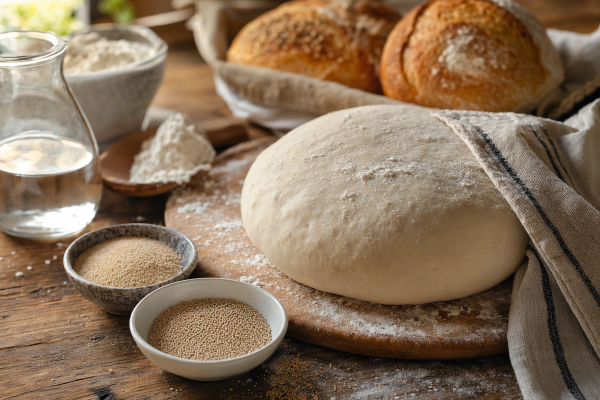
#For hostel stays, road trips, and slow travel, local bakery bread plus peanut butter can become an easy breakfast or lunch. It is cheap, filling, and much easier than trying to cook in a crowded shared kitchen.
Good for:
- Hostel guests
- Budget travelers
- Slow travel
- Road trips
- Simple grocery-store meals
Just be considerate in shared kitchens. Use your own knife or a clean utensil, wipe the counter, and do not leave peanut butter smears on tables, handles, sinks, or shared cutting boards.
People notice. And honestly, they should.
Peanut allergy etiquette while traveling
#Travel snacks do not exist in a bubble. Planes, trains, buses, ferries, tour vans, classrooms, and hostel kitchens are shared spaces. Peanut allergies can be serious, and it is worth being thoughtful.
You do not need to panic or treat every snack like a biohazard. But you should pay attention to the people around you.
If an airline crew member, train staff, teacher, guide, tour leader, or bus driver announces that someone nearby has a severe nut allergy, keep your peanut butter or nut butter sealed. Eat something else.
It is a small inconvenience for you. It can be an important safety step for someone else.
Even when there is no announcement, basic courtesy goes a long way.
On planes and trains
#If you eat peanut butter in a shared seating area:
- Keep the portion small and controlled.
- Avoid anything that smears onto tray tables, armrests, or seatbacks.
- Use napkins or wipes.
- Clean your hands afterward.
- Wipe the tray table if peanut butter touches it.
- Seal wrappers and packets before putting them in the trash or seat pocket.
- If crew members ask you not to eat it, put it away politely.
A peanut butter sandwich is usually cleaner than dipping crackers into a jar. A sealed packet is usually cleaner than an open container. Powdered peanut butter is better saved for places where you can mix it and clean up properly.
In hostels and shared kitchens
#Hostel kitchens need extra care because everyone is using the same counters, knives, sinks, shelves, and sometimes questionable dish towels.
If you use peanut butter:
- Do not double-dip shared utensils.
- Clean knives, spoons, and counters right away.
- Keep your jar or packets sealed when you are not using them.
- Do not leave sticky residue on tables, sink edges, cabinet handles, or fridge shelves.
- If someone nearby mentions a nut allergy, give them space and clean the area well.
This is not about being dramatic. It is basic shared-space manners.
And when everyone is tired, hungry, and living out of a backpack, good manners matter more than usual.