The small chaos before a 3AC night journey
#If you travel in India even a little bit, you’ll know this feeling. Train is at 9:40 pm, you start packing at 7:15 pm, somebody at home is shouting “charger rakha kya?”, and you are still trying to find that one ID proof which was definitely in the wallet yesterday. That is basically how many of my 3AC night journeys have started. Delhi to Bhopal, Pune to Nagpur, Howrah side, Jaipur side… different routes, same mild panic. And honestly, 3AC night travel is one of the best compromises in Indian Railways if you ask me. Not too expensive like 2AC, not too exposed like sleeper, usually cool enough, and you can actually sleep if your co-passengers are decent.
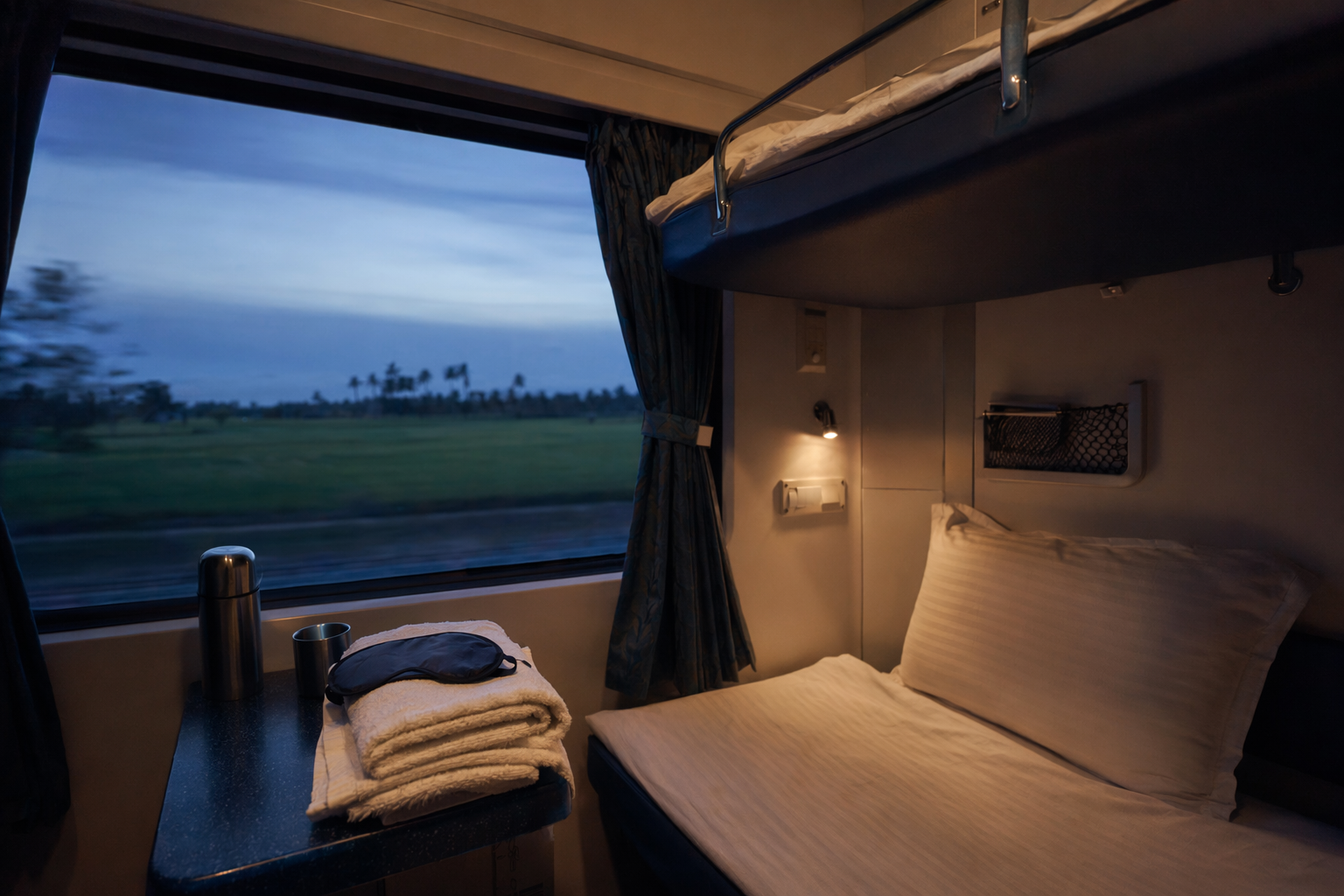
But 3AC is also not a hotel room on wheels. It’s shared space. You have six berths in a bay, two side berths, people climbing, bags under seats, chai-wala shouting at odd stations, kids watching reels without earphones, and that one uncle who starts packing his steel tiffin at 5:15 in the morning like he is shifting house. So a proper checklist makes a huge difference. Not fancy packing, just sensible packing. Things that help you sleep, stay clean, keep your stuff safe, and not trouble other passengers. This is the checklist I’ve slowly built after making enough silly mistakes.
First thing: ticket, PNR, ID proof, and all that boring-but-important stuff
#Before anything else, sort the ticket situation. For e-tickets, Indian Railways accepts the ticket on your phone along with an original valid ID proof, but network can disappear exactly when the TTE comes, because obviously. I keep a screenshot of the ticket, PNR, coach number, berth number, and one backup PDF offline. Also check your chart status before leaving home, especially if your ticket was RAC or waitlisted. A fully waitlisted e-ticket is not the same as a confirmed ticket, and people still get confused about this at stations. Don’t be that person arguing with the TTE at 11 pm.
My usual pre-boarding mini-list is simple: Aadhaar or other valid ID, ticket screenshot, train number, platform update from the station display or NTES-type live running apps, hotel booking if I’m reaching early morning, and emergency contacts saved offline. If you’re the organised type, this Digital Travel Wallet Checklist: Save Travel Docs Offline is actually useful before a long overnight train trip, because one dead phone battery can turn a normal journey into full drama.
- Take a photo of your coach position board if the station has one, because running with bags from S1 end to B5 end is not character building, it is just suffering.
- Keep one government ID in your small sling bag, not inside the big suitcase pushed under the berth.
- If you are boarding from a big station like New Delhi, Mumbai CSMT, Howrah, Chennai Central, Secunderabad or Ahmedabad, reach earlier than you think. Platforms change, bridges are crowded, and dinner parcel hunting takes time.
My 3AC packing system: one big bag, one small bag, zero hero-giri
#For 3AC night travel, I strongly believe in the two-bag rule. One main bag or suitcase that goes under the lower berth, and one small backpack or sling that stays with you on the berth. The small bag is your survival kit. Phone, wallet, charger, power bank, ID, specs, medicines, wet wipes, hand towel, earphones, and maybe one snack. The big bag should ideally not be opened after lights go off, because nobody wants to hear zip-zip-zip and plastic cover noise at midnight.
Also, please carry a small lock and chain if your bag is valuable or you sleep deeply. Many 3AC coaches have hooks or rings under the berth for chaining luggage. Is theft happening in every coach? No. But busy overnight routes and major junctions can be messy, especially when people are getting in and out at 2 am. I don’t chain every small backpack, but for a suitcase under the berth, yes, mostly. It gives peace of mind. And peace of mind is underrated in Indian trains.
The actual night bag checklist I keep near my head
#- Phone charger and power bank, because charging points are sometimes loose, occupied, or doing that annoying on-off thing.
- A light shawl or thin bedsheet. 3AC usually provides linen in long-distance AC trains, but I still carry one soft layer. Sometimes the blanket smells fine, sometimes it smells like it has seen too much life.
- Earphones or earplugs. Not optional if you care about sleep. Someone will snore. Someone will watch cricket highlights. Someone’s alarm will ring at 4:30 am and they won’t wake up.
- Small toiletries pouch: toothbrush, mini toothpaste, face wash sachet, handwash strip or sanitizer, wet wipes, tissue, and a tiny towel.
- Basic medicines: acidity tablet, headache tablet, motion sickness medicine if needed, ORS sachet, band-aid, and your regular prescription meds. Keep them accessible, not buried.
Choosing the berth: lower, upper, side lower… everyone has opinions
#Berth choice in 3AC can change your whole mood. Lower berth is convenient, especially for elders, families, or anyone who gets up often. But it also becomes public seating till sleeping time, so don’t expect full privacy at 8 pm. Middle berth is the most controversial one. You can sleep properly once it’s up, but climbing in and out is not fun. Upper berth is my personal favourite for overnight travel because once I go up, I disappear. Nobody asks me to shift, nobody sits on my bedsheet, and I can keep my small bag near my pillow.
Side lower feels romantic in photos, like you’ll sip chai and watch India pass by. Reality: people brush past you, curtains are not always there, and at some stations the light hits your face. Still, for solo travellers it can be nice because you’re not inside the main six-berth bay. Side upper is okay if you’re flexible and not carrying too much. If you’re tall, well… best of luck. 3AC berths are manageable, but not exactly luxury.
Food plan: don’t depend fully on pantry, but don’t carry a wedding buffet either
#Food in trains has improved in many ways, especially with e-catering options at bigger stations and more digital payments than earlier. But on a night journey, I don’t like depending totally on pantry or platform food. If you board after dinner, eat at home or carry something light. Paratha-roll, thepla, curd rice, lemon rice, idli, sandwiches, poha, khakhra, fruits like banana or apple… these work better than oily gravy and rice that leaks in your bag. Trust me, nothing ruins a coach vibe like spilled paneer butter masala under the berth.
Carry food that doesn’t smell too strong and doesn’t need ten containers. In 3AC, you’re sharing air with seven people nearby. Fish fry, heavy garlic pickle, open onion salad… I mean, your choice, but don’t be surprised if people give looks. I now carry one spoon, one small fork, and a cloth napkin. If you prefer your own clean eating setup, this Reusable Travel Cutlery Kit: What to Pack and Avoid fits perfectly for train journeys too, especially when you’re eating packed dinner on the berth.
Snacks that actually help at night
#- Dry fruits or peanuts, but don’t go full packet-crunching after lights off.
- Digestive biscuits or khari, because sometimes dinner was too early and hunger comes back at 1 am like a villain.
- A small chocolate or energy bar, useful if your train is late and breakfast gets delayed.
- Tea is tempting at every station, but too much chai late night means toilet trips. Learned this the hard way.
Water, toilets, and the real 3AC night comfort conversation
#People talk about berth and food, but honestly the biggest night-travel comfort factor is bathroom planning. AC coaches generally have Indian and western toilets, and cleanliness depends on the train, route, crowd, and timing. Early in the journey it’s usually okay. By morning, especially on long routes, it can become… let’s say spiritual test. Carry tissue, sanitizer, soap strips, and footwear you can wear quickly. Never go barefoot. I don’t care how sleepy you are, just don’t.
Drink water, but don’t chug a litre just before sleeping. Also don’t replace water with chai and coffee just because vendors are available. On train days I try to sip slowly, and if it’s summer, I add one electrolyte sachet sometimes, especially after running around stations with luggage. This Travel Day Hydration Mistakes: Water, Coffee, Electrolytes explains that balance nicely. Basically, stay hydrated, but don’t create unnecessary 2 am toilet missions for yourself.
Clothes for 3AC night travel: comfort over airport fashion
#3AC can get cold at night, then suddenly warm when the AC behaves weirdly or people keep opening the coach door. Wear layers. I usually go with track pants or loose jeans, a cotton T-shirt, and a hoodie or light jacket. Women travelling solo often prefer a dupatta or stole too, not just for warmth but for comfort while sleeping. Socks help a lot, especially in winter routes or North Indian trains during December-January type cold. In peak summer, AC can still feel chilly after midnight, so don’t assume you’ll be fine in shorts and a thin tee.
Avoid clothes with too many hooks, belts, tight waistbands, or anything you can’t sleep in. You’re not attending a function. Also, keep one change of clothes in your small bag if you’re reaching a work meeting, wedding, exam centre, or hotel before check-in. Station washrooms and retiring rooms can be used in some places, but morning rush is real. I once reached Nagpur half asleep with kurta crushed like a paper bag. Since then, one fresh T-shirt always stays on top.
Safety, solo travel, and being alert without becoming paranoid
#3AC is generally safe for regular Indian travellers, including solo travellers, but basic awareness matters. Don’t display cash, jewellery, expensive gadgets, or leave your phone charging unattended near the aisle. Keep your small bag clipped to the berth or tucked near your head. If you are on upper berth, phone can fall easily, so I keep it inside the bag after setting alarm. For women travelling alone, I’d say choose upper or side upper if you like privacy, but lower berth is easier if you need quick movement. There’s no one perfect answer.
Use the official railway helpline numbers and onboard staff if something feels wrong. Most coaches have TTEs, attendants in AC classes, and railway police presence on many routes, but don’t wait too long if someone is drunk, harassing, or occupying your berth. Be polite first, firm next. Indian train culture is mostly helpful, and aunties/uncles in the bay will often support you if you speak up. But yes, choose your battles. If someone has kept one extra bag slightly near your space, adjust. If someone is sitting on your berth at sleeping time and not moving, call the TTE.
What to do before sleeping in 3AC
#- Finish dinner and throw waste properly before the coach lights are dimmed. Don’t keep banana peels and food packets near the window or under the seat.
- Visit the toilet once before making your bed. Sounds obvious, but when the middle berth is up, getting down becomes a full gymnastic event.
- Set alarm 30-40 minutes before your station, more if the train usually reaches early or your stop is small. Some stations halt for barely two minutes.
- Keep shoes or slippers facing the right way. In the dark, you don’t want to search under three berths like a detective.
- Keep your ticket and ID nearby. TTE checking can happen after boarding, sometimes late, depending on the train and route.
One more thing: respect sleeping hours. Indian Railways has rules and general expectations around night sleeping time, and practically most passengers start settling after 10 pm. If you have a lower berth, people may sit till then. After that, middle berths go up, lights go dim, and the coach becomes a strange mix of snores, wheels, and blue night lamps. Keep calls short. Don’t play videos without earphones. And if you’re travelling in a group, remember the whole coach did not buy tickets for your reunion.
Season-wise checklist: summer, monsoon, winter
#Summer train travel means platforms are hot, water sells fast, and you may sweat before entering the AC coach. Carry extra water from a reliable source, but don’t buy random loose bottles. Keep a small towel, face wipes, and maybe glucose or ORS. In monsoon, pack a plastic cover for wet footwear and keep electronics inside a zip pouch. Platforms become slippery, trains can run late due to waterlogging or operational issues, and your luggage wheels will collect half the station mud. Not glamorous, but true.
Winter 3AC journeys in North and Central India need better layering. Fog can delay trains on some routes, especially in the northern belt, so carry extra snacks and don’t plan a tight onward connection if you can avoid it. The coach blanket helps, but I still carry socks and a light cap for late-night cold. Best months for comfortable train travel, in my opinion, are post-monsoon and early winter, roughly October to February for many routes, though festival rush around Diwali, Chhath, Christmas-New Year and long weekends can make tickets disappear quickly.
Boarding station hacks that locals know but nobody writes properly
#If you’re boarding from a major station, check platform updates only from official displays or announcements once you reach. Apps are helpful, but final platform changes happen. Don’t stand too close to the edge with luggage. Use the foot overbridge or escalator, not track crossing, even if others are doing it. Buy water, simple food, and anything missing before the train arrives, because once coach hunting starts, your brain stops working. If travelling with parents or kids, send one person ahead to confirm coach position while others stay with luggage.
Coolies are still useful at big stations if you have heavy luggage, elders, or a tight platform change. Rates can vary, so agree before moving. UPI works in many places now, but keep some cash. Network fails, QR codes don’t scan, and sometimes the tea stall guy just says “cash do bhaiya.” Also, station food is very route-specific. South Indian stations often have good idli-vada and curd rice, Gujarat routes have thepla and farsan vibes, Bengal side you’ll see cutlet and jhal muri, North Indian platforms are full chai-samosa life. That’s part of the fun.
If you need a room before or after the train
#Since many 3AC night trains reach at odd hours, accommodation planning matters. Railway retiring rooms and dormitories are available at many major stations and can be booked based on eligibility and availability, usually through railway channels. They’re practical for a few hours of sleep or freshening up, though quality varies a lot from station to station. Near big railway stations, budget hotels often start around ₹800-₹2,500 for basic rooms, while cleaner business hotels can go higher, around ₹2,500-₹5,000 or more depending on the city, season and distance from the station.
For women, families, or anyone reaching late night, I’d avoid blindly walking into the cheapest lodge outside the station. Check reviews, call the hotel, confirm 24-hour check-in if needed, and make sure the location is not in some dark gali where even autos hesitate. In smaller towns, decent dharamshalas, guest houses, and state tourism lodges can be better than random hotels, especially near pilgrimage routes. During festivals, exams, weddings, and cricket matches, rooms near stations get booked fast, so don’t keep it for “dekhenge waha jaake” unless you really enjoy stress.
Small things that make you a better co-passenger
#A good 3AC journey is not only about your comfort. It’s also about not making others miserable. Don’t block the aisle with shoes and bags. Don’t occupy charging points forever if someone else needs it urgently. Don’t spread your bedsheet over someone else’s seat before sleeping time. If an elderly passenger is struggling, help with luggage if you can. If a child is crying, don’t stare like the parents are enjoying it. Trains are shared Indian life in one coach, and a little patience goes a long way.
At the same time, keep boundaries. You don’t have to share your full life story with every friendly stranger. Be warm, not careless. I’ve had lovely conversations in 3AC, from a retired railway employee explaining old routes to a college student sharing homemade laddoo because his mother packed too much. I’ve also had journeys where I put earphones in and spoke to nobody. Both are fine. That’s the beauty of train travel here, you can be social or completely in your own zone.
My final 3AC night travel checklist
#- Confirmed ticket or clear RAC status, PNR screenshot, coach and berth details saved offline.
- Original ID proof in small bag, not suitcase.
- One main locked bag plus one small night bag with essentials.
- Phone charger, power bank, earphones, alarm set before sleeping.
- Light shawl or sheet, socks, comfortable clothes, and easy footwear.
- Water, light dinner, low-mess snacks, personal spoon or fork if needed.
- Toilet kit: sanitizer, tissue, soap strip, wet wipes, small towel.
- Medicines, ORS, prescription tablets, and anything you may need at night.
- Luggage chain or lock for peace of mind, especially on long overnight routes.
- A little patience. Seriously. It weighs nothing and helps the most.
Last thoughts from one Indian train sleeper to another
#3AC night travel is not perfect, but it has its own charm. The blue curtains or no curtains depending on coach type, the muffled station announcements, chai at strange hours, families opening tiffins, strangers becoming temporary neighbours, and that sleepy moment when you wake up and don’t know which state you’re in. I love flights for speed, yes, but trains still feel more connected to India. You see the country change slowly outside, even if most of the time you’re half asleep under a railway blanket.
So pack smart, keep your documents ready, don’t overthink every little thing, and be kind to fellow passengers. A 3AC night journey can be genuinely comfortable if you prepare for the basics and accept the little randomness that comes with Indian Railways. And if you’re planning more trips by train, bus, flight or just looking for practical desi travel tips, browse around AllBlogs.in sometime. I’ve found that the best travel advice is usually not fancy, just the stuff that saves you from avoidable headaches.