I love food courts more than I probably should. Not the sad airport kind with limp fries under a heat lamp, though even those have saved me at 2 a.m. I mean the real ones: hawker centres in Singapore, basement depachika food halls in Tokyo, mall food courts in Bangkok where office workers line up like they’re guarding state secrets, and the big modern food halls that keep popping up in places like Lisbon, Dubai, Seoul, and Mexico City. Food courts are where travel gets honest. You see what people actually eat on lunch break, what families share after shopping, what students can afford, and what tourists like me hover around awkwardly trying not to order the wrong thing.
But here’s the thing nobody wants to talk about when they’re filming their first bite of chili crab noodles or mango sticky rice: hygiene matters. A lot. I’ve had trips made magical by food courts, and I’ve had one trip in Kuala Lumpur where I spent a whole night bargaining with my stomach like, please mate, not now. So this is my traveler’s food court hygiene checklist, but not in a boring clipboard way. More like the stuff I actually look for when I’m hungry, sweaty, carrying a backpack, and trying to decide if that sizzling plate is a genius idea or a future regret.
Why Food Courts Are Still My Favorite Travel Meals in 2026
#Food travel has changed so much lately. People aren’t only chasing white tablecloth restaurants anymore. Everyone wants local, fast, affordable, and kind of immersive. Food halls and hawker-style markets are having a huge moment because they give you choice without making dinner feel like a committee meeting. One person wants ramen, another wants vegan dumplings, someone else wants fried chicken, and the kid wants bubble tea. Done. No drama. Also, QR ordering, cashless payments, allergen labels, robot tray-return stations, water refill points, and visible open kitchens are getting way more common in travel hubs and modern malls. Some of it feels a bit futuristic, some of it feels cold, but honestly I like being able to see what’s happening behind the counter.
My favorite food court trips lately have been the places that blend old-school cooking with new hygiene habits. Singapore is still the gold standard for me, not because every stall is fancy, but because the whole hawker culture is taken seriously. Hawker culture in Singapore was added to UNESCO’s Intangible Cultural Heritage list in 2020, and you feel that pride when you sit down at Maxwell Food Centre or Lau Pa Sat with a tray of chicken rice, satay, or laksa. Bangkok’s Terminal 21 food court, Pier 21, is still one of the best-value travel meals I’ve ever had. Tokyo department store food halls are almost too beautiful, like edible jewelry counters. And in Taipei, Seoul, Istanbul, and even airports like Changi or Hamad, food courts have become part of the actual travel experience, not just a refuel stop.
The First Rule: Watch the Crowd, But Watch the Right Crowd
#My first hygiene check is simple: who’s eating there? I don’t just mean “is it busy,” because busy can be misleading. A place can be packed because it’s famous on social media, not because it’s careful. I look for locals, especially office workers, older people, parents with kids, taxi drivers, and staff from nearby shops. They know. They eat there repeatedly, not once for a reel. In Singapore, I once followed a line of aunties at Old Airport Road Food Centre because I figured they had better instincts than me. They did. I ended up with char kway teow so smoky and rich I still think about it, and the stall was spotless in that practical, no-nonsense way: clean tongs, covered ingredients, fast turnover.
But don’t be blinded by a queue either. If the line is long and the food is moving fast, that’s usually good. If the line is long but the cook is touching cash, raw meat, and garnishes with the same hand, I quietly drift away like I suddenly remembered an appointment. No speech, no judgement, just exit. Me and my stomach have made agreements over the years, and one of them is: popularity doesn’t cancel out bad handling.
My Pre-Order Scan: The 30-Second Food Court Hygiene Checklist
#- Are the cooked foods steaming hot or just sitting there looking tired? Hot food should look properly hot, not lukewarm and lonely.
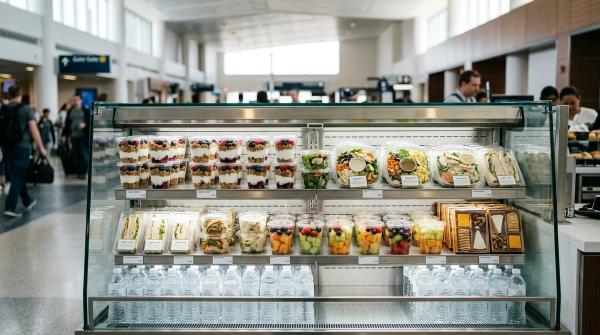
- Are cold items actually chilled? Sushi, cut fruit, salads, cream desserts, and fresh juices need real refrigeration, not decorative ice that melted an hour ago.
- Do staff separate raw and cooked foods? Different boards, different tongs, and no raw chicken juice anywhere near your noodles. Obvious, but you’d be surprised.
- Is there handwashing or glove discipline? Gloves are not magic. If someone wears gloves and then handles money, phone, bin, and your herbs, those gloves are basically a souvenir of everything.
- Are the tables being wiped with clean cloths or the same mysterious grey rag? I have strong feelings about the grey rag. Too strong maybe.
- Do the bins overflow? A messy bin area can mean staff are slammed, pests might be nearby, and cleaning cycles aren’t keeping up.
- Can I see an official hygiene grade or inspection notice? In some cities you’ll see posted grades, licenses, or food safety certificates. I don’t worship them, but I do notice them.
Heat Is Your Friend, Especially When Jet-Lagged and Reckless
#If I’m newly arrived somewhere, I usually start with hot cooked food. Not because I’m scared of everything, but because my body is already confused by time zones, airplane coffee, and the fact that I slept sitting upright next to a man who ate tuna sandwiches. A freshly cooked bowl of pho, a sizzling bibimbap, a hot plate of pad kra pao, a steaming dosa, a bowl of laksa, or grilled satay coming straight off the flame feels safer than cold buffet items that have been waiting around.
In Bangkok, I once arrived exhausted and went straight to a mall food court because I didn’t have the mental strength to decode a street stall at midnight. I ordered pad see ew from a stall where the cook worked so fast it was basically choreography. Wok screaming, noodles tossed, egg set in seconds. That kind of heat makes me happy. Same thing in Kuala Lumpur with roti canai when it’s pulled and slapped fresh on the griddle. Same thing in Seoul when the soup is bubbling like a tiny volcano. If it’s cooked right in front of you and served immediately, I relax a lot.
The Ice Question: My Most Annoying Travel Habit
#I am deeply annoying about ice. I admit it. In some destinations, commercial ice is perfectly normal and safe, especially in major cities, hotels, and modern food courts. In other places, I still ask myself where it came from. Not in a dramatic way, just practical. If a drinks stall is using sealed bags of tube ice from a supplier, great. If they’re scooping cloudy chunks from an uncovered bucket with a cup that everyone touches, I go for bottled or canned drinks. In Singapore, Tokyo, Seoul, Dubai, and most big malls, I don’t overthink it. In smaller bus station food courts or beach markets where water quality is uncertain, I overthink it enough for both of us.
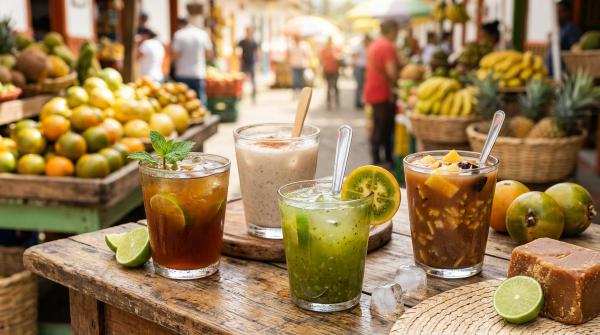
Fresh juice is another tricky one because I love it. Give me calamansi juice, sugarcane, watermelon, mango, all of it. But cut fruit and juice can be risky if the fruit sits out, the knife isn’t clean, or the water used for rinsing isn’t safe. My rule: choose stalls with high turnover, visible washing, covered fruit, and cold storage. If the fruit looks dry at the edges, flies are auditioning for a role, or the vendor seems annoyed when I ask for no ice, I move on. There will be another mango. There is always another mango.
Look Down: Floors Tell Stories Menus Don’t
#This sounds weird, but I always look at the floor behind the counter. Not in a creepy inspector way. Just a quick glance. A little mess during rush hour is normal. Food courts are chaotic, and I don’t expect a noodle stall at 1 p.m. to look like a laboratory. But there’s a difference between busy mess and neglect. If the floor is greasy, wet, littered with food scraps, and staff are stepping through it while carrying ingredients, that tells me something. Same with drains. Same with pest traps sitting right next to prep areas. Once in a transport hub food court, I saw a cockroach sprint under a dessert counter and honestly, I didn’t even pretend to be brave. I left. Some adventures are not for me.
Tables matter too, but less than people think. A messy table might just mean the dining area is packed. What matters is whether staff come around regularly, whether trays are cleared, whether utensils are stored cleanly, and whether sauce stations look cared for. Communal chili oil jars, open sambal bowls, squeeze bottles with crusty nozzles, shared chopsticks sitting uncovered near a queue of coughing travelers... yeah, I get selective. I still eat chili sauce, obviously. I’m not dead inside. I just choose the stall that looks like it replaces and cleans things.
My Favorite “Safe Bet” Food Court Dishes Around the World
#When I’m not sure about a place, I pick dishes that are cooked to order, served hot, and don’t rely heavily on raw toppings. In Singapore, chicken rice can be wonderful, but I check that the chicken isn’t sitting uncovered too long and that the stall has proper turnover. Laksa, fried carrot cake, fishball noodles, and satay are usually comforting picks. In Thailand, I love pad kra pao, fried rice, noodle soups, grilled pork skewers, and mango sticky rice from a stall that keeps the coconut sauce covered. In Japan, depachika food halls are brilliant for bento, tonkatsu, yakitori, tempura, and onigiri, but I still pay attention to refrigeration times and packaging dates.
In India, railway and mall food courts can be a feast if you choose wisely. Fresh dosas, idli with hot sambar, chole bhature made fast, kathi rolls from busy stalls, or biryani from a place with serious turnover. I’m more careful with chutneys that sit out, uncooked salads, and yogurt-based sides if the cooling looks questionable. In Turkey, food courts and market halls often have grilled kebabs, pide, lentil soup, and börek that are easy wins. In Mexico City’s food halls and mercados, I lean into tacos from busy stands, quesadillas, soups, and grilled meats, while being more cautious with raw salsas if I’m unsure about water and handling.
My personal rule is not “eat only safe boring food.” It’s “eat boldly, but don’t ignore the tiny alarm bell in your head.” That bell has saved me more than once.
The Trend I Actually Like: Open Kitchens and Transparent Prep
#A lot of travel food trends are overhyped. I do not need gold leaf on a croissant, sorry. But open kitchens? Love them. More food courts are designing stalls so you can watch prep, cooking, plating, and cleaning. It’s partly entertainment, sure, but it also gives travelers confidence. You see the noodles hit the wok. You see the fish go on the grill. You see whether the cook changes tongs after raw meat. You see if the garnish container is covered. That visibility changes everything.
The newer food halls in big cities often add digital menus with allergen filters, vegetarian and halal labels, cashless ordering, and sometimes time-stamped packaged items. Airports are doing this too because travelers want speed and trust. At Changi Airport, for example, eating is practically part of the airport experience, and the general standard is high. In Tokyo stations, packaged food often comes with careful labeling and presentation, and honestly Japan has spoiled me for convenience food forever. But technology doesn’t replace common sense. A QR menu can be beautiful while the sauce station is a disaster. Screens don’t wash hands.
Official Hygiene Grades: Useful, But Not the Whole Story
#If a city posts food hygiene ratings, I always look. Singapore’s hawker stalls and food establishments have had visible hygiene grading systems, and travelers often notice the posted certificates. In New York, Los Angeles, and some other cities, restaurant letter grades or inspection results can be visible or searchable. In the UK, the Food Hygiene Rating Scheme is widely used. These systems are not perfect snapshots of every single moment, but they’re helpful. If a stall has a low rating and also looks chaotic, that’s enough for me.
Still, I’ve eaten incredible food from humble stalls that looked plain but were run with care, and I’ve seen glossy places where staff were careless because everything was hidden behind branding. Don’t judge only by modern design. Stainless steel can lie. Marble counters can lie. A small family-run stall with tidy prep, covered ingredients, and a cook who clearly gives a damn is often safer than a trendy place coasting on vibes.
Allergies, Dietary Needs, and the “Lost in Translation” Problem
#Food court hygiene isn’t only about stomach bugs. Cross-contact matters if you have allergies, celiac disease, or strict dietary requirements. Travel in 2026 is definitely better for this than it used to be, with more stalls using icons for nuts, shellfish, dairy, gluten, vegan, vegetarian, halal, and sometimes spice level. But don’t assume the icon tells the full story. Shared fryers are common. Shared ladles are common. Oyster sauce sneaks into “vegetable” dishes. Fish sauce is everywhere in Southeast Asia. Peanut garnish appears like confetti.
I travel with translated allergy cards when needed, and I think they’re worth it. Even if you don’t have allergies, learn a few words: no ice, no peanuts, well cooked, bottled water, spicy, not spicy, pork, shellfish. I once watched a traveler in Taipei try to explain “no shrimp” by doing a little swimming motion with his fingers. The vendor understood eventually, but it was a whole theatre production. Funny, yes, but also a reminder that your health shouldn’t depend on mime if you can prepare better.
The Traveler’s Hygiene Kit I Actually Carry
#- A tiny hand sanitizer, because food courts are full of shared trays, railings, payment screens, and mystery surfaces.
- A few wet wipes. Not glamorous, but useful for tables, hands, and that one sauce spill that somehow gets on your backpack.
- A reusable water bottle with a filter if I’m going somewhere water quality is uncertain. In cities with safe tap water, I just refill.
- Basic stomach meds, oral rehydration salts, and any prescriptions. Nothing ruins a dumpling crawl like dehydration.
- A small pack of tissues. Some food courts have napkins, some don’t, and some charge for them. Learned that the sticky way.
- A translation app downloaded offline, because food words become urgent when you’re hungry and Wi-Fi disappears.
When to Walk Away, Even If the Food Looks Amazing
#This is the hard part. Sometimes the smell is incredible, the grill is smoking, everyone online said it’s a must-try, and your common sense is waving both arms in the background. Walk away if raw and cooked food are touching. Walk away if there are flies all over uncovered food. Walk away if seafood smells sour or ammonia-like. Walk away if the staff seem sick and still handling food. Walk away if the rice is sitting at room temperature for who knows how long, because cooked rice can be risky when held badly. Walk away if you see pests. Walk away if your gut says no, even if you can’t explain it.
I know, it feels dramatic. But travel is long. There’s always another meal, another stall, another bowl of noodles. I’d rather miss one famous dish than lose two days of a trip to a hotel bathroom. And honestly, being picky about hygiene has never made my food travels boring. It made them better, because I learned to notice craft. Clean food handling is part of hospitality. It says, “I want you to enjoy this and be okay tomorrow.” That matters.
A Few Food Court Moments I Still Think About
#Maxwell Food Centre in Singapore, early lunch, when the air smelled like broth, garlic, and kopi. I sat with chicken rice, a lime drink, and a tiny dish of chili sauce that had more personality than some people I’ve dated. The tables were being cleared constantly, stall lines moved fast, and I felt that lovely food-travel feeling where you’re completely alone but also part of the room.
Pier 21 in Bangkok, where I ate basil chicken over rice for the price of a fancy coffee back home. It was cooked hard and fast, egg crispy at the edges, and I watched the cook wipe the station between orders. Not fancy. Perfect. In Tokyo, the Isetan Shinjuku basement food hall nearly broke my brain with its neat rows of desserts, bento, croquettes, sushi, and seasonal sweets. Everything looked immaculate, almost intimidating. I bought tonkatsu, a fruit sandwich, and a matcha sweet I couldn’t pronounce, then ate them in my hotel room like a raccoon with excellent taste.
And then there was a night market-style food court in Taipei where I wanted everything. Oyster omelet, pepper buns, braised pork rice, bubble tea, scallion pancakes. I chose stalls with active cooking and fast turnover, skipped a few pretty but tired-looking displays, and ended up having one of the best grazing dinners of my life. That’s the balance I’m always chasing: curious, hungry, open, but not totally foolish.
My Final Food Court Hygiene Checklist Before I Take the First Bite
#- Check the crowd and turnover. Busy with locals usually beats empty and shiny.
- Choose hot, cooked-to-order dishes when you’re unsure or newly arrived.
- Be cautious with ice, cut fruit, raw salads, sushi, creamy desserts, and lukewarm buffet trays.
- Watch hand hygiene, utensil use, and separation of raw and cooked foods.
- Look at the floor, bins, sauce station, and tray return area. They reveal the rhythm of cleaning.
- Notice official hygiene grades or certificates where available, but still trust your eyes.
- Carry sanitizer, wipes, water, and basic stomach supplies. Boring until you need them.
- If something feels off, leave. No meal is worth wrecking your trip.
Final Thoughts From a Hungry Traveler
#Food courts are one of the best ways to taste a city without spending your whole travel budget in one sitting. They’re democratic, noisy, delicious, sometimes confusing, and often more memorable than the restaurants with reservations and mood lighting. The trick is to eat with both excitement and awareness. Watch how food is handled. Choose stalls with care. Ask questions when you can. Be respectful. Don’t act like every unfamiliar place is dangerous, because that’s unfair and, honestly, boring. But don’t ignore obvious warning signs either.
For me, the best travel meals are the ones where I wake up the next day still smiling, not recovering. A clean stall, a hot wok, a crowded table, a dish I didn’t fully understand until the first bite... that’s the stuff I chase. So pack the wipes, trust the aunties in line, respect the chili sauce, and let food courts lead you into the real life of a place. And if you’re into more food-and-travel rambling like this, have a look around AllBlogs.in sometime, it’s a nice rabbit hole for hungry travelers.