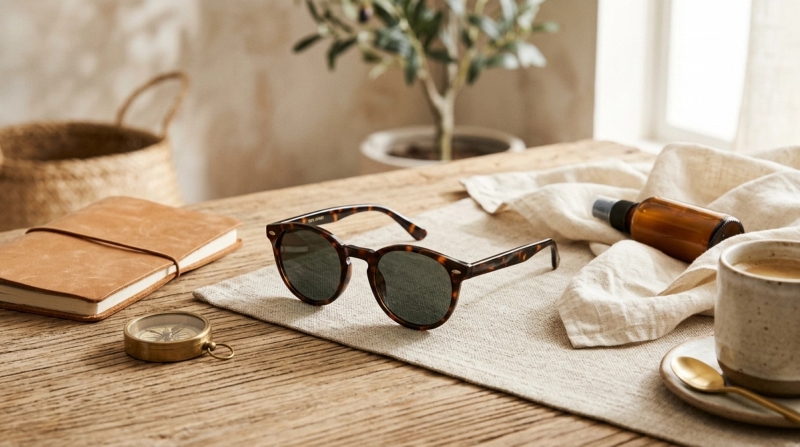
If you’re trying to choose between polarized vs UV400 sunglasses, here’s the easiest way to think about it:
UV400 is the must-have. Polarized is the nice-to-have.
UV400, also written as 100% UVA and UVB protection, is what helps protect your eyes from harmful ultraviolet rays. Polarization does something different. It reduces glare from shiny surfaces like roads, water, snow, glass, car bonnets, and wet pavement.
So if you’re buying one pair for everyday use, start with UV400 sunglasses. If you drive a lot, travel often, spend time near water, or feel bothered by harsh reflections, then choose UV400 polarized sunglasses.
You don’t need to turn sunglasses shopping into a science lesson. You just need a pair that protects your eyes, feels comfortable, suits your lifestyle, and still looks good with your outfits.
This AllBlogs sunglasses buying guide keeps it simple: check UV protection first, then decide whether polarization is worth it for you.
The Simple Difference: UV Protection vs Glare Control
#A lot of people see the word “polarized” and assume it means the sunglasses are automatically safer.
That’s not always true.
UV protection and polarization are two separate features.
- UV400 or 100% UV protection helps protect your eyes from ultraviolet rays.
- Polarization reduces reflected glare and makes bright outdoor conditions more comfortable.
You can buy sunglasses that are UV400 but not polarized. You can also buy sunglasses that are both UV400 and polarized.
The pair you should avoid is the one that does not clearly say:
- UV400
- 100% UV protection
- 100% UVA and UVB protection
If that information is missing, it’s better to skip them.
What Does UV400 Mean?
#UV400 sunglasses are designed to block ultraviolet rays up to 400 nanometers. In everyday shopping terms, that means they block both UVA and UVB rays.
You may see UV protection written in a few different ways:
- UV400
- 100% UV protection
- 100% UVA and UVB protection
- Blocks 100% of UV rays
These are the labels that matter most. Eye health organizations, including the American Academy of Ophthalmology, commonly recommend sunglasses that block 100% of UVA and UVB rays.
Here’s something many people get wrong: dark lenses do not automatically mean better UV protection.
A very dark lens without proper UV filtering is not safer. It can actually be a poor choice because your pupils may open wider behind the dark lens, while UV rays can still enter.
UV protection comes from the lens material or coating, not from how dark, expensive, or stylish the lens looks.
So before you look at the brand, frame shape, color, discount, or trend value, check this first:
No UV400 or 100% UV protection label, no purchase.
What Are Polarized Sunglasses?
#Polarized sunglasses reduce glare from flat, reflective surfaces.
Think of sunlight bouncing off a wet road, lake, sea, swimming pool, snow, car bonnet, glass building, or polished pavement. That reflected light can feel sharp, uncomfortable, and sometimes almost blinding.
Polarized lenses have a special filter that cuts down a lot of that glare. The view can feel clearer, calmer, and easier on your eyes, especially in bright outdoor places.
But this part is important:
Polarization does not replace UV protection.
A polarized lens still needs to say UV400 or 100% UVA and UVB protection. If it doesn’t, don’t assume it is safe just because it is polarized.
UV400 vs 100% UV Protection: Are They the Same?
#For normal sunglasses shopping, UV400 and 100% UVA and UVB protection usually mean the same useful thing: the lenses are meant to block the UV rays your eyes need protection from.
Here’s a quick way to read the labels:
If you’re buying online, read the product details carefully. If you’re buying in a store, check the lens sticker, tag, box, or printed specification.
If the seller makes it hard to find the UV protection details, that’s usually not a great sign.
Polarized vs Non-Polarized Sunglasses: Which One Fits Your Life?
#Neither option is automatically better for everyone. It depends on how you use your sunglasses.
Choose Polarized Sunglasses If You Drive Often
#Polarized sunglasses can be very helpful for driving because they reduce glare from:
- Wet roads
- Bright concrete
- Other vehicles
- Car bonnets
- Dashboards
- Low sunlight reflecting off surfaces
If you commute daily, take long road trips, or often drive in strong afternoon sunlight, polarized sunglasses can make driving feel much more comfortable.
There is one small downside, though. Some polarized lenses can make digital displays harder to see. This can include car screens, fuel station displays, phones, parking meters, ATMs, and some dashboard panels.
So if your car has a large digital display, it’s worth testing the sunglasses with your screen before relying on them every day.
Choose Polarized Sunglasses for Travel and Water
#Polarized sunglasses are especially useful near water because they reduce surface glare. That makes them a good choice for:
- Beach holidays
- Boating
- Fishing
- Lakeside trips
- Poolside days
- Sunny road trips
- Snowy destinations
- Mountain travel
If your travel is mostly airports, city walks, cafes, museums, shopping streets, and restaurants, then UV400 non-polarized sunglasses may be enough.
But if your trips involve beaches, highways, deserts, mountains, lakes, or bright open spaces, polarized lenses are worth considering.
Choose Non-Polarized UV400 Sunglasses for Everyday City Use
#For college, office commutes, errands, outdoor cafes, and normal city wear, UV400 non-polarized sunglasses are often perfectly fine.
They protect against UV rays, usually cost less, and are often easier to use with screens.
They’re a good choice if you:
- Check your phone often outdoors
- Use ATMs, ticket machines, or outdoor screens
- Want stylish sunglasses for daily wear
- Spend more time in shaded city areas than near water or highways
- Prefer more lens colors and frame options
- Want something affordable but still safe
Basically, if glare is not a daily problem, you don’t have to force yourself to buy polarized sunglasses.
Be Careful With Polarized Lenses Around Screens and Some Activities
#Polarized lenses can make some screens look dim, rainbow-like, or almost black at certain angles. Sometimes it’s barely noticeable. Sometimes it’s annoying.
They may also be less ideal in situations where seeing reflected glare is actually useful. For example, in some snow sports or icy conditions, reflections can help you notice surface changes.
Pilots generally avoid polarized lenses because they need clear visibility of instruments and outside reflections.
For regular walking, driving, beach days, and bright outdoor use, polarized lenses can feel great. For specialized activities, choose more carefully.
Quick Comparison: UV400 Non-Polarized vs UV400 Polarized
#What Should You Buy? A Practical Answer by Lifestyle
#For Daily Office Commutes
#Buy UV400 sunglasses first. Polarization is optional.
If your commute includes a lot of driving, flyovers, bright roads, or wet-road glare, choose UV400 polarized sunglasses.
If you mostly use public transport, walk short distances, or move between buildings, UV400 non-polarized sunglasses are enough for most days.
For College and Campus Days
#Choose UV400 non-polarized sunglasses if you want easy screen use, more style choices, and a budget-friendly pair.
A slightly oversized frame or a wayfarer-style frame usually works well because it gives decent coverage without looking too sporty.
For college, you probably want something that works with many outfits. Not a pair that looks good with one jacket and then stays in your bag forever.
For Driving
#Choose UV400 polarized sunglasses, especially if glare bothers you.
Grey, brown, amber, or green lenses can all work for driving. It depends on how you like contrast and color to look on the road.
If your car has digital displays, test the sunglasses with your dashboard and phone before using them for every drive. Some screens look fine. Others can look strangely dark.
For Travel
#For any trip, one pair of UV400 sunglasses is essential.
If you’re going to beaches, lakes, highways, deserts, mountains, or snowy places, polarized lenses are a smart upgrade.
If you’re packing light, choose a frame that works with casual clothes and slightly dressier outfits too. Classic shapes usually travel better than very trendy frames.
For Outdoor Weekends
#Choose based on glare.
- Park walks, markets, outdoor brunch: UV400 non-polarized is fine.
- Water, road trips, snow, open bright areas: UV400 polarized is more comfortable.
If you only go out for short walks, you probably don’t need anything fancy. If you’re outside for hours, comfort and coverage matter much more.
Fit and Coverage Matter More Than People Think
#A good lens only helps if the frame actually covers your eyes well.
UV light and brightness can enter from the top, sides, and bottom of small frames. That does not mean everyone needs giant sports sunglasses, but tiny lenses are not always practical for long outdoor days.
Look for:
- Lenses wide enough to cover the eye area
- Frames that sit close without touching your eyelashes
- A bridge that does not slide down your nose
- Temples that feel secure but do not pinch
- Enough side coverage for outdoor use
For everyday fashion, slightly oversized square, round, aviator, or wayfarer-inspired frames can balance style and coverage.
For travel or long outdoor days, a frame with a little curve can help reduce side light.
Simple rule: if you keep adjusting them every few minutes, they’re not the right pair.
Lens Colour Guide: What Tint Should You Choose?
#Lens tint changes comfort, brightness, and how colors look. But it does not prove UV protection.
Always check UV400 first.
Grey Lenses
#Grey lenses reduce brightness while keeping colors fairly natural. They are a safe, easy choice for daily wear, driving, travel, and office commutes.
Best for: everyday use, true color perception, simple styling.
Brown or Amber Lenses
#Brown and amber lenses can improve contrast and depth perception. Many people like them for driving, hazy weather, and partly cloudy days.
Best for: driving, travel, outdoor cafes, warm-toned outfits.
Green Lenses
#Green lenses balance brightness reduction with decent contrast. They can feel softer than grey while still keeping colors fairly natural.
Best for: daily wear, city use, classic fashion frames.
Gradient Lenses
#Gradient lenses are darker at the top and lighter at the bottom. They can be useful when you want protection from overhead sun but still need to look down at your phone, book, or dashboard.
Best for: driving, cafe reading, city outfits, stylish everyday use.
Very Dark Lenses
#Very dark lenses may feel comfortable in strong sunlight, but darkness alone is not protection. They still need to be UV400.
Best for: bright outdoor days, only when UV protection is clearly stated.
Frame Style Tips: Safe Can Still Look Stylish
#You do not have to choose between protection and style. The right sunglasses can do both.
For Round Faces
#Angular frames like square, rectangle, or wayfarer-style sunglasses can add structure.
For Square Faces
#Round, oval, or softly curved frames can balance sharper face angles.
For Oval Faces
#Most frame shapes work well. Choose based on comfort, coverage, and what fits your wardrobe.
For Smaller Faces
#Look for small to medium frames that do not slide down or cover your cheeks too much. Avoid oversized frames that leave gaps because they sit badly.
For Long Outdoor Days
#Prioritize coverage over trend. A frame that blocks more side light will usually feel better after a few hours outside.
And honestly, if the sunglasses look great but hurt your nose, you won’t wear them much.
The AllBlogs Sunglasses Buying Checklist
#Before you buy, run through this quick checklist.
- Check the UV labelLook for UV400, 100% UV protection, or 100% UVA and UVB protection.
- Do not rely on lens darknessDark tint does not mean UV safety.
- Decide if you need polarizationChoose polarized sunglasses if glare is part of your daily life, especially while driving or near water.
- Think about screensIf you use your phone, car display, outdoor ATM, or laptop often in sunlight, test polarized lenses first.
- Check fit and coverageThe frame should feel secure, cover the eye area well, and not pinch your nose or temples.
- Choose a useful lens tintGrey is versatile, brown or amber can boost contrast, green is balanced, and gradient lenses are practical for mixed light.
- Match the frame to your routineOffice and college wear can be stylish and moderate. Travel and outdoor days need more coverage.
- Buy from a clear listing or reliable storeIf the seller does not clearly mention UV400 or 100% UV protection, skip it.
Common Buying Mistakes to Avoid
#Mistake 1: Buying Polarized Sunglasses Without Checking UV400
#Polarized does not automatically mean UV safe. Always check both labels if you want both benefits.
Mistake 2: Choosing the Darkest Lens Because It Looks Safer
#A dark lens without UV protection is not the right choice. The label matters more than the shade.
Mistake 3: Ignoring Fit
#Loose sunglasses let in more light, slide down, and become annoying. A comfortable pair is the pair you’ll actually wear.
Mistake 4: Expecting One Pair to Be Perfect for Everything
#One good UV400 pair can cover most daily use. But if you drive often or spend time around water, polarized lenses may be worth the extra cost.
Mistake 5: Forgetting Your Wardrobe
#If sunglasses do not suit your usual clothes, you may leave them at home. Choose a frame you’ll actually enjoy wearing.
Final Recommendation
#For most people, the best answer is:
Buy UV400 sunglasses first. Add polarization if glare is a regular part of your day.
If you drive often, travel to bright places, or spend time near water, UV400 polarized sunglasses are a practical upgrade.
If you mostly need sunglasses for college, office commutes, city walks, cafes, and casual outfits, UV400 non-polarized sunglasses can be safe, stylish, and easier to use with screens.
Protection comes first. Comfort comes next. And yes, style still matters.
Safety Note
#This guide is for everyday sunglasses shopping and lifestyle use. If you have eye pain, sudden vision changes, strong light sensitivity, or any ongoing vision concern, consult an optometrist or ophthalmologist.