Monsoon and jewellery have a complicated relationship.
You want to wear your favourite hoops to work, oxidised jhumkas to college, a simple chain every day, or bangles for a festive dinner. But the weather is not exactly kind. The air is damp, your skin feels sticky, rain appears without warning, and suddenly a piece that looked bright last week starts looking dull.
The good news? Most tarnish can be slowed down with a few easy habits.
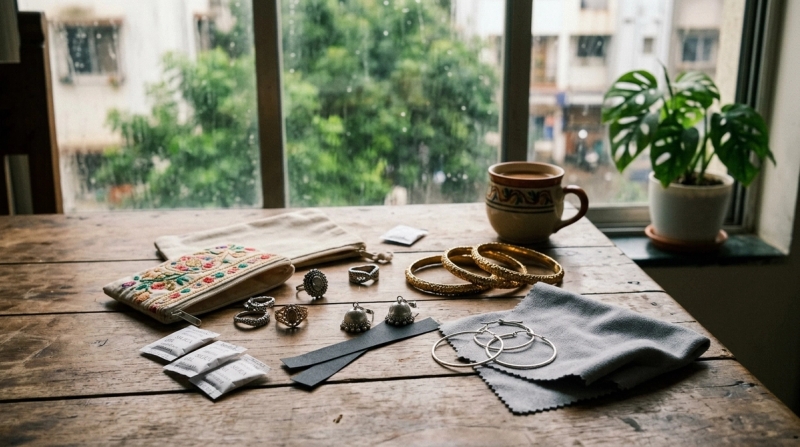
If you want the simplest answer, how to prevent jewellery tarnish in monsoon comes down to this: keep jewellery dry, wipe it after wearing, and store every piece separately in airtight pouches with silica gel for jewellery or anti-tarnish strips. Also, remove jewellery before rain, bathing, perfume, lotions, sweaty travel, swimming, or cleaning work.
This is especially important for silver, gold-plated, oxidised, imitation, and fashion jewellery.
You do not need harsh home hacks, toothpaste scrubbing, baking soda experiments, or expensive organisers. What you need is dry storage, gentle cleaning, and a little more care while wearing your pieces.
Here is a practical, monsoon-friendly guide you can actually follow.
Why jewellery tarnishes faster in monsoon
#Tarnish does not automatically mean your jewellery is poor quality or fake. In most cases, it is just a surface reaction caused by moisture, air, sweat, cosmetics, pollution, and chemicals.
During monsoon, jewellery comes in contact with all of this more often:
- Sweat from humid commutes
- Rainwater from sudden showers
- Perfume, sunscreen, moisturiser, and hair products
- Soap, shampoo, and handwash
- Chlorine or cleaning chemicals
- Damp fabric-lined boxes, drawers, or pouches
Humidity makes everything worse because moisture stays around the metal for longer.
Silver is particularly sensitive. Tiffany’s official sterling silver care guidance says sterling silver can tarnish when exposed to humidity, perspiration, cosmetics, chlorine, and harsh chemicals. That is basically the full monsoon mix, especially in Indian weather. So if silver jewellery tarnish feels worse during this season, you are not imagining it.
Gold is different. Pure gold does not tarnish the way silver does, but most wearable gold jewellery is mixed with other metals to make it stronger. Those alloy metals can become dull or collect grime, especially in detailed designs.
Gold-plated and imitation jewellery need even more care because the outer finish can wear down and expose the base metal underneath.
Quick comparison: what monsoon does to different jewellery types
#A simple monsoon jewellery routine
#This routine works for everyday wear, office looks, college outfits, travel days, and festive dressing.
Step 1: Pick jewellery based on the day
#Before choosing your earrings, rings, or chains, check two things: the weather and your schedule.
If you have a long commute, public transport travel, or a high chance of rain, avoid delicate silver, imitation chokers, heavy plated rings, and pieces with lots of stones or tiny gaps. Choose simpler pieces that are easier to wipe dry.
For festive days, carry delicate jewellery in a pouch and wear it after you reach the venue. It sounds like a small thing, but it protects your pieces from sweat, perfume, and rain during travel.
Step 2: Follow the “last on, first off” rule
#This is one of the easiest jewellery habits to remember.
Wear jewellery last, after your skincare, sunscreen, perfume, hair spray, and makeup have settled.
Remove jewellery first when you come back home.
Jewellery care guidance from brands like Swarovski and Pandora also commonly recommends removing jewellery before water, perfume, lotions, and harsh chemicals. In monsoon, this rule matters even more because products tend to sit on the skin longer in humid weather.
A good order looks like this:
- Bathe and dry your skin properly
- Apply lotion, sunscreen, perfume, and hair products
- Wait for everything to dry
- Wear jewellery last
- Remove jewellery as soon as you get home
- Wipe and store it properly
Step 3: Keep jewellery away from water
#Try not to wear jewellery while:
- Bathing
- Washing hands repeatedly
- Swimming
- Washing utensils
- Cleaning with chemicals
- Applying perfume or hair spray
- Travelling in heavy rain or splash-heavy conditions
One accidental splash may not ruin every piece, but repeated exposure adds up. This matters most for plated, imitation, oxidised, and stone-set jewellery.
Step 4: Wipe jewellery after every wear
#Do not put worn jewellery straight back into the box. This is one of the most common mistakes, and most of us do it without thinking.
Use a clean, soft, dry microfiber cloth or lens cloth. Gently wipe the surface to remove sweat, oil, moisture, and product residue.
Pay extra attention to:
- Ring bands
- Earring backs
- Chain clasps
- Pendant corners
- Bangles where they touch the skin
- Nose pins and small studs
- Areas under stones or detailing
You do not need to rub hard. For daily care, a gentle wipe is usually enough.
Step 5: Let jewellery dry before sealing it
#If a piece feels even slightly damp, leave it on a clean dry cloth for a while before storing it.
Do not seal damp jewellery inside an airtight pouch. That only traps moisture with the piece, which is exactly what you are trying to avoid.
If imitation or stone-set jewellery gets wet in the rain, pat it dry first. If water is stuck in tiny gaps, you can use a hairdryer on a cool setting from a safe distance. Avoid heat, especially around glued stones, enamel, beads, or delicate finishes.
Step 6: Store every piece separately
#Separate storage prevents scratches, tangles, and metal reactions.
Use:
- Small zip pouches
- Airtight plastic pouches
- Individual soft pouches
- Compartments in a dry jewellery organiser
- Small boxes with silica gel packets
Avoid throwing all your earrings, rings, and chains into one fabric box. Chains tangle, plating scratches, stones loosen, and moisture can stay trapped.
How to store jewellery in humid weather
#If you are wondering how to store jewellery in humid weather, the answer is simple: keep it dry, airtight, separate, and away from damp spaces.
Storage matters just as much as cleaning. Jewellery can tarnish even when you are not wearing it, especially if it sits in a damp drawer, open tray, or old cloth pouch.
Use airtight pouches
#Airtight zip pouches are very useful for silver, gold-plated, imitation, and fashion jewellery.
Keep one clean, dry piece in each pouch. Press out extra air gently before sealing it.
This reduces moisture exposure and stops pieces from rubbing against each other.
Add silica gel packets
#Silica gel for jewellery helps absorb extra moisture inside boxes, drawers, and pouches. These are the small packets you often find in shoe boxes, bags, and packaging.
Use them in:
- Jewellery drawers
- Travel pouches
- Acrylic organisers
- Zip pouches
- Storage boxes
Do not open silica gel packets. Keep them away from children and pets.
Use anti-tarnish strips for silver
#Anti-tarnish strips are especially helpful for sterling silver jewellery. They reduce tarnish-causing gases around jewellery during storage.
Place one strip inside a pouch or compartment with clean, dry silver jewellery. Replace it according to the instructions on the strip.
Avoid damp fabric storage
#Velvet-lined and fabric-lined jewellery boxes look beautiful, but during monsoon they can hold moisture if kept in a humid room.
If you use one, add silica gel and keep the box inside a dry cupboard.
Avoid storing jewellery:
- In bathrooms
- Near windows
- In open trays
- In damp wardrobes
- Inside handbags after rain
- Near wet clothes or towels
Protect jewellery properly while travelling
#For travel, pack jewellery in small individual pouches. Add a silica gel packet to the main pouch.
Do not keep jewellery loose in a makeup bag where it can touch perfume, sunscreen, compact powder, moisturiser, or spilled products.
It may feel like extra effort, but it saves you from finding a blackened ring, dull earrings, or tangled chain later.
Cleaning jewellery safely in monsoon
#Not every piece should be cleaned the same way. A viral hack that works for one metal can damage another.
Toothpaste, baking soda scrubs, lemon, vinegar, and harsh detergents can scratch soft metals, strip plating, loosen finishes, or damage stones.
If a piece is valuable, sentimental, heavily tarnished, or made with stones, follow its care instructions or ask a professional jeweller.
For sterling silver
#For silver jewellery tarnish, use a proper silver polishing cloth or a silver cleaner that is suitable for that particular piece. Rub gently.
Do not scrub aggressively.
Be extra careful with oxidised silver. Over-polishing can remove the darkened finish that is part of the design.
Tiffany’s sterling silver care guidance notes that sterling silver can tarnish with humidity, perspiration, cosmetics, chlorine, and harsh chemicals. So the goal is not just to polish silver after it turns dark. The better goal is to prevent tarnish through dry wearing and dry storage.
For gold jewellery
#The Gemological Institute of America, GIA, gives general jewellery care guidance that many fine jewellery pieces can be cleaned with warm water, mild dish soap, and a soft brush, depending on the gemstones and construction.
For monsoon care, drying is the most important part. If you clean gold jewellery with water, dry it completely with a lint-free cloth before storing it.
Water trapped in chain links, ring settings, or pendant corners can make jewellery look dull.
Do not soak jewellery if it has delicate stones, glue-backed elements, pearls, enamel, or unknown materials.
For gold-plated jewellery
#Gold-plated jewellery care should be gentle and mostly dry.
Avoid soaking, scrubbing, toothpaste, baking soda, and chemical cleaners. Plating is a thin layer, so friction and harsh cleaning can wear it down quickly.
After wearing gold-plated jewellery, wipe it with a soft dry cloth. Store it separately so it does not rub against harder metals, stones, or other pieces.
For imitation jewellery
#Imitation jewellery care is mostly about prevention.
Keep it away from rain, sweat, perfume, lotions, and water. If it gets wet, dry it immediately. Do not soak it, scrub it, or use liquid cleaners unless the seller’s care instructions clearly say it is safe.
Be extra careful with:
- Fashion rings
- Statement earrings
- Plated chains
- Artificial kundan-style pieces
- Pieces with glue-set stones
- Enamel or coloured coating
For oxidised jewellery
#Oxidised jewellery has a dark finish on purpose. Harsh polishing can remove that look and make the piece patchy.
Wipe it dry after wearing. Use a soft cloth and avoid wet cleaning unless you are sure the piece can handle it.
Store oxidised jewellery separately because the finish can rub unevenly when mixed with other pieces.
Monsoon fashion tips that also protect jewellery
#Good care does not mean boring styling. It simply means choosing jewellery based on the weather, your commute, and how long you plan to wear it.
For office
#Choose lightweight studs, small hoops, simple chains, or bangles that do not sit too tightly against sweaty skin.
If your commute is long, avoid layered plated necklaces that can trap sweat around the neck.
Keep a small cloth pouch in your office bag. If the rain gets heavy, remove delicate jewellery and store it before it gets soaked.
For college
#Oxidised earrings, stacked rings, and imitation pendants are monsoon favourites, but they need some care.
Avoid wearing too many rings on days when you will wash your hands often or travel in the rain.
If you wear oxidised jhumkas, wipe the hooks and backs after use. These areas collect sweat, hair product residue, and grime quickly.
For travel
#Travel days call for practical jewellery. Wear fewer pieces and avoid complicated chains, delicate plating, or statement earrings that can get wet, bent, or lost.
Pack every piece separately. Keep silica gel in the pouch. Do not store jewellery with damp clothes after a rain-heavy day.
For festive looks
#Festive jewellery often has stones, pearls, beads, plating, enamel, or glue-backed details.
Wear it only after perfume, hair spray, and makeup are done. If you are travelling to the venue, carry the jewellery separately and wear it after you arrive.
After the event, wipe every piece before storage, even if it looks clean. Sweat and perfume residue may not show immediately, but they can dull the finish later.
For daily rings and bracelets
#Rings and bracelets face the most water exposure because of handwashing, sanitiser, rain, and friction.
If you wear plated or imitation rings, remove them before washing your hands or applying lotion.
Fine gold rings are more durable, but they can still collect soap and grime around settings. Wipe them regularly and dry them well.
What not to do during monsoon jewellery care
#Avoid these common mistakes:
- Do not store wet jewellery in closed boxes
- Do not spray perfume directly on jewellery
- Do not wear plated or imitation jewellery in the shower
- Do not clean every piece with toothpaste or baking soda
- Do not mix silver, plated, imitation, and stone jewellery in one pouch
- Do not leave jewellery in the bathroom
- Do not use hot air on glued stones or delicate finishes
- Do not scrub oxidised jewellery to make it “shine”
- Do not assume “gold colour” means water-safe
Most monsoon dullness comes from small habits repeated daily. Very often, the real problem is not wearing jewellery once in the rain. It is storing it damp, unwiped, or mixed with other pieces.
A simple weekly monsoon jewellery checklist
#Use this once a week during peak humidity.
- Empty your daily-wear jewellery tray
- Wipe every piece with a dry microfiber cloth
- Check for damp pouches or fabric linings
- Replace or refresh silica gel packets if needed
- Keep silver with anti-tarnish strips
- Separate plated and imitation pieces
- Check clasps, earring backs, and ring settings
- Move rarely worn pieces into airtight storage
- Keep festive jewellery away from bathroom or window-side storage
- Put one soft cloth in your handbag for rainy-day emergencies
This takes only a few minutes, but it can noticeably reduce tarnish, dullness, and discolouration.
Final take: the best way to prevent tarnish in monsoon
#The best jewellery care in monsoon is simple.
Wear jewellery after your products dry. Remove it before water exposure. Wipe it after every use. Store each piece separately in airtight pouches with silica gel or anti-tarnish strips.
Silver needs extra anti-tarnish care. Gold-plated and imitation jewellery need strict dryness. Fine gold is more durable, but it still benefits from wiping and careful storage.
Think of monsoon jewellery care as a habit, not a rescue mission. The less moisture, sweat, and residue your jewellery faces, the longer it stays shiny, wearable, and beautiful.