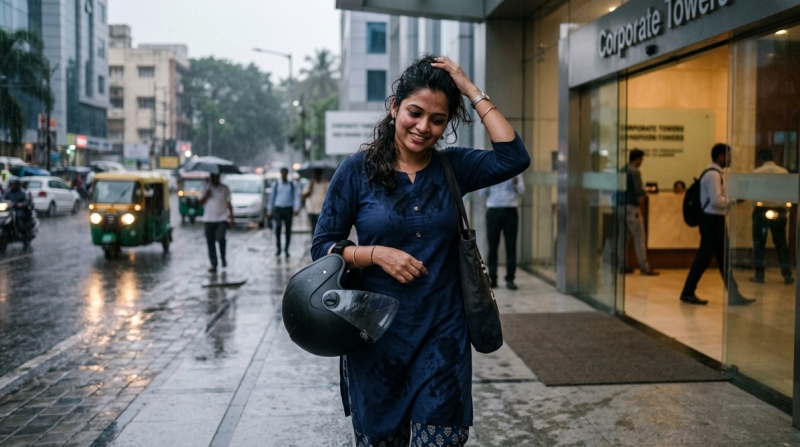
The fix for helmet hair in humid weather is not skipping your helmet. Start with dry hair, keep products light, avoid tight hairstyles, let your scalp cool after the ride, refresh roots gently, and clean your helmet liner regularly. In Indian monsoon humidity, reducing trapped sweat and friction matters more than using more styling product.
Why helmet hair feels worse in the monsoon
#Helmet hair is not just hair getting pressed down. During humid weather, several things happen at once:
- Your scalp sweats inside the helmet.
- Humidity makes some hair frizzy and some hair limp.
- Helmet padding flattens the roots.
- The liner rubs against the hair and creates friction.
- Sweat, oil, sunscreen, dust and pollution collect inside the helmet over time.
So yes, sometimes a quick comb-through helps. But on very humid days, it usually is not enough.
To manage helmet hair properly, you need to reduce trapped sweat, lower friction and refresh your hair gently after the ride.
And just to say it clearly: the helmet stays on. Hair can be fixed. Head injuries are not worth the risk.
Before the ride: set your hair up for less damage
#A good after-ride fix starts before you even leave home. What you do before wearing the helmet decides how bad the hair situation will be later.
1. Wear your helmet only on dry hair
#Try not to put a helmet over wet or damp hair, especially during the monsoon.
Damp hair gets pressed into shape more easily. Under a helmet, it stays humid for longer and often ends up feeling sticky, flat or slightly smelly.
If you wash your hair in the morning, give it enough time to dry. If you are short on time, at least dry your roots and scalp area properly. That alone can make the post-ride situation much better.
2. Keep styling products light
#Heavy gels, waxes, thick creams and oily leave-in products usually do not behave well under a helmet. Add sweat and pressure, and they can make the scalp feel greasy and the roots look flat.
Better options include:
- A light texturising spray
- A small amount of lightweight serum on the ends
- A frizz-control product used sparingly
- No product at the roots if your scalp gets oily quickly
The aim is not to create a hairstyle that refuses to move. The aim is to help your hair recover once the helmet comes off.
3. Try a clean silk or satin skull cap, but only if it fits safely
#A thin silk or satin skull cap can help reduce friction between your hair and the helmet liner. This is especially useful if your hair is curly, wavy, dry, coloured or easily frizzy.
But helmet fit matters more than hair.
Keep these points in mind:
- The skull cap should be thin and smooth.
- It should not make the helmet too tight.
- It should not make the helmet unstable.
- It should not change how securely the helmet sits on your head.
If the cap affects the fit even slightly, skip it. Safety comes first.
4. Avoid tight hairstyles under the helmet
#Tight high ponytails, tight buns and heavily pinned styles are uncomfortable under helmets. They can create pressure points and pull at the hairline.
Helmet-friendly options are usually low and soft:
- Loose low braid
- Loose low bun at the nape
- Soft low ponytail
- Hair left down and tucked neatly
- Hair tucked inside a clean thin liner
Keep it simple. The easier it is to open and adjust after the ride, the better.
5. Do not load your scalp with product before riding
#If your scalp sweats a lot under a helmet, avoid applying oil, thick cream or sticky styling products right before a commute.
These mix with sweat and can make your scalp feel heavier, greasier and more uncomfortable.
Save oiling and richer treatments for wash days, or for times when you are not going to wear a helmet immediately after.
After the ride: refresh your hair without making it worse
#Once you reach your destination, do not attack your hair with a comb immediately. Sweaty, flattened hair needs a few minutes.
1. Take off the helmet and let your scalp cool
#Remove your helmet and give your scalp some breathing time.
If possible, stand near a fan or in a well-ventilated space for a few minutes. This helps sweat settle before you use any product.
This step matters because dry shampoo or powder on a wet scalp can turn patchy, sticky and uncomfortable.
2. Lift your roots with your fingers
#Once your scalp is not dripping with sweat:
- Flip your head forward.
- Use clean fingers to gently lift the roots.
- Avoid scratching your scalp.
- Flip back and adjust your parting lightly.
This takes less than a minute, and on many days, it is enough to make your hair look more normal.
3. Use dry shampoo only after your scalp is not wet
#Dry shampoo can help absorb oil and bring back a little volume, but timing is everything.
Do not spray it the second you remove your helmet. Wait until your scalp cools down a bit.
Use a small amount near the roots, wait for a minute, then massage gently with your fingertips. Do not overdo it. Too much dry shampoo can make hair look dusty, stiff or dull.
4. Smooth the ends, not the roots
#If your ends look frizzy after the ride, take a tiny drop of lightweight serum and apply it only to the mid-lengths and ends.
Avoid the roots. Your scalp has already dealt with sweat, heat, pressure and humidity. It does not need more product sitting on top.
5. Carry a small commute hair kit
#You do not need to carry your whole dressing table. A few things are enough:
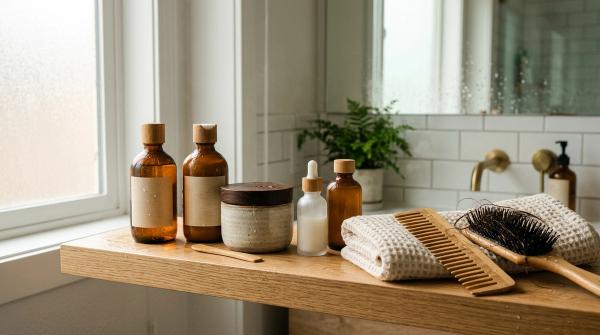
- Mini comb or wide-tooth comb
- Travel-size dry shampoo, if you use it
- Lightweight serum
- Microfibre towel or soft handkerchief
- Spare clean skull cap or liner
- Hair tie or clip that does not pull tightly
That is enough for a quick touch-up after most monsoon rides.
Common helmet hair problems and quick fixes
#Helmet hygiene matters more than you think
#You can have the best hair routine, but if your helmet liner is dirty and damp, your scalp will still feel uncomfortable.
During the monsoon, helmet hygiene is part of hair care.
Daily habits after a sweaty ride
#- Air out your helmet after every sweaty commute.
- Do not put it straight into a closed storage box while it is damp.
- Keep it in a ventilated place when possible.
- Wipe the outer shell if it gets wet in the rain.
- Let the inside dry fully before wearing it again.
A damp helmet used again and again will only make sweat, smell and scalp discomfort worse.
Weekly cleaning habits
#If your helmet has removable liners:
- Take them out once a week.
- Hand wash with mild detergent or gentle shampoo.
- Rinse properly so no residue remains.
- Dry completely before putting them back.
- Wipe the chin strap with a damp cloth, especially if you sweat a lot or use sunscreen.
Do not put damp liners back into the helmet. They should be fully dry.
If your helmet liner is not removable
#If the liner cannot be removed:
- Use a helmet-safe deodorising or antibacterial spray as directed.
- Do not soak the inside of the helmet.
- Let the helmet dry fully before wearing it.
- Avoid spraying strong perfume inside.
Perfume may cover the smell for a while, but it does not clean sweat buildup. It can also irritate your scalp or skin.
Keep skull caps clean too
#If you wear an under-helmet skull cap or liner:
- Wash it after one or two sweaty uses.
- Keep at least two, so one can dry while you use the other.
- Never reuse a damp cap.
- Choose a thin, smooth fabric that does not affect helmet fit.
A clean liner will not give you perfect hair every day, but it will definitely help your scalp feel fresher.
What not to do for helmet hair in humid weather
#Some quick fixes can actually make helmet hair worse.
Do not skip the helmet
#No hairstyle is worth that risk. Your helmet is non-negotiable.
Do not wear a loose helmet for better hair
#A loose helmet is not a clever hair hack. It is unsafe.
Your helmet should fit properly and securely. If it moves around too much, it is not doing its job well.
Do not overuse dry shampoo
#Dry shampoo is helpful, but it is not a replacement for washing your hair or cleaning your helmet liner.
Too much dry shampoo can build up on the scalp and make it feel itchy, heavy or dirty.
Do not oil your scalp right before riding
#If your scalp sweats easily, oiling right before wearing a helmet can feel sticky and uncomfortable.
Oil your hair when you have time to wash it out properly, not just before a humid commute.
Do not believe miracle hair-growth claims
#Helmet hair is usually caused by pressure, sweat, friction and hygiene issues. Be careful with products that promise instant hair growth or guaranteed reversal of hair fall.
If you are dealing with real hair loss, scalp pain, swelling, redness or sudden bald patches, speak to a qualified doctor or dermatologist.
Simple routines based on your commute
#If your commute is under 20 minutes
#Before the ride:
- Dry your hair fully.
- Use very little product.
- Keep your hairstyle loose and low.
After the ride:
- Let your scalp cool.
- Lift roots with your fingers.
- Smooth the ends only if needed.
If your commute is 30 to 60 minutes
#Before the ride:
- Avoid heavy scalp products.
- Use a clean skull cap if it does not affect helmet fit.
- Choose a low braid, low bun or soft low ponytail.
After the ride:
- Let the sweat settle.
- Use dry shampoo lightly if roots look oily.
- Air out your helmet as soon as possible.
If you ride daily in heavy monsoon humidity
#Before the ride:
- Rotate clean skull caps.
- Keep hair dry before wearing the helmet.
- Avoid tight hairstyles.
After the ride:
- Refresh roots gently.
- Air out the helmet daily.
- Wash removable liners weekly.
This is one of those situations where consistency beats expensive products.
When to see a dermatologist or doctor
#Some sweat, flatness and frizz are normal after wearing a helmet. But scalp symptoms that keep coming back should not be ignored.
See a qualified dermatologist or doctor if you notice:
- Persistent itching that does not improve with basic hygiene
- Pain, tenderness or swelling on the scalp
- Large, painful bumps or pus-filled spots
- Sudden patchy hair loss
- Thick, crusty flaking that does not settle
- Burning, oozing or worsening redness
- Scalp discomfort that returns after every ride
This article is for grooming and hygiene guidance only. It does not diagnose scalp conditions or replace medical treatment.
Final takeaway
#Helmet hair in humid weather is irritating, but it is manageable.
Keep your hair dry before the ride, use lighter products, reduce friction, refresh only after your scalp cools, and clean your helmet liner regularly.
Most importantly, keep the helmet on. Your hair can be fixed in five minutes. Your safety cannot be replaced.