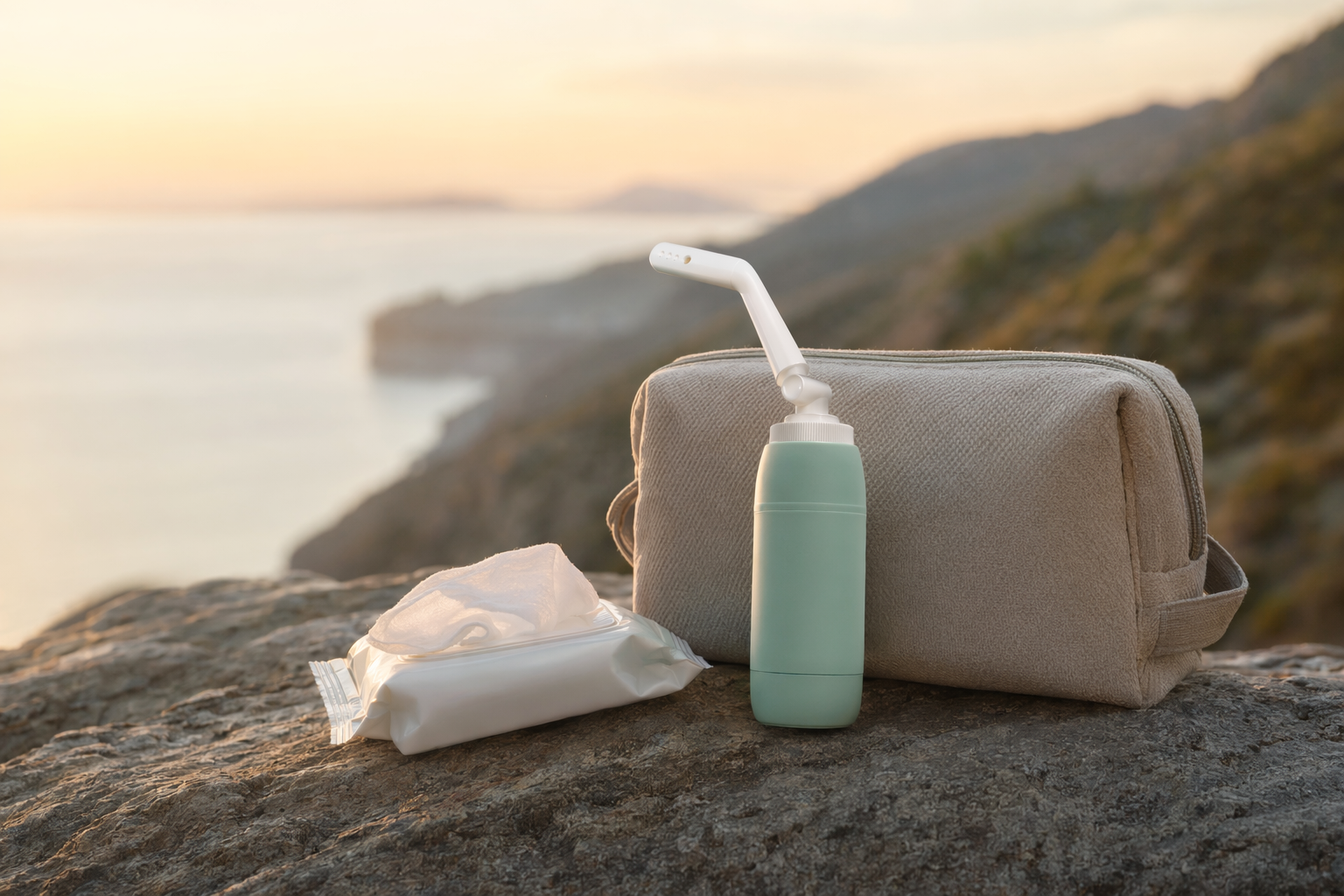
The toilet thing nobody wants to talk about, but everyone suffers from
#Okay, let’s just say it properly. Travel bathroom situations can ruin your mood faster than a delayed train at 2 am. As Indians, most of us are used to water. Jet spray, lota, health faucet, whatever you call it at home, it’s normal. Then you travel outside India, or even to some hostels inside India, and suddenly the bathroom has only toilet paper sitting there like it is going to solve all your life problems. It doesn’t. At least not for me.
I used to carry wet wipes everywhere. Bus journeys from Delhi to Rishikesh, budget stays in Goa, airport layovers in Bangkok, one slightly cursed overnight train in Europe where the toilet door didn’t lock properly... wipes were my backup plan. Then I tried a portable bidet, and honestly, I felt like I had unlocked some secret Indian traveler cheat code. But it’s not that simple also. Wet wipes still have their place. Portable bidets are not perfect. And depending on your travel style, one may make more sense than the other.
So this is not some fancy product review written from an air-conditioned room. This is what I learnt after carrying both on actual trips, making dumb packing mistakes, running out of water at the worst possible time, and once drying my bidet bottle using a hotel hair dryer because I was leaving in 12 minutes. Very classy.
Why this debate is extra personal for Indian travelers
#If you grew up in India, you probably already have strong feelings about water vs paper. In many Indian homes, water is hygiene. Paper is, like, backup. So when Indian travelers go abroad, especially to Europe, Japan outside hotel rooms, parts of the US, or even some Southeast Asian hostels that cater to western backpackers, the toilet setup can feel weirdly incomplete. The bathroom may be sparkling clean, but no jet spray. No mug. Nothing. Just paper and silence.
Even within India, it’s mixed now. Nice hotels usually have health faucets. Homestays in Himachal, hostels in Varkala, dorms in Jaipur, older railway station toilets, roadside dhabas on highways, festival camps, beach shacks... you can’t assume anything. I’ve stayed in places where the room was ₹900 a night and the bathroom had a strong jet spray that could remove paint from a wall. I’ve also stayed in a much pricier boutique place where the faucet was broken and the staff said, “Sir plumber kal aayega.” Great.
That’s why this tiny topic matters. It’s not about being fussy. It’s about feeling clean, avoiding rashes, not using half a toilet roll, and honestly, feeling like yourself when you’re far from home. Travel already throws enough at you. Your bathroom routine shouldn’t become a full emotional event.
Wet wipes for travel: the good, the bad, and the sticky packet in your bag
#Wet wipes are the easy answer. You buy them from any pharmacy, supermarket, airport shop, or even a small kirana in many Indian towns. They don’t need water, they work in flights and buses, and they’re useful for more than toilet stuff. Sticky hands after eating momos, dust on your face after a jeep ride, wiping a hostel toilet seat before sitting, cleaning your sandal after stepping in something suspicious... wipes are very multi-purpose.
For short trips, I still carry a small pack. Not the big baby-wipe brick unless I’m doing a road trip. A 10 or 20 wipe pack is enough for emergencies. They are especially useful when you’re travelling with kids, during periods, on long bus rides where toilets are unpredictable, or when you’re sick and don’t have the energy to do a whole water routine in a cramped bathroom. Trust me, when your stomach is upset in a mountain homestay, you don’t want to experiment.
But wet wipes have annoying issues. First, they dry out if the sticker seal gets loose. Second, some have fragrance and alcohol-ish ingredients that can irritate your skin, especially in humid weather or if you’re using them again and again. Third, disposal is a pain. Even wipes labelled “flushable” can be a problem in many plumbing systems. In hostels, old hotels, camps, and aircraft toilets, please don’t flush them. Put them in the bin. I know it feels unpleasant, but blocked toilets are more unpleasant for everyone, including the poor housekeeping staff.
- Wet wipes win when there is no clean water available, like long bus stops, festival grounds, or sketchy public toilets.
- They are also better when you need to clean surfaces, hands, shoes, or random travel mess.
- They lose points because they create waste, can irritate skin, dry out, leak in bags, and you always have to keep buying them.
Portable bidet: my very Indian travel upgrade
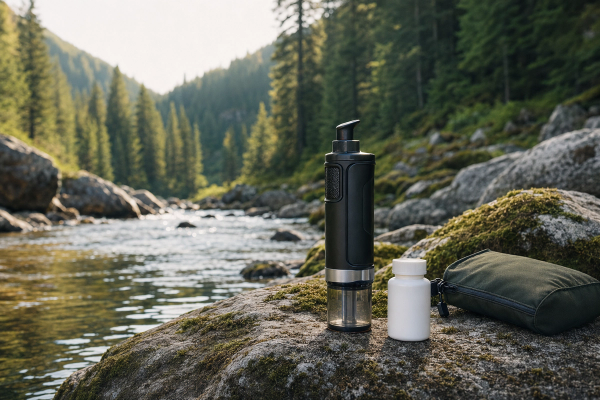
#A portable bidet is basically a small bottle or attachment that sprays water. Some are simple squeeze bottles with an angled nozzle. Some are electric and battery-powered. I started with the cheapest squeeze type because I didn’t want to become that person who buys travel gadgets and then forgets them in a drawer. Surprisingly, it became one of my most-used items.
The first trip where I fully trusted it was a mix of airport, train, and hostel travel. I had packed it thinking “chalo dekhte hain.” By day two, I was sold. It felt closer to home. It used less toilet paper because I only needed paper or a small towel to dry. And in places where bathrooms didn’t have a jet spray, it saved me from that uncomfortable half-clean feeling. Sorry if that’s too much detail, but this whole topic is detail only.
The biggest advantage is comfort. If you’re used to water, a portable bidet feels normal. It’s also useful for people with sensitive skin, periods, postpartum travel, piles, stomach issues, or just those spicy-food consequences we don’t discuss at family dinners. But, and this is important, it’s not magic. You need water. You need privacy to fill it. You need to dry after. And you need to clean the bottle properly, otherwise you are just carrying a tiny plastic problem around the world.
Squeeze bottle or electric bidet?
#I prefer the squeeze bottle for travel. It’s cheaper, lighter, has no charging drama, and if it falls on a bathroom floor you don’t feel like crying. Electric ones have stronger spray and feel more “proper”, but they need batteries or charging, and some are bulky. If you’re doing longer stays, maybe electric is nice. For backpacking, hostels, trains, and carry-on travel, simple wins. Always simple. That is one lesson travel keeps teaching me, even though I don’t always listen.
Airport days: where both options get tested badly
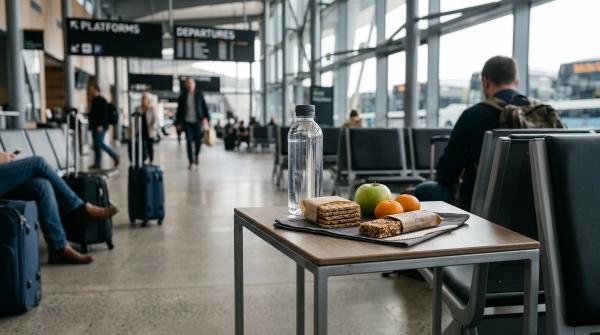
#Airports are where your hygiene plans meet reality. You’re drinking coffee, standing in security lines, eating overpriced sandwiches, sitting in cold AC, and then suddenly the bathroom queue is longer than immigration. On flights, wet wipes are easy because you can use them in that tiny aircraft toilet without splashing anything. A portable bidet can be used too, but you need to be careful. Fill it after security, not before if it’s a bottle containing water. Empty bottles are usually easier through security, and then you can refill inside the terminal where water stations are available.
This is also where I’ll say something aunty-like but true: don’t reduce your water intake just to avoid bathroom stops. I’ve done it on long travel days and ended up with a headache, dry throat, and that heavy tired feeling. If you’re packing a portable bidet, you’re already thinking about water access, so plan your drinking water too. I liked this practical piece on Travel Day Hydration Mistakes: Water, Coffee, Electrolytes, mainly because it says the boring sensible things we ignore before flights.
For bidet users, a refillable water bottle helps a lot. Not the same bottle you drink from, obviously don’t be weird, but knowing where refill points are can reduce panic. Many airports now have water stations or drinking fountains after security, though availability varies by airport and terminal. If you’re trying to pack more reusable stuff and avoid buying plastic bottles every time, the Airport Water Bottle Refill Guide for Travelers fits nicely with this whole routine.
Hostels, hotels, homestays: what actually happens in bathrooms
#Accommodation changes the whole portable bidet vs wet wipes decision. In Indian budget hotels, guesthouses, and many homestays, you’ll usually find a health faucet or at least a bucket and mug. But “usually” is doing too much work here. In older hill properties, water pressure may be weak. In beach hostels, bathrooms are often sandy, wet, and shared by too many people. In international hostels, especially Europe and Australia-type backpacker places, toilet paper is standard and water is not. Some Southeast Asian places have bum guns, some don’t. It’s a lottery.
Price doesn’t guarantee bathroom comfort. I’ve paid hostel rates and got a spotless bathroom with hot water, hooks, shelf, everything. I’ve also paid for a decent hotel room where the health faucet pipe was leaking continuously and the bathroom floor became a mini swimming pool. As a rough India travel reality, dorm beds can be budget-friendly, guesthouses vary wildly, and nicer hotels may offer better bathroom fittings, but maintenance is the real king. Check recent reviews. Search words like “bathroom”, “water pressure”, “clean toilet”, “hot water”. These reviews tell the truth.
For shared bathrooms, wet wipes are easier but wasteful. Portable bidet is cleaner-feeling but needs confidence. You may need to carry it from your bag to the bathroom without making it look like a science experiment. I keep mine in a small opaque pouch with my soap strip, tissues, and a tiny quick-dry towel. Speaking of towel drama, if you’re building a compact hygiene kit, the whole Microfiber vs Turkish Towel for Travel: Which Is Better? debate is actually relevant. Drying matters. Nobody wants a damp towel smell in their backpack, bhai.
Road trips and Indian highways: wet wipes still save the day
#On Indian road trips, I don’t rely only on a portable bidet. Highways are improving, yes, and many petrol pumps and food courts now have better toilets than before. But still, you can get everything from super clean to horror movie. On routes like Delhi to Manali, Mumbai to Goa, Bengaluru to Coorg, Jaipur to Udaipur, the facilities depend on where you stop. Big branded food plazas are usually better. Small dhabas may have water but not always clean floors, hooks, soap, or bins.
This is where my kit becomes mixed. Portable bidet if there is a reasonably usable toilet and water. Wet wipes if the place is too rushed or too dirty or there’s no proper water. Tissue for drying. Hand sanitizer. Small soap. A zip pouch for used items if the bin situation is bad, though obviously dispose properly as soon as possible. It sounds like overplanning until you’re in a toilet with no latch and one slipper floating near the drain. Then suddenly you become grateful for every little thing you packed.
For women travelers, especially during periods, I would say don’t romanticise minimal packing too much. Carry what makes you feel safe and clean. Wipes, bidet, disposal bags, extra underwear, painkiller if you use it, whatever. Travel influencers can say “one backpack only” but they are not standing with you in a bus stand toilet near some random town at 6 am. Practicality over aesthetics, always.
Beach trips, treks, and festival travel: different rules, boss
#Beach travel is sweaty, sandy, and salty. Goa, Gokarna, Varkala, Pondicherry side, Andamans if you’re lucky enough... bathrooms can be wet all the time. A portable bidet works well if your stay has good water access, but in beach shacks or shared bathrooms, drying becomes the annoying part. Wet wipes are tempting, but please don’t leave them in beach bins overflowing or, worse, anywhere near sand. Beaches already get enough trash.
Treks are a different game. In proper wilderness or high-altitude routes, waste management is serious. Wet wipes are not something to casually throw or bury. They can take a long time to break down, and animals or weather can scatter waste. If you carry wipes, pack them out in a sealed bag. A portable bidet may work if water is available, but in cold weather you may regret splashing icy water in sensitive places. Sorry, but truth is truth.
Festival camping, music events, desert camps, and big fairs are probably wet wipe territory for most people. Water queues can be long and bathrooms are busy. Still, I carry the bidet if I’m staying overnight because at least at the tent or room I can manage. During the day, wipes. At night, water. Hybrid method. Not very glamorous, but very effective.
What about safety, skin, and hygiene?
#I’m not a doctor, so I won’t give medical gyaan like it’s a prescription. But from experience and basic common sense, repeated wiping can irritate skin, especially if the wipes are scented or if you already have sensitivity. Water feels gentler for many people. After using water, drying properly is important because staying damp can also feel uncomfortable, especially in humid places like Kerala, Mumbai monsoon, coastal Karnataka, or Thailand-style weather.
For the portable bidet, clean water matters. I use tap water in places where I’m comfortable using it for washing. If the tap water looks doubtful, I use drinking water or filtered water. This is not always possible, I know. But if the water smells rusty or looks muddy, don’t use it on your body just because you’re desperate. Also rinse the bottle daily, let it dry when you can, and don’t share it. I can’t believe I have to say this, but travel groups are strange sometimes.
Wet wipes should be unscented if possible. Baby wipes are often gentler, though not always eco-friendly. Avoid using harsh antibacterial wipes on intimate areas unless the label clearly says it’s safe for skin. Those surface disinfectant wipes are for surfaces, not for you. Again, sounds obvious, but in panic people do nonsense things. Me included, once. Not proud.
Packing: how I carry both without making my bag disgusting
#My small hygiene pouch has become very fixed now. Portable bidet bottle, mini tissue roll, a few wet wipes in a flat pack, hand sanitizer, soap sheets or tiny soap, one small quick-dry cloth, and a zip bag. If I’m flying carry-on only, the bidet goes empty through security. I fill it later if needed. If I’m on a train or bus, I fill it only right before using or keep it empty because leaks are betrayal of the highest order.
One tip: test the bidet at home before travelling. Don’t be that person learning spray angles in a hostel bathroom while someone is knocking outside. Also test if the cap leaks. Fill it, squeeze it, turn it upside down, put it in a pouch for an hour. Cheap bottles can leak. Good ones usually don’t, but I’ve seen expensive things fail and cheap things survive Ladakh roads, so who knows.
- For a weekend city break, I carry mostly wipes plus a small bidet if the hotel bathroom is uncertain.
- For long international travel, the portable bidet is non-negotiable for me, with wipes as backup.
- For treks or eco-sensitive places, I reduce wipes and make sure anything I carry in, I carry out.
- For flights, I keep wipes in the personal bag and bidet empty in the main cabin bag.
Cost and availability: which one is actually cheaper?
#Wet wipes feel cheap because one pack is inexpensive. But if you travel often, you keep buying pack after pack. Small packs at airports or tourist shops can be weirdly expensive. In India, normal wet wipes are easy to find in pharmacies, supermarkets, baby stores, and online. Abroad, you’ll find them too, but the type and price varies. Some places mostly sell makeup wipes or baby wipes, not travel toilet wipes.
Portable bidets cost more upfront. Simple squeeze bottles are usually affordable and last long if you don’t lose them. Electric ones cost more and may need batteries, charging cable, or special parts. For me, the basic bottle paid for itself because I stopped buying so many wipes. But if you travel once a year and stay only in good hotels, maybe you don’t need another gadget. Don’t buy stuff just because bloggers like me get excited. Buy what matches your actual trips.
Also check size. Some portable bidets are too big for light packing. Some fold or collapse, but collapsible plastic can be harder to clean and dry. I like a medium bottle with a detachable angled nozzle. Not too tiny, because tiny bottles run out mid-use and then you’re sitting there regretting your life choices.
Eco angle: uncomfortable but important
#Wet wipes create waste. Even biodegradable ones need the right conditions to break down, and many travel destinations don’t have perfect waste systems. In hill towns, islands, beaches, campsites, and crowded tourist areas, waste disposal is already stretched. If every traveler uses wipes daily and tosses them carelessly, it adds up. You can literally see it in some trekking routes and beach corners, and it’s depressing.
A portable bidet uses water, yes, but usually not much. It reduces tissue and wipes. For me, it feels like the more responsible option for regular use. But it’s not automatically eco-friendly if you keep buying plastic bottles or don’t clean it and replace it often. The best setup is boring: one durable bidet, refill responsibly, dry with tissue or a washable quick-dry cloth when practical, and keep wipes only for situations where they are truly useful.
My personal rule now is simple: water first when possible, wipes only when necessary. Not because I’m some perfect eco saint, but because travel places are not dustbins for our convenience.
So, portable bidet vs wet wipes: my honest verdict
#If you’re an Indian traveler who feels uncomfortable with only toilet paper, get a portable bidet. Really. Start with a simple squeeze one. It will make international travel, hostel stays, and random bathroom situations much less stressful. It feels familiar, it’s reusable, and it saves money and waste over time. For long trips, I’d choose portable bidet over wet wipes any day.
But don’t completely ditch wet wipes. They are brilliant for emergencies, transit days, road trips, kids, illness, and places where water access is poor. The trick is not choosing one like it’s a cricket rivalry. It’s not India vs Pakistan. It’s more like dal and achar. One is the main thing, one saves the meal when needed.
My final combo is portable bidet plus a small pack of unscented wet wipes. Add tissue for drying, sanitizer, and soap. That’s it. Not complicated. If I’m going somewhere with very good hotels, maybe I reduce. If I’m backpacking or taking overnight buses, I carry the full kit. If it’s a trek, I rethink wipes and waste disposal carefully.
Final thoughts from someone who learnt this the awkward way
#Travel hygiene is not the prettiest topic, but it’s one of those things that quietly decides how comfortable your trip feels. We spend so much time choosing cafes, hotels, sunrise points, reels spots, and then ignore the basic bathroom reality. Big mistake. Especially for us Indians who are used to water, a portable bidet can make travel feel less alien. Wet wipes are useful, no doubt, but they shouldn’t become the only plan.
So before your next trip, whether it’s a cheap Goa hostel, a Spiti homestay, a Singapore layover, a Europe backpacking route, or just a family road trip with too many paratha stops, think about your toilet kit. Not in a dramatic way. Just practical. Your future self, tired and sleepy in some strange bathroom, will thank you.
And ya, if you enjoy these slightly too-honest travel packing conversations, I keep finding helpful, real-world travel reads on AllBlogs.in. Good place to browse before you pack the bag and forget the most important things, like I still sometimes do.