Why I started carrying an empty bottle to every airport
#The first time I properly understood the importance of a refillable water bottle was not in some fancy international airport, it was at Delhi T3, very early morning, half sleepy, half irritated, and fully dehydrated. I had thrown away my water before security like a good rule-following citizen, then after security I saw one 500 ml bottle being sold for a price that made me do mental maths like I was buying petrol. I still bought it, obviously. Thirst has no ego. But that day I decided, boss, enough. Empty bottle in bag, refill after security. Simple.
If you travel often from Indian airports — Delhi, Mumbai, Bengaluru, Hyderabad, Chennai, Kochi, Kolkata, Goa, Ahmedabad, Pune, wherever — this small habit saves money, reduces plastic, and honestly keeps you sane. Airports make you walk a lot. Check-in queue, security queue, gate change, bus boarding, then sitting inside dry aircraft air for two hours. By the time you land, your throat feels like you ate namkeen without chai. So this guide is basically my practical airport water bottle refill guide for travelers, written from many flights, some mistakes, and a few slightly embarassing moments where I asked airport staff, “Bhaiya drinking water kidhar milega?” more times than I want to admit.
The basic airport water rule, in normal Indian language
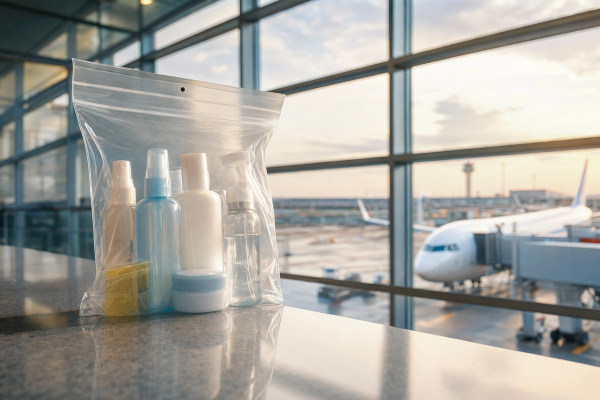
#Carry an empty bottle through security. Refill it after security. That’s the cleanest rule. In most airports, security doesn’t mind an empty reusable bottle in cabin baggage. What they don’t allow, especially for international flights, is carrying liquid above the permitted limit through screening. Many countries follow the 100 ml container rule for liquids, gels, creams etc. India also uses similar cabin liquid restrictions on many routes, particularly international. Domestic security can feel different airport to airport, but don’t argue with CISF or airport security. If they say empty it, just empty it. No drama needed.
I’ve carried stainless steel bottles, plastic bottles, collapsible silicone bottles, even one old gym shaker once. Empty is usually fine. Full bottle before security? Risky. Half bottle? Also risky. Sometimes they’ll ask you to drink it or throw it. And if you’re running late, trust me, you don’t want to stand near the bin gulping water like some school sports day kid.
My simple airport formula: drink before leaving home, empty the bottle before security, refill near the gate, sip slowly on the flight. Not rocket science, but it changed my travel days.
Where to find water refill points at Indian airports
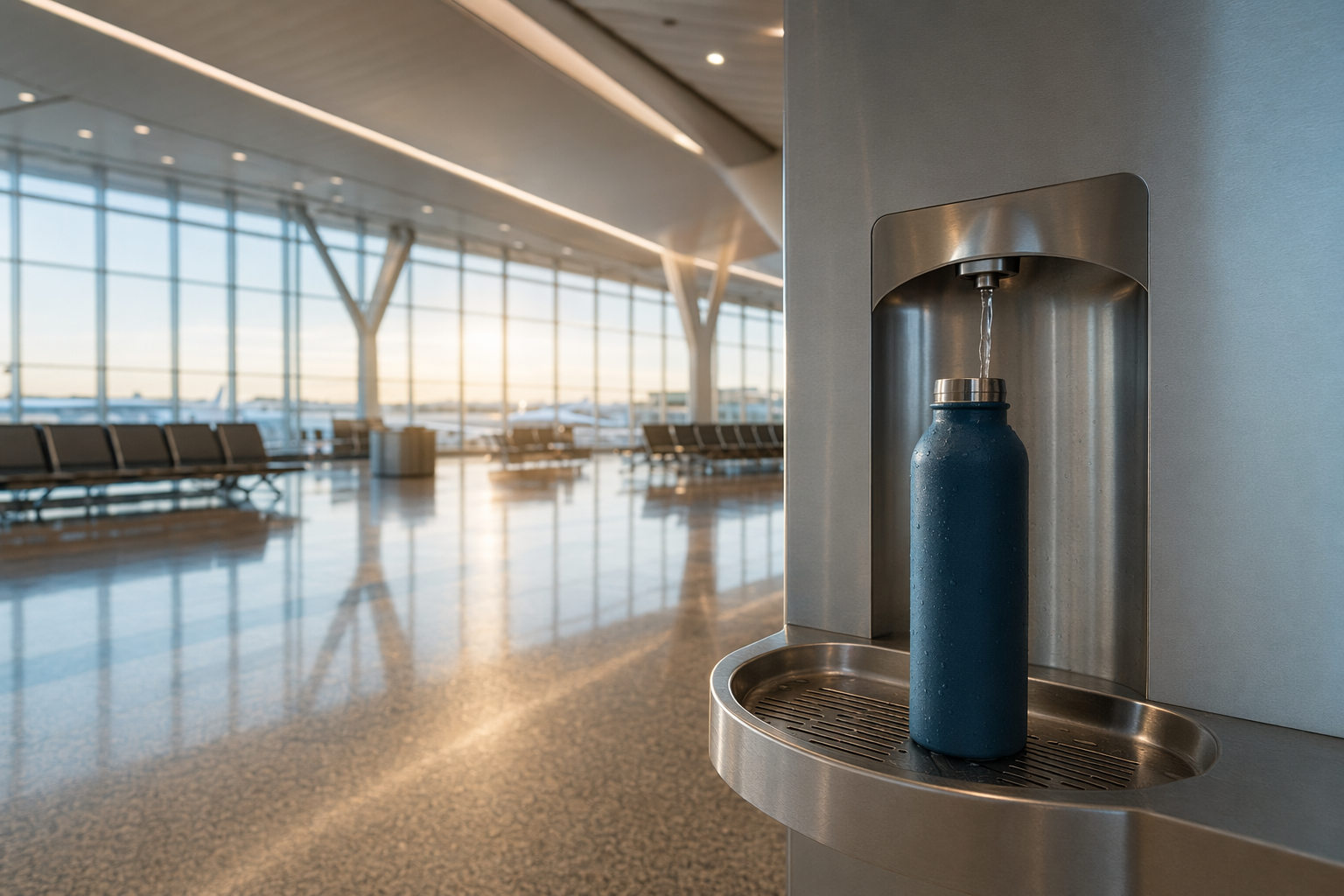
#Most big Indian airports now have drinking water stations, water fountains, or bottle refill points after security. Some are obvious and shiny, some are hidden behind seating areas like a secret level in a video game. Delhi T3 has multiple drinking water points near washrooms and gate areas. Bengaluru airport has clean-looking refill stations around the terminal, though during crowd peaks you may have to walk a bit. Mumbai T2, Hyderabad, Chennai, Kochi and Kolkata also generally have drinking water facilities after security. Smaller airports can be hit or miss, but even there, washroom areas or food court corners usually have a water cooler somewhere.
My trick is boring but it works: look near toilets first. Airports usually place drinking water points close to washroom blocks, not always beside restaurants. Second place to check is near gate clusters, especially where there are long seating rows. Third, ask housekeeping staff. Not the airline counter person who is already dealing with angry passengers and baggage drama. Housekeeping staff know the terminal like their own gali.
- Look for signs saying drinking water, water fountain, bottle refill, potable water, or simply water cooler.
- If the tap is inside a toilet stall area or not marked drinkable, don’t use it. Seriously, don’t be adventurous there.
- At international airports abroad, refill points are often right after security, but in older terminals they may be only near washrooms.
- Some lounges will refill your bottle if you ask nicely. Some cafés also do, but it depends on staff mood and crowd.
My bottle choice after trying too many options
#For flights, I prefer a 700 ml to 1 litre bottle. One litre sounds big but it fits in most side pockets of backpacks if the bottle is slim. Stainless steel keeps water cool, which is lovely in May-June when you’re flying from Jaipur or Delhi and the whole world feels like tandoor. But steel bottles are heavier and sometimes they make a loud thak sound when you drop them at security tray, which I have done. Plastic reusable bottles are lighter, cheaper, and easier for cabin crew to handle if you ask them for a refill. Collapsible bottles are great for backpackers, but personally I don’t love the rubbery taste some of them get.
One more small thing — avoid bottles with complicated straw lids if you don’t clean them properly. Airports and flights are not exactly dust-free spiritual retreats. Simple wide-mouth bottle is easiest to rinse, refill, and inspect. If you’re travelling with kids or parents, carry a bottle each if possible. Sharing one bottle sounds cute until everyone is thirsty at different times and someone has backwash. Sorry, but true.
Security-friendly reusable kit, not too fancy
#My regular flight kit now is: empty bottle, small packet of ORS or electrolyte, one hand towel, a spoon or compact cutlery if I’m carrying food, and some dry snack. Don’t overpack like you’re going for Himalayan expedition. Just enough. If you’re trying to build a reusable airport kit, this guide on Reusable Travel Cutlery Kit: What to Pack and Avoid fits nicely with the bottle habit because security rules can get weird around sharp or metal items. A bottle is easy. A knife-looking fork is not.
Can you refill on the plane?
#Yes, usually, but timing matters. On many Indian domestic flights, cabin crew will give you water in small cups, and some airlines may refill your bottle if they have enough drinking water onboard. But don’t expect it as your right-right, you know? They’re managing service, turbulence, medical requests, crying babies, and that one passenger who wants to stand up when seatbelt sign is on. I usually fill my bottle before boarding so I don’t need to ask unless the flight is long.
Low-cost carriers may sell bottled water or provide cups depending on route and service policy. Full-service airlines are more likely to give water freely, but again, flight length and airline practice matters. On international long-haul flights, crew are generally used to bottle refill requests. Just don’t hand them a dirty bottle mouth-first. Open the cap yourself and offer it politely. Sounds basic, but I’ve seen people act like cabin crew are personal servants. Arre, manners cost nothing.
The biggest hydration mistake Indians make on travel day
#We drink chai or coffee, then forget water. I do it too. Early morning flight? One cutting chai at home, one coffee at airport, maybe a salty sandwich, then inside the plane we wonder why headache is coming. Airport air is dry, flights are dry, and sitting for long makes you feel sluggish. But drinking too much water at wrong time also means bathroom queue during boarding or seatbelt sign, which is another kind of suffering.
My current rhythm is simple. I drink a glass of water before leaving home, then sip slowly after security. Not one litre in five minutes. If I’m flying more than three hours, I add electrolytes sometimes, especially in summer or after running around with luggage. I wrote notes from my own mistakes while travelling, and this detailed piece on Travel Day Hydration Mistakes: Water, Coffee, Electrolytes is worth reading if you are the type who lands with headache and says “maybe flight food was bad.” Sometimes it’s not food. It’s just dehydration plus too much caffeine.
Airport-wise refill notes from an Indian traveler’s point of view
#Delhi IGI T3 is probably the airport where I’ve refilled most often. The water points near washrooms are reliable, though sometimes one machine will be out of service and you have to walk to next block. During late-night international departures, refill before going too deep toward your gate because some gates feel like they are in another district. Mumbai T2 has decent facilities but can feel like a maze if you’re tired. The design is beautiful, but when you’re thirsty, art installation doesn’t help much. Follow washroom signs and you’ll usually find water.
Bengaluru airport, especially with the newer terminal experience, feels more organized in parts, and water refill points are generally not hard to locate. But distances can be long, so don’t wait till final boarding call. Hyderabad is pretty straightforward, clean, and usually easy. Chennai and Kolkata have improved a lot compared to earlier days, but at peak times you may find crowding around water coolers. Kochi is one of those airports where I actually felt relaxed, maybe because Kerala airport energy is different only. Goa’s newer airport facilities are better than the old chaos, but season crowds can make everything slower. Smaller airports like Indore, Bagdogra, Varanasi, Dehradun, Bhubaneswar — carry patience. Water is there most times, but signage may not be perfect.
What about international airports?
#Singapore Changi, Doha, Dubai, Bangkok, Istanbul, Kuala Lumpur — these major hubs usually have refill stations or drinking fountains, but don’t assume every water tap is potable unless marked. In Europe and North America, many airports have bottle filling stations near gates. In some places, water from restroom sink may be technically safe, but I still prefer marked drinking water points because, mentally, it feels better. Maybe that’s not scientific, but kya karein, mind also needs comfort.
At certain airports, security may ask you to empty even a bottle with ice. Some countries are strict about liquids during secondary security checks at the gate, especially for US-bound flights from certain airports. So if you refill too early and then there’s another screening before boarding, you may have to dump it again. I’ve had this happen in transit once and I was genuinely annoyed because I had just filled cold water. Lesson learnt — check if there is gate security before filling full.
Hygiene: the part we don’t talk about enough
#Not all water stations are equal. Some are clean, some are okay-ish, and some look like they have seen three monsoons and one family function. I check the nozzle before filling. If the nozzle is touching the sink or looks crusty, I skip it. If water flow is weak and the area is dirty, I skip. If there is a queue and everyone is pressing their bottle mouth directly onto the outlet, I wait and fill without touching. Little things. You don’t need to become paranoid, but be aware.
I also rinse my bottle at the hotel every night. If I’m staying in a budget hotel or homestay, I use filtered water or hot water from kettle, then let it dry open. In India, many hotels provide RO water refill now, especially eco-conscious stays, hostels, and boutique properties. Some still give plastic bottles daily, but if you ask reception, they often refill from a dispenser. In good hostels in Goa, Rishikesh, Jaipur, Kochi and Bengaluru, filtered water refill is almost standard because backpackers keep asking. In business hotels, housekeeping may bring glass bottles or refillable bottles depending on property policy.
Accommodation and refill reality during layovers
#If you have an overnight layover, water becomes part of planning. Airport hotels and transit stays can be expensive, but convenient. Typical full airport hotels in big Indian cities can range anywhere from around ₹5,000 to ₹15,000+ per night depending on city, date, demand and how close the hotel is to the terminal. Day-use rooms or sleep pods, where available, may be roughly ₹1,000 to ₹4,000 for a few hours, sometimes more in premium terminals. Prices move a lot during holidays, long weekends, IPL-type event periods, wedding season, and bad weather disruption days when everyone suddenly needs a room.
For budget travellers, staying slightly away from the airport can save money. Near Delhi Aerocity you’ll find everything from budget hotels to luxury, but prices jump and quality varies wildly. Mumbai airport area has hotels in Andheri, Vile Parle and Sakinaka, again mixed bag. Bengaluru airport is far from the city, so factor transport cost before booking a “cheap” room 30 km away. Hyderabad airport has hotels nearby, but the city is still a drive. Always check if the hotel provides safe drinking water. Sounds like a small thing, but when you land at midnight and don’t want to pay airport price for bottles, it matters.
Seasonal travel tips: summer, monsoon, winter flights
#Indian summer flights are dehydration traps. April, May and June can be brutal in North India, central India and many airport taxi areas. Even if the terminal is air-conditioned, the journey to airport, luggage dragging, security stress, and walking to boarding gate all add up. Carry the bottle empty but hydrate before you leave. If travelling with elderly parents, remind them gently. Our parents will carry the entire house in a suitcase but forget water, then say “haan haan theek hai” when clearly not theek hai.
Monsoon brings a different issue: delays. Mumbai, Kochi, Goa, Kolkata, Bengaluru — rains can slow airport movement, road traffic, and sometimes flights. Keep water and snacks after security because a one-hour wait can become four hours. Winter in North India, especially fog season around Delhi and surrounding airports, is another delay drama. Early morning flights may get pushed, and airport shops get crowded. In all these cases, a refillable bottle is not just eco-friendly, it is survival-lite.
Food, snacks, and water pairings that actually work
#Airport food is expensive and not always satisfying. I usually carry something simple: thepla, poha in a dabba if early morning, homemade sandwich, roasted makhana, peanuts, banana, or khakhra. But if you’re flying international, be careful with fresh food. Security and customs rules are different from normal domestic travel. For example, fruits can be allowed in some situations and restricted in others, especially when crossing borders. If you pack fruit with your refillable bottle, read this before making assumptions: Can You Bring Fruit on a Plane? Whole vs Cut Rules. Whole fruit, cut fruit, domestic, international — small differences can become big irritation at airport.
Also, salty snacks make you thirsty. I love masala peanuts and chips like any normal person, but if I eat them before boarding and don’t drink water, my throat becomes desert. Same with airport biryani, chole kulche, dosa with spicy chutney, and those overpriced cheese sandwiches that taste like cardboard but somehow we buy. Eat, but sip. And don’t drink so much that you spend boarding time searching for washroom while your group is calling, “Gate close ho raha hai!”
Transport to airport and why it affects hydration too
#This sounds unrelated, but transport decides how much water you should drink before leaving. If you’re taking metro to Delhi airport, nice, predictable, and you can sip water before starting. Bengaluru airport bus is comfortable but long, so plan bathroom timing. Mumbai local plus auto plus airport walk? Don’t overdrink just before leaving unless you know your route. Hyderabad Pushpak bus, Kochi metro plus feeder, Chennai metro, airport taxis — every city has its own rhythm.
For early morning flights, I leave with a small amount of water in the bottle, finish it before entering terminal, then keep the empty bottle for security. If the taxi ride is long, I don’t chug water right before. During peak traffic, especially Bengaluru or Mumbai evening flights, keep water accessible but don’t go overboard. Practical, not perfect. Travel is basically bathroom strategy plus boarding pass, if we’re being honest.
Safety and common sense at refill stations
#Airport water refill is generally safe when it’s from marked drinking water points, but use common sense. Don’t fill from random cleaning taps. Don’t fill from wash basin if you’re unsure. Don’t use water that smells odd or looks cloudy. If you have a sensitive stomach, kids, elderly people, or medical concerns, bottled sealed water may be the safer choice in doubtful places. I’m not here to prove a point and ruin my trip with stomach trouble. Sustainability is good, but health first.
Keep your bottle in the outer pocket of your bag so security can inspect if needed. Don’t attach it loosely where it keeps hitting people in queue. I once had my metal bottle swing and lightly hit one uncle’s trolley, and he gave me that disappointed Indian uncle look which hurts more than shouting. Also, label your bottle or choose a colour you recognise. At refill stations, many bottles look same. Black Milton, blue Cello, silver steel — full Indian airport family reunion.
A small note on plastic waste and why this habit feels good
#I’m not the most zero-waste person. I still forget cloth bags sometimes and buy packaged snacks when hungry. But carrying a refillable bottle is one of those easy wins. Airports generate a scary amount of single-use plastic. One traveller buying one bottle doesn’t sound much, but multiply by thousands of passengers daily and it becomes mad. When refill stations are clean and visible, people use them. When they’re hidden, people buy plastic. So airports also need to do better with signage, maintenance, and proper cold water availability, not just put one lonely machine and call it sustainability.
The good trend is that more Indian airports, hotels, lounges, cafés and hostels are talking about refill culture now. DigiYatra, self bag drop, smarter terminals — all these modern things are coming, but drinking water is still the basic passenger comfort test. If an airport has good toilets, clear gates, decent seating and easy water, I automatically respect it more.
My final airport refill routine, step by step
#- At home or hotel, I drink water properly before leaving, but not like a camel preparing for Rajasthan safari.
- I carry a clean empty bottle in my cabin bag side pocket.
- Before security, I make sure it’s fully empty. If there’s water left, I finish or discard it.
- After security, I find a marked drinking water point near washroom or gate area and refill halfway first, not always full.
- Before boarding, I top up if the flight is long or if I know airline service may be limited.
- On arrival, I refill again before leaving airport if taxi ride to city is long. This is very useful in Bengaluru, Hyderabad, Delhi NCR traffic, and Goa season roads.
Final thoughts from too many airport walks
#A refillable water bottle won’t make your trip glamorous. Nobody is posting Instagram reels saying “guys look at my hydration strategy” — actually maybe they are, internet is strange. But it makes travel smoother. You spend less, waste less plastic, avoid headaches, and feel a bit more in control on those chaotic travel days when gate changes, delays, queues and overpriced coffee are all testing your patience.
For Indian travelers, especially families, solo women, students, budget backpackers, and business flyers doing back-to-back trips, this is one habit worth building. Empty bottle through security, refill after. Check hygiene. Sip smartly. Don’t fight rules. And ask staff when confused — most airport people are helpful if you’re polite.
Honestly, after so many flights, I feel the best travel tips are not always big destination secrets. Sometimes it’s just knowing where to get clean water without paying ₹80 for a tiny bottle. Small win, big relief. If you like these practical, slightly lived-in travel notes, you’ll find more such guides and real trip-style tips on AllBlogs.in — I keep discovering useful stuff there when planning my own journeys too.