The real thing about going from Baku to Tbilisi
#Baku to Tbilisi sounds simple on Google Maps, no? Two capital cities, both in the Caucasus, not too far, same kind of trip people do in Europe by train or bus without thinking much. But honestly, this route is a little more complicated than it looks, especially for us Indian passport holders who have to think about visas, border rules, luggage, weather, and of course the classic Indian question: “bhai, safest and cheapest option kaunsa hai?” I did this Azerbaijan–Georgia planning with the same mindset. Baku had already surprised me with its polished Flame Towers, Caspian Sea breeze, old city lanes and almost Dubai-meets-Europe feel. Tbilisi, on the other hand, felt more artsy, messy, warm, balcony-filled, and very walkable. If you’re still deciding how many days to give each place, my comparison on Baku vs Tbilisi: Best First Caucasus City Trip fits nicely before you lock transport.
The biggest thing to know upfront: don’t assume the train or bus is always running like normal. Azerbaijan’s land border rules have changed a lot since the pandemic period, and the Baku–Tbilisi overnight train which many older blogs praise has not been something you can blindly count on in recent times. So before getting romantic about sleeping in a Soviet-style train cabin with chai and mountain views — which, trust me, even I wanted badly — check the latest official railway, airline, and border updates. For many travellers recently, flying has been the most reliable way between Baku and Tbilisi. But that doesn’t mean train and bus are useless to understand. They matter, because when land routes are open, they can be cheaper, more scenic, and honestly more memorable.
Quick route snapshot: train vs bus vs flight
#| Option | Typical journey feel | Best for | Main issue |
|---|---|---|---|
| Flight | Fast, simple, least drama | Travellers short on time, families, winter trips | Usually costs more than bus/train |
| Train | Slow overnight, nostalgic, comfortable if operating | People who love rail journeys and saving one hotel night | Passenger service may be suspended or limited |
| Bus / shared road route | Budget-friendly and flexible when border is open | Backpackers, light luggage travellers | Border delays, comfort, land border rules |
If I had to give one honest answer for most Indian travellers: choose flight if your itinerary is tight or you don’t want uncertainty. Choose train only if you have confirmed it is actually operating for your travel dates. Choose bus or road transfer if land borders are open and you are okay with waiting, questions, bags being checked, and maybe reaching later than planned. I know that sounds very practical and boring, but this route rewards people who plan properly. The Caucasus is not like hopping from Jaipur to Delhi where ten backup buses are there if one plan fails. Sometimes one border rule can change your whole day.
Flying from Baku to Tbilisi: the easiest option, mostly
#The flight between Baku and Tbilisi is short. Like, you barely settle in and it’s done. Actual flying time is usually around one hour-ish, though airport time makes the total half-day if you count hotel checkout, taxi, security, boarding, immigration and reaching your Tbilisi stay. Baku’s Heydar Aliyev International Airport is clean and modern, actually one of the smoother airports I’ve used in the region. From central Baku, I’d keep around 30–45 minutes by taxi depending on traffic. Tbilisi airport is smaller and easier, and getting into town usually takes 20–35 minutes by taxi or airport bus depending on where you stay.
Airlines and schedules can shift seasonally, so check directly before booking. You may find direct flights operated by regional carriers, and sometimes prices jump if you book late. For a comfortable budget, I’d mentally keep flights in the “not super cheap but worth it if saving time” category. Some days you might find a decent fare, other days it feels painful for such a short distance. Also check baggage properly. Indian travellers, including me only sometimes read baggage rules properly and then act shocked at counter — don’t do that. A 20 kg checked bag may or may not be included depending on fare type, and cabin baggage rules can be strict.
- Best if you have only 7–10 days total for Azerbaijan and Georgia and don’t want to waste a full travel day.
- Good option in winter, when road delays and weather can make overland travel irritating.
- Also better for parents, kids, or anyone carrying big suitcases after shopping in Baku malls. And yes, Baku shopping can get you.
My flight experience, minus the glamour
#I won’t pretend it was some dreamy travel movie scene. It was practical. I reached the airport early because Indian habit — we panic if we’re not early. Security was smooth, immigration was fine, and the flight felt shorter than one Mumbai local train struggle in peak hour. The only emotional part was looking down and thinking, boss, this region is so underrated by Indians. Everyone runs to Dubai, Thailand, Bali, Europe. But Baku and Tbilisi together give you architecture, wine culture, old town walks, mountains nearby, halal-friendly food in Azerbaijan, vegetarian options in Georgia if you know what to order, and still that “new place” feeling.
Baku to Tbilisi by train: romantic idea, but check if it’s running
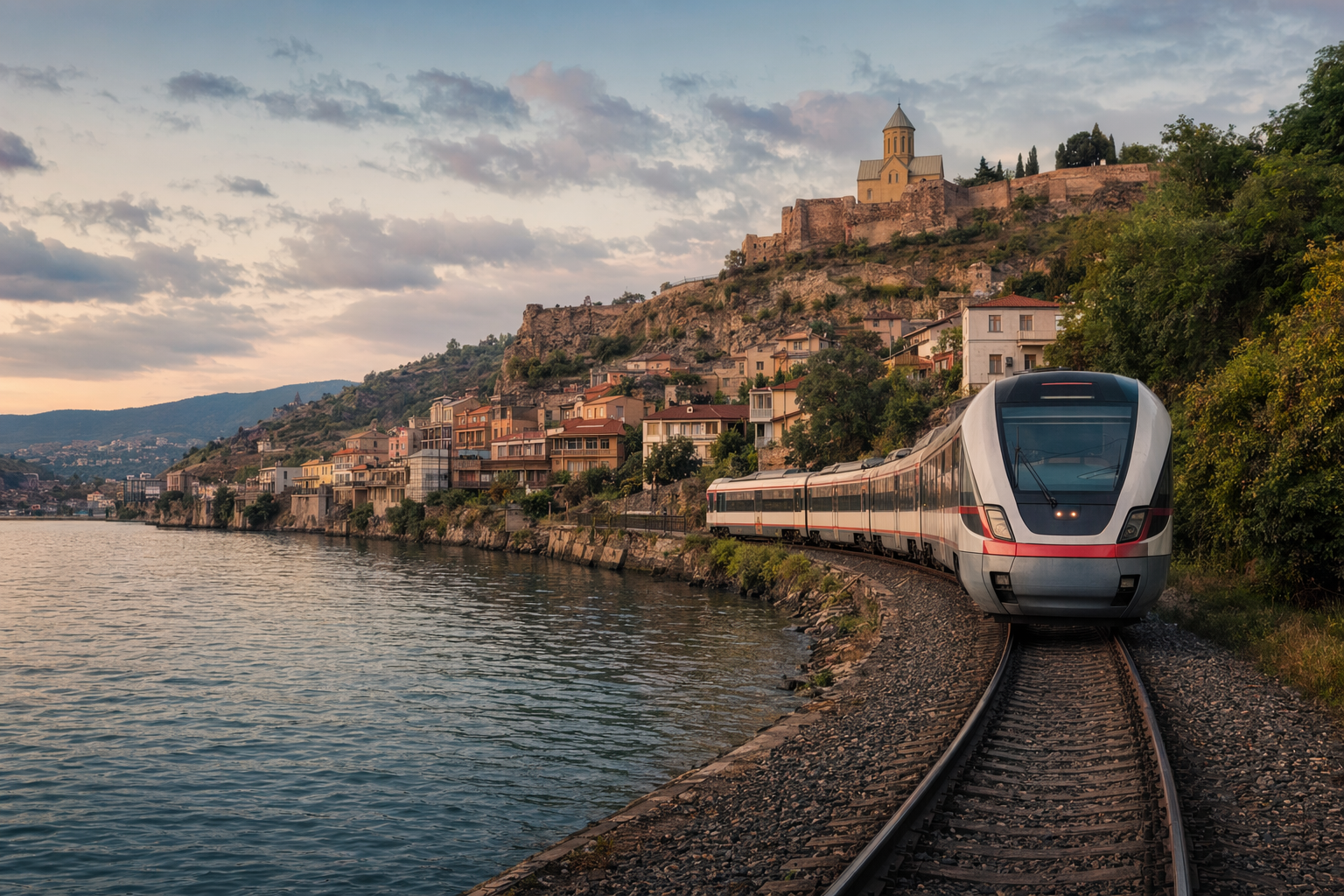
#Before land-border disruptions, the Baku to Tbilisi overnight train was one of the classic Caucasus travel routes. People loved it because it was slow in the best way — evening departure, border formalities at odd hours, sleeping cabins, and arrival next morning or later depending on timings. There were usually different comfort classes, from cheaper shared compartments to nicer sleeper options. It saved one night of hotel cost and gave that old-school travel feeling, which I personally love more than flights. But here’s the problem: the direct passenger train has faced suspensions and uncertainty, so older blogs saying “just take the train” may be outdated.
If train service resumes properly, it can be a beautiful option for travellers who aren’t in a rush. You’ll need to check Azerbaijan Railways and Georgian Railway information close to your date, not six months before and then forget. Border procedures can happen during the night, and you may need to wake up for passport checks. Keep your passport, visa printouts, hotel bookings and travel insurance handy. Don’t bury everything inside your main luggage like I once did on another border route and then had to unpack half my bag while people stared. Very elegant moment, obviously.
What Indian travellers should think about before choosing the train
#For Indian passport holders, train travel means your documents need to be extra clean. Azerbaijan usually has an e-visa system for Indian citizens, and Georgia has its own visa rules. Many Indians can apply for a Georgian e-visa, while some travellers holding valid visas or residence permits from certain countries may have easier entry options under Georgia’s rules. But please check official Georgian visa guidance for your exact situation. Don’t rely on a random WhatsApp group uncle saying “Schengen hai toh sab allowed hai” without verifying. At borders, officials look at your actual documents, not confidence.
- Carry printed hotel bookings for Georgia, even if you also have them on phone.
- Keep proof of onward travel or return flight. Border officers sometimes ask, sometimes don’t, but better to have.
- Travel insurance is not just for formality. In this region, weather and route changes can mess plans.
- Have some USD or EUR backup, plus cards. Indian forex cards usually work in cities but don’t depend on one card only.
Baku to Tbilisi by bus or road: cheapest when possible, but not always smooth
#The bus or road route is the option that sounds most backpacker-friendly. When land borders are open and services are running, buses or shared transfers can connect Baku and Tbilisi through the Azerbaijan–Georgia border, often around the Red Bridge area. Travel time can vary a lot — think long day, not a quick hop. Road distance is roughly 580 km depending on route, and with border formalities it can stretch. If everything goes well, you reach tired but happy. If border queues are long, suddenly your “budget adventure” becomes one full day of waiting, snacks, and regret.
I actually like road journeys, but only when I’m mentally prepared. In the Caucasus, road travel gives you small-town views, petrol pump coffee moments, roadside bread, random conversations, and that feeling of crossing from one culture into another slowly. But bus seats may not be luxurious, toilet stops can be basic, and luggage space can become a mini fight if everyone is carrying huge bags. If you’ve read my Bishkek to Almaty: Bus, Taxi or Flight? guide, you’ll know this whole Central Asia/Caucasus overland planning has similar questions: comfort, border delays, and whether saving money is worth losing energy.
Who should take the bus, if the route is open
#Take the bus if you’re young-ish in travel energy, carrying manageable luggage, and have buffer time. Don’t take it on the same day you have a non-refundable Tbilisi wine tour or Kazbegi trip starting next morning. I would keep at least one relaxed evening after arrival. Tbilisi is best enjoyed slow anyway — a hot khachapuri, a walk near the sulfur baths, maybe sitting near the river and doing nothing. If you arrive after a tiring bus ride and then try to tick off Narikala Fortress immediately, you’ll just hate everyone around you.
- First, confirm land border status. This is non-negotiable.
- Second, check bus departure point in Baku because stations and private operators can be confusing.
- Third, keep food and water. Vegetarian travellers especially, carry snacks from Baku.
- Fourth, don’t pack your passport in the overhead or luggage hold. Keep it on you.
Which route did I prefer?
#For my style of travel, I wanted the train. Full filmy expectation. Night train, window, maybe some quiet music, looking out like I’m in a travel documentary. But practicality won. The uncertainty around land movement made flying the more sensible choice, and I don’t regret it. Sometimes travel bloggers make everything sound adventurous, but real travel also means not ruining your itinerary just to prove a point. If you have limited leave from office in India, maybe only 9 days including flights from Delhi or Mumbai, don’t gamble too much.
That said, if the train is officially back and reliable for your dates, I would choose it next time without thinking too much. There’s something about trains in this region. They carry history. Baku feels glossy and oil-rich, while Tbilisi feels like it has stories in cracked walls and wooden balconies. A train between them just makes emotional sense. But travel planning is not poetry only, na. It’s also immigration stamps, working toilets, phone battery, and whether your hotel accepts late check-in.
Visa and entry notes for Indians: don’t leave this for last minute
#Azerbaijan is relatively straightforward for many Indian travellers because of the ASAN e-visa system. You apply online, upload details, pay the fee, and recieve the e-visa by email if approved. Processing times and fees can vary depending on standard or urgent options, so use the official portal and don’t fall for overpriced agents unless you really need help. Print the visa. I know digital copies are fine in many places, but printed documents still make border counters smoother. Old-school, but works.
Georgia needs more attention. Indian passport holders generally need to meet Georgian visa requirements unless they qualify under exemptions connected to valid visas/residence permits from certain listed countries. The e-visa route exists for many travellers, but approval is not something to treat casually. Your hotel booking, funds, insurance, return/onward ticket, and itinerary should look sensible. I’ve heard of travellers being questioned more at Georgian entry than they expected, especially when documents were vague. Don’t panic, just prepare neatly. If your plan is Baku first then Tbilisi, make sure your Georgia entry documents are ready before you even fly to Azerbaijan.
My simple rule for the Caucasus: book your transport only after your visa situation makes sense. Cheap tickets are not cheap if you can’t use them.
Where to stay in Baku and Tbilisi before and after the journey
#In Baku, I’d suggest staying near Nizami Street, Fountain Square, Icherisheher, or the Boulevard area if it’s your first time. It makes evenings easy, food easy, taxis easy. Budget hostels can start around the lower backpacker range, simple guesthouses and apartments are often mid-range, and nice hotels can climb quickly depending on season and location. Baku has many polished apartment stays too, but read reviews carefully because “luxury apartment” can mean anything from excellent to one sad sofa and a leaking shower. Been there, not in Baku but enough times elsewhere.
In Tbilisi, I like staying around Old Tbilisi, Sololaki, Avlabari, or near Rustaveli if you want good connectivity. Old Tbilisi is atmospheric but can be hilly and noisy in parts. Sololaki has lovely streets, cafes, and old buildings. Avlabari can be better value and still close to the centre. Typical stays range from hostel dorms and budget guesthouses to boutique hotels with balcony views. Prices move by season, weekends, festivals, and how early you book. Summer and autumn can get busy, especially when regional travellers and digital nomads are around.
Best season for the Baku to Tbilisi route
#Spring and autumn are the sweet spots. April to June and September to October usually feel best for city walking, day trips, and not melting under the sun. Baku can get windy — like properly windy, not cute breezy — because it’s known for that. Tbilisi summers can be hot, especially in July and August, and walking uphill in Old Town at 3 pm is not a spiritual experience, it is punishment. Winter is cheaper and beautiful in its own way, but road travel can be more unpredictable, and mountain plans around Georgia need extra care.
If you’re planning around popular experiences, Georgia’s wine harvest season in early autumn is special, especially Kakheti day trips from Tbilisi. Baku has its own event calendar with concerts, cultural festivals and big sporting weekends sometimes affecting hotel prices. Don’t assume hotel rates will stay low just because the region feels “offbeat”. Baku especially can become expensive around major events. Check accommodation before booking transport, not after.
Food on both sides: Indian stomach friendly or not?
#Baku is easier if you prefer halal meat and familiar-ish flavours. You’ll find kebabs, plov, soups, breads, grilled fish, and plenty of Turkish-style food too. Indian restaurants exist in Baku and Tbilisi, though quality and pricing vary. In Baku, I ate local more often because Azerbaijani food felt comforting — rice, meat, bread, yogurt, tea. Not spicy like home, but satisfying. If you need spice, carry small sachets of achaar or chilli flakes. No shame. I do it.
Tbilisi is heaven if you like bread, cheese, walnuts, herbs and wine. Khachapuri is famous, but heavy. Khinkali is the dumpling everyone talks about, though vegetarians need to check fillings. Lobiani, badrijani nigvzit, mushroom dishes, bean stews, Georgian salads — these worked nicely for me when I wanted non-meat options. Just be clear while ordering because “vegetarian” understanding can differ. Also, Georgian portions can be huge. Don’t order like you’re at a buffet in Gurgaon unless you have backup people to finish.
Packing and practical tips for the journey
#Pack for two different moods. Baku feels more polished and windy, Tbilisi feels more casual and hilly. Comfortable walking shoes are a must. Not optional. In Tbilisi, the pavements and old lanes can be uneven, and in Baku you’ll end up walking more than planned along the Boulevard or Old City. Carry a universal adapter, power bank, printed documents, and a small day bag for border or airport days. If taking bus/train, keep tissue, sanitizer, snacks, and water. Very Indian parent advice, but correct.
- Local SIM or eSIM helps a lot. Airport Wi-Fi is okay, but don’t depend on it for everything.
- Bolt works in both cities and is usually easier than negotiating taxis.
- Carry layers. Even if the day is warm, evenings can become chilly or windy.
- For road travel, keep small currency for snacks or toilets, though cards work well in cities.
One more thing: don’t overpack. This route becomes much easier with one suitcase or backpack you can handle yourself. I saw travellers struggling with giant bags on cobbled streets in Tbilisi and I felt second-hand pain. If you’re doing a longer Caucasus itinerary, use laundry. It’s cheaper than dragging your entire wardrobe like you’re shifting houses.
Safety, border mood, and what felt different from India
#Both Baku and Tbilisi felt generally safe to me as an Indian traveller, especially in central areas. Normal precautions apply: watch your phone, avoid drunk arguments late night, use app taxis, don’t flash cash, and check bills in touristy restaurants. People were mostly polite, sometimes reserved in Baku, more chatty in Tbilisi. Language can be a small issue, but translation apps solve most things. Younger people in cafes and hotels often speak English. Older taxi drivers may not, but hand gestures are universal somehow.
At borders and airports, be calm and answer only what is asked. Indian travellers sometimes over-explain because we’re nervous. Don’t do a TED Talk at immigration. Have documents ready and keep your itinerary realistic. If you say you’re staying 2 nights in Georgia but have no hotel booking and no return ticket, obviously questions will come. Also avoid carrying restricted items, drone equipment without checking rules, or too many loose medicines without prescriptions. Basic stuff, but important.
A good sample plan for Baku to Tbilisi travellers
#If you’re flying from India, a nice plan is 3 nights in Baku, travel to Tbilisi, then 4 nights in Georgia with one or two day trips. In Baku, do Icherisheher, Maiden Tower from outside or inside if you enjoy history, Flame Towers viewpoint, Boulevard, Heydar Aliyev Center, and maybe Gobustan mud volcanoes if you have time. In Tbilisi, walk Old Town, sulfur bath district, Narikala, Dry Bridge Market, Fabrika area, and take day trips to Mtskheta, Kazbegi or Kakheti depending on weather and your interests.
Don’t make the mistake of treating Tbilisi only as a transit city. It grows on you. The first day I found it slightly rough compared to Baku’s clean, shiny look. Then slowly the balconies, bakeries, wine bars, street art and random courtyards started doing their thing. Baku impresses quickly. Tbilisi wins slowly. That’s my personal take, maybe you’ll feel opposite.
Final verdict: train, bus or flight?
#For most travellers right now, flight is the safest recommendation because it avoids land border uncertainty and saves time. Train is the most romantic and potentially best-value option if direct passenger service is confirmed for your dates. Bus or road is the budget adventure option when land borders are open, but only if you have patience and buffer time. If this was a Europe-style route, I’d say take the train without thinking. But Baku to Tbilisi needs a little more homework.
My personal ranking would be: train if officially running and I have time, flight if I want reliability, bus only if I’m in backpacker mode and land borders are clearly open. Simple. Also, compare the real cost, not just ticket cost. A cheap bus that makes you lose one hotel booking or one paid tour is not cheap anymore. A flight that looks expensive may actually save a whole day, and on a short holiday from India, one day is big.
Would I do Baku to Tbilisi again? 100%. The two cities together make such a good first Caucasus trip — different enough to feel exciting, close enough to combine, and still not overrun in the way some mainstream destinations are. Just plan the transport carefully, keep your documents tight, and don’t rely on outdated forum posts. And if you’re comparing more cross-border travel styles, even something like Dubrovnik to Kotor Day Trip: Bus, Tour or Car? gives a useful mindset for border delays and route flexibility. Anyway, hope this helps you plan better than I did in the beginning. For more such realistic travel guides and slightly messy-but-useful trip ideas, I keep finding good reads on AllBlogs.in.