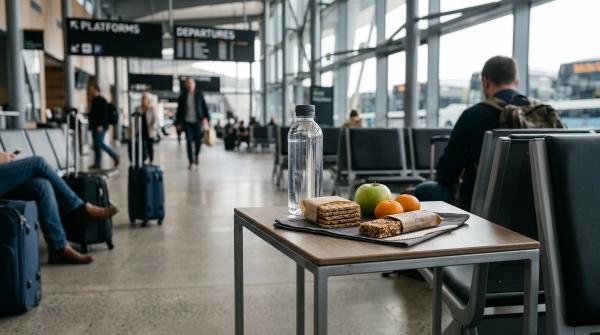
The short answer, from someone who has dragged whey through Indian airports
#Yes, you can carry protein powder on flights from India. In cabin baggage also, in check-in baggage also. But — and this is the part most people miss — it depends on how you pack it, how much you’re carrying, where you’re flying, and whether the security guy looking at your bag feels like asking you questions that morning. I’ve carried whey from Mumbai, Delhi, Bengaluru, Kochi and Hyderabad airports over the years, mostly because I’m that annoying person who thinks one missed scoop will destroy all gym progress. Spoiler: it won’t. But still, when you’re travelling for 10 days and hotel breakfasts are just poha, toast, one sad omelette and watery tea, protein powder feels like survival item only.
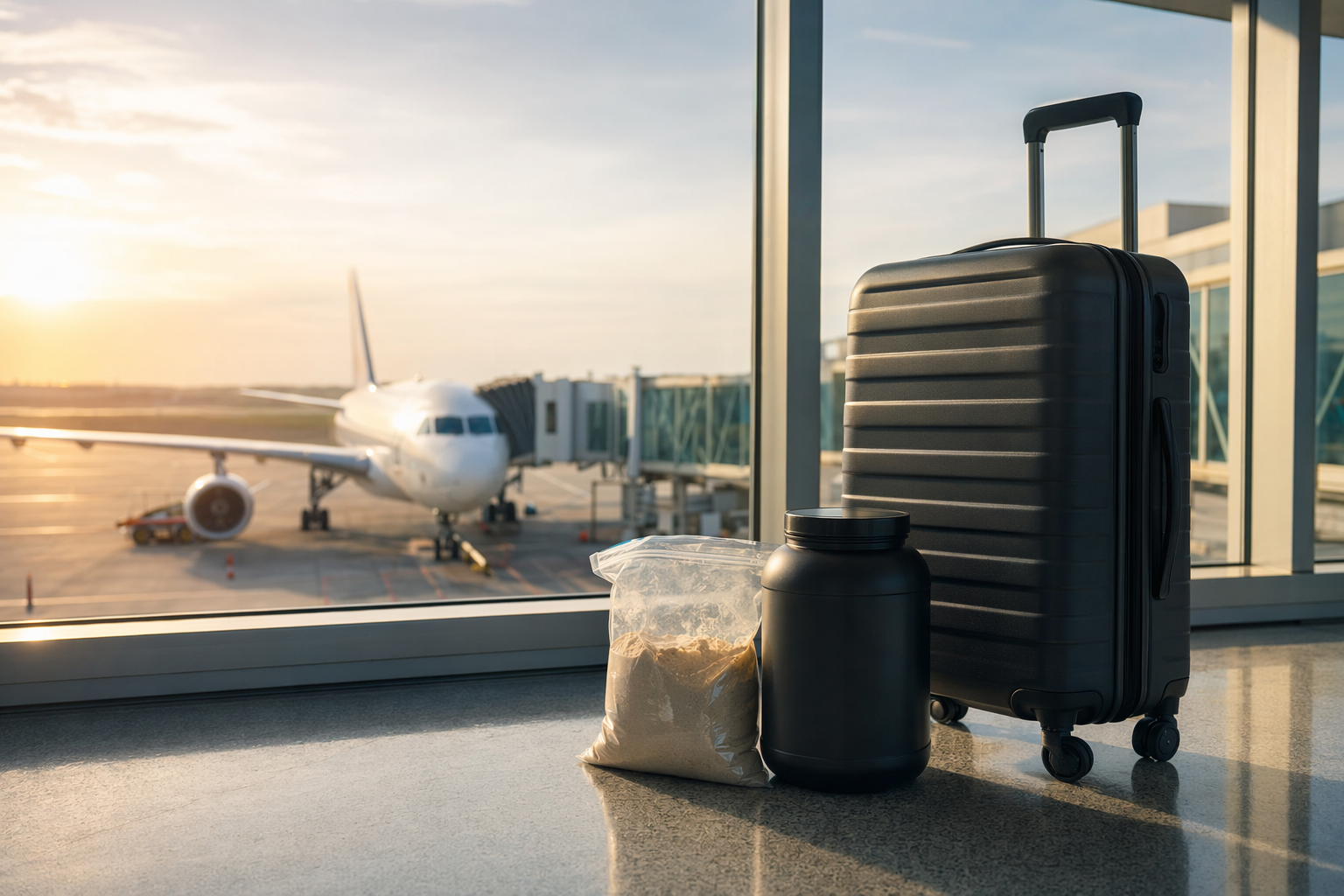
My first proper protein-powder airport drama happened at Mumbai T2 before a flight to Dubai. I had put two zip-lock pouches of chocolate whey in my backpack because the original 1 kg dabba was too bulky. At security, my bag went through the scanner, came out, went back in, came out again, and then one CISF officer asked, “Powder kya hai?” Very normal question, but my brain suddenly started acting guilty for no reason. I said, “Protein hai, gym wala.” He opened it, smelled it, made a face like chocolate protein personally offended him, and let me go. Since then I learnt one thing: protein powder is allowed, but loose mystery powder in a plastic packet is not exactly the smartest look at an airport.
Cabin bag or check-in bag: where should you keep protein powder?
#If it’s a small quantity — like 2-5 scoops for a short trip — cabin bag is usually fine. I’ve carried small sachets in my laptop bag many times on domestic flights from India. Nobody cared. But for bigger packs, especially anything above 300-400 grams, I honestly prefer check-in baggage. Not because it’s illegal in cabin, but because it saves time and awkward explanations. Airport security in India is already slow during peak hours, and if your bag gets pulled aside behind three people carrying power banks, pickle jars and one random steel tiffin, bas, your boarding gate cardio starts.
| Situation | Better place to pack it | Why I’d do this |
|---|---|---|
| 2-3 servings in sachets | Cabin bag | Easy for layovers and no big security issue usually |
| Small branded pouch under 250g | Cabin or check-in | Keep label visible, don’t make it look suspicious |
| Full 1kg tub | Check-in baggage | Bulky, can trigger extra screening in cabin |
| Unlabelled loose powder | Avoid if possible | Allowed maybe, but questions are almost guaranteed |
| International trip to strict countries | Check-in + original packaging | Customs and powder screening can be stricter outside India |
For domestic flights like Delhi to Goa, Bengaluru to Kolkata, Mumbai to Kochi and all that, security is mostly focused on prohibited items, liquids, batteries, sharp objects, etc. Protein powder is not a weapon and not a liquid. Still, powders can look weird on X-ray, especially if packed tightly in foil pouches or hidden inside shoes, which I once did because my bag was overflowing. Bad idea. The shoe smelled like vanilla for two days.
What Indian airport security actually checks
#At Indian airports, the pre-boarding security check is handled by CISF at most major airports. They are not sitting there to judge your supplement stack, but they do need to identify unknown substances. Protein powder, creatine, mass gainer, pre-workout — all these are common enough now because half the country is suddenly doing gym, marathon, CrossFit, or at least buying gym clothes. But if the powder is not in original packing, or if it is in a large quantity, they may ask you to open it. Sometimes they swab it. Sometimes they just look and wave you through. There is no one single experience, which is why people get confused.
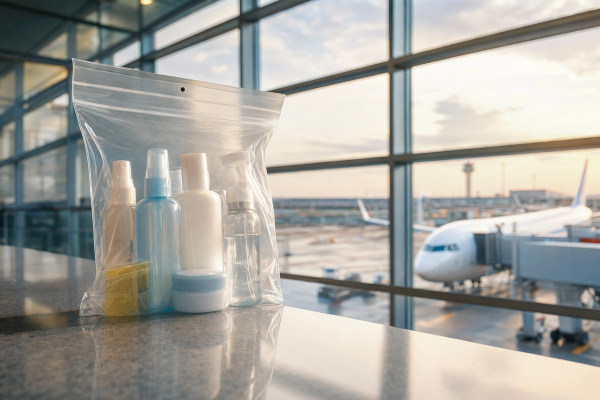
One small but useful thing: don’t pack your scoop separately in some odd corner of the bag with white powder stuck on it. I know this sounds funny, but I’ve seen my friend’s shaker and scoop getting checked more carefully than his actual protein pouch. Keep the scoop inside the pouch or wash it properly. Also, don’t mix protein powder with water before security and carry it as a shake unless it fits the liquid rules. Powder is one thing, liquid shake is another. If you carry a shaker filled with 500 ml protein shake in cabin, that can be stopped like any other liquid. For makeup, creams, gels and similar airport liquid confusion, I had found this guide useful earlier: Airport Beauty Liquids India: Makeup & Skincare Guide. Different item, same airport headache.
International flights from India: this is where you need to be more careful
#Flying from India to another country with protein powder is usually okay for personal use, but international travel adds two extra layers: airport security and destination customs. Security checks whether it’s safe to carry on the aircraft. Customs checks whether you’re allowed to bring that product into the country. These are not the same thing, and trust me, this difference matters. You may clear security in Delhi with your whey, land in Singapore or Australia or the US, and then customs rules can still apply.
For the US, airport security has specific powder screening guidance for powders in carry-on baggage. Powder-like substances over 12 oz / 350 ml may need extra screening and can be refused in cabin if they can’t be cleared. That doesn’t mean your protein is banned, but if you’re carrying a big tub in hand baggage, you’re inviting delay. For Australia and New Zealand, food and supplements should be declared if required, and they are particular about biosecurity. For Gulf countries, generally personal-use supplements in original sealed packaging are fine, but don’t carry a suitcase full like you’re opening a nutrition shop in Sharjah. For Europe and UK, personal quantities are usually manageable, but customs can always ask what it is.
My rule for international flights from India is simple: if it’s more than a few servings, check it in. Keep the invoice if it’s a new expensive product. Keep the label visible. Don’t carry unbranded powder from your gym trainer in a transparent pouch and expect immigration officers to understand “bhai ne diya hai”. They don’t know your bhai. And honestly, sometimes even we don’t know what bhai has given.
Original container vs zip-lock: what has worked for me
#The safest packing is the original sealed pack, especially if you haven’t opened it yet. It shows the brand, ingredients, nutrition label, expiry date and that it is a food supplement. But original tubs are bulky and annoying. A 2 kg whey tub takes half a cabin suitcase, and if you’re flying IndiGo or Akasa with 15 kg check-in baggage, every gram becomes emotional. I’ve stood on my bathroom weighing scale holding my suitcase like some circus act, trying to guess if it’s 14.8 or 16.2 kg. Not recommended.
For short trips, I now use small labelled pouches. I write “Whey Protein - Chocolate - Personal Use” with a marker if it’s not the original sachet. Is this legally required? No. Does it make life easier? Yes. If I’m going abroad, I cut out the label from the original pouch and keep it with the smaller pack, or I carry travel-size sachets from known brands. Those single-serve sachets are brilliant for flights, hikes, work trips, and also for avoiding that weird moment when your entire bag smells like cookies and cream.
- Keep protein powder dry and sealed properly. Moisture makes it clumpy and also more messy during checking.
- Avoid aluminium foil wrapping or hiding it inside socks. Security people are not fools, and hiding makes normal things look not-normal.
- If you carry creatine or pre-workout too, keep them labelled separately. Don’t mix powders together to save space.
- Carry only personal-use quantity. One pouch looks normal. Six tubs may look commercial, and customs duty questions can start.
How much protein powder can you carry from India?
#There isn’t a simple “you can carry exactly X kg protein powder” rule that applies to every airline, airport and country. For Indian domestic flights, the practical limit is your baggage allowance and security clearance. For international flights, personal use is the safest zone. I personally don’t carry more than 500g to 1kg unless I’m relocating or going for a long stay. Even then, I prefer buying locally if the country has good options, because dragging tubs around is not glamorous. It sounds organised in your head, but at 3 am in Delhi airport, with a backpack, cabin trolley, passport pouch, neck pillow and one protein tub poking your ribs — no thanks.
Also remember airline weight limits. Most Indian domestic economy tickets give around 15 kg check-in baggage, but this can vary by airline, route, fare type and international connection. Cabin baggage is often around 7 kg. International baggage allowance depends heavily on airline and destination. Emirates, Qatar, Singapore Airlines, Air India, Vistara routes, low-cost carriers — all different. If you carry a full tub, shoes, jeans, laptop, gifts, dry fruits, snacks, and then your mother adds achar at the last minute, overweight charges become a real horror story. A small digital luggage scale at home has saved me from airport repacking shame many times, and this buying guide is actually relevant if you travel with heavy stuff: Digital Luggage Weighing Scale Buying Guide for Indian Flights and Trains.
Domestic flight experience: Mumbai, Delhi, Bengaluru, Goa type scenes
#On domestic routes, protein powder is generally very chill. I’ve carried it on morning flights to Goa, work trips to Bengaluru, and one wedding trip to Jaipur where my cousin made fun of me for packing whey next to kurta-pyjama. At Mumbai and Bengaluru, my small pouch went through without even a second look. Delhi airport once pulled my bag aside, but it was actually because of a power bank buried under clothes, not the protein. Kochi airport asked me to open the pouch because it was in cabin, and the officer just said “fitness?” and smiled. That was it.
Peak travel time matters though. During school holidays, long weekends, Diwali, Christmas-New Year rush, and early morning business flight hours, Indian airports can get crowded. If you’re carrying powders in cabin, reach a bit earlier. Not because you’re doing something wrong, but because one extra bag check can eat 10-15 minutes easily. At smaller airports, staff may ask more questions because they see fewer supplement packs compared to metros. Be polite. Don’t get defensive. Saying “It’s whey protein, personal use, you can check it” works better than arguing “But internet pe likha hai allowed hai!” Airport security doesn’t care about your screenshot collection.
What about protein bars, creatine, mass gainer and pre-workout?
#Protein bars are the easiest. Carry them in cabin, no drama usually, unless they contain something restricted for your destination country, which is rare for normal branded bars but still read the label. Creatine powder is also generally fine, but because it is a fine white powder, keep original packaging if possible. Mass gainer is allowed, but it’s heavy and bulky, so check-in is better. Pre-workout is where I become slightly cautious because some formulas contain stimulants, herbal extracts, high caffeine, or ingredients that may not be permitted everywhere. If you’re flying internationally, don’t carry some random imported pre-workout with half the label scratched off. That’s just asking for unwanted attention.
Dry food items are another common Indian-traveller category — badam, kaju, makhana, thepla, khakhra, mixture, all the emotional support foods basically. Protein powder is similar in the sense that it’s a dry packaged food/supplement, but customs rules can differ by item and country. If you’re also packing nuts or snacks, this article on Can You Carry Dry Fruits on International Flights from India? Cabin, Customs and Packing Rules explains that side nicely. My family treats dry fruits like currency while travelling, so I’ve learnt this the hard way.
Packing protein powder for hotels, hostels and long trips
#This is the part people don’t think about until they reach the hotel. Protein powder is easy to carry, but using it on the road is another story. In Indian hill stations or beach towns, humidity can make powder clump fast. Goa, Kochi, Andamans, coastal Karnataka — keep the pouch sealed tight. In colder places like Himachal, Uttarakhand, Kashmir, Sikkim, Ladakh, it’s easier, but water quality and shaker cleaning becomes the issue. I carry a shaker with a wide mouth because hotel bathroom sinks are tiny and washing those fancy blender bottles with spring coils is irritating.
Accommodation-wise, if you’re doing fitness-focused travel or long remote work trips, choose places with basic kitchen access. Hostels in Goa, Rishikesh, Manali and Bir often have shared kitchens, with dorm beds usually somewhere around budget-friendly ranges and private rooms costing more depending on season and location. Airport hotels in Delhi, Mumbai and Bengaluru can be anything from simple business stays around the lower-mid budget bracket to proper luxury rates near terminals. Prices move a lot during events, weekends, wedding season and festivals, so I won’t pretend one fixed number is true all year. But if you’re booking a place only to crash during a layover, check if they allow early breakfast or at least have kettle access. A scoop of whey with banana from a local shop has saved many sad mornings for me.
Best seasons and trip types where carrying protein actually helps
#Protein powder is most useful when food options are unpredictable. Trekking trips, long road trips, work travel, early morning flights, vegetarian travel days, or places where you don’t want to eat outside too much. In summer, avoid leaving protein powder in a parked car or hot bus luggage compartment for hours. It won’t explode or anything dramatic, but heat and moisture can spoil taste and texture. Monsoon travel is worse for clumping. Winter trips are easiest, though you may not feel like drinking cold shakes in Shimla at 6 am. I’ve mixed whey into warm milk in a homestay once, and it became lumpy disaster, but I still drank it because waste nahi karna.
If you’re travelling for treks like Kedarkantha, Hampta Pass, Valley of Flowers, or even simpler weekend hikes around Maharashtra, carrying small sachets is practical. But don’t depend only on protein powder. Eat proper food. Local rajma-chawal, dal, eggs, paneer, fish curry, idli-sambar, chana, whatever suits your diet. Travel is not a bodybuilding competition. I say this with full hypocrisy because I have measured scoops in hotel rooms, but still. Try the local food. That’s half the joy.
Customs, declarations and the “personal use” common sense test
#When you land abroad from India, customs may ask about food products, supplements or powders. Some countries require declarations for food, plant/animal products, dairy-based items, medicines or supplements. Whey comes from milk, so if a declaration form asks about food or dairy products, don’t play smart. Declare if required. Declaring doesn’t mean it will be confiscated. It means you’re being honest. Not declaring something that should be declared can become a bigger problem than the item itself.
Personal use quantity is the magic phrase, but it should look believable. One opened 500g pouch for a two-week trip? Believable. Eight sealed imported tubs in your suitcase? That looks like resale, gifts, or commercial import. Then duty and import rules may come in. Also check ingredients if you’re travelling to countries with strict supplement controls. Some fat burners, testosterone boosters, herbal blends and stimulant-heavy products can be risky. Plain whey, plant protein, casein, or vegan protein is usually simpler.
My personal airport rule: make boring things look boring. Branded pack, clear label, normal quantity, easy to open if asked. The less dramatic your packing looks, the less dramatic your security experience becomes.
A simple packing routine I follow now
#The night before flying, I decide how many servings I actually need. Not fantasy servings. Actual servings. If I’m going for three days, I don’t need a 1 kg tub. I pack one scoop per day plus one extra, because flights get delayed and Indian travel plans have their own mind. Then I put it in a small zip pouch or original sachets, label it, and keep it near the top of the bag. If it’s cabin baggage, I make sure I can remove it quickly. If it’s check-in, I double seal it, because protein powder leaking into clothes is a tragedy with chocolate smell.
- Use original packaging when possible, especially for international trips.
- For cabin baggage, keep quantities small and accessible for screening.
- For big tubs, check-in is less stressful. Wrap the lid with tape or put the tub in a plastic bag.
- Don’t pre-mix shakes before security unless you’re okay with liquid restrictions.
- Check destination customs rules if flying outside India, especially for Australia, New Zealand, US, Gulf and Europe routes.
So, should you carry protein powder on your next flight from India?
#If you need it, yes, carry it. Just don’t overcomplicate it. Protein powder is not some banned airport item. Indian travellers carry much stranger things — pressure cooker, mangoes, homemade snacks, wedding outfits with 2 kg embroidery, steel dabbas, cricket bats, and once I saw someone trying to convince staff about a giant framed god photo. Compared to all that, one pouch of whey is very normal. The only issue is presentation and quantity.
For domestic travel from India, small protein packs in cabin are usually fine, and bigger ones are better in check-in. For international flights, keep it labelled, keep it reasonable, and be aware that destination customs has the final say. If security asks, answer normally. Don’t joke about powders at airports. Don’t act irritated. Don’t pack it like contraband. And please, for your own peace, don’t carry unlabelled white powder in a random packet because your trainer said “same hi hai”. Maybe it is. Maybe it isn’t. Either way, airport is not the place to find out.
Honestly, travelling with protein powder has become pretty common now, especially among Indian gym-goers, runners, vegetarians trying to hit protein goals, and people who don’t want to depend on airport sandwiches costing half a day’s salary. Pack smart, respect the rules, and keep a little buffer time at security. That’s really it. And if you like these practical, thoda real-life travel guides from an Indian point of view, have a look around AllBlogs.in — I keep finding useful stuff there before my own trips too.