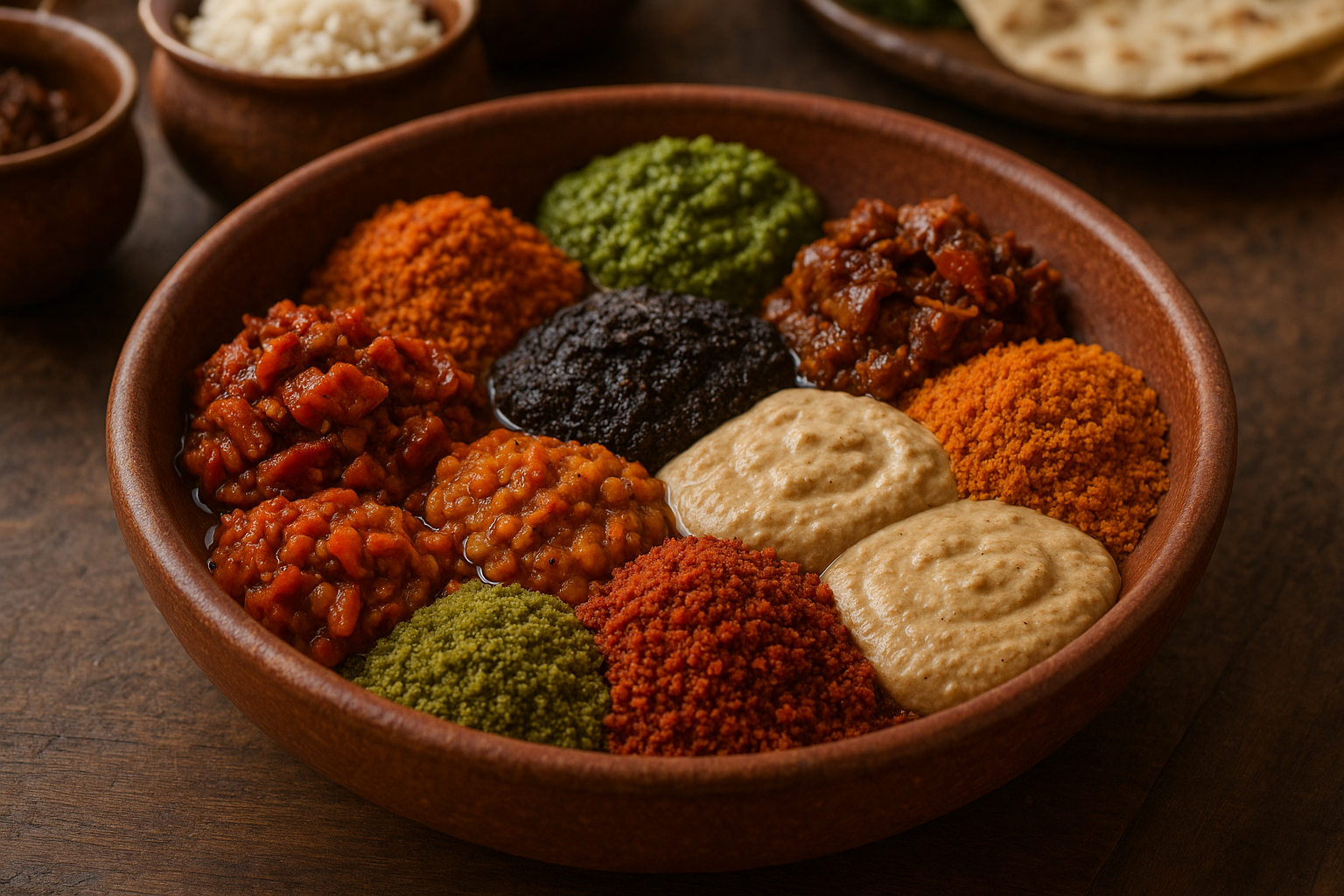
I need to confess something right away. I’m the person who gets more excited about the little steel katoris on the side of the thali than the actual main dish sometimes. Like, give me hot idlis, sure, nice, love that... but give me three chutneys, a podi with gingelly oil, one fierce pickle that almost makes my eyes water, and suddenly I’m fully alive. I’ve been travelling around India on and off for food for years now, and one thing that keeps smacking me in the face—in a good way—is how condiments here are not condiments in the boring Western sense. They’re not an afterthought. They can carry a meal, rescue a dull plate, start a family argument, and honestly, they hold memory better than many grand curries do.
Also, tiny disclaimer, this isn’t some neat textbook list. It’s basically me rambling about the chutneys, podis and pickles I keep chasing, buying too much of, spilling in my bag once in Kozhikode, and then trying to recreate badly at home. A few of these are super famous, a few deserve wayyyy more hype. And because food changes fast now, I’m also thinking about how these old-school things are suddenly having a very 2026 moment—chef tasting menus are doing pickle pairings, millet cafés are serving regional podis like they’re wine flights, and artisanal Indian pantry brands are selling small-batch achar in ridiculously pretty jars. Some of it is trend, some of it is rediscovery. Either way, I’m into it.
Why these little side things matter so much, at least to me
#I remember being a kid and watching the adults act weirdly serious about chutney texture. Coconut chutney too thin? Complaint. Mango pickle not cured enough? Complaint. Podi ground too fine? Big complaint. At the time I thought everyone was being dramatic. Now... um, I get it. These foods are tiny but they’re technical. The roast level of dal in a podi, the moisture control in a pickle, the tempering in a chutney, the kind of chilli used, whether the mustard oil is raw or mellowed—everything changes the mood. And unlike restaurant gravies that can sometimes blur into each other, regional chutneys and pickles are stubbornly specific. One spoon tells you where you are.
A really good chutney or achar doesn’t sit quietly beside the meal. It hijacks the whole plate. That’s why I love them.
1. Andhra karam podi and idli podi — the powder that can outshine breakfast
#Let’s start in Andhra/Telangana territory because podi deserves more respect than it gets. People outside South India often think podi is just some dry powder sprinkled on idli. No no no. A good karam podi or idli podi mixed with sesame oil or ghee becomes this nutty, smoky, spicy thing that clings to every bite. I had a version in Hyderabad years ago at a friend’s aunt’s place—still one of the best things I’ve eaten, and me and him basically ruined our appetite before lunch because we kept eating podi rice straight from the vessel.
Usually you’ll find roasted lentils, dried red chillies, garlic sometimes, cumin, curry leaves in some homes, and salt. The texture matters. Too powdery and it tastes flat. Slightly gritty is perfect. In 2026, podi has become weirdly fashionable in urban cafés too—there are podi avocados toasts, podi fries, podi cashews at bars. I should hate this, but honestly, some of it slaps. Traditional use is still best though: hot idli, ghee, podi, don’t overthink it.
2. Gongura pachadi — sour, loud, impossible to forget
#If there’s one thing I push on people who say Indian food is all the same—ugh, that sentence annoys me—it’s gongura. This Andhra classic made from sorrel leaves has a deep tang that’s almost meaty in the way it lands. It’s earthy, acidic, chilli-hot, and kind of addictive once your mouth adjusts. First time I had it properly was with steaming rice and a blob of ghee, plus some fried appadam on the side, and I swear I stopped talking for like five whole minutes. Which if you know me, that’s rare.
There are versions with garlic, with more red chilli, with lentils, and of course the famous gongura with mutton which people get very emotional about. But plain gongura pachadi itself? Incredible. It’s also showing up more in contemporary Indian restaurant menus now, especially places trying to spotlight hyper-regional ingredients instead of doing the same old paneer clichés. I’ve seen chefs use gongura in canapés and with burrata, which sounds wrong but somehow... not always wrong.
3. Tamil Nadu’s milagai podi — the breakfast table legend
#Yes, I know some people use idli podi and milagai podi almost interchangeably, and yes I also know homes make it differently, don’t yell at me. But Tamil-style milagai podi has its own personality in many houses—often with roasted urad dal, chana dal, sesame, red chillies, asafoetida, salt, maybe jaggery in some places, maybe not. It’s not just heat. It’s fragrance. The sesame especially gives it this warm, toasty roundness that is sooo good with dosa.
There’s a tiffin spot in Chennai where I had paper dosa with three podis served almost like a tasting set, and that felt very 2026 somehow—old tradition, plated with extra intention, no nonsense fusion name, just confidence. That’s another trend I’m noticing recently. Instead of hiding regional condiments, restaurants are centering them. Good. About time. Also, if you’ve never mixed milagai podi into curd rice for a quick lunch, please fix that.
4. Kerala inji puli — sweet, hot, sour, dark and a little dramatic
#Inji puli, or puli inji depending on where and who’s talking, is one of those things that makes me sit up straighter at a sadya. Ginger, tamarind, jaggery, green or red chilli, curry leaves, mustard seeds—simple on paper, but when it’s balanced right it’s basically edible electricity. Sharp from the ginger, sticky-sour from tamarind, sweet but not dessert-sweet. I used to think it was just a festive side note. Then I had a homemade one in Thrissur that was so glossy and intense I started eating it with plain matta rice after the meal was over. Slightly embarrasing, but worth it.
A lot of younger home cooks and small-batch brands are revisiting these temple and sadya condiments now, often with cleaner labels, better sourcing, and less preservative load. That’s nice, though I’ll say this—sometimes shelf-stable versions lose the sparkle. Inji puli really shines when the ginger still tastes alive.
5. Karnataka shenga chutney pudi — the peanuty miracle for lazy days
#I’m deeply fond of any condiment that can save dinner when the fridge looks tragic, and Karnataka’s shenga chutney pudi is exactly that. Peanut-forward, often with dry coconut, garlic in some versions, curry leaves, chilli, maybe jaggery, maybe not. Stir it into rice with ghee, pack it with chapati, sprinkle it over dosa, eat it with cucumber slices while pretending that counts as a proper meal. It’s comfort food in powdered form.
North Karnataka versions can be bolder and rougher, Bangalore home-style ones sometimes a little milder, and every family thinks theirs is the correct one—which, fair. I actually bought three packets from three different stores once to compare and ended up liking the most anonymous paper-wrapped one from a tiny neighborhood shop. Happens all the time with Indian food, honestly. Fancy label means very little.
6. Maharashtrian thecha — chaos, but the good kind
#Thecha is not for people who want their condiments to behave. Made usually with green chillies or sometimes dry red chillies, garlic, peanuts in many versions, salt, maybe a little cumin, pounded rather than smoothly blended if done the way I like it. It is coarse, punchy, fresh, and very much awake. Have it with bhakri, varan bhaat, or even just curd and roti and suddenly your simple meal has a backbone.
I had a homemade thecha near Pune with jowar bhakri on a ridiculously hot afternoon, and despite sweating from every possible pore, I kept going back for more. That’s the thing. It hurts a little, but then it tastes greener and brighter and you can’t stop. With 2026’s millet push still going strong in India—less trend now, more normalised habit in many urban kitchens—bhakri and thecha combos are showing up in cafés that previously would’ve given you quinoa bowls. I’m not mad about this evolution. For once, the trend cycle is actually pointing back to something rooted.
7. Bengali kasundi — mustard with attitude
#Kasundi is one of the all-time great condiments and I won’t be taking questions. This fermented or matured mustard-based Bengali sauce/paste has heat, bitterness, tang, and that unmistakable nose-hit from mustard that feels almost like wasabi’s older, sharper cousin. It’s classically incredible with fish fry, chops, cutlets, shingara, even plain vegetables. The first proper kasundi-heavy fish fry I ate in Kolkata made me realise how boring many bottled mustard sauces elsewhere are. They just don’t have this personality.
A lot depends on the mustard seeds, the vinegar or acidic medium used, and the way bitterness is managed. Good kasundi is assertive, not harsh. In more modern kitchens, I’ve seen it whipped into dressings, smeared under grilled prawns, and paired with smoked beets, which sounds suspiciously restaurant-y but actually works if the chef isn’t being too clever. If you buy a jar, keep it cold and use it with restraint at first. Then probably stop pretending and use more.
8. Gujarati chhundo — the pickle that tastes like summer gossip
#Chhundo, especially the grated mango kind, is one of those sweet-spicy pickles that people either adore instantly or claim is too much before quietly eating a second spoon. Made with raw mango, sugar, chilli, and spices, it can range from jammy to translucent, from sunny-sweet to quite hot depending on the style. I used to dismiss sweet pickles when I was younger because I thought they were for kids. Wrong. Very wrong. Chhundo with thepla on a train journey is elite behavior, sorry.
There’s also something kinda genius about how it preserves mango brightness while turning it into a proper accompaniment. In a time when more diners are open to sweet-heat profiles—thanks partly to global hot honey, chilli crisp, and fermented fruit condiments being all over menus—chhundo suddenly feels very current again. Except Gujarat was obviously there long before the trend forecasters caught up.
9. Rajasthani ker-sangri pickle — desert sharpness in a jar
#Not enough people talk about ker-sangri beyond saying it’s a sabzi from Rajasthan, but the pickle version deserves attention too. Ker, those tart little desert berries, and sangri, the beans/pods, can be pickled with mustard oil, chillies, spices, sometimes amchur-like tartness depending on the prep, and the result is savoury, tangy, a little wild-tasting. There’s this desert austerity to it that I really love. It doesn’t try to be lush. It’s intense in a drier, more austere way.
I first tasted it at a heritage-style meal in Jodhpur and then later had a homemade jar from someone’s nani, which of course was miles better. That’s another thing I’ve noticed with Indian pickles in 2026: restaurant versions are getting more respectful, but home versions still win because they’re less polished and more alive. Also, ingredient sourcing has improved, so more specialty stores now carry ker and sangri outside Rajasthan, which makes this easier to try than it used to be.
10. Naga raja mircha pickle — not beginner level, just saying
#This one is serious. Pickles from Nagaland and the wider Northeast deserve far, far more mainstream attention, and a raja mircha based pickle is an unforgettable place to start if you can handle heat. Raja mircha, often linked to the ghost pepper family of superhot chillies, has this fruity aroma under the fire that people forget to mention because they’re too busy sweating. Mixed with garlic, salt, maybe mustard oil depending on the maker, sometimes with bamboo shoot in related styles, it becomes something ferocious and beautiful.
A tiny amount transforms dal, pork, noodles, rice—everything. I had some with smoked pork once and kind of lost my mind a little. The Northeast is thankfully getting more visibility in India’s restaurant scene lately, not enough, but more. There are newer menus in metros taking axone, bamboo shoot, perilla, and regional chilli condiments seriously instead of treating them like novelty shock food. Good. About bloody time.
A few quick honorable mentions because I can’t help myself
#- Coconut chutney from coastal South India when it’s freshly ground and tempered right, not fridge-cold and sad
- Pudina chutney from North India, especially with kebabs, sandwiches, chaats... so simple, so essential
- Lasoon chutney from Maharashtra and Rajasthan, dry or wet, depending on how brave you feel that day
- Bhoot jolokia style chutneys and pickles from Assam and nearby regions, if you enjoy danger with flavor
- Bihari tomato chutney with mustard oil and garlic, which can be outrageously good with litti or just paratha
How I actually eat these at home, which may or may not be proper
#Honestly? Improperly, all the time. I mix podi into buttered toast when I’m in a hurry. I stir kasundi into mayo for a fish sandwich. I eat thecha with omelettes. Chhundo goes into grilled cheese sometimes—don’t judge till you try it. Gongura with hot rice is still sacred, though, I won’t mess with that too much. And I’ve learnt a few practical things the hard way. Keep dry spoon only for pickles, moisture ruins stuff. Oil-sealed achars usually taste better after resting. Fresh chutneys are not meal prep champions no matter what influencers tell you. Some are meant to be eaten now, not next Thursday.
One more thing, if you’re buying online in 2026, small-batch is great but read ingredient labels. A lot of new indie food brands are doing wonderful work with single-origin chillies, cold-ground spices, and region-specific recipes. Love that. But some jars are all branding and no soul. If the pickle tastes only of acid and generic chilli powder, move on. Better to buy from a trusted regional maker, a community kitchen initiative, or honestly, that auntie-led business with a slightly chaotic WhatsApp ordering system.
If you’re new to regional Indian condiments, start here
#- For easy entry: shenga chutney pudi or milagai podi
- For sour-lovers: gongura pachadi or inji puli
- For mustard fans: kasundi
- For sweet-spicy people: chhundo
- For heat seekers and chaos goblins: thecha or raja mircha pickle
That said, there’s no neat ladder for this stuff. Half the joy is trying something at someone’s table, having no context, and suddenly becoming obsessed. That’s how it happened to me, anyway. Not in a curated tasting room, not with tasting notes, just with hot rice, a steel plate, and somebody saying, “have this with ghee.” Which is maybe the best food instruction ever invented.
Final bite
#So yeah, if you’ve been treating chutneys, podis and pickles like little sidekicks, maybe stop doing that. Across India, these things carry climate, preservation wisdom, local crops, caste and community histories, migration stories, and family pride—while also just being ridiculously tasty. They’re old, but they feel current again because people are finally paying attention to regional detail, fermentation, pantry craft, and bold flavor. As they should. Start with one or two from this list, eat them with something plain, and let them do the talking. And if you’re as food-obsessed as me and like wandering through more delicious rabbit holes, go poke around AllBlogs.in sometime.