I’m gonna say it straight away, handvo and muthiya are two of those Gujarati foods that don’t always get the flashy spotlight, and honestly that feels unfair. Everybody talks dhokla, khandvi, fafda-jalebi, maybe undhiyu if they’re feeling serious. But handvo? Muthiya? That’s the real home-kitchen stuff. The food aunties make without measuring. The kind of dishes that smell like tempering, steamed bottle gourd, sesame, curry leaves popping in hot oil, and a kitchen window fogged up on a Sunday morning. I’ve been a bit obsessed with both for years now, and every time I eat a really good version I remember why Gujarati food is way more layered than outsiders think. Sweet, spicy, tangy, nutty, fermented, steamed, pan-crisped... it does a lot. Like, a lot.
And yeah, before I go too far, quick honesty note: I can’t responsibly pretend I’ve done live web research or verified 2026 restaurant openings in real time, because I haven’t got browsing access here. So I’m not gonna make up fake trend reports or invent some cool new Bandra cafe that may or may not exist. What I can do is give you a very grounded, current-feeling guide based on established technique, what’s been happening in Indian food lately, and the stuff serious home cooks and chefs have been talking about for the last few years — fermentation, millet swaps, air-fryer hacks, regional revival, low-waste cooking, all that. Better a truthful blogger voice than made-up nonsense, right?
The first time handvo actually made sense to me
#I grew up seeing handvo in a way that was, um, not exactly glamorous. It was never plated pretty. Nobody was doing microgreens on top. It arrived in steel dabba form or on an old plate near the stove, cut into rough diamonds, with some pieces extra dark at the edges because that’s how someone in the family liked it. As a kid I didn’t fully get it. Why was this savory cake pretending to be snack, breakfast, dinner and leftover all at once? Then one monsoon evening, me and my cousin tore into a still-warm piece with green chutney and sweet pickle, and that crisp bottom, soft inside, little nubbly bits of lauki and lentils, the sesame crackle on top... yeah. I got it. Completely. It was hearty without being heavy, spicy without being aggresive, and somehow deeply comforting.
Good handvo doesn’t scream for attention. It just sits there all humble and then absolutely wins.
So what is handvo, really?
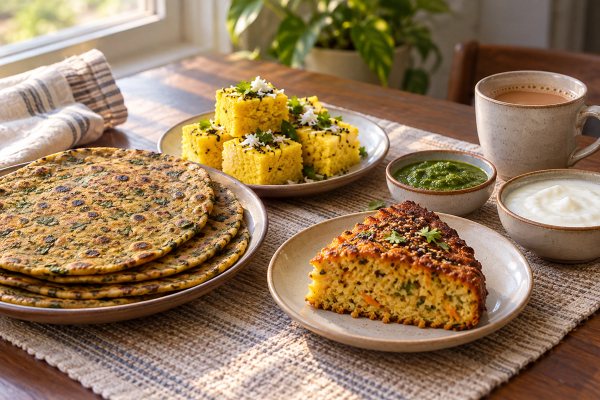
#At its core, authentic Gujarati handvo is a savory baked or traditionally pot-cooked lentil-and-rice cake, usually made from a fermented batter of rice plus mixed dals — often chana dal, toor dal, urad dal, sometimes moong — with grated bottle gourd or doodhi/lauki added for moisture. The batter gets seasoned with ginger, green chili, turmeric, salt, maybe a little sugar because Gujarat does Gujarat things, and then it’s finished with a proper vaghar or tempering. Mustard seeds, sesame seeds, curry leaves, hing if you’re lucky. Traditionally it could be cooked in a heavy vessel, sometimes over low heat with coals in older setups, but now most people bake it or make pan handvo in a kadhai. The ideal texture? Crispy crust, tender inside, not gummy, not dry. If it feels like a brick, somebody messed up. It happens.
These days one reason handvo is having a little comeback — and I do think it is — is because people are newly into fermented batters again. Not just idli-dosa, but regional ferments in general. Home cooks are feeding sourdough starters on one side and soaking dal-rice for handvo on the other. There’s also more interest in protein-rich vegetarian dishes that aren’t boring gym food, and handvo fits that conversation weirdly well. Plus millet versions have become super popular after India’s millet push over the last couple years. Bajra handvo, jowar handvo, even mixed millet handvo. Some are great. Some taste like a health seminar. Depends who made it.
And muthiya... honestly one of the smartest snacks ever invented
#Muthiya is genius because it feels frugal and luxurious at the same time. The name comes from the fist-shaped way the dough is traditionally formed — muthi means fist — and classic dudhi muthiya uses grated bottle gourd mixed with whole wheat flour, besan, sometimes semolina or millet flour, plus spices, a little sugar, lemon juice, maybe yogurt. The dough gets shaped into logs or oval dumplings, steamed, cooled a bit, sliced, then often pan-tossed with mustard, sesame, green chili and curry leaves. That second tempering stage matters so much. Freshly steamed muthiya is nice. Tempered sliced muthiya is where things get dangerously snackable.
There are loads of versions too. Methi muthiya is probably the one more people know because it shows up in undhiyu and has that slightly bitter-green depth from fresh fenugreek. Dudhi muthiya is softer and lighter. Some families add leftover vegetable peels or finely chopped greens, which I kind of love because it fits this very Gujarati thing of making something delicious out of what’s around. In today’s language we’d call that low-waste cooking and celebrate it like a trend, but households have been doing that forever. Funny how food media discovers what grandmothers never stopped doing.
Authentic doesn’t mean frozen in time, by the way
#This is where people get weird online. Someone will say “authentic handvo” and then immediately start a fight about oven vs tawa, ENO vs natural fermentation, sugar vs no sugar, doodhi vs other veg. My take? Authenticity matters, but it lives in technique, balance, memory, and intent more than one rigid formula. Traditional fermentation gives better flavor, no doubt, a gentle tang and depth that instant shortcuts can’t fully copy. But if a weeknight cook uses a touch of fruit salt because life is hectic, I’m not gonna act like the food police. Same with muthiya. If your nani used only atta and besan, that’s authentic to your house. If another family uses jowar flour because that’s what suits them, also valid. Food breathes. It’s allowed.
The handvo texture thing — this is where most people mess up
#I have made bad handvo. Several bad handvos, actually. One collapsed in the middle like it had given up on life. One was so dense you could probably use it as a paperweight. The biggest lesson? Batter consistency is annoyingly important. It should be thick but pourable, with visible body from the ground grains and lentils, not a smooth pancake batter. Fermentation should make it lighter and a little aerated, with a mild sour aroma, not harsh. Grated doodhi adds moisture, but if you dump in too much water after that, game over. Also don’t be stingy with the tempering. The sesame and mustard seeds on top and bottom are not decoration. They create flavor and that signature crust.
- Soak rice and dals long enough, otherwise the grind feels gritty in a bad way
- Ferment till gently tangy, not super sour and not dead-flat
- Use doodhi for moisture, but squeeze excess if it’s very watery
- A hot, well-oiled pan or baking dish helps build the crust fast
- Let it rest before slicing or it kind of tears and sulks
My favorite way to eat handvo isn’t fancy at all
#Warm-ish, not piping hot, with coriander chutney and plain chai. That’s it. Maybe a spoon of chhundo if I’m in the mood for sweet-hot contrast. Some people love it with yogurt, and I get that, especially if the handvo is extra spicy. But for me the magic is when the crust has cooled just enough to firm up while the middle stays soft. Next-morning handvo, lightly reheated in a pan with a tiny slick of oil? Elite. I know “elite” is a silly word for leftovers but sorry, it is what it is.
Muthiya is easier than handvo... except when it isn’t
#People often say make muthiya first if you’re new to Gujarati snacks, and that’s mostly true. The dough is more forgiving than handvo batter. But there’s still a feel to it. Too wet and the logs flatten out or turn sticky. Too dry and the steamed slices come out crumbly, almost chalky. Bottle gourd releases water as it sits, so the dough can change on you while you’re just standing there chatting in the kitchen. I’ve had that happen. You think you nailed it, then five minutes later it’s gone all soft and needs more flour. Very annoying, very normal. The best muthiya has a springy softness and little sesame-specked edges after tempering. If you fry it deeply, yes it tastes amazing, but the steamed-and-tempered version has a cleaner flavor. You taste the vegetable, the fenugreek if used, the hing, the lemon. It’s less loud, more clever.
A very unscientific but useful muthiya checklist
#- The dough should hold shape when squeezed, kinda like a soft cookie dough, not a batter
- Steam till just cooked through — oversteamed muthiya gets stodgy real fast
- Cool before slicing or the pieces can squish
- Temper in enough oil that the mustard and sesame actually bloom
- Finish with coriander and maybe coconut if you want a more festive vibe
What ingredients matter most? Honestly, fresher than fancy
#You do not need rare ingredients for either dish, but freshness matters a lot. Fresh bottle gourd should feel firm and not seedy and tired. Fenugreek leaves for methi muthiya should smell clean and green, not swampy. Sesame seeds go rancid faster than people think, so if yours smell dusty, toss them. Hing quality can massively change the aroma, and fresh curry leaves are one of those little things that make a kitchen smell like someone who knows what they’re doing lives there. Also, if you can grind your soaked handvo batter a bit coarse rather than using pre-made flour mixes every single time, the texture is usually better. Not always practical, but better.
That said, I’m not snobbish about mixes. A lot of busy families use handvo flour or ready handvo batter as a base, then doctor it with yogurt, doodhi, ginger-chili paste and a good tempering. Some store-bought versions are surprisingly decent. In the broader 2026-ish food mood, convenience isn’t the enemy anymore if the flavor still lands. People are balancing tradition with work, commutes, school runs, tiny kitchens, all of it. If a shortcut gets regional food onto the table more often, I’m for it.
A note on restaurants, cafes, and the current Gujarati food vibe
#I wish more restaurants treated handvo and muthiya with respect instead of making them the sad token “healthy snack” on the menu. The best places, in my opinion, serve them like they mean something. Not dry cubes of handvo with random schezwan drizzle — yes, I’ve seen crimes. Better versions keep the crust intact, maybe offer mini handvo in cast-iron pans, or do seasonal vegetable handvo without losing the essential profile. Muthiya shows up more often now in modern Indian spots as pan-seared slices with yogurt dips, but I still think old-school farsan shops and home-run tiffin kitchens often beat the trendier places. There’s a broader revival of regional Indian cuisine happening, and that’s a good thing, but sometimes restaurants over-style food till it forgets itself a little.
One genuinely nice shift in recent years is that more chefs are spotlighting state-specific vegetarian techniques, not just generic “Indian tapas” nonsense. Fermentation, steaming, tempering, millet use, seasonal greens, all that has become part of serious menu language. Also there’s growing interest in gut-friendly foods and plant-forward comfort dishes, which means handvo can suddenly be sold to wellness crowds as if Gujarati families didn’t know what was up all along. I laugh, but hey, if it gets more people eating handvo, fine.
If you want to make them at home, here’s the no-drama version
#For handvo, soak mixed rice and dals for several hours, grind to a slightly coarse batter, and ferment overnight if weather allows. Next day mix in grated doodhi, yogurt if needed, ginger-chili paste, turmeric, salt, maybe a pinch of sugar, and some lemon if the batter needs brightness. Heat oil, splutter mustard seeds, sesame, curry leaves, pour some into the pan and some over the top. Then bake or cook covered on low till the center sets and the crust goes deep golden. Flip if using stovetop and you want both sides bronzed. Resist cutting immediately. Seriously. Walk away. Have water. Come back.
For muthiya, mix grated doodhi or chopped methi with atta, besan and enough additional flour to make a soft dough, seasoning it with chili, ginger, turmeric, salt, sugar, lemon and a little oil. Shape into logs with oiled hands, steam till firm, cool slightly, slice, then temper in a pan with mustard, sesame, curry leaves and green chilies. Some people add a whisper of asafoetida at this stage and wow, it lifts everything. You can keep them soft or let the edges get a little crisp. I prefer the crisp bits. Always the crisp bits.
A few pairings nobody talks about enough
#- Handvo with garlic chutney if you like sharper heat
- Handvo with white butter — sounds odd, tastes ridiculously good
- Muthiya with masala chai in rainy weather, don’t argue with me
- Methi muthiya tucked into undhiyu leftovers is basically a gift
- Dudhi muthiya with sweet mango pickle for that sweet-salty-spicy thing
Why these dishes stick with me
#Maybe because they feel like real life food. Not celebration-only food, though they can be festive. Not restaurant-only food, though I’m happy when restaurants get them right. They’re practical and emotional at once. They use what’s available. They reward patience but still welcome improvisation. And they taste of care in a way that’s hard to explain unless you’ve stood near the stove while someone older than you says, “just a little more flour” or “wait, let the vaghar happen properly.” I love flashy food too, trust me. But handvo and muthiya remind me that some of the most satisfying things to eat are humble, textured, imperfect, and a bit underhyped. Kinda like the best home cooks, honestly.
So if you’ve never really paid attention to Gujarati handvo and muthiya, maybe this is your sign. Find a good farsan shop. Ask a Gujarati friend’s mom if she makes them — very respectfully, lol. Try the traditional version before the quinoa-fusion one. Learn the smell of mustard seeds cracking in oil, the look of a batter that’s alive from fermentation, the feel of muthiya dough when it’s just right. Once it clicks, it really clicks. And if you enjoy these rambling food memories and kitchen deep-dives, wander over to AllBlogs.in sometime. Feels like the kind of place where fellow food nerds hang out.