The lunch that made me stop buying sad desk salads
#I used to be a very boring lunch person. Like, aggressively boring. A tub of leftover rice, maybe a boiled egg if I remembered, and some limp lettuce that had already given up on life by 11:42. Then one summer I got into packing rice paper rolls, and honestly, it changed my lunch situation in a way that sounds too dramatic but I stand by it. Fresh rolls in a lunchbox feel like you put effort in, even when you were half-asleep in the kitchen, hair weird, coffee going cold, wondering why the dog is staring at a cucumber peel like it owes him money.
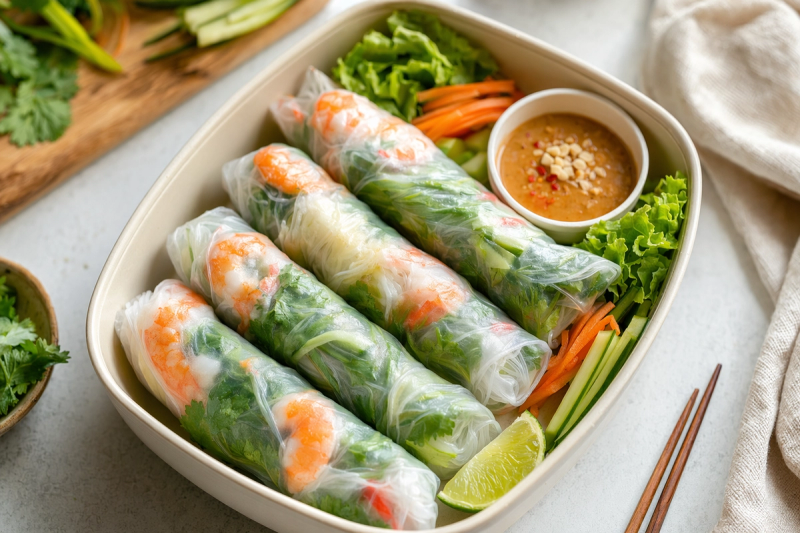
Rice paper rolls are one of those foods that look fancy but are secretly just organized leftovers wearing a translucent jacket. You can make them with shrimp, tofu, chicken, avocado, herbs, crunchy veg, noodles, mango if you're feeling a little tropical and smug about it. The trick, though, is packing them so they stay soft and fresh instead of turning into gluey little sadness tubes. Been there. Ate them anyway. Regretted it emotionally.
My first rice paper roll lunchbox was honestly a bit of a disaster
#I remember my first proper attempt so clearly because it was humid, I was late, and I had watched exactly one cooking video and decided I was basically an expert. I soaked the wrappers way too long, stuffed them like burritos, wrapped them in paper towel, and threw them in a plastic container with a dipping sauce that leaked all over my tote bag. By lunch, the rolls had stuck together in one giant rice paper creature. I pulled one out and it stretched. Like cheese. Not cute.
But the flavor was still there. Mint, basil, crunchy carrots, cold noodles, peanut sauce, and this clean little snap from cucumber. That’s what got me. Even when I messed them up, they were still better than another container of dry quinoa pretending to be lunch. And after a lot of trial, error, and one truly tragic avocado situation, I figured out how to pack fresh rolls so they actually survive the morning.
What rice paper rolls actually need to be lunchbox-friendly
#Fresh rolls, sometimes called summer rolls or gỏi cuốn, are not the same as fried spring rolls, and I feel like this causes lunchbox confusion. These are the soft, fresh ones made with thin rice paper wrappers. They’re usually served cold or room-temp-ish with a dip. The wrapper is delicate, which is lovely when you’re eating at a table with a little bowl of sauce and your life together. Less lovely when the roll is trapped in a lunchbox next to apple slices and a rogue fork.
For lunchbox success, you need three things: controlled moisture, a little separation, and fillings that don’t turn weird after a few hours. That’s basically it. Well, that and not overfilling them, which I still do because I have no self control around herbs and noodles. But the main idea is simple. Keep wet things from soaking everything. Keep rolls from sticking to each other. Keep perishable stuff cold if it needs to be cold. Boring advice, but it saves lunch.
The fillings I come back to again and again
#I’ve made rice paper rolls with all sorts of fillings, and some are gorgeous in the moment but terrible later. Tomatoes, for example, are juicy little troublemakers. Delicious, yes. Lunchbox safe? Not my favorite. I’d rather use crunchy veg that holds up. Carrot, cucumber with the watery middle scraped out, bell pepper, lettuce, cabbage, bean sprouts if they’re very fresh, and herbs. Lots of herbs. Mint makes the whole thing taste awake. Cilantro is divisive but I love it. Thai basil makes me feel like I know what I’m doing, even when I don’t.
- For protein, I like chilled shrimp, baked tofu, shredded chicken, thin omelet strips, or edamame smashed a little with salt and lime.
- For carbs, rice vermicelli noodles are classic, but don’t overload them or the roll gets bland and bulky. A little goes further than you think.
- For crunch, carrots and cabbage are lunchbox heroes. They stay perky, which is more than I can say for myself most Mondays.
- For richness, avocado is amazing but risky. Use firm avocado, add it close to packing time, and accept that it may brown a bit. Life is hard.
- For flavor, herbs are not optional in my kitchen. Without herbs, it’s basically a salad burrito in pajamas.
A basic roll combo that never lets me down
#If you’re new to this, start with one simple mix and don’t try to make twelve versions on day one. My regular lunchbox roll is rice paper, butter lettuce, vermicelli noodles, carrot matchsticks, cucumber, mint, cilantro, and either shrimp or tofu. Sometimes I add mango when I want lunch to feel like a tiny holiday. Sometimes I add leftover roast chicken with a little lime and fish sauce, which is probably my most “I didn’t plan dinner but look at me now” move.
The order matters more than people admit. Put the prettiest stuff down first if you care about aesthetics, because that’s what shows through the wrapper. I usually lay shrimp or herbs down first, then lettuce, then noodles and veg. Lettuce acts like a little moisture shield, and I’m weirdly passionate about that. It keeps pokey carrots from stabbing through the wrapper too. Rice paper is strong until it isn’t, and then suddenly you’re holding lunch confetti.
My soaking method, because soggy wrappers are the enemy
#The biggest mistake is soaking rice paper until it feels ready. Don’t. I know, that sounds backwards. You want to dip it briefly in warm water, just a few seconds, then lay it on a damp board or plate. It will keep softening as you add fillings. If it feels perfectly soft in the water, it’s probably going to be too soft by the time you roll it. This took me embarrassingly long to learn, because I kept thinking patience was the answer. Nope. Less soaking. More confidence.
I use a dinner plate with warm water because I don’t own one of those special rice paper water trays, and honestly I don’t need another oddly shaped kitchen thing. Dip, rotate, out. The wrapper should still feel a bit firm. Then I fill it lightly, fold the sides in, roll snug but not tight, and place seam-side down. If one tears, I either double wrap it or eat it immediately over the sink like a goblin. Chef’s snack.
Packing them so they don’t stick into one giant mega-roll
#This is the part that makes or breaks the whole rice paper rolls lunchbox situation. Fresh rolls love to stick to each other, especially if they’re touching with no barrier. My favorite trick is to lay each roll on a piece of lettuce, parchment, or a very lightly dampened rice paper wrapper cut into strips. Lettuce is the nicest because you can eat it, but parchment is reliable. Don’t wrap each roll tightly in paper towel unless you enjoy peeling lunch apart like old wallpaper.
I pack them in a shallow container in a single layer whenever possible. If I have to stack, I separate layers with parchment or lettuce leaves. I also avoid packing them with super wet fruit or anything warm. Warm rice paper rolls are not the vibe, unless you just made them and you’re standing in the kitchen. For summer lunches, I’m extra cautious and use an insulated bag with an ice pack, especially if there’s shrimp, chicken, tofu, egg, or a creamy dip. I wrote more about this kind of thing in Hot-Weather Lunch Packing Mistakes: What to Keep Cool, Dry, and Light, because hot weather turns cute lunches into science projects real quick.
The dip deserves its own little container, please
#Never pour sauce over the rolls before packing. I’m saying this with love and also trauma. Sauce in the lunchbox is a separate-container situation. Peanut sauce is my usual because it’s creamy, salty, sweet, and basically makes everything taste intentional. I do peanut butter, lime juice, soy sauce or tamari, a tiny bit of maple or sugar, garlic, warm water to thin, and chili crisp if I’m feeling spicy. Not traditional in any strict way, but delicious. And that’s the point of lunch, yeah?
Nuoc cham is another favorite when I want something lighter: lime, fish sauce, sugar, garlic, chili, and water. It’s bright and sharp and makes shrimp rolls taste like sunshine. For vegan rolls, I’ll do a sesame-ginger dip or a hoisin-peanut dip. Hummus-style dips can be good too, especially with crunchy vegetable rolls, but treat them like perishable food and don’t let them lounge around unrefrigerated forever. If you’re packing chickpea dips or creamy spreads, this guide on Can Hummus Stay Outside? Safe Timing and Storage Rules is actually useful, not just food-safety nagging.
A quick lunchbox filling cheat sheet
#| Filling | Why I like it | Lunchbox note |
|---|---|---|
| Shrimp | Clean, sweet, classic with herbs | Keep chilled with an ice pack |
| Baked tofu | Firm, protein-rich, soaks up flavor | Pat dry before rolling |
| Rice noodles | Soft and filling without being heavy | Cool fully before using |
| Cucumber | Crunchy and fresh | Scrape out watery seeds |
| Carrot | Sweet crunch, pretty color | Cut thin so it rolls neatly |
| Avocado | Creamy and lush | Best same day, may brown |
| Mango | Sweet, juicy, fun | Use firm slices, not mushy fruit |
| Herbs | Makes the whole roll taste alive | Dry gently after washing |
About the noodles: I cool them completely and toss them with the tiniest splash of sesame oil or lime so they don’t clump into one noodle brick. If you’re using cooked noodles or any cooked starch in a lunchbox, just remember they aren’t magic. They still need sensible storage, especially if they’re sitting around before work or school. I think this piece on How Long Can Cooked Pasta Stay Outside? Safety Rules is relevant even if you’re using rice noodles, because the same general lunchbox brain applies: cooked carbs should not be forgotten on the counter while you answer emails and lose track of time.
My usual morning routine, when I’m not being chaotic
#- I cook or soak the noodles the night before, rinse them, drain them well, and stash them in the fridge. If they’re wet, tomorrow’s rolls will be sad.
- I cut the veg into thin sticks and store them with a dry paper towel in a container. Not glamorous, but it works.
- I make the sauce in a tiny jar and taste it. Then I taste it again because apparently I am quality control.
- In the morning, I roll everything fresh if I have 10 minutes. If not, I roll them the night before and separate them carefully with lettuce or parchment.
- I pack the rolls cold, sauce separate, ice pack tucked in, and I try not to toss my bag around like I’m training for lunchbox Olympics.
Can you make rice paper rolls the night before? Yes, but they’re best the day you eat them. I know people say that about everything, but with fresh rolls it’s very true. Overnight, the wrappers can dry out or get too soft depending on the filling and fridge humidity and probably the moon, who knows. If I make them ahead, I wrap the whole container with a slightly damp clean towel under the lid, not touching the rolls directly if I can help it. This keeps the air from drying them into chewy little skins. Sorry for that image, but it’s accurate.
The restaurant roll that made me take herbs seriously
#There’s a small Vietnamese spot I used to go to after work, the kind with bright lights, fast service, and tables that were always a little sticky in a comforting way. Their fresh rolls were simple: shrimp, pork, noodles, lettuce, herbs. Nothing trendy. But the herbs were so generous that every bite tasted layered. Mint first, then basil, then the savory dip, then cool cucumber. I remember sitting there after a genuinely awful day, eating one roll after another, and thinking, okay, maybe life is not completely terrible.
That place taught me that rice paper rolls are not just about what you put in them, but what you don’t bury. If you add too many heavy fillings, the fresh stuff disappears. I used to cram in noodles because I thought more food meant better lunch. It doesn’t. It means dull rolls. Now I treat noodles like a supporting actor and herbs like the lead. Very dramatic, yes, but food has roles. I will not apologize.
A good rice paper roll should feel cool, crisp, soft, herby, and a little messy. If it tastes like plain noodles in plastic wrap, something has gone wrong, but don’t panic. Add better sauce.
Little problems and my not-so-perfect fixes
#If your rolls tear, you probably overfilled them, soaked the paper too long, or used fillings with sharp edges. Or all three, which is usually my personal brand. Use lettuce as the first layer and tuck pokey vegetables inside. If they dry out, your fridge air got to them, so cover the container better next time. If they’re slimy, there was too much moisture or they sat too long, and I’d rather make a noodle salad than force it. If they taste bland, it’s almost always not enough salt, acid, herbs, or sauce.
One thing I don’t love is packing rice paper rolls with watery greens like chopped spinach or wet salad mix. They seem healthy and innocent, but then they leak. Also, don’t use hot fillings. Let tofu, chicken, noodles, whatever it is, cool down first. Hot fillings steam inside the wrapper and make everything weird. I learned this with warm tofu once, and the roll collapsed in my hand like it had recieved bad news.
Some combinations I’m obsessed with right now
#My current favorite is tofu, mango, cucumber, carrot, mint, and peanut-lime sauce. It’s sweet and salty and crunchy, and it makes a regular Tuesday feel less like a spreadsheet. Another good one is shrimp, vermicelli, lettuce, basil, and nuoc cham. Very classic, very clean. For a more lunchbox-y, less traditional version, I do chicken, cabbage, carrot, cilantro, and sesame-ginger dip. I’ve even done leftover salmon with cucumber and avocado, which was rich and lovely, though not something I’d pack without a serious ice pack.
And for kids, or adults who eat like kids sometimes, try rice paper rolls with omelet strips, carrot, cucumber, and a mild peanut or sunflower seed sauce. Cut them in half so they look less intimidating. Actually, cut all lunchbox rolls in half if you can handle the extra fuss. They’re easier to dip, easier to eat at a desk, and you get that pretty cross-section that makes you feel like a lunch influencer for 4 seconds.
Final lunchbox thoughts, from someone who has ruined plenty of wrappers
#Rice paper rolls are not hard, but they do ask you to pay attention. Not in a fussy chef way. More in a “please don’t drown me and throw me next to a hot thermos” way. Once you get the rhythm, they’re one of the best packed lunches around: fresh, colorful, flexible, and way more exciting than another sandwich you don’t even want. You can prep most of the parts ahead, roll a few in the morning, pack a punchy dip, and suddenly lunch feels like something you chose instead of something that happened to you.
So yeah, pack fresh rolls. Make them imperfect. Let one tear and eat it over the sink. Add too much mint, then decide actually that was the correct amount. Keep them cool, keep the sauce separate, and don’t let anyone tell you lunch has to be boring. If you’re into these kinds of food rambles and practical kitchen-ish adventures, I’ve been enjoying poking around AllBlogs.in lately too. Lots of cozy food ideas over there, and honestly, I can always use more lunch inspiration.