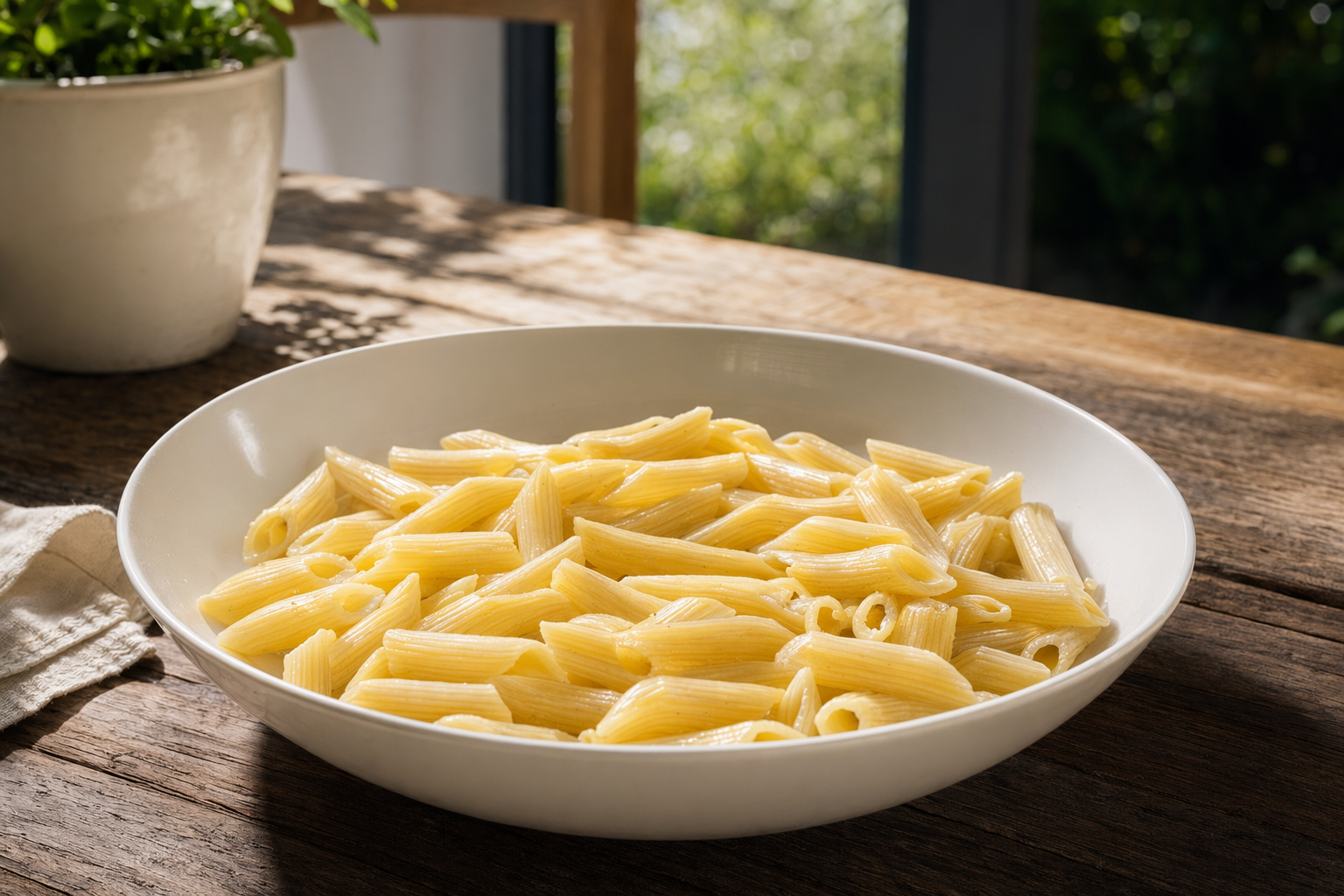
The pasta bowl I left on the counter, and the tiny panic that followed
#So, confession first: I have absolutely been the person standing in a dim kitchen at midnight, staring at a bowl of spaghetti on the counter and wondering if I’m brave or just being dumb. It was tomato basil pasta, the kind with too much parmesan because I believe cheese is emotional support, and I’d left it out after dinner while me and my friends were talking too long over wine. Three hours? Maybe four? Nobody knew. And that’s how this whole question gets real fast: how long can cooked pasta stay outside before it turns from “late-night snack” into “please don’t eat that, you’ll regret it by sunrise.”
The short answer, before I wander around in pasta memories, is this: cooked pasta should not sit out at room temperature for more than 2 hours. If it’s hot outside, like above 90°F, that window drops to 1 hour. That’s the food safety rule used by USDA and FDA guidance, and honestly it’s one of those rules I used to think was overly fussy until I learned about cooked starches and bacteria. Pasta looks innocent. It just sits there. But it’s moist, cooked, and full of carbs, which is basically a soft little hotel for microbes if you give it enough time.
The actual rule: 2 hours, or 1 hour when it’s really hot
#Here’s the thing I wish someone had taped to my first apartment fridge: once cooked pasta drops into the “danger zone,” which food safety folks define as 40°F to 140°F, bacteria can grow pretty quickly. The rule is not “does it smell bad?” because most risky bacteria don’t politely announce themselves with a stink. It’s 2 hours total at room temp. Total means the time it was sitting after cooking, while you ate, while it was on the picnic table, while it rode home in the car, all of it. If the room or outside temp is over 90°F, like a summer BBQ, beach lunch, school sports day, tailgate, whatever, then it’s 1 hour.
I know, I know. I grew up around people who left food out for ages and said, “we’ve always done it this way.” Same. My aunt could leave a casserole on the stove like it was a decorative centerpiece and no one would blink. But food safety isn’t about whether you got lucky last time. It’s about reducing the odds, especially for kids, older folks, pregnant people, or anyone with a weaker immune system. And also for those of us who simply do not want to spend the night clutching the bathroom sink after eating questionable rotini.
| Situation | How long cooked pasta can sit out | What I’d do |
|---|---|---|
| Plain cooked pasta at room temp | Up to 2 hours | Refrigerate fast in shallow containers |
| Cooked pasta outside above 90°F | Up to 1 hour | Cool it, pack with ice, or toss it |
| Pasta with meat, seafood, cream, or cheese sauce | Still max 2 hours, often I’m stricter | Don’t gamble, especially with dairy or meat |
| Pasta kept hot | Safe if held at 140°F or hotter | Use a real hot-holding setup, not wishful thinking |
| Pasta kept cold | Safe if held at 40°F or colder | Cooler with ice packs, fridge, insulated bag |
| Left out overnight | Nope | Throw it away, even if it looks fine |
Why pasta is sneakier than it looks
#People worry about chicken. They worry about seafood. They worry about creamy sauces, which yes, fair. But cooked pasta? It gets underestimated. Pasta is a cooked starchy food, and starchy foods can be linked with Bacillus cereus, a bacteria that can form spores. The annoying part is those spores can survive cooking, and if cooked pasta hangs around warm or room-temp for too long, the bacteria can grow. Some toxins from Bacillus cereus may not be destroyed just because you reheat the food later. This is why “I’ll just microwave it really hot” is not always a magic fix.
I learned that after a very unglamorous incident with leftover buttered noodles in college. I had made this cheap little pot of pasta, added garlic powder and butter, felt like a chef because I used cracked pepper, then left the lid on the pot overnight because my dorm fridge was basically the size of a shoebox. Next day, I thought, eh, it’s just pasta. I reheated it. I ate it. Let’s just say I did not attend my morning class and I developed a deep respect for refrigeration. Was it definitely the pasta? I mean, I can’t prove it in a courtroom. But my stomach had opinions.
Sauce changes the vibe, but not the basic safety clock
#Plain pasta has its own risk, but sauces add more drama. Meat sauce, shrimp linguine, alfredo, carbonara-ish leftovers, cheesy baked ziti, pesto with cheese, pasta salad with chopped vegetables and tuna, all those things are perishable. The 2-hour rule still applies, and honestly I’m more cautious with rich sauces because they’re exactly the kind of leftovers I love too much. Creamy pasta sitting on a counter in a warm kitchen is not a romantic Italian scene. It is a science project with parmesan.
And mayonnaise gets blamed for everything at potlucks, but it’s not the only villain. Commercial mayo is acidic enough that it isn’t automatically the scariest thing in the bowl. The cooked pasta, eggs, tuna, chicken, chopped tomatoes, cooked vegetables, bits of cheese, and all the hands and spoons going in and out matter too. Pasta salad needs to stay cold at 40°F or below. If it’s hanging out on a picnic table in July while everyone slowly “just takes a little more,” that timer is ticking. I still love pasta salad, by the way. I just put the serving bowl over ice now because I’ve become that person.
My kitchen rule: cool it fast or commit to eating it
#When I make pasta at home, especially a big batch, I try to decide pretty quickly what’s happening. Are we eating it now? Is it getting packed for lunch? Is half of it becoming tomorrow’s baked pasta with mozzarella? Don’t let it sit around while you “clean up later.” Later is a liar. Later becomes an episode of a show, then a phone call, then suddenly the pasta has been out for three hours and you’re sniffing it like a detective, which doesn’t help anyway.
The best move is to get leftovers into the fridge within 2 hours, and faster is better. Use shallow containers instead of one giant deep tub, because thick piles of pasta hold heat in the middle for ages. I spread sauced pasta into a wide container, leave the lid slightly loose for a bit so steam can escape, then close it once it’s cooling down. If it’s a mountain of plain pasta, I’ll toss it with a tiny bit of olive oil so it doesn’t become one tragic noodle brick, then chill it. Not too much oil though, unless you want every sauce tomorrow to slide off like it’s avoiding commitment.
- Don’t put a huge hot pot straight into the fridge and expect miracles. Divide it up.
- Don’t leave pasta in a warm turned-off oven. I did that once with lasagna. Bad idea.
- Don’t trust smell, taste, or “it looks fine.” Food poisoning does not always come with a warning label.
- Do label leftovers if you’re forgetful. I use masking tape and pretend I’m organized.
What about packing cooked pasta for lunch?
#Pasta for lunch is one of life’s better inventions. I’d pick a good leftover pesto pasta over a sad desk sandwich almost every time. But cooked pasta packed for school, work, or a road day needs temperature control. If you’re packing it hot, it needs to stay hot, meaning 140°F or above until it’s eaten. That usually means preheating a thermos with boiling water, heating the pasta until properly steaming hot, and sealing it right away. A lukewarm insulated container is not the same thing. If you’re into the whole hot lunch situation, I wrote more about the practical side in Thermos Lunch Food Safety: What Stays Hot, What to Skip, and the Rules That Really Matter, because honestly thermos lunches are amazing when they’re done right and kinda risky when they’re not.
If you’re packing pasta cold, chill it thoroughly first. Don’t cook pasta at 7:30, toss it warm with dressing, shove it in a lunch bag at 7:45, and hope a single tiny ice pack saves the day. I’ve done versions of that, and now I cringe. Make cold pasta salad the night before if you can. Keep it in the fridge, pack it with a solid ice pack, and don’t leave it in a hot car. The hot car thing is where good lunches go to die. If you want a lunch that’s designed to be cold from the start, not just leftovers pretending, Cold Noodle Lunches for Hot Weather: Soba, Rice Noodles and Peanut Bowls has the sort of chilled noodle ideas I lean on when the weather is gross and I can’t even think about reheating food.
The “I left it out overnight” question, because we’ve all been there
#Can you eat cooked pasta left out overnight? No. I’m sorry. I hate waste too, and throwing away food makes me feel like I have personally failed someone’s grandmother, but overnight pasta belongs in the trash. Not the fridge. Not reheated with extra sauce. Not “just one bite to see.” If it sat out all night at room temperature, it has been in the danger zone way too long.
This is where people start negotiating. What if it was plain? What if the house was cool? What if it was covered? What if I boil it again? I get it. But covered pasta can still grow bacteria because covering protects it from dust, not from time and temperature. A cool room is not a refrigerator unless it’s actually 40°F or colder, which most homes are not unless something has gone terribly wrong with your heating bill. Reboiling may kill some bacteria, but not necessarily toxins that may have formed. So the answer is still toss it. Painful, but simple.
Restaurant leftovers and the ride home
#I love restaurant pasta leftovers almost more than the original dinner. There’s something about eating cold spicy rigatoni from the container the next day that feels deeply correct. My favorite local Italian place does this short rib pappardelle that is honestly too rich for one sitting, and I always bring half home with big plans. But the clock starts when that food is no longer being safely held hot or cold. If your pasta sits on the table while you talk for an hour, then waits in the car while you stop for groceries, then makes it home another hour later, you might already be past the safe window.
My habit now is boring but effective: if I know we’re doing after-dinner wandering, I skip the leftovers unless I can get them into a fridge fast. In winter, people sometimes treat the car like a fridge, but unless you actually know the food is staying below 40°F, that’s guessing. On road trips, I’ve learned to choose foods that don’t need babysitting. If you’re traveling without a fridge and trying to eat well without turning lunch into a food-safety math problem, Grocery Store Lunch While Traveling: No-Kitchen Meals That Actually Work is handy for safer no-kitchen ideas.
Buffets, parties, and the giant pasta tray problem
#Pasta trays are the backbone of casual parties. Baked ziti, mac and cheese, penne vodka, lasagna slabs with those crispy edges everyone fights over. I am pro pasta tray. Aggressively pro pasta tray. But they need some attention. If a tray is meant to be served hot for a while, it should be kept hot at 140°F or above using chafing dishes, slow cookers, warming trays, or some other actual hot-holding method. Setting it on the counter and saying “it was hot when I put it out” is not hot holding. That’s just cooling slowly.
For cold pasta salads, nest the bowl in ice or put out smaller bowls and refill from the fridge. This is what restaurants and caterers are usually thinking about behind the scenes, and it’s why good buffet setups look fussy. They’re trying to keep food out of that danger zone. At home, you don’t need to be dramatic, but you do need a plan. I like putting out a smaller serving dish and keeping the rest chilled. It also stops people from digging around in a huge bowl for the “good bits,” which, let’s be honest, we all know happens.
How long does cooked pasta last once it’s refrigerated?
#Once cooked pasta is safely refrigerated at 40°F or below, USDA leftover guidance generally puts it in the 3 to 4 day range. That’s my personal rule too. Plain pasta might seem like it should last forever because it’s “just noodles,” but cooked pasta is moist food. Sauced pasta also depends on the sauce, obviously. Seafood pasta is something I eat sooner, usually next day, because I’m picky about it and also seafood leftovers get weird fast. Cream sauces can separate and become sad, though I still eat them if they’re within the safe window and smell normal after proper storage.
For reheating, aim for 165°F for leftovers, especially if it has meat, poultry, seafood, dairy, or eggs. Stir halfway through microwaving because pasta loves to create hot edges and cold centers. I splash in water, milk, broth, or extra sauce depending on what it is. Tomato pasta gets a little pasta water if I saved any, or just tap water because life is not always a cooking show. Creamy pasta gets low heat and patience, even though I have very little patience. Pesto pasta I often eat cold because heating basil pesto can make it taste a bit dull to me, but that’s my own picky opinion.
Fresh pasta, stuffed pasta, and all the extra delicate stuff
#Fresh pasta feels fancy and soft and romantic, but it’s also more perishable than dried pasta before cooking, especially if it has eggs. Once cooked, though, the room-temp rule is still the same: 2 hours max, 1 hour if it’s above 90°F. Stuffed pastas like ravioli and tortellini make me even more cautious because the filling might have cheese, meat, herbs, vegetables, or all of the above. There’s more moisture, more handling, more little pockets of food. Delicious pockets, yes. But still.
I once bought gorgeous spinach ricotta ravioli from a little market and then got distracted by a bookstore on the way home. A bookstore! That’s how they get you. By the time I remembered the pasta in my tote bag, it had been sitting around way too long on a warm day. I cooked it anyway because I was younger and stubborn, and it tasted fine, but I spent the whole night wondering if I’d made a terrible choice. That’s the other part of unsafe food people don’t talk about: even if you don’t get sick, you don’t enjoy the meal because your brain is standing there with a clipboard, judging you.
A few signs that do matter, and a few that don’t
#Visible mold, slime, sour smells, bubbling sauce, or pasta that feels oddly sticky in a not-normal way are obvious no-go signs. If you see that, don’t trim around it. Toss it. But the absence of those signs does not mean the pasta is safe. This is the frustrating bit. Food can look totally normal and still be risky if it has been held too long in the danger zone. I wish there was a dramatic color change or something. Like the noodles turn purple when they’re unsafe. Sadly, no.
Also, tasting a tiny bite to “check” is not a smart test. I know people do it. I have done it, standing barefoot in front of the fridge like some kind of leftover goblin. But if the concern is bacteria or toxins, a tiny taste can still be enough to make you sick. Your tongue is good at detecting too much salt, burnt garlic, and whether someone used the cheap parmesan. It is not a lab instrument.
My personal pasta safety cheat sheet
#- If cooked pasta has been out less than 2 hours, refrigerate it right away in shallow containers. If it’s hot weather over 90°F, use 1 hour instead.
- If it has been out longer than that, especially overnight, throw it away. Don’t negotiate with noodles.
- Keep hot pasta hot at 140°F or above if serving for a while. Keep cold pasta cold at 40°F or below.
- Eat refrigerated cooked pasta within 3 to 4 days. Freeze it if you know you won’t get to it, though some shapes freeze better than others.
- Reheat leftovers to 165°F, stir well, and don’t rely on smell as your safety plan.
The foodie answer, not just the food safety answer
#Here’s my slightly sentimental take: good pasta deserves better than being abandoned on a counter until it becomes suspicious. I love pasta too much to treat it like an afterthought. The bowl of Sunday ragù, the quick weeknight garlic noodles, the cold pasta salad eaten from a paper plate at someone’s backyard party, the restaurant leftovers you’re already excited about before you even leave the table... all of that is worth storing properly. Not because we’re scared of food, but because we respect it.
So yeah, cooked pasta can stay outside for up to 2 hours, or 1 hour when it’s above 90°F. That’s the line. It’s not always convenient, and sometimes it means tossing food you really wanted, which stings. But it also means the pasta you do eat gets to be joyful instead of questionable. And honestly, I want my pasta memories to be about silky sauce and chewy noodles and too much grated cheese, not regret. If you’re as pasta-obsessed as me and like these practical little food rabbit holes, wander over to AllBlogs.in sometime. There’s always something tasty to get lost in over there.