Train travel in India hits different when you’re planning it for senior citizens. For us younger folks, a delayed train, a crowded platform, or an upper berth mess-up is annoying. For our parents or grandparents, it can turn into proper stress, body pain, confusion, even risk. I’m writing this after years of doing railway trips with my parents, one chacha who refuses to travel light, and my mom who somehow carries home food for half the compartment. And honestly, Indian Railways can still be a beautiful way for older people to travel. It’s affordable, familiar, and in many routes, way more practical than flying. But only if you plan smart. Not fancy-smart, just sensible-smart.
One thing I’ve noticed is this: many families book the ticket and think kaam khatam. Nope. Senior citizen train travel in India needs a bit more thought than that. You have to think about berth position, station crowds, medicine timing, toilet access, food safety, night-time security, even silly little things like whether the platform has a working lift or not. These details matter. I learned some of this the easy way, some of it the hard way... usually at 11:40 pm on a random platform with too many bags.
First things first: pick the right train, not just the cheapest one
#This sounds obvious, but people still do it. They book whichever train has seats left. If an elderly person is travelling, especially someone with knee pain, diabetes, heart issues, weak eyesight, balance problems, or just age-related tiredness, train choice matters a lot. Day trains can be easier for many seniors because there’s less night-time confusion and they can avoid climbing into berths when half asleep. But on long routes, overnight trains are practical, so then the coach class and berth become more important than ever.
In my experience, 2AC is usually the sweet spot if budget allows. It’s quieter than sleeper, easier than 3AC for movement, and generally less chaotic. 1AC is obviously more comfortable but not everyone wants to spend that much. Sleeper class for a healthy, seasoned elderly traveller who knows the system? Maybe okay on short routes. For very old passengers, I personally wouldn’t recommend it unless there’s no option. Too much crowding, too much random movement, and toilet cleanliness can become a real issue by morning.
- Try to choose trains that start from the boarding station itself or have a longer halt there. That extra 10-15 minutes can save so much panic.
- Avoid super-tight connection journeys for seniors. One delay and the whole thing becomes exhausting.
- If possible, choose trains reaching in daylight. Arriving at a new city at 2 am with an elderly parent... not fun, trust me.
Berth selection is not a small thing, it’s basically the whole game
#If I could give only one tip, it would be this: get a lower berth. Full stop. I know everybody wants one, and yes getting it is not always easy, but for senior citizens it can make or break the journey. Indian Railways does provide lower berth preference quotas for senior citizens in many cases, but depending on route demand and booking timing, it may still not happen automatically. So book early. Really early if it’s holiday season, summer vacation, festive rush, or a popular route like Delhi-Varanasi, Mumbai-Goa, Chennai-Bengaluru, Kolkata-Puri, all that.
My father once got a side upper by mistake on a waitlist-confirmed ticket. He tried to act brave about it, but one look at that tiny ladder and we all knew this was nonsense. We spent half the evening requesting people for an exchange. Somebody kind helped, thank God, but that kind of dependence is avoidable if you plan ahead. For elderly couples, two lower berths or one lower plus one side lower is usually easiest. Side lower is okay for some people, but it can feel narrow for those who shift a lot in sleep or need to get up often.
Book early, check the berth after charting, and don’t feel shy asking the TTE politely if an elderly passenger needs a safer berth. Sometimes things do get adjusted.
At the station, the real struggle starts before the train even arrives
#A lot of travel advice online talks only about inside-the-train comfort. But Indian stations can be the harder part for older travellers. Long foot overbridges, sudden platform changes, patchy announcements, huge crowds, porters charging differently depending on mood, and those confusing coach position displays that somehow appear exactly when you don’t need them. In big stations like New Delhi, Howrah, Mumbai CSMT, Ahmedabad, Secunderabad, Chennai Central, even experienced passengers get flustered.
So here’s what works for me and my family. We reach at least 40 to 50 minutes early for medium stations, and nearly an hour early for large junctions. If the senior citizen walks slowly, we aim even earlier. Book wheelchair assistance if needed, or ask at the station enquiry/help desk in advance. Not every station handles it smoothly, I’ll be honest, but many major stations now have better assistance than before. Escalators and lifts have improved in several stations under railway station upgrades, but don’t assume every platform connection is senior-friendly. Always ask locally the moment you enter.
- Carry a printed ticket copy or at least a clear screenshot. Network goes missing exactly when needed.
- Hire a porter if luggage is more than one person can handle comfortably. This is not the place to save 100-200 rupees and strain someone’s back.
- Stand near the right coach position before train arrival. Don’t make an elderly person walk half the platform after the train stops.
- Keep one family member focused only on the elder, not on luggage, chai, calls, and ten other things.
Safety on board: most journeys are fine, but don’t become careless
#Generally, train journeys for seniors in India are safe, especially in reserved classes. Still, basic caution matters. I don’t mean paranoia. Just smart habits. Keep valuables limited and close. Use a small chain lock for luggage under the seat. Keep phones, wallet, medicines, ID, and some cash in an easy waist pouch or small shoulder bag, not buried inside a suitcase. At night, I prefer keeping one dim light source handy because elderly passengers often wake up disoriented and try to step down too quickly.
And please, please don’t let older people lean too casually near the train door, especially on crowded routes or while the train is slowing. We all know the dramatic Bollywood-style doorway moment, but no. Not worth it. If they need fresh air, let them stand only when someone is with them and the crowd is manageable. Also be a little careful with co-passenger oversharing. Most people are decent, but avoid telling strangers that an elderly person is travelling alone with lots of jewellery or cash. Common sense, basically.
- Pin a small card in their purse or pocket with name, age, emergency contact, destination, coach and seat number.
- If travelling alone, ask them to inform family after boarding, after major stops, and after arrival.
- For night travel, keep slippers with grip, not loose bathroom chappals that slide off.
- A soft shawl or light blanket helps because coach temperature can go from stuffy to freezing for no reason.
Food, water, and medicines... this is where many families get lazy
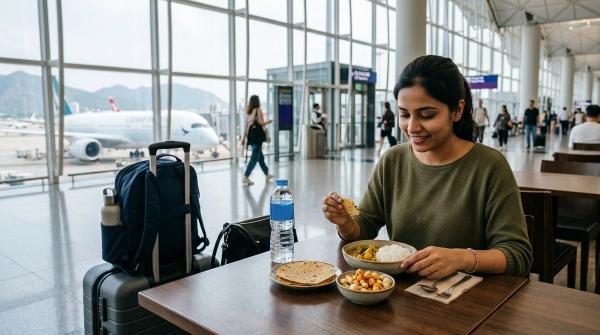
#I’m a big believer in carrying home food for senior citizens, especially on journeys under 12-15 hours. Simple stuff. Thepla, idli, poha, paratha with dry sabzi, lemon rice, curd rice if it’ll be eaten early, bananas, roasted makhana, biscuits without too much cream, glucose, nuts if allowed medically. My mother still packs steel dabbas like we are migrating forever, and okay, maybe she’s not fully wrong. Train pantry food has improved on many routes and e-catering to your seat is available on several trains and stations, but quality still varies a lot. For elderly travellers with acidity or sensitive stomach, bland food is best.
Water matters just as much. Carry enough sealed bottled water or filled clean bottles. Seniors often avoid drinking water because they don’t want to use the washroom repeatedly. Bad idea. Dehydration causes weakness, headaches, constipation, even dizziness while getting down. Instead, encourage small sips through the journey. If someone has BP or sugar issues, set medicine alarms. The movement and noise of train travel throws off routine more than people realise. I’ve seen this happen with my bua, who was happily chatting and completely forgot her evening tablet till almost bedtime.
Toilet reality check, because somebody has to say it
#Look, AC coaches are usually better maintained than unreserved or sleeper, but train toilets are still train toilets. On a fresh departure they may be decent. By early morning, especially on full routes, not always. For senior citizens, this can be one of the biggest stress points. Western toilets are usually easier than Indian-style for those with knee or back trouble, so while booking, if coach layout info is available or if you know the train type, it helps. But since you can’t fully control that, carry a tiny toilet kit.
- Tissues, wet wipes, paper soap or handwash sheets
- Sanitiser, disposable seat covers if preferred
- Extra undergarments or adult diapers for very elderly passengers, no shame in it yaar
- A small torch or phone light for late-night washroom trips
Also, avoid asking an older person to go to the toilet when the train is jerking through points or nearing a station halt with lots of movement. Wait a few minutes. If balance is poor, someone should accompany them till the washroom area and wait outside. Yeah, it feels awkward the first time. Then you realise dignity also means support when support is needed.
If the senior citizen is travelling alone, do these extra things
#Many older Indians still prefer travelling solo by train. Some are super confident, more than us frankly. But solo senior travel needs backup planning. First, choose a simpler route, ideally direct train, lower berth, known boarding station, and reasonable arrival time. Share PNR, train number, coach, seat, and live train tracking link with 2-3 family members. Keep phone fully charged and carry a power bank that’s already charged, not one of those decorative dead power banks we all keep for emotional support.
I’d also suggest booking a trusted pickup at the destination, whether that’s a relative, hotel cab, prepaid taxi, or app cab booked after arrival. Don’t leave an elderly passenger to negotiate aggressively outside a crowded station if avoidable. On some routes, especially pilgrimage circuits like Varanasi, Haridwar, Ujjain, Shirdi, Puri, Tirupati side connections, there are lots of older travellers and lots of helpers too, but also enough confusion to make things tiring. Better to keep things pre-arranged.
Best seasons and route timing actually affect comfort more than people think
#Summer train travel can be rough for seniors, especially in North and Central India. Hot platforms, dehydration, delayed trains, and general fatigue make everything worse. Peak winter in the north can also be a problem because fog delays are still very much a thing on many routes, and long unexplained delays are extra hard on elderly passengers. Personally, I feel the most comfortable months for senior train trips are usually post-monsoon and mild winter periods, roughly October to March on many routes, though South India stays manageable in a different way across much of the year. Monsoon journeys are beautiful, no doubt, specially Konkan and Kerala routes, but slippery platforms and humidity are not ideal for frail travellers.
If the trip is part of a proper holiday, keep the destination easy too. Senior-friendly places with decent rail connectivity and manageable local transport include Jaipur, Mysuru, Udaipur, Madurai, Bhubaneswar-Puri circuit, Dehradun, Kochi, Visakhapatnam, and some hill gateways where the train gets you close enough before a short cab ride. Hotel rates vary a lot, but for a clean mid-range stay near stations or city centers, many Indian cities still offer decent rooms around ₹2,000 to ₹4,500 per night, while more comfortable senior-friendly hotels with lift, room service, and wheelchair access may start around ₹4,000 to ₹7,500 and up. Near pilgrimage towns or during festivals, prices can jump suddenly, so book earlier than you think you need to.
A few things I always pack now after messing up before
#This part comes from trial and error. Real error. Once we forgot my mother’s neck pillow and she spent half the journey using a folded dupatta and blaming me every 20 minutes. Fair enough. So now I keep a basic senior train kit ready for longer trips. It’s not fancy, just practical stuff that reduces discomfort.
- All medicines in one easy pouch, plus written prescription photo on phone
- Light snacks, spoon, napkins, and one small cup
- Neck pillow, light shawl, socks, and an extra hand towel
- Slip-proof footwear and one change of clothes in hand luggage
- Power bank, charger, spectacles case, hearing-aid batteries if needed
- Small bedsheet or clean spread, because sometimes people are fussy and honestly I get it
What Indian Railways has improved, and where you still need patience
#To be fair, things are better in many ways now. Online booking is easier for families managing travel from different cities. More stations have lifts, escalators, cleaner waiting areas, and better signage than they used to. E-catering has made food access simpler on many major routes. Reserved coaches on premium and popular trains are generally more predictable than they were years back. There’s also more public awareness now around helping elderly passengers, and I’ve seen strangers offer berth swaps or help with luggage without being asked. India still has that softness in between all the chaos.
But yeah, let’s not pretend everything is smooth. Delays happen. Coach positions change. Cleanliness is inconsistent. Last-minute platform shifts are still the villain of the story. At some stations, wheelchair help is excellent. At others, you’ll be hunting for the right person while the train time gets closer and your BP rises. So the trick is this: appreciate improvements, but travel with backup plans. That’s the most Indian travel advice possible, honestly.
My honest final take on train travel for senior citizens in India
#I still think trains are one of the best ways for Indian seniors to travel, especially those who grew up with railway journeys and feel comfortable in that rhythm of chai, stations, fellow passengers, steel tiffins, and looking out the window for hours. There’s something deeply familiar and comforting in it. But comfort doesn’t happen automatically. Family has to make the journey easier before it begins. Book the right class, fight for the lower berth if needed, reach early, keep meds handy, don’t act overconfident, and please don’t overpack like you’re shifting house. Elderly passengers need space more than they need six backup containers of namkeen.
And one last thing. Be patient with them. Travel is slower with age. They’ll ask the same question twice, worry about missing the stop, insist on feeding everyone, and maybe complain about the AC being too cold and then too hot five minutes later. Let them. One day we’ll be the same. If you plan it well, a train trip for a senior citizen in India can still be safe, comfortable, affordable, and honestly kinda lovely. If you enjoy these practical desi travel reads, go have a look at AllBlogs.in too, there’s usually something useful there.