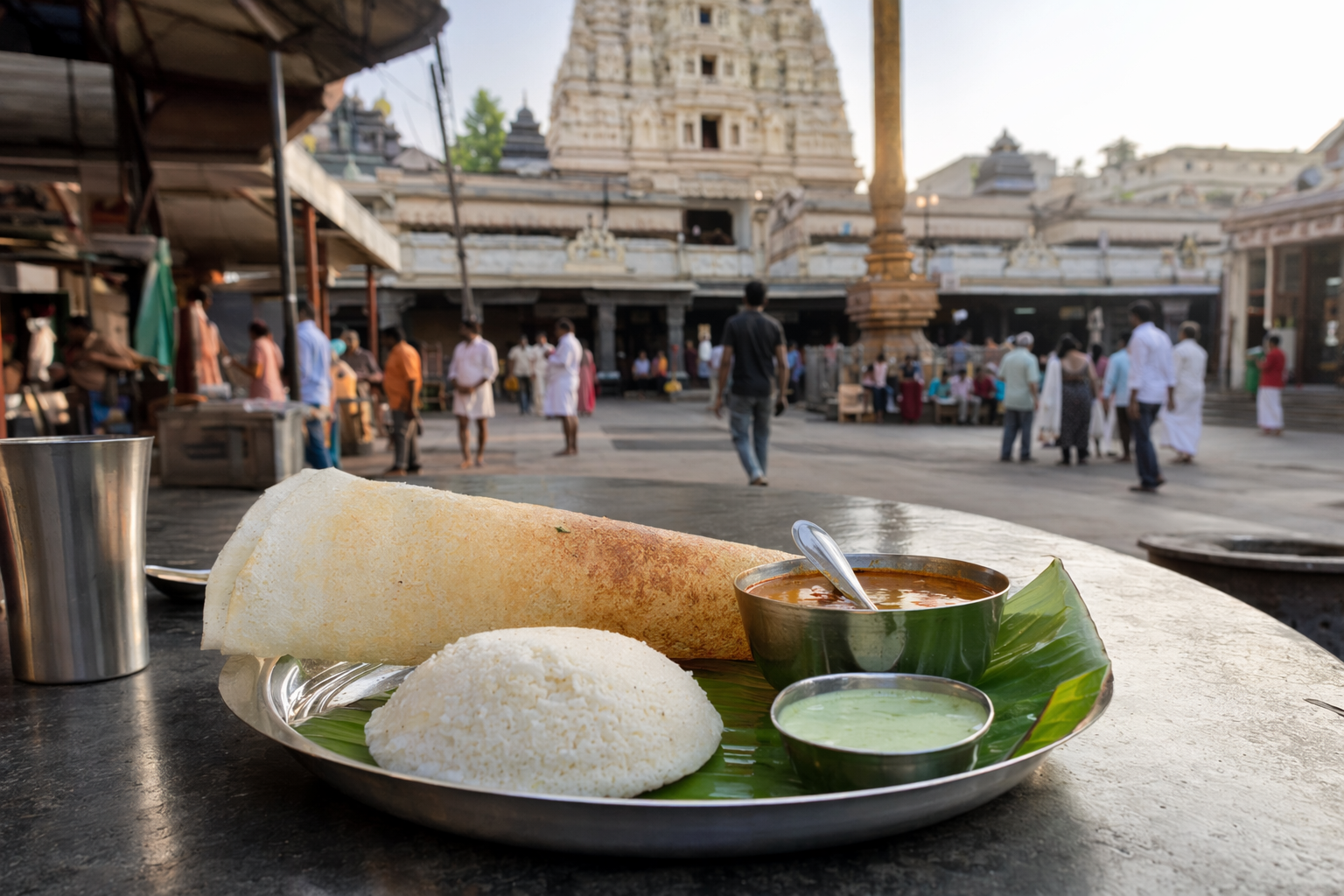
There’s a very particular sound India makes before sunrise in a temple town. Not the honking, not yet. It’s the scrape of a tea glass on a steel counter, the hiss of milk rising too fast in a battered aluminium pot, the soft thud of idli batter being poured into greased moulds, someone tying jasmine into a garland with fingers moving quicker than my brain at 4:30 in the morning. And then there’s me, half asleep, hair doing whatever it wants, trying to figure out what I can eat before early darshan without feeling heavy, sleepy, or spiritually distracted by my own stomach.
I’ve done this wrong more than once. In Tirupati I once ate a giant masala dosa before a 5 am queue because, honestly, it looked too good and I have no self control around crispy dosa edges. Big mistake. Delicious mistake, but still. By the time we were inching forward with hundreds of other people, I felt like I was carrying a small brick inside me. Since then, I’ve become a bit obsessed with the art of the light breakfast before darshan. Not fasting exactly, not feasting either. Just enough. Something warm, sattvic-ish if that’s the vibe, easy on the stomach, and deeply local because why would you travel all the way to Varanasi or Madurai or Udupi and eat a packaged biscuit in your hotel room? I mean, you can, but please don’t unless you really have to.
The Golden Rule: Eat Like You’re About to Stand, Walk, Wait, and Feel Things
#Early darshan isn’t like normal sightseeing where you grab breakfast, take photos, sit in a taxi, complain about traffic. Temple mornings are physical. You wake before your body agrees to wake, maybe bathe with cold-ish water, walk barefoot on stone that’s either freezing or surprisingly warm, stand in a queue, climb steps, keep your bag small, dodge monkeys if you’re unlucky, and then suddenly, after all that, you get one tiny blazing moment in front of the deity and everything goes quiet inside. Heavy food can ruin that rhythm. Too little food can also ruin it because low blood sugar in a crowded queue is not devotional, it’s just miserable.
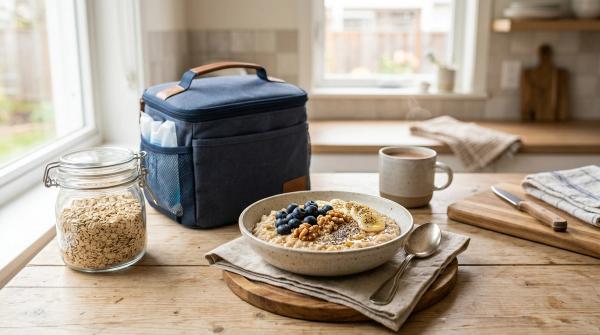
My personal sweet spot is this: one or two soft idlis, or a small bowl of poha, or a banana with hot filter coffee, or a plain dosa shared with someone. If the darshan is really early, like 3:30 or 4 am, I keep it even simpler. A few sips of ginger chai, maybe a piece of coconut, maybe dry fruits I packed the night before. After darshan, then yes, go wild. That’s when the real breakfast can happen. Pongal with ghee. Kachori sabzi. Puri bhaji. Appam. Whatever the town does best.
My temple travel theory: before darshan, breakfast should support the body. After darshan, breakfast can celebrate the soul.
Tirupati: Idli, Pongal, and the Humble Breakfast That Saves You
#Tirupati taught me discipline, mostly because the queues there do not care about your digestive ambitions. Around Tirumala and Tirupati, the food culture is practical, vegetarian, and built for huge numbers of pilgrims. You see this everywhere: quick tiffin counters, clean steel plates, steaming idlis, pongal with pepper and cumin, upma that tastes better than it has any right to at dawn. The Tirumala Tirupati Devasthanams system is famously organized, and many pilgrims plan their food around accommodation blocks, queue timings, and laddu collection. It’s not romantic in the Instagram sense, but it has its own beauty. A mass choreography of hunger and faith.
My best pre-darshan meal there was boring on paper: two idlis with a little coconut chutney and no sambar because I didn’t want anything too spicy that early. The idlis were cloud-soft, slightly sour from fermentation, and served so hot that the steam fogged my glasses. I ate standing near a counter while a family from Maharashtra debated whether their kid should have coffee. He looked about eight and extremely committed to the idea. I remember thinking, this is what temple food travel really is. Not curated tasting menus, not rare ingredients. Just food doing its job perfectly at the exact hour you need it.
- Best light pick in Tirupati/Tirumala: plain idli, ven pongal, upma, banana, or a small cup of milk coffee.
- Avoid before darshan if you’re sensitive: very oily vada, spicy chutneys, huge dosa, and anything you haven’t tried before. Save it for later.
- A tiny tip that sounds obvious but isn’t: carry water, but don’t overdrink right before a long queue. Temple logistics are real.
Varanasi Before Sunrise: Chai, Malaiyo Memories, and Kachori Temptation
#Varanasi is dangerous for anyone trying to eat light. The city wakes up with such edible drama. Boatmen calling out at Assi Ghat, bells from somewhere you can’t see, smoke, marigolds, dogs sleeping like they own the steps, and then those kachori shops start frying and you’re finished. I went for early darshan at Kashi Vishwanath after a dawn walk, and every lane seemed to whisper, just one kachori, come on. But kachori before a crowded temple visit? For me, no. I have learned. Mostly.
What worked beautifully was kulhad chai and a small helping of poha from a lane-side vendor near Godowlia, eaten slowly while the sky turned grey-blue. In winter, if you’re lucky, Varanasi has malaiyo, that airy saffron milk foam sold in little clay cups. It’s seasonal, delicate, and honestly one of North India’s great morning miracles. Is it a breakfast? Not really. Is it light? Sort of. Is it worth rearranging your entire morning? Absolutely. I wouldn’t eat a giant bowl before darshan, but a few spoonfuls after sunrise feels like eating a cloud that has been blessed by cardamom.
The current food travel scene in Varanasi has gotten more layered too. You still have the old-school places like Kashi Chaat Bhandar for later in the day and Blue Lassi in the lanes for that thick, tourist-famous lassi experience, but there are also more guided food walks, small cafés near Assi catering to slow travellers, and pilgrims using UPI for everything from chai to flowers. One 2026-ish trend I keep seeing in temple cities is this blend of ancient routine and digital convenience: QR payments at tiny stalls, online darshan slots, WhatsApp food recommendations from guesthouse owners, and travellers who want sattvic, local, and hygienic all at once. Fair enough, honestly.
Madurai: The Breakfast City That Tests Your Willpower
#Madurai before Meenakshi Amman Temple darshan is one of my favourite food moods in India. The city smells like jasmine, ghee, wet stone, and filter coffee. It’s intense but somehow soft. I stayed near the temple once and woke up to the sound of shutters opening and scooters coughing awake. By 5 am, people were already moving with purpose, women with flowers in their hair, men in crisp veshtis, kids still sleepy and annoyed. Me too, basically.
Now Madurai is not where you go if you want bland food. This city has personality. But before darshan I keep it very gentle: idli, maybe one kuzhi paniyaram if it’s not too oily, and filter coffee. Murugan Idli Shop is a well-known name associated with Madurai-style idlis and chutneys, and while it’s more of a proper stop than a secret little place, the idlis really do have that soft, almost melting texture. The chutney spread can be tempting, so I go easy. Coconut yes. Tomato maybe. Spicy podi? After darshan, please.
After the temple visit, though, Madurai opens up. Jigarthanda later in the day, meals on banana leaf, kari dosa if you eat meat and are not on a temple-day veg routine, and those little snack shops where everything is somehow crisp, hot, and gone too soon. But the pre-darshan breakfast stays sacredly small for me. One of the nicest mornings I had there was just two idlis and coffee from a no-frills place where the server poured sambar from such a height I thought he was showing off. He probably was. He deserved to.
Udupi and the Coastal Temple Breakfast: Clean, Calm, Perfect
#If there is one region that understands breakfast as a spiritual technology, it is coastal Karnataka. Udupi, of course, is legendary for its temple and its vegetarian cooking traditions. Around Sri Krishna Matha, the food feels balanced in a way that makes you wonder why the rest of us complicate breakfast so much. Soft idli, mild sambar, coconut chutney, sheera, upma, neer dosa if you find it early, and coffee that tastes like someone actually cared.
I had one of my calmest pre-darshan breakfasts in Udupi: a small plate of uppittu, which is upma but somehow nicer when said there, and a banana from a shop near my lodge. No drama. No chilli attack. No oil slick. Just warm semolina, curry leaves, mustard seeds, a few cashews, and that coastal air that makes everything feel freshly washed. Later, after darshan, I ate a proper Udupi meal and then needed a nap, which is also a form of devotion if you ask me.
There’s been a wider travel trend lately toward what people call wellness pilgrimage or mindful travel, and Udupi fits that without trying too hard. Travellers are asking for less processed food, millets, fermented breakfasts, local produce, less plastic, and more traditional eating patterns. In temple towns, this isn’t new. Our grandmothers were doing “wellness travel” with steel tiffins and roasted chana before it got a hashtag. Still, I like that younger travellers are rediscovering kanji, ragi malt, millet idli, and simple sattvic plates instead of treating breakfast as just hotel buffet filler.
Puri: When Mahaprasad Changes How You Think About Food
#Puri is different. The Jagannath Temple food culture is not just breakfast, it’s a whole universe. The Mahaprasad from the temple kitchen, cooked in earthen pots, has a reputation that goes far beyond Odisha. Pilgrims eat at Anand Bazaar, and the whole experience can feel overwhelming if it’s your first time: rice, dal, vegetable preparations, khatta, sweets, people sitting close, sharing space, eating with focus. I wouldn’t call Mahaprasad a light pre-darshan breakfast, though. For me it belongs after darshan, when you can sit and recieve it properly, not rush through like you’re catching a train.
Before early darshan in Puri, I prefer something tiny: tea, a banana, maybe chuda with curd if available, or a little bara if I know I can handle fried food that early. Odisha’s breakfast world is underrated by travellers who only chase the beach. There’s chuda dahi, chakuli pitha, ghuguni, bara, and sweet things that appear casually and ruin your plans in the best way. But again, timing matters. If I’m going into the temple, I want my stomach quiet and my mind awake. Afterward, I’m ready for the full plate.
Rameswaram: Idiyappam, Sea Air, and the Softest Morning Food
#Rameswaram mornings have this salty, blue feeling even before the sun comes up. Pilgrims move toward Ramanathaswamy Temple, many after bathing rituals, and the town has a different pace from the big northern temple cities. It’s coastal, humid, and gentle until suddenly it’s not, because the temple corridors are long and the crowds can gather fast. Here, a light breakfast really matters.
My favourite Rameswaram pre-darshan plate was idiyappam with a little coconut milk, not too sweet, just enough to make me feel human. Idiyappam is ideal before darshan because it’s soft, steamed, and doesn’t sit heavily. Appam can work too if it’s not oily. Plain dosa is fine. I’d avoid too much chutney if it’s fiery, because Tamil Nadu chutney can look innocent and then slap you awake. Not always a bad thing, but maybe not before temple queues.
After darshan, if you eat seafood, Rameswaram and the nearby coast have plenty to explore outside the strict temple-food frame, though many pilgrims keep vegetarian on the day itself. I usually do veg until darshan, then decide later depending on the place, the company, and frankly my mood. Food travel has rules, but it also has feelings.
What I Pack Now for Early Darshan Mornings
#I used to be chaotic about this. I’d wake up late, panic, drink tea too fast, forget cash, forget water, and then buy some random fried thing because it was the only thing open. These days I’m still not exactly organized, but I have a small darshan breakfast kit, if that doesn’t sound too dramatic. It saves me, especially in towns where shops open later or during festival rush when everything is crowded.
- A banana or two. Boring, yes, but bananas have rescued more pilgrim mornings than fancy travel blogs admit.
- A small packet of roasted makhana, peanuts, or chana. Not masala-loaded, just plain-ish.
- Dates or dry figs if I need quick energy and don’t want a full meal.
- Electrolyte sachet for hot places like Rameswaram, Madurai, Puri, and basically anywhere in May where the sun behaves personally offended.
- A reusable bottle and sometimes a tiny steel tumbler. More travellers are doing this now, partly sustainability, partly because temple-town plastic waste is honestly heartbreaking.
One newer food-travel habit I love is ordering or arranging simple breakfast through homestays the night before. Many guesthouses in pilgrimage towns now understand the early darshan rhythm. They’ll pack idlis, poha, fruit, or plain parathas without onion-garlic if you ask nicely. Some even ask about fasting rules, which is thoughtful. The best travel hospitality in India is often not luxurious, it’s someone saying, “I’ll keep hot water ready at 4.” That line can make me emotional, no joke.
Regional Light Breakfast Ideas Before Darshan
#Not every temple town eats the same, and that’s the fun of it. If you’re in Maharashtra heading for Shirdi or Trimbakeshwar, poha is your friend. Light, lemony, with peanuts if you want crunch. In Gujarat, around Dwarka or Somnath, a small portion of dhokla can work, though I personally avoid too much fried fafda before darshan unless I have time to sit after. In Rajasthan temple towns like Nathdwara or Pushkar, milk, fruit, or a small plain poha/upma situation is safer than diving into kachori early. North India loves a fried breakfast, and I love North India for it, but before darshan I negotiate with myself like a lawyer.
In Vrindavan and Mathura, the temptation is milk sweets. Peda, rabri, lassi, makhan-mishri vibes everywhere. But dairy before a crowded morning can be risky if your stomach is dramatic. Mine is. So I keep it minimal: hot milk tea, maybe a small peda after darshan, and proper breakfast later. In Haridwar or Rishikesh, you’ll find aloo puri calling your name from every lane, but if you’re going for early Ganga aarti or temple visits, maybe start with fruit and chai, then reward yourself later. There is no shame in delayed indulgence. Actually, it tastes better.
The 2026 Temple-Food Travel Mood: Old Rituals, New Habits
#What I’m noticing more and more in Indian food travel now is that pilgrims and travellers are not separate categories anymore. People go for darshan, yes, but also for the food lanes, the old sweet shops, the temple kitchens, the coffee houses, the prasadam counters, the millet cafés, the banana-leaf meals. Younger travellers especially are planning trips around both spiritual calendars and local food experiences. Festival dates, online darshan bookings, regional breakfast reels, food walks, homestay kitchens, all of it blends together.
Millets are still having a moment after all the recent attention they got, and I’ve seen ragi dosa, millet pongal, jowar upma, and bajra khichdi appearing in more travel menus and wellness stays. Fermented food is another big one: idli, dosa, kanji, ambali, curd rice, buttermilk. Not new foods, obviously, just newly appreciated by travellers who want gut-friendly breakfast before a long day. There’s also a quiet rise in sattvic travel meals: no onion, no garlic, lighter spice, seasonal vegetables, simple grains. Some people do it for faith, some for digestion, some because they saw it on social media. Doesn’t matter. If it gets them to eat thoughtfully, I’m in.
Food innovation in travel doesn’t always mean robots making coffee or some airport vending machine selling quinoa bowls. In India’s temple towns, innovation looks like a tiny idli shop accepting UPI at 4:45 am. It looks like homestays packing compostable breakfast boxes. It looks like travel groups asking local cooks to make region-specific pre-darshan meals instead of generic bread-butter. It looks like people choosing local breakfast over hotel buffet because they want the place to enter their memory through taste. That’s the good stuff.
My Personal Do’s and Don’ts, Learned the Hard Way
#- Do eat warm food if possible. Cold packaged snacks at 4 am make me feel sad, though they are sometimes necessary.
- Don’t experiment with super spicy chutney before darshan. You are not proving anything to anyone.
- Do ask locals what’s open early. Auto drivers, flower sellers, lodge caretakers, they usually know better than apps.
- Don’t assume every temple allows the same items inside. Check bag rules, phone rules, food rules, all that boring-but-important stuff.
- Do respect fasting traditions if you’re travelling with family or a group. Food is personal, faith is personal, and nobody likes a breakfast bully.
- Don’t skip food completely if you know you get dizzy. Devotion and common sense should be friends.
Also, can we talk about coffee? South Indian filter coffee before darshan is one of life’s great balancing acts. Too much and you’ll be jittery in the queue. Too little and you’ll stare at the temple wall like your soul left your body. I usually take half a tumbler if I can convince the vendor, which sometimes makes them laugh. In Tamil Nadu and Karnataka, coffee is not just caffeine, it’s culture poured from height, and even a small one can make an early morning feel suddenly possible.
After Darshan: That First Proper Meal Hits Different
#The best part of keeping breakfast light is the meal after darshan. I swear food tastes different then. Maybe it’s relief, maybe hunger, maybe the way your senses sharpen after standing in a sacred space. In Tirupati, pongal after darshan felt like a warm blanket. In Varanasi, kachori sabzi finally made sense once I wasn’t worried about the queue. In Madurai, idli with podi and ghee tasted almost celebratory. In Puri, Mahaprasad humbled me because it wasn’t restaurant food at all, it was something bigger, cooked and shared with a different intention.
That’s why I don’t treat temple breakfasts as just fuel. They’re part of the journey. The tea stall before dawn, the old woman selling bananas, the boy wiping steel plates, the smell of sambar, the first sip of coffee when you’re still half asleep, the stranger who tells you which gate to use, the vendor who says “come after darshan, fresh vada will be ready.” These are not side details. They’re the trip.
A Simple Pre-Darshan Breakfast Map I’d Actually Follow
#If you want the short version, here’s how I’d plan it. In South Indian temple towns, choose steamed: idli, idiyappam, pongal, upma, appam, maybe dosa if plain. In North Indian temple towns, choose light and less oily: poha, fruit, tea, milk, a small portion of daliya, maybe curd if your stomach likes dairy. In coastal towns, go for rice-based steamed foods and coconut, but not too much. In places famous for fried breakfast, wait until after darshan unless you have a heroic digestive system. I do not.
And please, eat local. Even if it’s just one idli from a stall instead of a hotel buffet croissant that tastes like cardboard regret. Light breakfast doesn’t have to mean boring. It can be the most precise, beautiful little meal of the day when done right. A small plate, a hot drink, a quiet street, temple bells somewhere in the distance. Honestly, that’s my kind of luxury.
Final Thoughts From a Hungry Pilgrim-Traveller
#A light breakfast before early darshan in India is not a diet tip. It’s a travel skill. It’s knowing when to hold back so you can fully arrive. It’s respecting your body, the place, the crowd, the ritual, and yes, the food too. Because India’s temple towns are some of the greatest breakfast destinations in the world if you pay attention: Tirupati’s idlis, Varanasi’s chai, Madurai’s filter coffee, Udupi’s calm tiffin plates, Puri’s sacred food culture, Rameswaram’s soft idiyappam mornings. Each place teaches you a slightly different way to begin the day.
I still mess it up sometimes. I still get tempted by the wrong snack at the wrong hour. I still over-order because my eyes are basically greedy tourists. But when I get it right, when I eat just enough before darshan and then come out ready for the town’s real breakfast, it feels like travel at its best: hungry, humble, curious, and completely alive. If you’re planning your own food-and-faith trip across India, keep your breakfast light, your mind open, and maybe browse AllBlogs.in for more travel stories before you go.