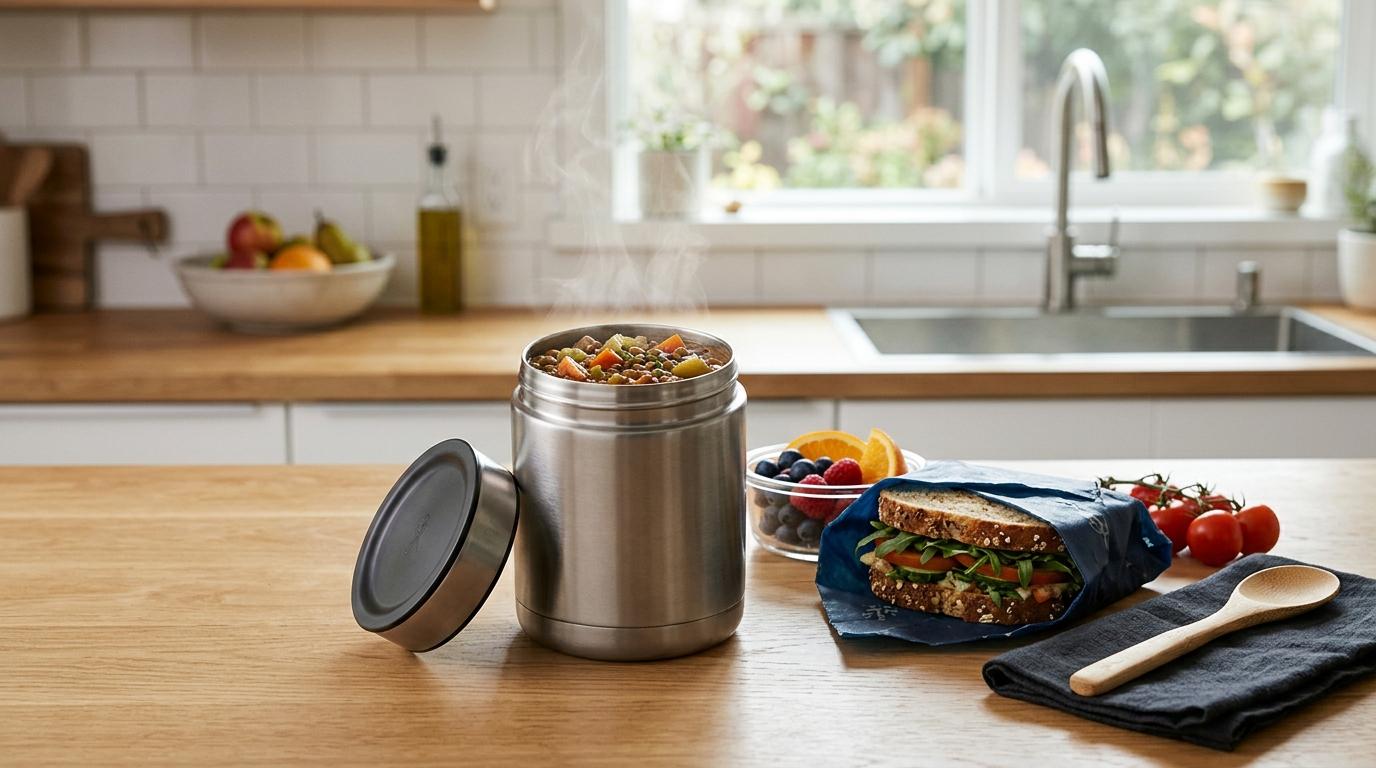
A hot lunch in a thermos can feel like a small miracle on a busy day.
It means your child can take soup instead of another sandwich. It means you can bring leftovers to work without fighting for the office microwave. It means students, commuters, travelers, shift workers, and anyone eating on the go can still have something warm and filling.
But there’s one catch: warm food is not always safe food.
That’s the part people sometimes miss. A thermos can keep food hot for hours, but it has to be used the right way. Good thermos lunch food safety comes down to a few simple things: starting with very hot food, preheating the thermos, packing it properly, and knowing when it’s better to throw food away than risk it.
Quick Answer: Is It Safe to Keep Food Hot in a Thermos?
#Yes, it can be safe to keep food hot in a thermos, as long as the food stays hot enough until it’s eaten.
Here are the basic rules:
- Start with very hot food. It should be steaming hot, not just warm.
- Preheat the thermos first. Fill it with boiling water for 5 to 10 minutes before adding food.
- Fill the jar as much as possible. A full thermos holds heat better than a half-empty one.
- Keep hot food hot. Food safety guidance usually considers 140°F / 60°C and above the safer hot-holding range.
- Watch the danger zone. Perishable foods between 40°F and 140°F / 4°C to 60°C can become risky if they sit too long.
- Use the 2-hour rule. If food has been in the danger zone for more than 2 hours, throw it away. If the surrounding temperature is above 90°F / 32°C, use 1 hour.
- Do not save thermos leftovers. If food comes home uneaten or half-eaten, toss it.
That’s the short version. Now let’s talk about what this looks like in real life.
Why “Warm Enough” Isn’t Always Safe
#Food safety experts often talk about the danger zone. This is the temperature range between 40°F and 140°F / 4°C and 60°C.
That’s the range where bacteria can grow quickly in perishable foods, including:
- Cooked chicken, meat, and seafood
- Rice and pasta
- Eggs
- Dairy-based foods
- Soups and stews
- Leftovers
- Cooked beans and lentils
- Saucy meals and casseroles
The tricky thing is that unsafe food does not always smell bad, look strange, or taste spoiled. It may seem completely fine.
That’s why a thermos lunch is not just about whether the food still feels cozy at noon. If it has cooled into the danger zone and stayed there too long, it may no longer be safe to eat.
The goal is simple: keep hot food hot, ideally at or above 140°F / 60°C, until lunchtime.
A good insulated food jar helps a lot, but it doesn’t stop heat loss completely. Your job is to give the food the best possible start in the morning.
The 2-Hour Rule and the 1-Hour Rule
#This is one of the most useful lunch safety rules to remember:
- If perishable food sits in the danger zone for more than 2 hours, throw it away.
- If the surrounding temperature is above 90°F / 32°C, throw it away after 1 hour.
That second rule matters more than people think.
Lunch might be sitting in a hot car, on a sunny sports field, in a warm classroom, at a construction site, or in a lunch bag near a window. Even if the thermos is sealed, the conditions around it still matter.
A thermos gives your food more protection than a regular container, but it is not magic. If the food cools down too much and stays that way for too long, it should not be eaten.
The Step People Skip: Preheating the Thermos
#If you want to keep food hot for lunch, preheating the thermos makes a real difference.
A cold stainless-steel food jar pulls heat from your food the moment you add it. Even a high-quality vacuum-insulated jar has an inner wall that needs to warm up.
So if you pour hot soup into a cold thermos, the soup immediately loses some of its heat.
Preheating helps prevent that first big temperature drop.
How to Preheat a Thermos for Hot Food
#- Boil water. Do this while your food is heating.
- Fill the empty thermos with boiling water. Fill it as close to the top as you safely can.
- Close the lid. Let it sit for 5 to 10 minutes.
- Pour out the hot water carefully. The jar and water will be very hot.
- Add the hot food right away.
- Seal the thermos tightly. Keep it closed until lunchtime.
One more helpful tip: fill the thermos as much as practical. A half-empty jar has more air inside, and air does not hold heat as well as dense, hot food.
Heat the Food Properly Before Packing
#A thermos holds heat. It does not create heat.
That means you should not pack food that is only lightly warmed. Heat the food until it is steaming hot all the way through.
This is especially important for thick foods like:
- Chili
- Curry
- Stew
- Rice dishes
- Pasta
- Macaroni and cheese
- Leftovers
Stir thick foods while heating so the middle gets hot too. This matters because the outside can be bubbling while the center is still cooler.
If you use a microwave, stir the food and check for cold spots before packing. Microwaves are convenient, but they can heat unevenly.
If you heat food on the stove, make sure soups, stews, and saucy meals are hot throughout before adding them to the jar.
Once the food is hot, move quickly: empty the preheating water, fill the jar, close the lid, and leave it closed until lunch.
Foods That Work Best in a Thermos
#Some foods are naturally better for thermos lunches than others.
In general, the best choices are moist, dense, and evenly heated. They fill the jar well, leave fewer air gaps, and usually stay hot longer.
Soups
#Soups are one of the easiest and most reliable thermos foods. They heat evenly, pack well, and usually stay hot better than dry foods.
Good options include:
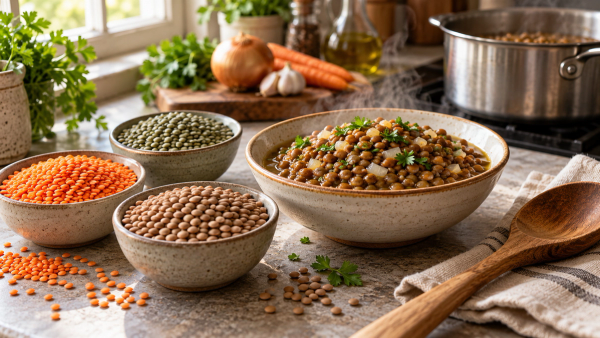
- Lentil soup
- Chicken soup
- Tomato soup
- Vegetable soup
- Bean soup
- Brothy noodle soup
- Minestrone
- Split pea soup
For noodle soups, just keep texture in mind. Noodles can get soft after sitting for a few hours. If that bothers you, choose sturdier noodles or pack a thicker soup instead.
Stews and Chili
#Stews and chili are excellent thermos meals because they are thick, moist, and hearty.
Good choices include:
- Beef stew
- Chicken stew
- Vegetable stew
- Bean chili
- Chicken chili
- Lentil stew
- Thick vegetable curry
- Saucy bean dishes
These meals tend to hold heat well because they are dense and don’t leave a lot of empty space in the jar.
Saucy Pasta
#Pasta can work beautifully in a thermos, but sauce matters.
Dry pasta cools faster, clumps together, and usually isn’t very pleasant by lunchtime. Saucy pasta stays warmer and tastes better.
Better thermos pasta ideas include:
- Macaroni and cheese
- Pasta with tomato sauce
- Ravioli in sauce
- Pasta with meat sauce
- Baked pasta packed hot and saucy
- Pasta with lentil or vegetable sauce
If the pasta seems dry before packing, add a little extra sauce. It helps with both heat and texture.
Rice Dishes With Sauce or Moisture
#Rice can be packed in a thermos, but it needs careful handling.
Plain dry rice is not the best choice because it can cool unevenly and become dry or clumpy. Rice dishes with sauce or moisture work much better.
Good options include:
- Curry with rice
- Beans and rice
- Rice with stew
- Risotto-style rice
- Saucy rice bowls
- Rice porridge
- Lentils and rice
Rice should always be handled safely. Refrigerate leftover rice promptly, reheat it until steaming hot, pack it immediately, and throw away anything left in the thermos after lunch.
Oatmeal and Porridge
#Hot oatmeal and porridge are great for breakfast on the go or a warm school snack.
Good options include:
- Oatmeal
- Rice porridge
- Creamy grain porridge
- Hot cereal
- Porridge with fruit mixed in
If you want crunchy toppings like nuts, seeds, granola, or coconut flakes, pack them separately. Otherwise they’ll soften in the thermos.
Foods to Avoid or Pack Carefully
#Not every hot food is a good thermos food. Some foods cool too quickly, get soggy, or are harder to keep at a safe temperature.
Dry Fried or Breaded Foods
#Chicken nuggets, fish sticks, fries, breaded cutlets, and similar foods are not ideal in a thermos.
They have two main problems:
- They don’t hold heat as well as soups, stews, or chili.
- Steam gets trapped, which makes them soggy.
Even if they start out hot, they often become lukewarm faster than dense, moist foods.
Delicate Seafood
#Fish and shrimp can be packed safely only if they stay hot enough, but they are not always practical.
They can:
- Overcook
- Develop a strong smell
- Change texture after sitting sealed for hours
- Cool faster if packed in small pieces or without sauce
If you pack seafood, be extra careful with temperature, timing, and freshness.
Dairy-Heavy Cream Sauces
#Creamy soups and dairy-heavy sauces can be safe if they are heated thoroughly, packed very hot, and kept hot.
But they are less forgiving if the thermos cools into the danger zone.
If your thermos does not hold heat well, a broth-based soup, chili, curry, or thick stew is usually a safer and more reliable choice.
Light, Airy Foods
#Foods with lots of air space cool faster. This includes some casseroles, loosely packed pasta, dry grains, and foods cut into large uneven pieces.
If you pack these foods:
- Add sauce or broth
- Pack the jar tightly
- Make sure everything is hot all the way through
- Fill the thermos as much as possible
The less air inside the jar, the better.
Better Packing Rules for a Hot Thermos Lunch
#Here’s a simple morning routine that works, even when everyone is rushing.
1. Start With a Clean Thermos
#Use a clean insulated food jar every time.
Pay attention to:
- The lid
- The threads around the opening
- Rubber seals or gaskets
- Folding spoon compartments
- Any small crevices where food can hide
Food residue can get stuck in tiny spots. Wash the thermos with hot, soapy water and let it dry well before using it again.
2. Preheat Before Adding Food
#Do not skip this step.
Fill the thermos with boiling water, close the lid, and let it sit for 5 to 10 minutes. This warms the inside of the jar and helps the food stay hotter for longer.
3. Heat Food Until Steaming Hot
#The food should be steaming hot all the way through.
Stir thick foods during heating so there are no cool spots in the middle. This is especially important for leftovers, rice dishes, pasta, chili, and stews.
4. Fill Quickly
#Once the food is hot and the thermos is preheated, move fast.
Pour out the hot water, add the food right away, and close the lid tightly.
5. Keep the Thermos Closed
#Every time the thermos is opened, heat escapes.
If the lunch is for a child, remind them not to open it early “just to check.” Even a quick peek cools the food down a little.
6. Separate Hot and Cold Items
#You can pack a thermos in the same lunch bag as cold foods, but try to keep them apart.
Use:
- A divider
- A towel
- A separate compartment
- A smaller insulated pouch
This helps keep the thermos from warming up cold foods, and it keeps ice packs from cooling down the thermos.
7. Don’t Leave Lunch in a Hot Car
#A thermos may protect the hot food inside, but the rest of the lunch bag can still be affected by heat.
If there are cold foods like yogurt, fruit, cheese, salads, or sandwiches, use ice packs and keep the bag out of direct sun whenever possible.
What About Leftovers in a Thermos?
#Leftovers can be packed in a thermos, but they need to be handled carefully.
The safer routine is:
- Refrigerate leftovers promptly after the original meal.
- Reheat them until steaming hot.
- Stir well so there are no cold spots.
- Pack them immediately into a preheated thermos.
- Eat them at lunchtime.
- Throw away anything left in the thermos after lunch.
The big mistake is treating a thermos like a mini fridge. It isn’t one.
Once hot food cools down, it may spend hours in the danger zone. By the time the thermos comes home, you usually don’t know how long the food has been at an unsafe temperature.
When to Throw Away a Thermos Lunch
#This is the part that can feel wasteful, but it’s important.
Throw the food away if:
- It was not eaten at lunch.
- The thermos was opened earlier and then left sitting.
- The food is only lukewarm and you don’t know how long it has been that way.
- The thermos did not seal properly.
- The jar was only partly filled and the food cooled quickly.
- Lunch sat in very hot conditions for too long.
- You are not sure whether it stayed hot enough.
As a practical rule, do not save thermos leftovers for later.
By the time the food comes home, it may have been cooling for hours. Reheating it later does not reliably fix unsafe handling.
Empty the thermos, wash it well, and let it dry completely before the next use.
Can You Pack Cold Food in a Thermos?
#Yes. A vacuum-insulated food jar can also keep cold foods cold.
For cold foods, use the opposite method:
- Fill the thermos with ice water.
- Let it sit for about 10 minutes.
- Pour out the water.
- Add the cold food.
- Seal the lid tightly.
Cold foods should stay below 40°F / 4°C.
Good cold thermos ideas include:
- Yogurt
- Smoothies
- Chilled pasta salad
- Cold fruit
- Overnight oats
- Cottage cheese
- Cold noodle salad
If you are packing other cold foods in the lunch bag, use ice packs too.
Thermos Lunch Food Safety Checklist
#Before you leave the house, run through this quick list:
- Is the thermos clean?
- Did you preheat it with boiling water?
- Is the food steaming hot?
- Did you fill the jar right away?
- Is the lid sealed tightly?
- Will the thermos stay closed until lunch?
- Are cold foods packed separately with ice packs?
- Will uneaten food be thrown away?
If the answer is yes, you’ve covered the main parts of food flask lunch safety.
Final Word
#A thermos lunch is simple once it becomes part of your routine: heat the food well, preheat the jar, fill it properly, keep it closed, and throw away leftovers.
Do that, and an insulated food jar becomes one of the easiest ways to enjoy a safe, hot lunch almost anywhere.