Supermarket sushi can feel like a small travel miracle.
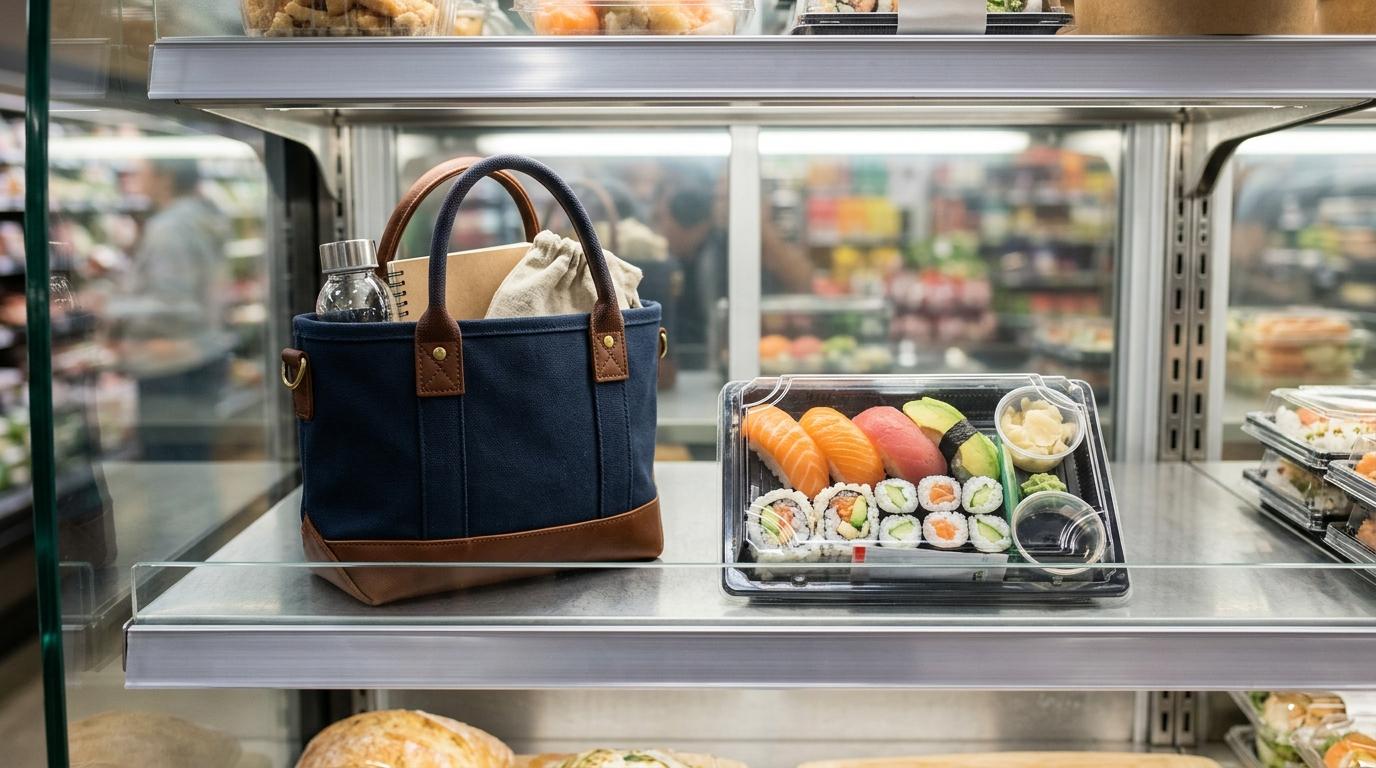
You’re tired. You don’t want another greasy meal. You don’t feel like sitting in a restaurant. Maybe you’ve just checked into a hotel, you’re killing time before a train, or you’re trying to eat something decent without blowing your budget. Then you see it: a neat little tray of rolls, already packed with soy sauce, wasabi, and ginger.
Honestly, sometimes it’s a great choice.
But sushi is one of those foods where timing and temperature really matter. Raw fish, cooked seafood, cut vegetables, and cooked rice all need careful handling. The plastic lid doesn’t magically make them safe. So when you’re traveling, the real question isn’t just “Does this look good?” It’s “Has this stayed cold, and can I eat it soon?”
Here’s a practical, no-panic guide to knowing when supermarket sushi is worth buying, when it needs to be chilled, and when it’s better to walk away.
Quick answer
#Buy it if it’s sitting in a properly cold display case, the package feels cold, the fish looks fresh and glossy, the rice still looks moist, and you’re going to eat it soon.
Chill it only if you have a fridge that can reliably keep food at 40°F/4°C or below. A hotel mini-fridge that just feels “kind of cool” is not something to trust with sushi.
Skip it if the case looks warm, messy, leaky, or poorly maintained. Also skip it if the tray feels room temperature, the fish looks dull, the rice looks dry or gray, or anything smells strongly fishy or sour.
And if your plan is to carry it around in your bag for hours, skip it.
When in doubt, choose something less delicate. No tray of supermarket rolls is worth losing a travel day over.
When supermarket sushi actually makes sense
#Supermarket sushi works best when the trip from the cold case to your mouth is short.
It can be a good travel meal if you’re:
- Picking up dinner near your hotel and eating it right away.
- Buying lunch from a busy supermarket with a clean refrigerated case.
- Choosing cooked or vegetable rolls for a short train ride.
- Grabbing something light after a long travel day.
- Looking for a no-cook meal that doesn’t need plates, utensils, or cleanup.
That’s the appeal. It’s compact, tidy, and usually more interesting than crackers or chips. It can also feel a lot better than eating something heavy and fried when you still need to walk, catch a train, or stay awake long enough to check in.
But convenience doesn’t erase food safety.
Sushi is usually ready-to-eat, which means there’s no final cooking step before you eat it. You’re relying on the store’s handling, the temperature of the case, and what you do with it after buying.
A good rule is simple:
Buy it cold, keep it cold, eat it cold, and eat it soon.
If your plan sounds more like, “I’ll carry it around all afternoon and maybe eat it later,” choose something else.
What to check before buying
#You can’t inspect sushi perfectly through a plastic lid, but you can still spot a lot before you pay for it.
Start with the display case, not the tray.
A refrigerated sushi case should look clean, organized, and genuinely cold. If there’s a thermometer, it should read 40°F/4°C or below. Not every case has one, so use your judgment too. If the case is dripping, overcrowded, open to warm air, sitting in direct sun, or just looks neglected, be cautious.
Then check the package.
Look for:
- A cold tray. It should feel properly cold, not barely cool.
- Clear labels. Check the packed date, use-by date, and ingredients if they’re listed.
- Good packaging. Avoid cracked lids, broken seals, leaks, loose wrapping, or anything that looks like it has been handled too much.
- Fresh-looking fish. Raw fish should look moist and glossy, not dry, dull, brownish, faded, or tired.
- Rice that still looks moist. Sushi rice should look plump and held together. Dry, gray, hard, or crumbly rice is a reason to pass.
- No strong smell. Fresh sushi should smell mild and clean. If it smells sour, very fishy, or just wrong, don’t buy it.
- Not too much condensation. A little moisture can happen, but heavy condensation may mean the tray warmed up and cooled down again.
Also pay attention to turnover. A busy supermarket where sushi is being restocked regularly is usually a better bet than one lonely tray sitting there late in the day. It’s not a guarantee, but it helps.
And ask yourself one very travel-specific question:
Where is this sushi going next?
If the answer is “I’m eating it in 20 minutes,” that’s one thing. If the answer is “my backpack, then a bus, then a hostel check-in line,” pick something else.
Raw fish, cooked rolls, veggie rolls, and rice: what changes the risk?
#Not all supermarket sushi carries the exact same risk. The filling matters, but so does the rice.
Raw fish sushi
#Raw tuna, salmon, and similar fish are the most delicate choices when you’re traveling. They’re highly perishable and eaten without cooking.
If you buy raw fish sushi from a supermarket, treat it as an eat-soon food.
Buy it cold. Keep it cold. Eat it promptly.
If you’re unsure about the display case, your travel time, or your hotel fridge, raw fish is the first thing to skip.
Cooked seafood and ready-to-eat rolls
#Many supermarket sushi trays use cooked or ready-to-eat ingredients. California rolls with imitation crab, cooked shrimp rolls, and similar options are often more practical for travelers than raw fish.
But “lower risk” does not mean “no risk.”
These rolls are still perishable. They still need refrigeration. They’ve still been handled after cooking or processing, and they’re still eaten cold.
For travel, cooked or ready-to-eat rolls are best when you have a short walk, a short ride, or a reliable fridge waiting.
Vegetable rolls
#Cucumber, avocado, carrot, and other vegetable rolls avoid the raw seafood issue, so they often feel like the safer choice. And if you’re unsure about the fish, veggie rolls may be the better option.
But they are not shelf-stable.
Vegetable sushi still contains cooked rice and cut vegetables. Once it has been prepared and sold cold, it needs to stay cold.
Don’t treat veggie sushi like a granola bar. It isn’t one.
The rice matters too
#It’s easy to focus only on the fish, but sushi rice deserves attention too.
Cooked rice can support bacterial growth if it sits at unsafe temperatures for too long. Sushi rice is seasoned with vinegar, which helps with taste and texture, but it is not a magic safety shield.
Once sushi is packaged and sold cold, treat the whole tray as perishable.
Yes, even the veggie rolls.
Hotel fridge, train, airport, and picnic timing rules
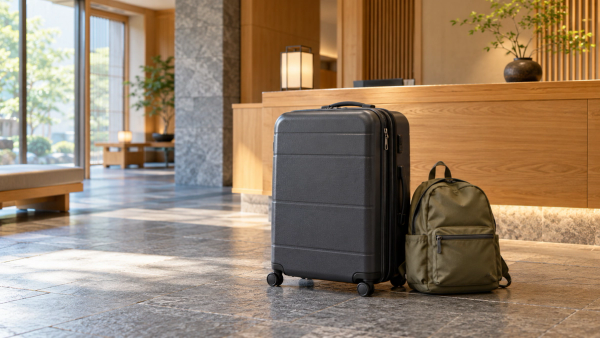
#Travel makes sushi trickier because you often lose control of temperature. At home, you can put food straight into a proper refrigerator. On the road, you may have a weak mini-fridge, a warm train carriage, a delayed flight, or no fridge at all.
Use these timing rules.
The two-hour rule
#Perishable foods should not sit at room temperature for more than two hours.
That includes supermarket sushi.
The clock starts when the sushi leaves proper refrigeration, not when you remember it’s in your tote bag.
So if you buy sushi, walk around, check into your hotel, unpack, shower, and then eat, you may have already used up too much time.
The one-hour hot weather rule
#If the temperature is above 90°F/32°C, the safe window drops to one hour.
This matters for:
- Summer picnics.
- Hot train platforms.
- Beach days.
- Long walks with groceries.
- Cars without steady air conditioning.
- Outdoor markets or festivals.
If it’s hot and you can’t keep the sushi cold, eat it quickly or don’t buy it.
Hotel mini-fridges
#Hotel mini-fridges are useful, but they are not always reliable for perishable food. Some are really designed more for drinks than food storage. Some cycle on and off unevenly. Some are overloaded. Some are barely cold.
Before storing sushi in a hotel fridge, ask:
- Does the inside feel truly cold?
- Is there a temperature control?
- Is the fridge overloaded?
- Has it had time to cool down after being turned on?
- Can you place the sushi away from the door, where temperatures fluctuate more?
If you have a thermometer, the target is 40°F/4°C or below. If you don’t, be conservative.
If the fridge feels only mildly cool, don’t save sushi overnight.
For more on this kind of decision, see Hotel Mini-Fridge Food Safety for Travelers.
Train and airport timing
#Sushi can work for a short train ride if you buy it cold and eat it near the beginning of the trip.
It is not a great “backup meal for later” unless you have a cooler.
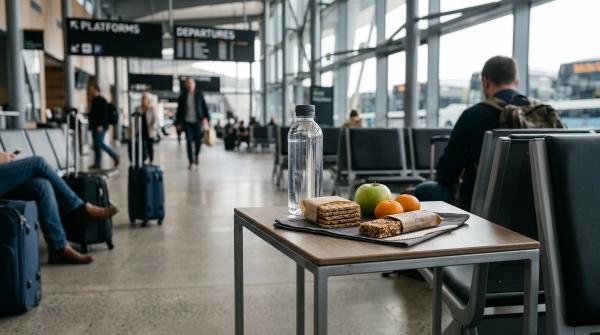
Airports are even trickier because delays can stretch everything out. Security lines, gate changes, boarding delays, tarmac waits, and missed connections can turn a quick snack into a long food-safety gamble.
If you buy sushi before a flight, eat it soon after buying, or choose something more stable.
You may also like: Airport Sushi Safety: Time Limits, Ice Packs and What to Skip.
Picnic rules
#Sushi is not ideal picnic food unless you can keep it cold with ice packs and eat it early.
If you’re buying food for a park lunch, choose sushi only when:
- The weather is mild.
- You’re eating soon.
- You can keep it chilled until mealtime.
- You’ll throw away leftovers instead of carrying them around.
A shady bench is nice, but it is not refrigeration.
What to buy instead when you’re unsure
#If the sushi case looks questionable, your hotel fridge is weak, or your day is too unpredictable, skip the sushi. It doesn’t need to be a big dramatic decision. There are plenty of travel foods that handle uncertainty better.
Choose food that matches your actual day, not just what sounds good in the moment.
If you need something shelf-stable
#Pick foods that don’t need refrigeration before opening, such as:
- Crackers.
- Nuts.
- Trail mix.
- Whole fruit.
- Shelf-stable tuna or salmon packets.
- Nut butter packets.
- Granola bars.
- Sealed snacks you can safely carry.
They may not be as exciting as sushi, but they’re much better for long bus rides, late trains, and rooms with no fridge.
If you can eat right away
#If you’re eating immediately, you have more flexibility. You might choose:
- A hot prepared meal from the supermarket.
- A freshly made sandwich from a busy refrigerated case.
- Soup or hot counter food, if it’s being held hot and served promptly.
- Yogurt or other chilled foods, if you’ll eat them right away.
The same basic rule applies: keep hot foods hot, keep cold foods cold, and don’t let either sit around too long.
If you want something fresh but lower fuss
#Try:
- Whole fruit plus nuts.
- Bread, cheese, and shelf-stable extras, if you can eat soon.
- A sealed salad from a properly cold case.
- A simple grocery lunch you can finish in one sitting.
If you’re comparing supermarket meals more broadly, read Grocery Store Lunch While Traveling: No-Kitchen Meals or Deli Salad Bar Food Safety for Travelers.
The safest choice is often the one that fits your schedule, not the one that looks best in the case.
Common mistakes
#Saving half a tray for tomorrow
#Leftover supermarket sushi is rarely a great travel plan.
If it was kept cold the entire time and stored quickly in a fridge at 40°F/4°C or below, next-day sushi may be possible from a safety point of view. But in a hotel setting, that “if” is doing a lot of work.
Most travelers don’t actually know how cold their mini-fridge is.
Quality also drops fast. The rice dries out, the seaweed gets tough or soggy, and the fish loses its clean texture.
If you’re buying sushi while traveling, buy what you can finish.
Trusting the date label more than your eyes and nose
#Packed-on and use-by dates are helpful, but they assume the sushi has been handled properly.
They don’t fix a warm display case, a damaged package, or a tray that looks tired.
If the date looks fine but the sushi looks wrong, skip it.
Carrying sushi “just for later”
#This is the classic travel mistake.
You buy sushi at noon because it looks good, then carry it through museums, stations, buses, and check-in. By dinner, it may still look like sushi, but it has not been treated like sushi.
If you can’t keep it cold, don’t save it for later.
Assuming veggie rolls are safe at room temperature
#Vegetable rolls are not shelf-stable.
They still contain cooked rice and cut produce, and they’re sold as refrigerated ready-to-eat food.
Buy them cold, keep them cold, and follow the same timing rules.
Using soy sauce, wasabi, or ginger as a safety net
#Soy sauce, wasabi, and pickled ginger add flavor.
They do not make old or poorly stored sushi safe.
If the fish smells off, the rice looks dry, or the tray has been sitting warm, condiments will not rescue it.
Putting sushi in a warm tote bag with everything else
#If you buy sushi with other groceries, don’t bury it in a bag and wander around for an hour.
Get it to a fridge quickly or eat it soon.
If you’re shopping before heading back to your hotel, make sushi the last thing you pick up, not the first.