The first time a “vegetarian” label betrayed me
#I still remember standing outside a tiny bakery in Prague, holding this glossy little cheese pastry like it was treasure. It was cold, I was starving, and the woman at the counter had nodded very confidently when I asked, “Vegetarian?” She even said “yes, yes, no meat.” So I ate it on the tram, very pleased with myself, flaky crumbs all over my scarf. Later that evening, a local friend casually mentioned that a lot of traditional savory pastries there are brushed with lard or made with pork fat because, well, that’s just how grandma did it. I don’t know if mine was. Maybe it wasn’t. But that was the moment I stopped treating “no meat pieces visible” as the same thing as vegetarian.
Food travel as a vegetarian is weirdly emotional. One minute you’re discovering the best roasted eggplant of your life in Istanbul, the kind that tastes smoky and sweet and a little bit dramatic, and the next minute you’re squinting at a packet of instant noodles in a fluorescent supermarket at 11 pm, trying to figure out if “aroma” means mushroom or chicken. Labels abroad can feel like tiny puzzles written by people who are technically telling the truth but not really helping you out.
And I say this as someone who loves eating abroad. Like, deeply loves it. I plan trips around markets, bakeries, train station snacks, breakfast spreads, and weird local sodas. I will absolutely walk 40 minutes for a bowl of lentils if someone on a travel forum described it with enough passion. But being vegetarian means you develop this second brain that is always scanning for hidden ingredients. Stock. Rennet. Gelatin. Fish sauce. Lard. Anchovy paste. Shrimp powder. The stuff that doesn’t look like meat, doesn’t smell like meat at first, and sometimes gets waved away by restaurant staff as “just flavor.”
“No meat” does not mean the same thing everywhere
#This is probably the biggest lesson I’ve learnt, and I learned it slowly, through many meals and a few uncomfortable stomach-sinking moments. In some countries, vegetarian means no beef, pork, chicken, or obvious seafood. In other places, it includes eggs and dairy automatically. Sometimes fish is treated like it lives in a separate moral category, like “not meat, just fish.” And in a lot of home-style cooking, broth is not considered an ingredient in the way we think of it. It’s just the base. The soul. The background music. Nobody mentions the background music.
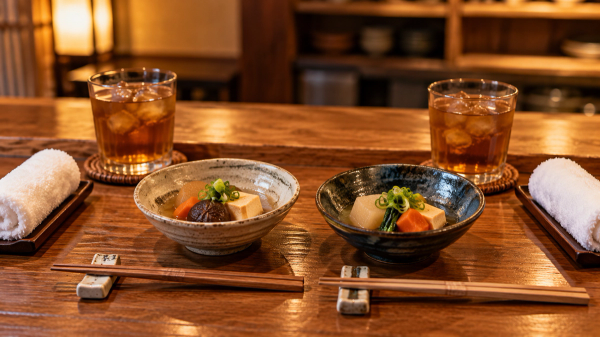
In Japan, I had one of the most beautiful bowls of “vegetable” udon in Kyoto, all clean broth and spring onions and a little mountain of grated ginger. It was perfect. Too perfect, honestly. A few days later I learned more about dashi, that magical Japanese stock often made with kombu seaweed and katsuobushi, which is dried bonito fish. Many vegetable soups, miso soups, dipping sauces, and noodle broths can include bonito unless they are specifically made with kombu-only dashi or marked vegan. I wasn’t angry. I was actually impressed by how much depth that broth had. But yeah, I had to adjust how I asked questions after that.
Thailand taught me another version of the same lesson. I was in Chiang Mai, happily eating stir-fried morning glory and green curry, thinking I had cracked the code because I could say “jay” and point to vegetables. Then a cooking class instructor explained that fish sauce can go into almost everything, and shrimp paste can hide inside curry pastes even when the final dish looks totally plant-based. She said it kindly, not like I was dumb. But I did feel a little dumb, standing there with my mortar and pestle, realizing that my confidence had been built on vibes.
The trick is not to assume people are trying to mislead you. Most of the time, they’re being helpful inside their own food logic. You just have to learn the local logic before you order like a hungry fool.
The label words I now look for, even when I can’t pronounce them
#Supermarkets are my comfort zone abroad. Not because I don’t like restaurants, I do, obviously. But grocery stores let you slow down. You can read, translate, compare, panic quietly, put things back without offending anyone, and buy emergency bananas. I’ve spent ridiculous amounts of time in supermarket aisles in Slovenia, Kyrgyzstan, France, Malaysia, and Spain, turning jars around like I’m solving a crime.
Some ingredients are obvious once you know them. Gelatin is a big one. It shows up in gummy sweets, marshmallows, yogurts, mousse desserts, panna cotta, jelly cups, some cheesecakes, and even a few drinks. It can be written as gelatine, gelatina, gélatine, Gelatine, or E441 in some European-style ingredient lists. I once bought what I thought was a harmless fruit yogurt in a railway station in Austria, only to notice the gelatin line after two bites. That one hurt because the apricot flavor was excellent. Betrayal, but make it creamy.
Rennet is another sneaky little thing, especially with cheese. Many traditional cheeses use animal rennet, which comes from the stomach lining of calves, lambs, or kids. Some cheeses use microbial or vegetarian rennet, and those are usually fine for lacto-vegetarians. But unless a label says “vegetarian rennet,” “microbial rennet,” “non-animal rennet,” or the local equivalent, you may not know. In Italy, I’ve had waiters look at me with genuine confusion when I asked about rennet in parmesan. Parmigiano Reggiano, by its traditional production rules, uses animal rennet. Same with many protected traditional hard cheeses in Europe. Delicious? Yes. Vegetarian? Not for everyone.
- Gelatin or E441 in sweets, desserts, yogurts, capsules, and some sauces
- Animal rennet in traditional cheeses, especially hard aged cheeses
- Lard, pork fat, beef fat, or suet in pastries, beans, tortillas, fries, and pie crusts
- Fish sauce, oyster sauce, shrimp paste, bonito flakes, anchovy paste, and dashi in Asian and Mediterranean cooking
- Carmine, cochineal, or E120, a red coloring made from insects, sometimes in drinks, candy, yogurt, and desserts
- Shellac or E904, used as a glaze on some candies, chocolates, and fruit coatings
Europe is easier and harder than people think
#A lot of travelers assume Europe is simple for vegetarians because supermarkets are organized, menus often have icons, and big cities have vegan cafes with oat flat whites and sourdough everything. And yes, compared to some places, it can be wonderfully easy. EU food labeling rules require certain allergens to be highlighted on packaged foods, including milk, eggs, fish, crustaceans, molluscs, and others. That helps a lot if you’re avoiding dairy or eggs, or trying to spot fish ingredients. But allergen labeling is not the same thing as vegetarian labeling. Chicken stock is not a required allergen. Lard is not a required allergen. Animal rennet may not jump out at you like a bolded allergen.
Spain is a good example. I adore eating in Spain. Give me pan con tomate, patatas bravas, blistered padrón peppers, tortilla española, gazpacho, olives, roasted artichokes, all of it. But then you learn that some “vegetable” dishes may have jamón for seasoning, beans might be cooked with chorizo, and a simple bocadillo can be buttered with lard or share surfaces with meat. Even patatas bravas can come with aioli containing egg, which is okay for some vegetarians but not vegans, and the frying oil situation varies. I once asked about croquetas de setas, mushroom croquettes, and the server proudly said “no meat, only ham stock.” Only ham stock. Bless him, he was trying.
Croatia and Slovenia were actually better for me than I expected, but I still had to keep my eyes open. Bakeries saved me more than once, especially burek-style cheese pastries, but then you have the question of lard in dough or meat stock in soups. If you’re heading that way and you eat like I do, I’d genuinely read something practical beforehand, like Croatia & Slovenia Vegetarian Food for Indians, because supermarket backups and bakery choices are not boring travel details when you are tired and hungry. They are survival.
Asia gave me my best meals and my biggest label confusion
#I don’t like making huge continent-wide statements, because Asia is not one food culture, obviously. But across several trips, I’ve found that some of my most memorable vegetarian meals were in places where the labeling was also the trickiest. India is the dream in one specific way because packaged foods usually carry vegetarian or non-vegetarian symbols, and menus understand vegetarianism as a proper category. You still ask about ghee, eggs, and cross-contact depending on your needs, but the baseline awareness is high. Outside India, though, the same word “vegetarian” can wobble around.
In Vietnam, I had a bowl of vegetarian pho in Hanoi that made me shut up for a full five minutes, which is rare. The broth was mushroomy and warm and fragrant with star anise, and the herbs came in this ridiculous mountain on the side. But I only trusted it because it was at a clearly marked chay restaurant, where Buddhist vegetarian cooking was the whole point. At regular places, nước mắm, fish sauce, is so central that asking for no meat is not enough. The cook may remove chicken and still season with fish sauce because, from their perspective, that’s seasoning, not “fish.”
Malaysia and Singapore are fascinating because you get Indian vegetarian restaurants, Chinese Buddhist vegetarian stalls, Malay food, Peranakan food, and modern vegan spots all smashed into one delicious eating map. But labels can still trip you. A “vegetable” curry puff might have egg wash. A noodle dish might have dried shrimp. A sambal can look innocent and then boom, belacan, shrimp paste. I’ve learned to ask not just “is it vegetarian?” but “no fish sauce, no shrimp paste, no chicken stock?” It feels annoying at first, repeating the whole list, but honestly it saves everyone time.
Meat-heavy countries can still be wonderful, if you plan a little
#Some places have reputations that scare vegetarians before we even arrive. Central Asia, the Balkans, parts of Eastern Europe, Argentina, Georgia if you don’t eat cheese, and so on. And yes, meat is central in many of these cuisines. But central doesn’t mean impossible. It means your best meals may come from side dishes, markets, bakeries, home-style salads, soups you verify carefully, and the one surprisingly great vegetarian cafe you find on day three.
Bishkek surprised me. I expected to live on bread and cucumbers, which honestly I could do for a few days, but it was better than that. There were Korean salads in markets, fresh lepeshka bread, simple potato dishes, lagman-style noodles if you found the right place and asked carefully, and supermarkets where you could build a picnic meal. But broth and meat fat were constant questions. In a meat-forward food culture, “vegetable soup” might mean vegetables cooked in meat broth. If that kind of trip is on your radar, the Bishkek Vegetarian Food Guide for Indian Travelers is the sort of practical thing I wish I’d had open on my phone earlier.
I had a similar experience in Georgia, though Georgia is also wildly generous to vegetarians if you eat dairy. Khachapuri, lobio, ajapsandali, pkhali, walnut sauces, mushrooms baked in clay pans, pickles, breads... I mean, come on. It’s glorious. But even there, you ask about meat stock in beans or soups, and if you avoid animal rennet, the cheese situation gets complicated. I ate so much cheese there that I briefly became 60 percent khachapuri, but I know not every vegetarian would be comfortable with it.
Restaurant menus are not ingredient lists
#This sounds obvious, but I forget it when I’m excited. A menu is a sales document. It tells you the romantic parts. “Wild mushroom risotto with herbs.” Lovely. It may not tell you the stock is chicken stock, the cheese is parmesan, the butter is everywhere, and the garnish is fried in shared oil with calamari. I’m not saying don’t eat out. Please eat out. That is the whole joy of food travel. Just don’t treat a menu description like a legal contract.
In France, I once ordered a lentil salad that seemed perfect. Lentils, walnuts, mustard vinaigrette, herbs. The waiter was charming in that slightly rushed Paris way, and I was feeling smug because I had found something not involving goat cheese. Then the salad arrived with tiny pieces of bacon scattered through it like confetti. When I asked, he said, “Ah yes, lardons, for taste.” For taste! Of course for taste. Everything is for taste. That phrase now lives rent-free in my head.
Italy is another beautiful trap. It can be excellent for vegetarians if you stick to tomato sauces, vegetable antipasti, pizza marinara, bruschetta, ribollita if verified, and seasonal vegetables. But broths, cheeses, and cured meat flavorings creep in. Minestrone may use meat stock. Risotto may use chicken stock. Pesto may contain parmesan made with animal rennet. Even a simple stuffed pasta can hide mortadella or meat broth in the filling. I still love Italy with my whole greedy heart, but I ask more questions there than people expect.
My little label-reading ritual, which is not glamorous but works
#When I land somewhere new, I usually do three things before I get adventurous. First, I learn the local words for meat, fish, chicken, pork, beef, gelatin, stock, and lard. Not a perfect dictionary, just enough to recognize danger words. Second, I search for the local vegetarian or vegan certification logos. In Europe, you’ll often see the V-Label on products, though it depends by country and brand. In the UK, the Vegetarian Society Approved trademark is common on some products. In India, those familiar vegetarian marks on packaged foods make life easier. Third, I buy a few safe backup foods. Bread, fruit, nuts, yogurt if I’m eating dairy, hummus, instant oats, cheese if I trust it, peanut butter, crackers, whatever looks reliable.
This ritual has saved me more times than I can count. In Seoul, it meant I had convenience-store bananas and plain rice balls when I couldn’t confirm if a soup had anchovy broth. In rural Portugal, it meant I had bread, tomatoes, olives, and cheese for a balcony dinner after three restaurants told me the vegetable soup was made with “just a little” meat stock. In Morocco, it meant I could enjoy gorgeous vegetable tagines but still ask whether the couscous broth was meat-based, because sometimes it is.
- Translate the ingredient list, not just the front label. “Plant-based” on the front can still be confusing depending on the country and product category.
- Check the allergy bolding, but don’t stop there. Allergens help with milk, egg, fish, shellfish and so on, but they won’t catch everything vegetarians care about.
- Look for stock words. Broth, bouillon, caldo, fond, consomé, dashi, 육수, бульон, and similar words are where many “vegetable” foods become not-so-vegetarian.
- Be suspicious of shiny candy and red desserts. Not always, obviously, but carmine and shellac pop up in places you don’t expect.
- Ask about frying oil if it matters to you. Fries cooked in beef fat or shared seafood oil are still a thing in some places.
The awkward art of asking without sounding like a food police officer
#This part matters. I used to ask, “Is this vegetarian?” and then feel frustrated when the answer didn’t match my definition. Now I try to ask specific questions in a friendly way. “Does it have chicken stock?” “Is there fish sauce?” “Is the cheese made with animal rennet?” “Is there gelatin?” Specific questions are easier for people to answer. Also, smiling helps. Not in a fake customer-service way, just in a human way. You’re asking someone to pause their busy day and think through a recipe they may not have written.
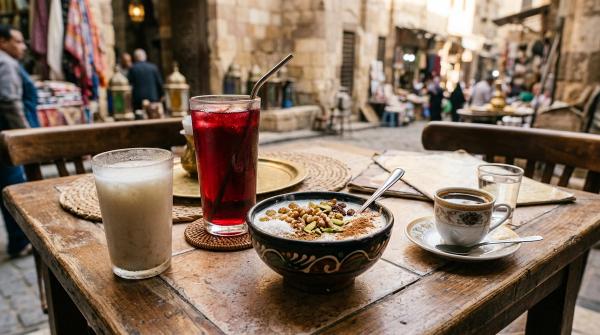
Translation cards are useful too, especially if you’re strict. I have shown cards that say I don’t eat meat, fish, seafood, meat stock, fish sauce, gelatin, or lard. Sometimes people read it and laugh a little, not meanly, more like “wow, you are serious.” Then they help. In Turkey, a lokanta owner walked me down the counter and pointed out which dishes had meat stock and which were safe. I ended up with lentil soup, stuffed vine leaves, beans, rice, and yogurt, and it was one of those meals that looks plain in a photo but tastes like somebody’s auntie loves you.
But you also need to accept uncertainty. I know, not everyone can. Religious, ethical, medical, and personal boundaries differ. For me, if I’ve asked clearly and someone answers clearly, I eat. If they seem unsure, I choose something else. If the place is chaotic and the dish depends on hidden broth, I skip it. Travel already comes with enough stress, and I don’t want every meal to become a courtroom scene.
Hidden ingredients that surprised me the most
#Carmine was one. I knew about gelatin early, but carmine, also called cochineal or E120, caught me out later. It’s a red coloring made from insects, used in some sweets, drinks, yogurts, and desserts. Not every vegetarian avoids insect-derived ingredients, but many do, and it’s definitely not vegan. The first time I noticed E120 on a bright pink yogurt in Spain, I felt like the label had whispered a secret. A gross little secret, but still.
Shellac is another. It’s sometimes listed as E904 and used as a glazing agent on candies, chocolates, and even some shiny fruits. Again, some vegetarians may accept it and some won’t. Food boundaries are personal. But if you’re strict, glossy sweets are worth checking. I had this moment in Berlin where I stood in front of a pick-and-mix candy wall and realized half the fun-looking stuff had either gelatin, beeswax, shellac, or carmine. I bought dark chocolate and sulked for ten minutes. Then the chocolate was good, so I recovered.
Then there’s Worcestershire sauce. It often contains anchovies, though vegetarian versions exist. It can sneak into Bloody Marys, Caesar-style dressings, mushroom dishes, veggie burgers, sauces, and marinades. Caesar salad is another classic trap because the dressing often has anchovy and the cheese may not be vegetarian. I once ordered a “vegetarian Caesar” in an airport lounge, which sounds like a contradiction already, and yes, the dressing had anchovy. Airport food has a special talent for disappointing you in expensive lighting.
Markets are where I feel the most free
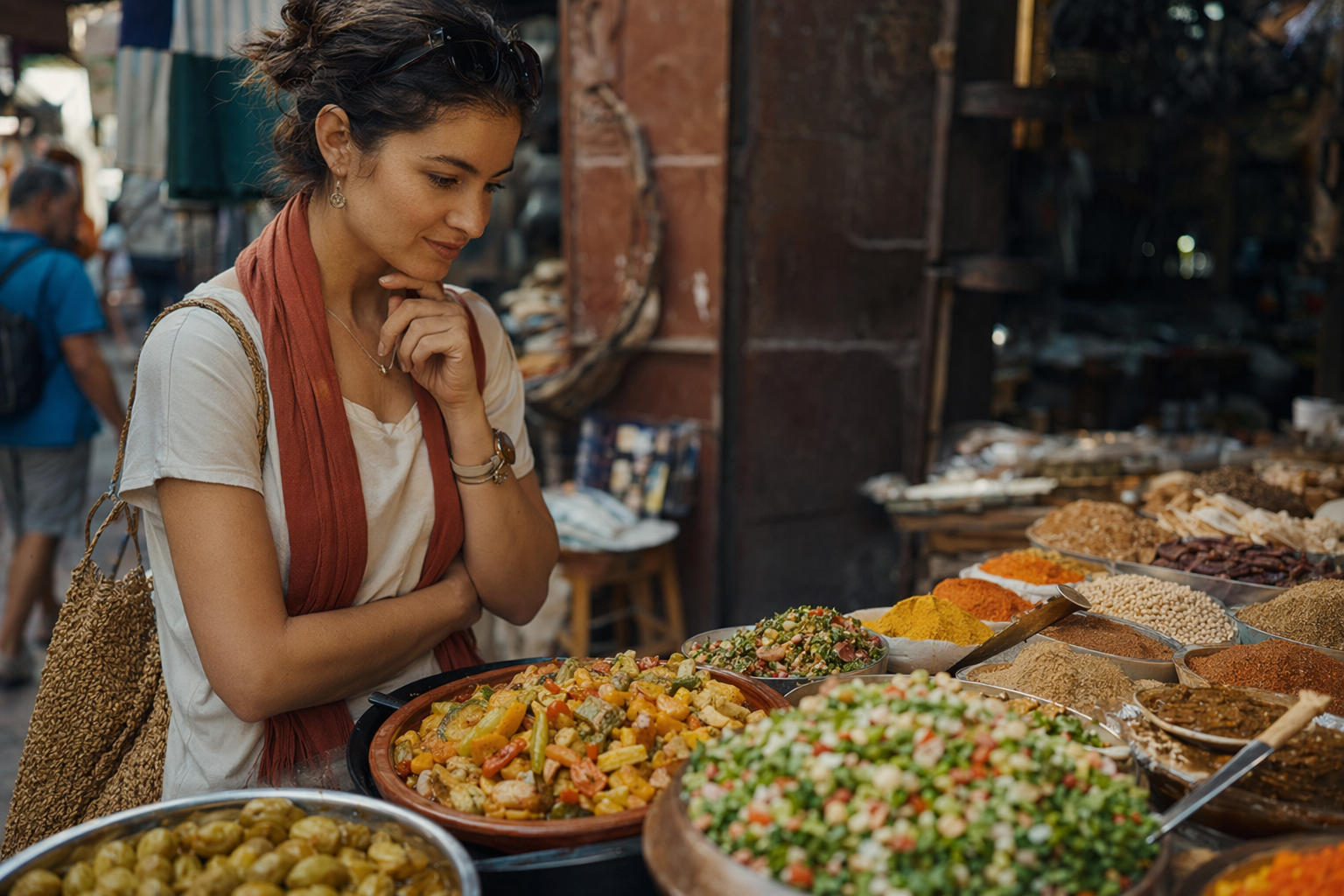
#For all this label anxiety, I don’t want to make vegetarian travel sound like homework with snacks. Some of the best eating happens when you step away from packaged foods entirely and go to markets. Markets are forgiving. You can see piles of tomatoes, herbs, oranges, mushrooms, breads, pickles, nuts, olives, cheeses, spices, and cooked dishes. You can point. You can ask. You can smell things bubbling away. And if all else fails, fruit never lies to you. Well, except durian, emotionally.
One of my happiest food mornings was in Ljubljana, wandering the market with a paper bag of cherries and a cheese pastry, listening to church bells and vendors shouting prices. Another was in Istanbul, eating simit with olives and tea, then later finding mercimek köftesi, those lovely red lentil bulgur patties that are often vegetarian and sometimes vegan. In Mexico City, I built breakfasts from fruit, fresh tortillas, beans I had verified were not cooked with lard, avocado, and salsa. In Greece, I ate tomatoes that tasted like they had been personally blessed by the sun.
Markets also teach you what people actually eat at home. Restaurant menus can overperform tradition, but markets show daily life. Grandmothers buying herbs. Office workers grabbing bread. Kids begging for sweets. Travelers like me hovering awkwardly near the olives, trying not to sample too many. If you love food, this is the good stuff.
When labels are helpful, and when they give false confidence
#Vegetarian and vegan labels are getting more common in many cities, partly because plant-based eating has become trendy, partly because younger travelers ask for it, and partly because restaurants realized we also spend money. I’m not complaining. I love a clear vegan symbol on a menu. I love when a supermarket has a whole plant-based section. I love not having to interrogate a tired waiter about broth at 9 pm.
But I’ve also seen labels used loosely. “Veggie” might just mean vegetables are present. “Plant-based” may refer to a burger patty while the bun has egg or the sauce has dairy. “Meat-free” may still include fish sauce in some contexts, depending on how carefully the company defines it. And “natural flavors” is one of those vague phrases that makes strict vegetarians twitch. In regulated packaged foods, companies have rules to follow, but the front of the package is still marketing. The back is where the truth usually sits, tiny font and all.
The most reliable labels tend to be official or third-party certifications with clear standards, but even then, know whether the symbol means vegetarian or vegan. They are not the same. Vegetarian may allow dairy, eggs, honey, and sometimes processing aids that vegans avoid. Vegan should exclude animal-derived ingredients, though cross-contact statements may still appear. If you have religious requirements, like avoiding alcohol-based flavorings or certain emulsifiers, or if you follow Jain, Buddhist, or other specific dietary rules, you may need to go deeper than the basic veg symbol.
So, what do I actually eat when I’m unsure?
#My emergency meal formula is boring and beautiful: bread plus something creamy, something crunchy, something fresh, and something salty. Bread with hummus, cucumbers, tomatoes, olives. Rice with tofu and vegetables if I can confirm the sauce. Yogurt with fruit and nuts. Instant noodles only if the seasoning is safe, and if not, I use the noodles with my own sauce. Peanut butter has saved me in more countries than my passport has.
In restaurants, I lean toward cuisines and dishes that are naturally vegetarian or have clear vegetarian traditions. South Indian dosas and thalis, Middle Eastern mezze, Ethiopian shiro and misir wot if clarified, Italian marinara pizza, Turkish lentil dishes, Georgian bean dishes, Thai jay restaurants, Vietnamese chay places, Buddhist vegetarian restaurants in East and Southeast Asia, and modern vegan cafes when I need a mental break. I used to feel like going to a vegan cafe abroad was “cheating” because I wasn’t eating the most local thing. Now I think that’s silly. Vegan cooks live there too. Their food is part of the city.
Also, sometimes you just need to eat without making it a cultural thesis. A supermarket dinner in a hotel room can be weirdly joyful. I’ve had excellent bed-picnics with cherry tomatoes, chips, local cheese, dark bread, pickles, and a mystery dessert that passed the label test. Maybe not glamorous, but travel is not always candlelit dinners and perfect street food shots. Sometimes it’s you in socks, watching foreign game shows, eating olives from a plastic tub. Honestly? Gorgeous.
My final advice, from one hungry traveler to another
#If you’re vegetarian and traveling abroad, don’t let hidden ingredients scare you out of tasting the world. Let them make you sharper. Learn a few words. Ask better questions. Use supermarkets as research labs. Trust restaurants that understand the details. Be patient with people who don’t. Carry snacks, because hunger makes everyone dramatic. And decide your own comfort level before you go, not while you’re dizzy with jet lag in front of a soup pot.
The funny thing is, being vegetarian has made me pay closer attention to food than I probably would have otherwise. I notice broths, fats, sauces, labels, markets, cooking traditions, and the way people explain their food. I’ve had awkward moments, yes, and a few meals where I ate fries and called it dinner. But I’ve also had lentils in Turkey, chay pho in Vietnam, walnut-stuffed eggplant in Georgia, dosa breakfasts in Singapore, and tomato salads in Greece that I still think about when I’m supposed to be doing normal life stuff.
So read the labels, but don’t forget to look up from them. The whole point is still the journey, the smells from the bakery, the auntie stirring a pot, the market cherries, the accidental picnic by the train station. That’s the part I keep chasing. And if you’re into these messy, delicious food-travel rabbit holes, you’ll probably enjoy poking around AllBlogs.in too, because honestly, half the fun is planning the next meal before you’ve even finished this one.