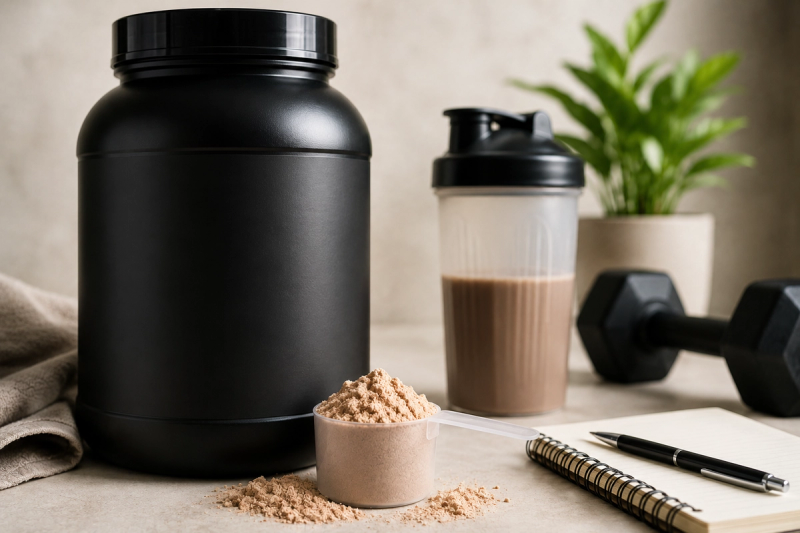
Before you buy a tub of whey protein, don’t just look at the big “24g protein” on the front. Flip the tub around and check the label properly.
Here’s the quick version: compare the protein grams with the scoop size, check whether it’s whey concentrate, isolate, or hydrolyzed whey, look at sugar and sweeteners, read the allergen warnings, and see whether the product has third-party testing.
The front label is designed to grab your attention. The back label is where the real story is.
Short Answer: Quick Whey Protein Label Checklist
#If you’re standing in a store or comparing whey protein powders online, check these first:
- Protein per serving vs scoop size: Divide protein grams by scoop size. For example, 24g protein in a 30g scoop is 80% protein. But 24g protein in a 40g scoop is only 60%.
- First ingredient: It should clearly say whey protein concentrate, whey protein isolate, hydrolyzed whey, or a whey blend.
- Type of whey: Concentrate is usually cheaper. Isolate is more filtered and often lower in lactose. Hydrolyzed whey is usually more expensive, and most beginners don’t need it.
- Sugar and sweeteners: Look for added sugar, maltodextrin, corn syrup solids, sucralose, Ace-K, stevia, or monk fruit.
- Allergens and lactose: Whey comes from milk, so check milk warnings, soy lecithin, sunflower lecithin, and “may contain” statements.
- Third-party testing: Look for NSF Certified for Sport, Informed Sport, or Informed Choice if you want extra confidence.
Buying whey protein should be simple. Somehow, it often ends up feeling like you’re reading a tiny legal document on the back of a plastic tub.
Every product sounds amazing. One says “premium.” Another says “lean.” Another has “24g protein” printed so large you can see it from across the store.
But those words don’t always tell you what you’re actually buying.
This guide is for beginners, gym starters, students, busy people, budget-conscious buyers, and anyone who wants a normal, practical way to read a whey protein label without getting confused by marketing.
No brand ranking. No “best protein ever” list. Just a checklist you can use anywhere.
Who Should Buy Whey Protein, and Who Should Avoid It?
#Whey protein is a supplement. That means it can help, but it is not something everyone must take.
Who should consider whey protein?
#Beginners who struggle to eat enough proteinIf your meals are usually low in protein, whey can help you fill the gap.
People with busy schedulesSometimes cooking a high-protein meal is not realistic. A scoop of whey is quick, which is why students, office workers, gym beginners, and travelers often use it.
People who train regularlyIf you work out and want a convenient protein source after training or during the day, whey can fit easily into your routine.
Budget-conscious shoppersDepending on food prices where you live, whey can be a decent value. But only if you actually check what’s inside the tub.
Who should avoid whey protein?
#People with a milk or dairy allergyWhey comes from milk. If you have a dairy allergy, whey is not safe unless your doctor has clearly told you otherwise.
People who don’t tolerate lactose wellWhey isolate is often lower in lactose than concentrate, but that doesn’t mean every product will suit every person.
People with kidney conditions or medical diet restrictionsIf you’ve been told to control your protein intake, speak with a qualified healthcare professional before using protein supplements.
People already eating enough protein from foodIf your regular diet already gives you enough protein, you may not need whey at all. Food first is still a perfectly good approach.
Step 1: Check Protein per Serving vs Scoop Size
#This is one of the most useful things you can learn before buying whey protein.
Most people see “24g protein” and think, great, that’s good enough.
But 24g protein can mean very different things depending on the size of the scoop.
Look for these two numbers on the label:
- Serving size, usually shown as one scoop in grams
- Protein, shown in grams
Then use this simple formula:
Protein grams ÷ scoop size grams = protein percentage
Example A
#- Protein: 24g
- Scoop size: 30g
24 ÷ 30 = 0.80
That means the powder is about 80% protein by weight.
Example B
#- Protein: 24g
- Scoop size: 40g
24 ÷ 40 = 0.60
That means the powder is about 60% protein by weight.
Both tubs can say “24g protein,” but they are not equal.
In the second example, more of each scoop is made up of other things: carbs, fats, flavors, thickeners, sweeteners, or fillers.
What is a good protein percentage?
#As a simple beginner benchmark:
- 70% to 80% protein by weight is common for many decent whey concentrates.
- Around 90% or more is more typical for whey isolate.
- Much lower than that deserves a closer look, especially if the product is priced like a premium powder.
This one calculation can save you money and help you compare products fairly.
Step 2: Read the First Ingredient
#Ingredients are listed from highest amount to lowest amount. So the first ingredient matters a lot.
For a basic whey protein powder, the first ingredient should usually be one of these:
- Whey protein concentrate
- Whey protein isolate
- Hydrolyzed whey protein
- Whey protein hydrolysate
- A whey blend that clearly lists concentrate, isolate, or hydrolysate
If the first ingredient is something else, slow down and read the full label.
Some products look like protein powders but are actually loaded with extra carbs, flavoring, creamers, or other ingredients you may not want.
This is also where you start to understand the difference between whey concentrate vs isolate, which can affect price, digestion, lactose content, texture, and protein percentage.
Step 3: Understand Whey Concentrate vs Isolate vs Hydrolyzed Whey
#You do not need to buy the most expensive whey just because it sounds more advanced.
Each type has a purpose.
1. Whey Protein Concentrate, WPC
#What it is:Whey concentrate is one of the most common forms of whey protein. It is processed less than isolate and usually keeps more natural milk components, including some lactose and fat.
Typical protein yield:Often around 70% to 80%, depending on the product.
Best for:Most beginners who tolerate dairy and want an everyday protein powder without paying extra for more filtration.
What to check:Concentrate can contain more lactose than isolate. If milk often upsets your stomach, pay attention to this.
Also check the protein percentage. Some whey concentrates are good value. Others are not.
You may also see regional or local brands in your market. For example, people in India may search for “Amul whey protein.” The same checklist still applies. Don’t buy only because the brand feels familiar. Check the scoop size, protein grams, ingredients, and testing information.
2. Whey Protein Isolate, WPI
#What it is:Whey isolate is filtered more than concentrate. This usually removes more lactose and fat.
Typical protein yield:Often around 90% or higher.
Best for:People who want more protein per scoop, lower lactose, or fewer extra carbs and fats.
What to check:Isolate usually costs more. That does not automatically make it better for everyone.
If you digest concentrate well and you’re not following very strict macros, isolate may not be necessary.
3. Hydrolyzed Whey, Whey Hydrolysate
#What it is:Hydrolyzed whey has been partially broken down using enzymes.
Typical protein yield:Often around 80% to 90%, depending on the product.
Best for:People with specific digestion needs or sports-use preferences. For most beginners, it is usually not the first option to buy.
What to check:Hydrolyzed whey can be more expensive and sometimes tastes slightly bitter. Don’t assume it is worth the extra money unless you have a clear reason for choosing it.
Step 4: Scan the Ingredient List for Fillers and Extras
#A short ingredient list does not automatically mean a product is perfect, but it is usually easier to understand.
As a practical beginner rule, you may want to start with powders that have fewer than 12 ingredients.
Unflavored whey usually has the shortest list. Flavored whey naturally has more ingredients because it needs taste, sweetness, and texture.
A simple unflavored whey may contain:
- Whey protein concentrate or isolate
- Lecithin for mixability, usually soy lecithin or sunflower lecithin
A flavored whey may also include:
- Cocoa powder
- Natural or artificial flavors
- Sweeteners
- Thickeners or stabilizers
- Salt
- Coloring agents
These ingredients are not automatically bad. The point is to know what you’re paying for.
If the ingredient list is very long, vague, or hard to understand, compare it with a simpler option before buying.
Step 5: Watch for Amino Spiking
#Amino spiking, sometimes called nitrogen spiking, is worth knowing about.
Here’s the simple version: protein content can be estimated through nitrogen testing. Some companies may add cheaper nitrogen-containing ingredients or individual amino acids to make the protein number look better than it really is.
Ingredients to notice include:
- Glycine
- Taurine
- Added glutamine
- Added creatine
These ingredients are not automatically harmful. Creatine, for example, can be useful for many people.
The issue is transparency.
If a label says 24g protein and also lists extra amino acids or creatine, ask yourself:
Is the label clearly separating these added ingredients from the protein amount, or is it making the powder look more protein-rich than it actually is?
For beginners, the safer choice is usually a product where the main protein clearly comes from whey, not from a confusing mix of add-ons.
Step 6: Check Sugar and Sweeteners
#This is where some “healthy-looking” protein powders become less impressive.
Check both the nutrition panel and the ingredient list.
Added sugar
#Look for added sugar, especially if you plan to use whey every day.
Some powders keep sugar low. Others, especially mass gainer-style products, can include more carbohydrate-heavy ingredients.
Watch for names like:
- Sugar
- Corn syrup solids
- Maltodextrin
Maltodextrin is common in some powders, especially higher-calorie products. It is not automatically bad, but if you’re buying whey mainly for protein, you should know whether your scoop contains a lot more than protein.
Artificial sweeteners
#Common sweeteners include:
- Sucralose
- Acesulfame potassium, also called Ace-K
These help keep calories and sugar low. Some people are completely fine with them. Others dislike the taste or feel they affect digestion.
“Natural” sweeteners
#You may also see:
- Stevia
- Monk fruit extract
These are often used in products marketed as cleaner or more natural. They still have a taste, and not everyone likes that taste.
Unflavored whey
#Unflavored whey is usually the simplest option.
You can mix it into:
- Milk
- Smoothies
- Oats
- Curd or yogurt
- Pancakes
- Other recipes
The trade-off is flavor. Plain whey can taste milky and a little bland, so it depends on what you prefer.
Step 7: Check Allergens and Lactose
#This part matters, so don’t skip it.
Whey comes from milk, so whey protein usually has a milk allergen warning.
If you have a dairy allergy
#Avoid whey unless a qualified healthcare professional has told you otherwise.
Whey is not dairy-free.
If you are lactose sensitive
#Check the whey type:
- Whey concentrate usually has more lactose.
- Whey isolate is usually more filtered and often lower in lactose.
- Hydrolyzed whey varies by product.
This does not mean isolate is safe for everyone with lactose issues. It just means the label can help you choose more carefully.
Check the lecithin source
#Many whey powders use lecithin to help the powder mix better. You may see:
- Soy lecithin
- Sunflower lecithin
The amount is usually small, but if you avoid soy or have a soy allergy, check this line.
Check “may contain” warnings
#Some factories handle other allergens too.
Look for warnings like:
- May contain soy
- May contain nuts
- Processed in a facility that also handles eggs, peanuts, or tree nuts
These warnings matter more if you have allergies.
Step 8: Look for Third-Party Testing and Certifications
#A third-party tested protein powder gives you an extra layer of confidence.
Supplements are not always checked the same way medicines are, and rules vary by country. A third-party certification means an outside program has tested or reviewed the product against its own standards.
Look for labels such as:
- NSF Certified for Sport
- Informed Sport
- Informed Choice
These are especially useful for athletes who need screening for banned substances. They can also help regular buyers feel more confident about label accuracy.
That said, no badge is magic.
Certification standards differ. Some brands test batches but may not print a big badge on the front. Others may share lab reports through QR codes or websites.
What beginners should do
#If you’re new and unsure, choosing a product with a recognized third-party testing mark is a sensible shortcut.
If there is no certification, it does not automatically mean the powder is bad. But you should then rely more on ingredient clarity, brand transparency, and label details.
Step 9: Compare Cost the Smart Way
#Don’t compare whey protein only by tub size or total price.
A big tub can still be poor value if each scoop has less protein. A smaller tub can be better value if the protein percentage is higher.
Use these checks:
- Protein grams per serving
- Scoop size
- Number of servings
- Total protein in the tub
- Ingredient quality and testing
For example, two tubs may both be 1 kg.
But if one has a 30g scoop with 24g protein and another has a 40g scoop with 24g protein, the first one gives you more protein per gram of powder.
That is why the protein percentage calculation is so useful.
It helps you compare what you’re actually getting, not just what the front label is shouting at you.
Step 10: Be Careful With Marketing Claims
#Whey labels love big words.
Some sound impressive, but they don’t always mean much.
Be careful with phrases like:
- Premium
- Ultra clean
- Lean muscle
- Advanced formula
- Fast-absorbing
- Gym grade
- Imported quality
These words may be legal marketing language, but they do not replace the label checklist.
Instead, ask:
- How much protein is in each scoop?
- What is the scoop size?
- What type of whey is used?
- How much sugar is included?
- Are there allergens I need to avoid?
- Is there third-party testing?
- Is the ingredient list clear?
That is how you read a whey protein label without getting pulled into the hype.
Quick Travel Note: Can We Carry Protein Powder in Flight?
#Many beginners ask this after buying a tub: can we carry protein powder in flight?
In general, protein powder can often be packed in checked luggage or carry-on bags, but airport, airline, and country rules can vary.
Powders in carry-on luggage may be inspected during security screening.
To make travel easier:
- Keep the powder in its original labeled packaging when possible.
- If carrying a smaller amount, use a clear and clearly labeled container or bag.
- Check your airline and airport rules before international travel.
This is not exactly a whey label issue, but it is useful to know once you start using protein powder regularly.
Beginner-Friendly Whey Protein Label Checklist
#Use this before buying any whey powder.
Basic label checks
#- Protein per serving is clearly listed.
- Scoop size in grams is clearly listed.
- Protein percentage is around 70% to 80% or higher for many whey products.
- First ingredient is whey concentrate, whey isolate, or hydrolyzed whey.
- The whey type matches your budget and digestion needs.
Ingredient checks
#- Ingredient list is understandable.
- Sugar is not higher than you expected.
- Sweetener type suits your preference.
- No confusing amino acid blend is inflating the label.
- Lecithin source is acceptable for you.
Allergen checks
#- Milk allergen warning is noted.
- Soy lecithin or sunflower lecithin is checked.
- “May contain” warnings are reviewed.
- Lactose tolerance is considered.
Trust checks
#- Third-party testing badge is present, if that matters to you.
- NSF Certified for Sport, Informed Sport, or Informed Choice is checked.
- Batch testing or lab report information is reviewed if available.
- Marketing claims are not your main reason for buying.
Final Takeaway
#A good whey protein purchase starts with the back label, not the front design.
Use the same simple checks every time:
- Compare protein per serving with scoop size.
- Identify the type of whey.
- Review sugar and sweeteners.
- Check allergens and lactose.
- Look for third-party testing if you want extra confidence.
For most beginners, the best choice is not the loudest tub or the most expensive one.
It is the powder with clear protein math, understandable ingredients, the right whey type for your needs, and no confusing claims.