“Wait… can vegetarians actually eat in Yerevan?”
If you’re planning a trip to Armenia and don’t eat meat, this question has probably crossed your mind. It’s understandable. From the outside, Armenian food can seem very meat-focused. Khorovats, the famous Armenian barbecue, is a big part of the food culture, and many traditional restaurant menus are full of grilled meat, stews, and dairy-heavy dishes.
But that’s only part of the story.
Yerevan is very doable as a vegetarian. You are not going to spend your whole trip sadly eating plain bread while everyone else has a feast. Unless you want to eat bread constantly, which, honestly, in Armenia would not be the worst fate.
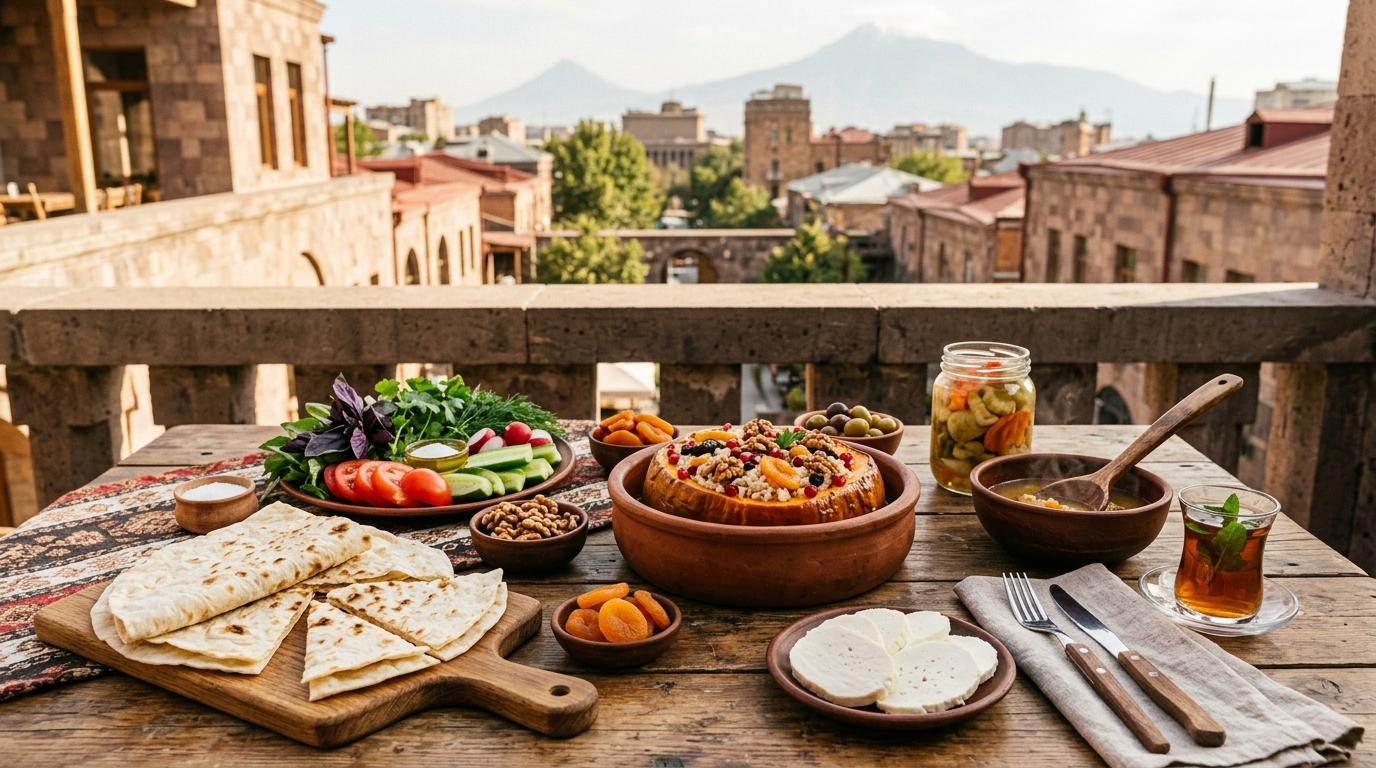
The city has fresh herbs, vegetables, beans, grains, pumpkin, walnuts, dried fruit, soft lavash, simple bakeries, market produce, cafes, falafel shops, and enough vegetarian-friendly Armenian dishes to keep things interesting.
The trick is knowing what to order, what to double-check, and where to go when you’re tired, hungry, or trying to save money.
So, can vegetarians eat well in Yerevan?
#Yes. Yerevan is probably the easiest place in Armenia for vegetarian travelers.
Here’s the quick version:
- Armenian food can be meat-heavy, especially in traditional restaurants.
- Yerevan still has plenty of vegetarian options, from local dishes to cafes, bakeries, falafel places, markets, and supermarkets.
- You do not need to rely only on Indian restaurants, although they are very useful when you want an easy meal.
- The main thing to watch for is hidden meat, especially meat broth in soups, rice, beans, sauces, and stews.
- Eating vegetarian on a budget is easy if you use bakeries, markets, supermarkets, and casual cafes.
If you eat dairy and eggs, you’ll have a much easier time. If you’re vegan or very strict about hidden animal products, you’ll just need to ask a few more questions.
Vegetarian Armenian dishes worth trying
#Armenian food is not really about meat substitutes or fake meat. The best vegetarian meals are usually dishes that were already meat-free to begin with: fresh bread, herbs, grains, beans, pumpkin, nuts, dried fruit, and seasonal vegetables.
Here are a few dishes and staples to look out for.
Ghapama
#Ghapama is one of the best Armenian dishes for vegetarians.
It’s a whole pumpkin stuffed with rice, dried fruits, nuts, and spices. Depending on who makes it, the filling might include apricots, raisins, prunes, walnuts, honey, cinnamon, or other sweet and fragrant ingredients.
It feels festive, generous, and very Armenian. It’s not something you’ll necessarily find on every menu every day, but if you see it, ask about it.
If you’re vegan, check whether it contains butter or honey. Some versions do.
Lavash
#Lavash is the Armenian flatbread you’ll see everywhere.
It’s thin, soft, flexible, and usually served with meals or used as a wrap. Fresh lavash can make even the simplest food feel like a proper meal.
Get some lavash, add cheese if you eat dairy, fresh herbs, tomatoes, cucumbers, walnuts, pickles, or a dip, and you’ve got an easy vegetarian lunch.
It’s also one of the best budget foods in Yerevan. Simple, cheap, and genuinely good.
If you’re vegan, lavash is often fine, but ask if you want to be sure.
Jengyalov hac
#Jengyalov hac is a flatbread stuffed with finely chopped herbs and greens. It’s originally associated with Artsakh, and it’s one of the best things a vegetarian can eat in Armenia.
It’s filling, local, flavorful, and completely its own thing. Not a compromise meal. Not “the vegetarian option” in a sad corner of the menu. Just a great dish.
The greens inside vary depending on the season and the cook. It’s usually plant-based, but vegans should ask whether it’s brushed with butter or served with any dairy.
Vegetable dishes, beans, and local sides
#Even in restaurants where grilled meat takes up most of the menu, you can often find dishes based on eggplant, beans, lentils, potatoes, mushrooms, herbs, rice, and seasonal vegetables.
That said, don’t judge only by the name of the dish.
A bean dish, soup, or rice pilaf might look vegetarian but still be cooked with meat broth or animal fat. This is the main thing to check in Armenia.
The food may look meat-free. The cooking liquid may not be.
Where to find vegetarian food in Yerevan
#Yerevan has a good mix of traditional Armenian restaurants, modern cafes, bakeries, casual lunch spots, falafel places, and some vegetarian or vegan-friendly restaurants.
It’s not Berlin or London in terms of plant-based choice, but it’s much easier than many people expect. Central Yerevan is especially manageable.
Just check current opening hours and menus before you go, because restaurants do change.
Traditional Armenian restaurants
#Traditional restaurants are where you can try the most local food, but they’re also where you need to ask the most questions.
Look for:
- ghapama
- lavash
- jengyalov hac
- vegetable dishes
- salads
- bean dishes
- rice dishes
- mushrooms
- potatoes
- pickles and herbs
Then ask how they’re cooked.
This is the place to check for meat broth, meat stock, and animal fat. A “vegetable soup” may still be made with meat broth. A rice dish may be cooked in stock. Beans may not be as vegetarian as they look.
It’s annoying, yes, but it’s manageable. Ask clearly and politely, and don’t assume.
Vegetarian and vegan-friendly cafes
#Yerevan has cafes and restaurants with vegetarian and vegan options, and these are a relief when you want to eat without asking five questions about every dish.
Search recent listings and reviews for:
- vegetarian cafe Yerevan
- vegan cafe Yerevan
- plant-based Yerevan
- jengyalov hac Yerevan
- falafel Yerevan
When you find somewhere promising, check whether it’s fully vegetarian, fully vegan, or just vegetarian-friendly. That difference matters if you avoid cross-contamination, dairy, eggs, or hidden animal products.
Bakeries
#Bakeries are one of the best cheap backups in Yerevan.
Fresh lavash is the obvious choice, but you’ll also find other breads, pastries, and simple baked goods. Some will contain butter, eggs, milk, or cheese, so ask if that matters to you.
If you’re vegetarian but not vegan, bakeries make breakfast and picnic meals very easy.
A very normal and very good Yerevan meal could be:
- fresh bread
- tomatoes
- cucumbers
- herbs
- cheese
- fruit
- walnuts
Nothing fancy. Still excellent.
Falafel and Middle Eastern casual spots
#Falafel is a reliable vegetarian fallback in Yerevan.
It’s filling, usually affordable, and easy to grab between sightseeing stops. It’s especially useful when you don’t want a full sit-down meal or you’re eating with people who all want different things.
If you’re vegan, ask about sauces. Some contain yogurt or mayo. If shared fryers matter to you, ask about that too.
Indian restaurants
#Indian restaurants are very useful for vegetarians in Yerevan. Sometimes you just want to open a menu and immediately see several things you can eat without negotiating with the kitchen.
Use Indian restaurants for comfort food, an easy dinner, or those evenings when you’re too tired to ask about broth for the tenth time.
But you don’t have to make them your whole plan. Yerevan has enough local vegetarian-friendly food that you can still feel like you’re eating in Armenia.
Hidden meat: what to ask before ordering
#This is the most important part of eating vegetarian in Armenia.
In some places, a dish may be considered “vegetable” because the main ingredient is vegetables, even if it has been cooked with meat broth, meat stock, or animal fat.
That doesn’t mean anyone is trying to trick you. It just means vegetarian rules are not always assumed in the same way.
Ask clearly before ordering.
1. Is it made with meat broth?
#Ask this for:
- soups
- lentil dishes
- bean dishes
- rice pilaf
- stews
- sauces
A useful question is:
“Is this cooked with meat broth or with water?”
If the server isn’t sure, ask if they can check with the kitchen.
2. Is there meat stock in the rice or beans?
#Rice and beans can look completely safe, but they may be cooked in stock for flavor.
This is one of the easiest hidden meat situations to miss, so ask directly, especially in traditional restaurants.
3. Are the vegetables cooked in animal fat?
#Potatoes, mushrooms, roasted vegetables, and fried items may be cooked with butter, oil, or animal fat.
If you eat dairy, butter may be fine. If you’re vegan, ask for vegetable oil. If you’re a strict vegetarian, it’s worth confirming they are not using animal fat.
4. What is in the sauce?
#Sauces can contain broth, yogurt, egg, or other ingredients you might avoid.
Sometimes the main dish is fine, but the sauce is not. If sauce comes on the side, you can always ask to skip it.
5. Can they make it without meat?
#Some restaurants can adjust dishes. Others can’t, especially if the broth, sauce, or filling was prepared earlier.
It’s always worth asking, but don’t be surprised if the answer is no. That’s normal.
Useful phrases and communication tips
#You don’t need to speak Armenian perfectly to eat vegetarian in Yerevan. In central areas, many restaurants have English menus or staff who speak some English.
Still, it helps to keep things simple.
You can say:
- “I am vegetarian. I do not eat meat.”
- “Does this have meat broth?”
- “Is this cooked with meat or animal fat?”
- “Can you make it without meat?”
- “Is this vegan?” if you avoid all animal products.
A translation app is very helpful. Type the sentence, show it on your phone, and ask the server to confirm with the kitchen if needed.
Also, remember that “no meat” may not automatically include broth. Mention broth separately. It feels repetitive, but it can save your meal.
Supermarket and market backups
#One of the easiest ways to eat well in Yerevan, especially on a budget, is to stop expecting every meal to be a restaurant meal.
Markets and supermarkets are your friends. They’re useful for breakfasts, day trips, late-night snacks, and those days when you just don’t feel like dealing with another menu.
What to buy at markets
#Local markets are great for simple vegetarian meals. Look for:
- tomatoes
- cucumbers
- fresh herbs
- seasonal fruit
- walnuts
- dried apricots
- bread
- cheese, if you eat dairy
This is perfect for breakfast, lunch, or a picnic-style dinner. Armenian produce can be one of the best parts of the trip, and you don’t need to cook much to enjoy it.
What to buy at supermarkets
#Supermarkets are useful for predictable basics.
Good vegetarian backups include:
- canned beans
- lentils or other pulses, if you have a kitchen
- pasta
- rice
- hummus or dips, when available
- yogurt or cheese, if you eat dairy
- fruit
- nuts
- bread
- snacks for long sightseeing days
If you’re vegan, check labels carefully. Dairy and eggs can show up in baked goods, sauces, and packaged snacks where you might not expect them.
A simple budget strategy for vegetarians in Yerevan
#Yerevan can be very manageable for budget-conscious vegetarian travelers if you mix things up.
You don’t need to eat every meal in a restaurant. You also don’t need to survive on snacks. A little planning goes a long way.
Breakfast: bakery or supermarket
#Start the day with bread, fruit, yogurt if you eat dairy, nuts, or something simple from a bakery.
It’s quick, cheap, and you don’t have to begin your morning by studying a menu.
Lunch: cafe, falafel, or market picnic
#Keep lunch casual.
Good options include:
- falafel
- jengyalov hac
- lavash with market produce
- a simple cafe meal
- bread, cheese, herbs, and fruit
This keeps costs down and gives you more flexibility during the day.
Dinner: Armenian restaurant meal
#Use dinner for a proper Armenian meal.
Try ghapama if you find it, jengyalov hac, vegetable dishes, salads, beans, lavash, and local sides.
Ask about broth, stock, and cooking fat first. Once you’ve checked, relax and enjoy your meal.
Keep emergency snacks with you
#Carry something small in your bag:
- nuts
- dried fruit
- fresh fruit
- bread
- a supermarket snack
This is especially useful if you’re traveling with non-vegetarians and end up somewhere with limited options. It also helps prevent that very specific travel hunger where you suddenly make terrible food decisions because you waited too long to eat.
We’ve all been there.
What a vegetarian day in Yerevan could look like
#A normal vegetarian food day in Yerevan might look something like this:
- Morning: Bread or pastry from a bakery, fruit, coffee, and yogurt if you eat dairy.
- Lunch: Jengyalov hac or falafel, maybe with fresh juice or coffee.
- Snack: Dried apricots, walnuts, fruit, or something from a supermarket.
- Dinner: Traditional Armenian restaurant with lavash, vegetable dishes, and ghapama if available.
- Before ordering: Ask about meat broth, stock, and cooking fat.
That’s a full day of vegetarian eating in Yerevan without needing to default to Indian food, unless you’re craving it.
Final tips for eating vegetarian in Yerevan
#Yerevan is not a city where every menu is carefully labeled with vegetarian and vegan symbols. You will need to ask questions sometimes.
But it’s also not a city where vegetarians need to struggle.
Go in with realistic expectations. Armenian cuisine does include a lot of meat, but it also has beautiful vegetarian-friendly ingredients: lavash, herbs, pumpkin, rice, beans, nuts, dried fruit, fresh vegetables, pickles, and seasonal produce.
Ask about broth. Check the cooking fat. Don’t forget that rice and beans can contain meat stock. Use bakeries and markets when you want cheap, easy meals. Keep Indian restaurants as a backup, not your entire food plan.
Do that, and Yerevan becomes a much easier, warmer, and tastier city for vegetarian travelers.