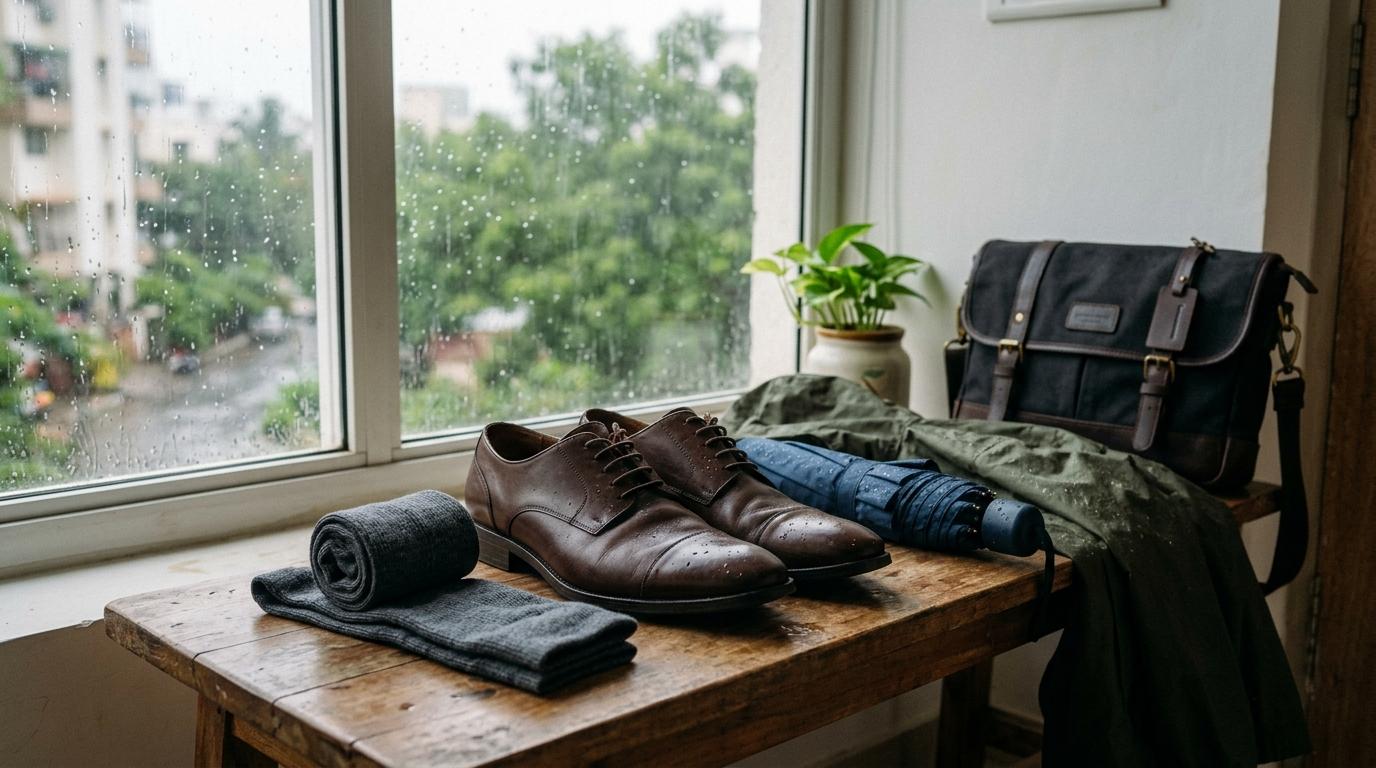
If you’re buying socks for the Indian monsoon, here’s the simple answer: choose quick-dry socks for monsoon commutes over pure cotton.
Cotton socks feel soft and comfortable when they’re dry. But the moment they get wet — from rain, puddles, sweat, or damp shoes — they stay wet for hours. That’s when your feet start feeling sticky, cold, and uncomfortable. And yes, that rainy-season sock smell usually follows.
For daily office travel, college, buses, trains, metros, scooter rides, and those unavoidable walks through puddles, synthetic quick-dry socks are usually the better choice. If your bigger problem is sweaty feet rather than rainwater, bamboo or modal blends can also work well.
Quick Summary
#- Heavy rain commute: synthetic quick-dry socks, usually polyester or nylon blends.
- Sweaty feet in humid weather: bamboo or modal blends.
- Long travel or trekking: lightweight merino blends.
- Dry indoor use: cotton socks.
- Wet shoes, puddles, office commute: avoid thick 100% cotton.
Main takeaway: In the cotton vs quick-dry socks debate, quick-dry socks are better for monsoon commuting because they handle moisture better and dry faster.
Who this is for: Office commuters, college students, bus, train and metro travelers, monsoon backpackers, scooter riders, and anyone who is tired of wet shoes, sweaty feet, and smelly socks during the rains.
Why Cotton Socks Become Annoying in the Monsoon
#Cotton socks are not bad. In fact, most of us have used them for years. They’re soft, easy to find, usually affordable, and perfectly comfortable on dry days.
The problem starts when you add Indian monsoon weather into the mix.
During the rains, your socks are dealing with more than just sweat. There’s rainwater, muddy splashes, humid air, damp shoes, and heat trapped inside closed footwear. Cotton absorbs all of this like a sponge.
And once cotton gets wet, it doesn’t dry quickly — especially when it’s inside a shoe with barely any airflow.
That’s how a normal 30-minute commute turns into a full-day problem. You reach office or college with damp socks. Your feet feel sticky. Your shoes start smelling. By evening, everything feels worse.
This is exactly where quick-dry socks for monsoon make more sense. They don’t hold on to moisture the way cotton does. Instead, they help move sweat and dampness away from your skin, so your feet feel less miserable through the day.
What to Check Before Buying Monsoon Socks
#Don’t just buy the first pack that says “sports,” “breathable,” or “all-day comfort.” These words are everywhere, but they don’t always mean the socks are good for rainy-season use.
Before buying, check the label or product page properly.
1. Fabric Blend
#Good monsoon socks are usually made from a blend of materials. Pure cotton is not ideal if your shoes get wet often.
Look for materials like:
- Polyester
- Nylon
- Bamboo viscose
- Modal
- Lightweight merino blends
- Spandex, elastane, or Lycra for stretch
That little bit of stretch matters more than you think. Wet socks that lose shape can slip, fold, bunch up, and rub against your skin. And once that happens during a commute, it becomes irritating very quickly.
2. Moisture-Wicking, Not Just “Breathable”
#“Breathable” sounds nice, but it doesn’t always mean the sock will dry fast.
For the monsoon, look for words like:
- Moisture-wicking
- Quick-dry
- Sweat-wicking
- Performance fabric
- Sports socks
- Running socks
These are better signs than only “soft cotton” or “premium comfort.” A sock can be soft and still be terrible once wet.
3. Thickness
#Thick socks feel comfortable when you first wear them. But during the monsoon, they can become a problem.
Thicker socks hold more water, take longer to dry, and can make your feet feel hotter inside closed shoes.
For daily commutes, choose:
- Thin socks for formal or office shoes
- Light to medium cushioning for walking
- Avoid very thick gym-style socks if your shoes get wet often
A thin quick-dry sock is usually more useful in the rains than a thick cotton sock.
4. Fit and Grip
#Loose socks are irritating in any season. In the monsoon, they’re worse because damp fabric moves around more easily.
Look for:
- A snug cuff
- Stretch around the arch
- A proper heel fit
- No loose fabric near the toes
- Smooth toe seams if you walk a lot
This matters if you walk from the station to office, stand in public transport, ride a scooter, or spend long hours in closed shoes.
5. Drying Ease
#Ask yourself one simple question before buying:
Will these socks dry overnight indoors?
During the monsoon, you may not get proper sunlight for days. If socks stay damp after washing, they start smelling faster.
This is where quick-dry synthetic socks usually do much better than thick cotton ones.
Cotton vs Bamboo/Modal vs Synthetic Quick-Dry vs Merino Blends
#Here’s a practical comparison of the best socks for rainy season India, based on real daily use.
1. Cotton Socks
#Cotton is probably the most common sock material in Indian homes. It feels familiar, soft, and comfortable when dry.
But in the monsoon, cotton has one big weakness: it absorbs moisture and holds on to it.
How Cotton Behaves in the Monsoon
#Cotton socks:
- Absorb sweat and rainwater quickly
- Take longer to dry
- Feel heavy and cold when wet
- Can rub against your skin when damp
- Start smelling if not dried properly
- Stay uncomfortable inside closed shoes
Best For
#Cotton socks are fine for:
- Dry days
- Indoor use
- Short wear time
- Light activity
- People who want a soft, natural feel
Avoid If
#Avoid cotton socks if:
- You commute in heavy rain
- Your shoes often get wet
- You have long office or college hours
- Your feet sweat a lot
- You need socks that dry overnight
Verdict
#Cotton is comfortable when dry, but it is not the best choice for wet monsoon commutes.
2. Synthetic Quick-Dry Socks
#Synthetic quick-dry socks are usually made with polyester, nylon, or similar blends. Many running, sports, and performance socks fall into this category.
For most Indian commuters, this is the most practical option.
How Synthetic Quick-Dry Socks Behave in the Monsoon
#Synthetic quick-dry socks:
- Absorb less water than cotton
- Move sweat away from the skin better
- Dry faster after washing
- Dry faster after getting damp
- Hold their shape better while walking
- Work well for daily travel in wet weather
If you take the local train, metro, bus, auto, scooter, or walk through waterlogged lanes, these are usually the safest pick.
Of course, they’re not magic. If your shoe is completely soaked, your foot will still feel wet. But once you remove your shoes or get some airflow, quick-dry socks dry much faster than cotton.
Best For
#Synthetic quick-dry socks are good for:
- Office commutes in rain
- College students
- Public transport users
- People wearing sneakers or closed shoes
- Heavy rain days
- Daily washing and overnight drying
- Walking through wet roads or puddles
Avoid If
#You may not like them if:
- You dislike the feel of synthetic fabric
- You choose very thick padded socks that trap heat
- You expect socks to keep your feet dry inside flooded shoes
Verdict
#Best overall choice for monsoon commute socks.
3. Bamboo and Modal Socks
#Bamboo and modal socks are known for comfort. They usually feel softer and smoother than regular cotton and can be very nice in humid weather.
They’re a good choice when your main issue is sweat, not rainwater.
How Bamboo and Modal Socks Behave in the Monsoon
#Bamboo and modal socks:
- Feel soft on the skin
- Work well in sticky weather
- Are good for sweaty feet
- Feel smoother than many synthetic socks
- Can be better than thick cotton in humidity
- May not dry as fast as polyester or nylon
These socks make sense in humid cities where your feet sweat even if it’s not raining heavily — places like Mumbai, Chennai, Kolkata, Kochi, Goa, and other coastal areas.
They’re especially useful if your shoes don’t get drenched every day, but your feet still feel sweaty and uncomfortable.
Best For
#Bamboo or modal socks are good for:
- Humid cities
- Sweaty feet
- Office wear
- Lighter rain days
- People who prefer a softer feel
- Long indoor wear after commuting
Avoid If
#Avoid them if:
- You often walk through deep puddles
- You need the fastest drying option
- Your socks regularly get fully soaked
Verdict
#Great for humidity and comfort. But for heavy rain exposure, synthetic quick-dry socks are more dependable.
4. Lightweight Merino Wool Blends
#Merino wool may sound like something only for winter, but lightweight merino blends are often used in travel, trekking, and performance socks.
The important word here is lightweight. Thick wool socks are not suitable for most Indian monsoon commutes.
How Merino Blends Behave in the Monsoon
#Lightweight merino blends:
- Manage moisture better than regular cotton
- Stay comfortable during long wear
- Are useful for travel and trekking
- Help reduce repeated-wear smell better than many basic socks
- Can feel warm in very hot and humid weather
Merino blends are more useful for travelers than everyday city commuters. If you’re backpacking, trekking in rainy areas, or carrying limited socks for a trip, they can be worth it.
But for a regular office commute in Mumbai, Bengaluru, Pune, Delhi NCR, Kolkata, or Chennai, they may be more than you need.
Best For
#Lightweight merino blends are good for:
- Long-distance travel
- Rainy treks
- Backpacking
- Packing fewer pairs
- Cooler hill-station monsoon trips
Avoid If
#Avoid them if:
- Your city is very hot and humid
- You want budget everyday socks
- You dislike wool-like textures
- You accidentally pick thick winter socks
Verdict
#Good for travel and trekking, but not necessary for most daily Indian city commutes.
Quick Buying Guide: Which Socks Should You Choose?
#Choose Synthetic Quick-Dry Socks If
#Go for synthetic quick-dry socks if:
- You commute in heavy rain
- Your shoes get wet often
- You walk through puddles or waterlogged roads
- You need socks that dry quickly after washing
- You wear sneakers, sports shoes, or closed office shoes
- You want the safest everyday monsoon option
For most people, this is the best choice for monsoon commute socks.
Choose Bamboo or Modal Socks If
#Choose bamboo or modal socks if:
- Your feet sweat a lot
- Your city is more humid than rainy
- You want softer socks for office wear
- Your shoes don’t get soaked regularly
- Sock smell is your biggest problem
Choose Lightweight Merino Blends If
#Choose lightweight merino socks if:
- You’re traveling during the rainy season
- You’re trekking or backpacking
- You want fewer pairs for longer use
- You’re going to cooler, wet places
Use Cotton Socks Only If
#Cotton socks are fine if:
- The weather is dry
- You’re mostly indoors
- You’re not walking much
- Your shoes will not get wet
- You can change socks quickly if they become damp
Common Monsoon Sock Mistakes to Avoid
#Good socks help, but they can’t fix every footwear mistake. These are the common ones to avoid during the rains.
1. Wearing Cotton Socks Inside Waterproof Shoes
#Waterproof shoes can keep rainwater out, but they can also trap sweat inside.
In Indian humidity, your feet can become damp even if no rain enters the shoe. If you wear cotton socks inside waterproof shoes, the cotton absorbs all that sweat and stays wet.
So if you’re wearing waterproof or water-resistant shoes, pair them with moisture-wicking socks instead.
Also read: Best Monsoon Travel Shoes in India: Quick-Dry vs Waterproof
2. Leaving Wet Socks Inside Shoes
#Quick-dry socks still need airflow. If you take off your shoes and leave wet socks stuffed inside them, they won’t dry properly.
When you get home:
- Remove the socks from your shoes
- Hang them separately
- Keep your shoes open
- Let everything get airflow
- Don’t throw wet socks into a closed bag
Also read: How to Dry Wet Shoes Overnight Without Smell
3. Wearing the Same Socks Again Without Washing
#During the monsoon, socks collect sweat, road moisture, and shoe smell very quickly.
Re-wearing damp or used socks is one of the fastest ways to make your shoes stink.
If possible, keep an extra pair in your office bag, college bag, or backpack on heavy rain days. It barely takes any space and can save your whole day.
4. Buying Very Thick Socks for Rainy Commutes
#Thick socks may feel protective, but they usually dry slowly.
If your shoes get wet, thick socks can stay damp for hours. For Indian monsoon commutes, thinner quick-dry socks are usually more practical.
5. Ignoring Wash Care
#Some socks lose their feel or performance if you wash them roughly.
Fabric softeners, very hot water, and harsh washing can affect synthetic performance socks, bamboo socks, and modal blends.
A simple wash and air drying is usually enough. Check the care label when possible.
6. Packing Only Cotton Socks for Rainy Travel
#If you’re traveling during the monsoon, cotton socks can become a problem in your bag.
Once they get wet, they take longer to dry. And damp socks inside luggage are never pleasant.
Pack at least one or two quick-dry pairs for rainy trips.
Also read: Monsoon Packing List for India Trips
So, What Should You Actually Buy?
#For most Indian commuters, the answer is simple.
Buy 2 to 4 pairs of thin or medium synthetic quick-dry socks for rainy days. Use them for office commutes, college, walking, public transport, scooter rides, and travel days when your shoes might get wet.
If your city is more humid than rainy, or your feet sweat a lot in office shoes, add a few bamboo or modal socks to your rotation.
If you travel often, especially to rainy hill stations or trekking routes, consider one pair of lightweight merino blend socks.
Keep cotton socks for dry days, home use, and low-sweat situations. They’re comfortable, just not ideal for wet monsoon commutes.