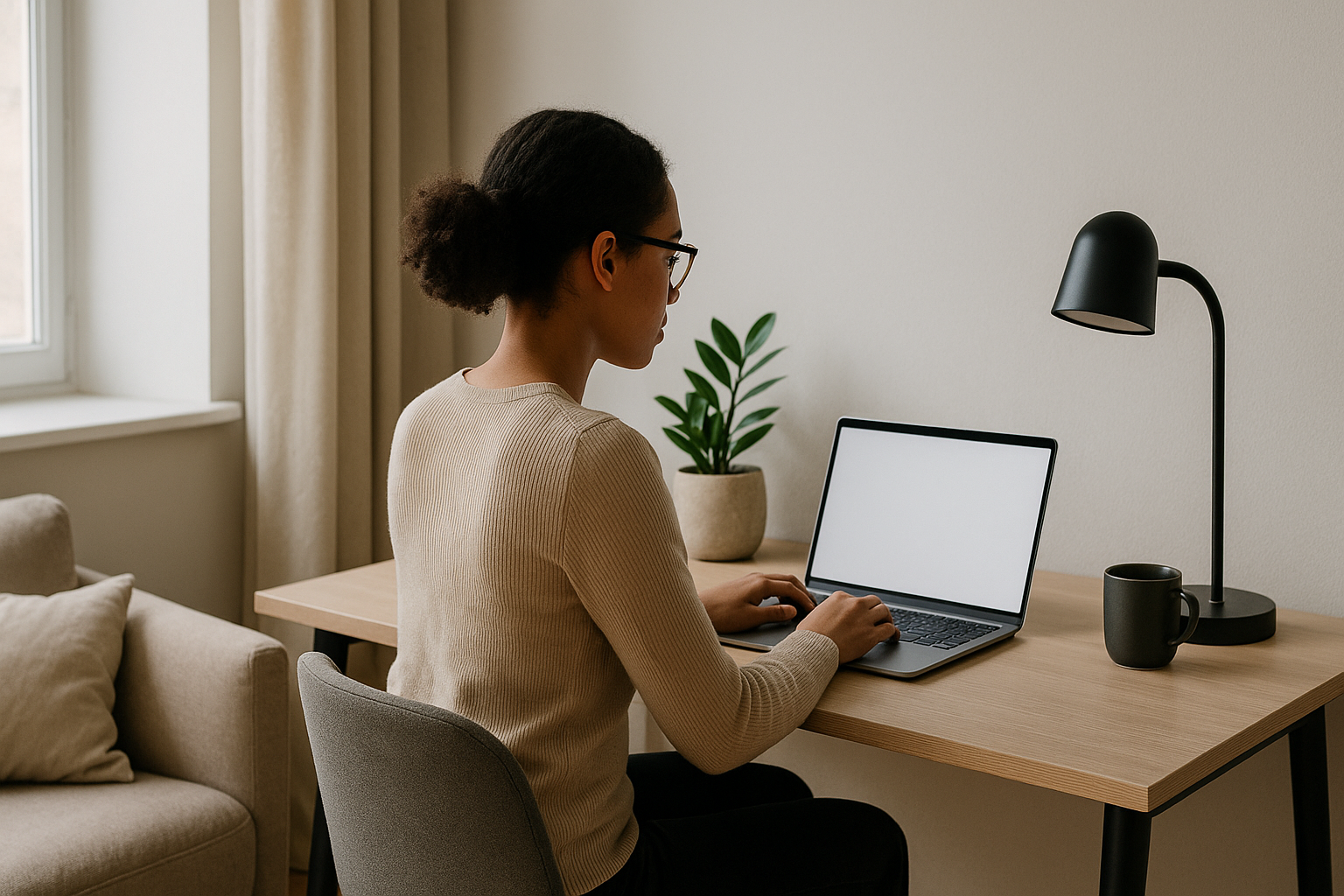
I’m writing this from a desk that is, if I’m being honest, basically wedged between a bookshelf and a window that refuses to fully close in winter. So yeah, this topic is personal. If you work from home in a tiny apartment, you already know the vibe. Your office is also your dining room, maybe your bedroom, possibly your laundry-folding station, and somehow also the place where random Amazon boxes go to die. It’s a lot. And yet, loads of us are still doing it in 2026, not as some weird temporary thing, but as normal life now.
The latest numbers floating around this year show remote and hybrid work are still a huge part of work culture, even after all the "return to office" headlines. Depending on the survey, roughly a quarter to a third of paid workdays in knowledge jobs are still happening from home in 2026, and hybrid schedules are kinda the default for a lot of companies. Gallup, Owl Labs, FlexJobs, all those workplace reports keep pointing in the same general direction: flexibility matters, people want it, and employers who totally ignore that are having a harder time with retention. So if you’ve been feeling like your tiny WFH setup deserves more thought, you’re not overthinking it. You’re just trying to not lose your mind in 600 square feet.
First thing, stop chasing the Pinterest office fantasy
#I had to learn this the annoying way. For the longest time I kept saving photos of these beautiful home offices with big oak desks, matching storage, tasteful lamps, giant monitors on fancy arms, like wow okay cool, where exactly do I put that in a one-bedroom apartment where the "entryway" is also the kitchen? Tiny-home workspaces work better when they’re realistic, not aspirational. You do not need a seperate room. Honestly, most of us do not have one. You need a repeatable setup that supports your body and your brain. That’s the actual goal.
A good small-space work setup isn’t about having more stuff. It’s about reducing friction so your brain quits fighting the room before you even open your laptop.
Pick the desk based on your day, not the product listing
#Desk advice online gets weirdly intense. Standing desk this, minimalist desk that. Here’s my actual opinion: in a small apartment, the best desk is the one that fits your real workflow and doesn’t hijack the whole room. If you mostly use a laptop and maybe one external monitor, you can get away with a compact desk around 35 to 40 inches wide. If your job involves paperwork, sketching, two screens, audio gear, or you just spread out like a chaotic goblin, you probably want closer to 47 inches if your room allows it.
This year there’s still a big trend toward compact sit-stand desks, and I get why. Even the more affordable ones in 2026 are way better than the wobbly budget models from a few years ago. Dual-motor legs used to feel like luxury territory, now they’re way more common in mid-range options. But honestly? If your apartment floor is uneven, or your downstairs neighbor hates every vibration known to man, a simple fixed desk might be less hassle. I tried a standing desk converter once and it made my whole setup feel top-heavy and cursed. Some people love them. Me? absolutely not.
- If your desk is in the bedroom, look for something visually light, like open legs instead of chunky drawers
- If you take lots of calls, avoid glass tops unless you enjoy every keyboard tap sounding like a tiny hammer
- If space is brutal, wall-mounted fold-down desks are better now than they used to be, and some don’t look dorm-y anymore
- Corner desks can be amazing... or they can eat the room. Measure twice, then measure one more time because I swear listings lie
Ergonomics matter way more than people think, even in a tiny setup
#This is the bit I ignored until my shoulders started feeling like concrete. A lot of 2026 workplace wellness research still says the same boring thing because, well, it’s true: bad posture plus long sitting hours equals discomfort, reduced focus, more fatigue, all of it. You don’t need an expensive ergonomic throne, but you do need your body to stop fighting your workstation all day.
Ideally your elbows are around 90 degrees, your screen top is roughly at or slightly below eye level, and your feet are supported. That’s the clean textbook version. In real life, maybe your monitor is on two old hardcover books and your feet are on a storage box. That counts. My first upgrade was not a desk, not a lamp, not some aesthetic nonsense. It was a seperate keyboard and mouse for my laptop. Best cheap fix ever. Instantly better neck position. Like, weirdly better.
- Raise the screen so you’re not looking down like a sad shrimp all day
- Use an external keyboard and mouse if you’re on a laptop for more than an hour or two
- Get lumbar support somehow, even if it’s just a small cushion or rolled towel
- If your chair sucks, a seat pad can buy you time before you replace it
- Don’t overdo standing. Alternating is better than trying to become a productivity monk
The chair situation... yeah, let’s talk about it
#A lot of people in small apartments use dining chairs. I did too. For months. Maybe longer than I should admit. And if you work three hours a day there, okay, maybe you can survive it. But if you’re doing full-time remote work, a real task chair is one of the most worthwhile upgrades you can make. The catch is that giant executive chairs look ridiculous in compact spaces and can make a room feel like a dentist office. Lately more brands are making smaller-footprint ergonomic chairs with breathable backs and less visual bulk, which I love. Finally, office furniture that doesn’t scream corporate sadness.
One thing I’ve noticed in 2026 reviews is people care more about armrest adjustability and seat depth now, not just whether a chair looks cool on social media. Good. Because cute chairs can absolutely wreck your back. If your chair can slide under the desk cleanly when you’re done, that’s a huge bonus in a tiny place. Sometimes the best focus tip isn’t mental at all, it’s being able to make your workspace disappear at 6pm so your brain gets the hint.
How to carve out a workspace when your apartment is doing too much
#This is where small-space WFH gets kinda creative. You don’t always need a dedicated room, but you do need a dedicated signal. A corner, a wall, a window nook, the end of a couch, a closet-office if you’re ambitious. The trick is making that area feel psychologically seperate, even if it’s only three feet away from where you eat pasta and watch bad TV.
Interior trend people keep talking about “micro-zoning” in 2026, which sounds very buzzword-y but is actually useful. Basically, you create mini zones in one room with light, furniture placement, rugs, shelving, or screens. I use a small rug under my desk and a lamp I only turn on during work hours. That’s it. Tiny cue, weirdly effective. Some folks use a folding screen, a narrow bookcase, or even curtain tracks to visually split the space. If your setup is in the bedroom, this stuff matters even more because your brain needs help switching modes. Otherwise you end up answering Slack messages while sitting on your bed, and that road leads nowhere good.
- Face the desk toward a wall or window if possible so your eyes have a stable focal point
- Use vertical storage, floating shelves, pegboards, over-desk organizers, all that jazz
- Keep work-only items together in one tray or rolling cart so cleanup takes 2 minutes, not 20
- If cables are everywhere, fix that first. Visual clutter is sneaky and makes the whole area feel louder
Lighting is one of those boring tips that turns out to be huge
#I used to think lighting advice was a little dramatic. Then I spent a week working in a dim corner during a rainy stretch and felt like a Victorian orphan by 3pm every day. Light changes everything. Natural light is still the gold standard for mood and alertness, and there’s plenty of recent sleep and performance research backing that up. Exposure to brighter light earlier in the day can help with circadian rhythm, energy, and sleep later. So if you can place your desk near a window without getting awful screen glare, do it.
And if you can’t, don’t just accept dungeon office status. In 2026 there are so many decent task lights now, especially adjustable LED lamps with warmer evening settings. Overhead lights alone are usually too harsh or too flat. I like layered light: window if possible, desk lamp for task work, softer ambient lamp for late afternoon. Maybe that sounds fussy, but it works. Also, webcams look way better when light hits your face from the front-ish, not from a blazing ceiling bulb behind you. Learned that after several calls where I looked like I was broadcasting from a cave.
Focus in a small apartment is mostly about reducing interruptions before they happen
#Let me just say it plainly. In a tiny home, focus is fragile. There’s the fridge humming, the neighbor drilling for reasons unknown, your laundry staring at you, dishes existing too loudly, and if you live with a partner or roomate or kid or pet, multiply all that by ten. So the solution usually isn’t “try harder.” It’s build fewer opportunities to get derailed.
One current trend I actually buy into is friction reduction. Productivity people phrase it in all kinds of annoying ways, but the idea is solid. Put the things you need within reach. Hide the stuff that pulls your attention. Use defaults so you don’t negotiate with yourself every morning. My desk gets reset at the end of the day with laptop stand, notebook, charger, water bottle. That means the next morning I sit down and start. No scavenger hunt. No tiny decisions. Less resistance.
- Use noise-canceling headphones if your budget allows. They’re not hype, they’re sanity
- Try one browser profile only for work so your fun tabs aren’t hanging around waving at you
- Keep your phone behind you or across the room during deep work. Screen down on the desk is not far enough, sorry
- Batch home tasks. Don’t half-work and half-tidy every 12 minutes. It feels productive but usually isn’t
- If your building is loud, schedule focus-heavy work when the noise pattern is lowest. Every building has a rhythm
A few small apartment desk setups I’ve seen actually work
#Not every home layout is the same, obviously, but there are a handful of setups I keep seeing work really well for normal people. Not influencers with giant lofts. Regular humans.
The "window ledge plus compact desk" setup is good if you need daylight and your room is narrow. The "behind-the-sofa desk" setup is weirdly great in studios because it creates a visual divider without building a wall. The "closet office" thing, sometimes called a cloffice, is still around in 2026 and honestly can be brilliant if you add ventilation and proper light. And the "rolling cart office" for laptop workers is underrated. A slim desk plus a cart means your office supplies can move out of sight at night. Kinda ugly maybe, but practical beats pretty after month six.
What I’d buy first if I had to start over on a budget
#Probably not what TikTok tells you, heh. I’d go monitor riser or laptop stand, keyboard, mouse, chair support, then lighting. After that, cable management. Then maybe a real monitor if your work needs it. Decor comes way later. Plants are nice, yes. But a fern will not save your wrists. I mean maybe emotionally, but not physically.
Don’t forget the mental side, because the setup is only half of it
#This part sneaks up on people. Working from home in a small apartment can feel efficient and cozy one day, then claustrophobic and kind of maddening the next. There’s also decent evidence in recent workplace studies that remote workers who set clearer boundaries around time and space report better wellbeing than people who are “always sort of on.” Which makes sense. If your desk is five steps from your bed, work can stretch into everything unless you push back on purpose.
I’m not perfect at this btw. I still check messages too late sometimes. But a few rituals help a lot. I open the curtains and turn on the desk lamp to start work. I shut the laptop, put the keyboard in a drawer, and literally cover part of the desk with a folded throw when I’m done. Is that a little dramatic? Maybe. Do I care? not really, because it helps my brain stop buzzing. A fake commute can help too, even if it’s just a ten-minute walk around the block or grabbing coffee downstairs before you begin.
When your home is also your office, the boundaries won’t magically appear. You kind of have to build them yourself out of habits, light, furniture, and a bit of stubbornness.
Some mistakes I made so you maybe don’t have to
#I put my desk facing the bed once. Terrible. My motivation dropped for reasons that were very obvious in hindsight. I also overloaded a tiny desktop with too many “productivity” accessories and ended up with nowhere to put my actual notebook. At one point I had a lamp, monitor, laptop stand, speakers, pen cup, candle, planner, coaster, charger dock, and some decorative object that served zero purpose except collecting dust. It looked nice in photos. It was awful to use.
- Mistake one: buying for aesthetics before comfort
- Mistake two: pretending I could focus with the TV visible in my peripheral vision
- Mistake three: no landing spot for papers, receipts, cables, all the little messes that accumulate
- Mistake four: ignoring acoustics. Soft stuff like curtains and rugs really do help a space feel calmer
- Mistake five: thinking more gear would equal more discipline... it did not
My simple formula now, and it’s way less glamorous than I expected
#So where I’ve landed is pretty basic. Small desk. Decent chair. Laptop on a stand. External keyboard and mouse. One lamp. One tray for work bits. Headphones. A plant I’m trying not to kill. That’s mostly it. The thing that made the biggest difference wasn’t some genius design hack. It was editing. Less on the desk. Less reaching. Less visual noise. Less deciding where to sit or what to move. More consistency.
And honestly, that seems to line up with a lot of what’s current in 2026 home office trends too. People are over the ultra-aesthetic, impractical setups. The newer vibe is flexible, ergonomic, apartment-friendly, more modular, less corporate, less cluttered. Good. We’re finally designing for actual living spaces instead of imaginary ones.
Final thoughts, from one small-space worker to another
#If your apartment is tiny and your work is taking over, you do not need a perfect makeover. You need a setup that supports your body, protects your attention, and can exist in the same room as the rest of your life without making everything feel cramped and chaotic. Start with comfort. Then light. Then clutter. Then focus systems. In that order, probably. Or don’t, honestly, break the rules if your space needs something else first. Every apartment has its own weird little personality.
Anyway, that’s what I’ve learned after too many hours of trial, error, back pain, and moving furniture around like a maniac. If you’re reworking your own small apartment WFH corner, I hope at least one of these tips saves you some hassle. And if you want more practical home and work-life reads like this, I’ve found myself poking around AllBlogs.in now and then too.