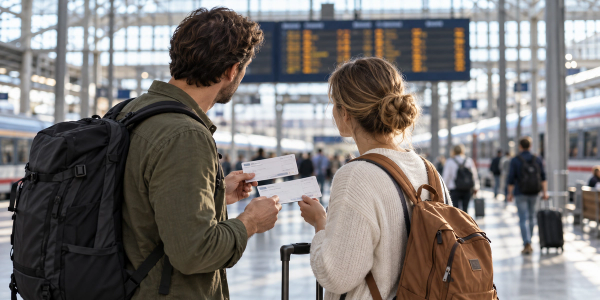
That one airline message which can spoil your whole mood
#You know that tiny heart attack you get when your phone buzzes and the airline app says, “Your flight schedule has changed”? Arre boss. I have been there more times than I’d like to admit. Once my Delhi to Goa flight got moved from a comfortable 11:30 am departure to some odd 6:05 am timing, and the airline email was written so politely as if they had done me a favour. Another time, on a Bengaluru connection, they shifted the first leg by just 40 minutes, but that 40 minutes basically destroyed my connecting flight plan. On paper it looked like a “minor schedule change”. In real life, it meant running in Mumbai airport with a backpack, half-sleepy, sweating, and praying my checked bag had more confidence than me.
Flight schedule changes are not always dramatic cancellations. Sometimes the airline moves your departure by 15 minutes. Sometimes they change aircraft and your seat disappears. Sometimes they push you to a later connection and suddenly you have a 9-hour layover in Doha, Singapore, Dubai, Delhi, wherever. And sometimes they change the airport itself, which is honestly a special kind of nonsense. So this is my practical, slightly emotional, Indian-traveller checklist for what to do when an airline changes your flight. Not theory only. These are the things I now check before clicking “Accept changes”, because once you accept, arguing later becomes harder and customer care will say, “Sir, as per system you accepted.” That sentence has ruined many evenings.
First thing: don’t panic, and don’t accept immediately
#The biggest mistake I made in my early travel days was tapping whatever button came first. “Accept itinerary” sounded safe, so I accepted. Later I realised my new arrival time was past midnight, airport bus had stopped, hotel check-in got messy, and my prepaid taxi was useless. Airline schedule changes are usually time-sensitive, yes, but you rarely need to decide in 10 seconds while standing in office lift or at chai tapri.
Open the message properly. Check if it came from the airline, OTA, or travel agent. If you booked through MakeMyTrip, Cleartrip, EaseMyTrip, Yatra, a bank travel portal, or your office travel desk, the airline app and booking platform may show different things for some time. Don’t assume the WhatsApp alert has the full story. Login to the airline website using PNR and last name. Also check your email, because sometimes the detailed options are buried there while SMS only says “schedule revised”. Screenshot everything before you touch anything. Sounds dramatic, but screenshots have saved me during refund arguments.
- Check old departure and new departure time, not just arrival time
- Check if flight number changed, because that can affect terminals and baggage
- Check if aircraft changed, especially if you paid for a seat or extra legroom
- Check if your connection time became too short or too long
- Check whether the airline is offering free rebooking, refund, or only auto-protection on another flight
My basic schedule change checklist, the one I actually use
#Okay, so here’s the checklist I keep in my notes app. Not fancy. But it works. Whenever an airline changes my flight, I go through this like a slightly paranoid uncle at airport security. And honestly, being paranoid is better than reaching the airport and discovering your “new” flight is from another terminal 45 minutes away.
- Compare the old and new itinerary side by side. I write it down: old departure, old arrival, new departure, new arrival, terminals, flight numbers, layover duration. If there is any connecting flight, I check every leg separately. A 20-minute delay on one leg can become a missed connection on the next.
- Do not accept until you know your rights and options. Many airlines allow one free change when they make a significant schedule change, but what counts as “significant” depends on airline policy, route, and sometimes the booking channel. If the change is only 5-10 minutes, you may not get much. If it is hours, or it breaks a connection, push harder.
- Check minimum connection time. Indian airports like Delhi, Mumbai, Bengaluru, Hyderabad and Chennai are manageable, but terminal changes can eat time. International connections are even trickier because immigration, security re-check, baggage re-drop, and transit visa rules may apply.
- Look at downstream bookings. Hotel, homestay, airport pickup, train, bus, cruise, trekking permit, visa appointment, wedding function, office meeting. Flights are never just flights. They are attached to 17 other bookings like a messy family WhatsApp group.
- Call or chat with the airline before calling the OTA, if possible. If you booked direct, airline support is usually cleaner. If you booked through an agent, airline may ask you to contact agent for changes, but still you can ask what options exist in their system.
- Ask clearly: “Can I get a free change or full refund because the airline changed the schedule?” Don’t say, “I want to cancel.” Say airline changed the timing and the new schedule does not work. Small wording difference, big outcome sometimes.
What counts as a big schedule change?
#This is where things get irritating, because there is no one magical rule for every airline and every country. In India, airline conditions of carriage and DGCA passenger guidelines matter, but a “schedule change” before travel can be handled differently from a same-day delay or cancellation. If the airline cancels a flight, passengers are generally entitled to a choice like alternate travel or refund, subject to conditions and how/when they were informed. For delays, meals, refreshments, accommodation, and compensation depend on the length of delay, flight block time, and notice period. But for a pre-travel schedule change by 30 minutes, 1 hour, 3 hours, etc., airlines often apply their own policy.
From my experience, if the change is less than 30 minutes, most airlines behave like nothing happened. Between 1-2 hours, you can sometimes request another flight, especially if arrival time becomes inconvenient. More than 2-3 hours, or if the connection is impossible, you have a better case for free rebooking or refund. For international travel, rules can be stronger depending on where you fly from or to. EU and UK routes have their own passenger rights framework for cancellations and long delays. The US Department of Transportation also treats airline cancellations or significant changes seriously if passenger doesn’t accept the new itinerary. But don’t randomly quote foreign rules for an IndiGo Pune-Delhi flight, haan. Use the rule that applies to your route.
My simple rule: if the airline changed something that changes my sleep, my connection, my hotel check-in, my visa timing, or my wallet, I treat it as serious and ask for options before accepting.
Connections are where the real drama starts
#Direct flights are annoying when changed, but connecting flights are where you can properly get stuck. I once had a Kochi-Mumbai-Delhi booking where the first flight was moved later by around 50 minutes. The booking still showed as “confirmed”, but the connection in Mumbai became tight enough that even Virat Kohli in running shoes would have struggled. Customer care first told me, “Sir connection is valid.” I asked if they guarantee baggage transfer and rebooking if I miss it. Suddenly the tone changed. They moved me to an earlier first leg.
When your connection changes, check if both flights are on the same PNR. Same PNR means the airline has more responsibility to protect you if the first flight delay causes a missed connection. Separate PNR means you are basically doing jugaad. If you booked Delhi-Dubai separately and Dubai-Europe separately because it was cheaper, the second airline may not care that the first one got changed. I know, it hurts, but cheap fares have hidden tension.
Also check terminal changes. Mumbai T1 to T2 takes time. Delhi domestic to international can be smooth, but only if you planned enough buffer. Bengaluru’s new terminal operations can change by airline and route, so don’t rely on old memory. Hyderabad is easier in my opinion, but security queues can still surprise you during festival rush. And if the new schedule gives you a long layover, like 6-10 hours, don’t just sit angrily near the gate eating overpriced sandwich. Plan it. Some airports have lounges, sleeping pods, paid rest areas, and shower options. I’ve found this guide on Airport Showers During Layovers: Find, Pack & Plan useful when deciding whether to freshen up during those awkward long waits.
Before saying yes, check your hotel and check-in timing
#Hotels are the silent victims of flight changes. Everyone remembers flight ticket. Nobody remembers that the homestay owner in Manali is waiting till 10 pm only, or the Goa villa has a security deposit, or the airport hotel charges full night even if you reach at 3 am. If your flight arrival has shifted, message the hotel immediately. Not later. Ask if late check-in is allowed, whether reception is 24 hours, and whether they will hold the room.
Typical airport-area stays in Indian metros can vary wildly. Budget hotels near airports may start around ₹1,800-₹4,500 per night depending on city, season and how close they are to the terminal. Proper airport hotels or branded business hotels can easily go ₹5,000-₹12,000 plus taxes, and during events, long weekends, weddings, or peak winter in places like Goa and Jaipur, prices go mad. Day-use rooms are becoming more common in big cities, and they’re useful if your airline has pushed you into a weird layover. But read the timing carefully: 6-hour stay, 8-hour stay, check-in window, ID rules, unmarried couple policy if that applies, all that.
One boring but important thing: card holds. Many hotels block an amount on your card as security, especially airport hotels and international chains. It is not always an actual charge, but it can reduce available limit and confuse you during travel. If your changed flight means you arrive late, cancel, or shift hotels, confirm what happens to the hold or prepaid amount. I had one Singapore airport hotel hold sit on my card for days after checkout, and I kept calculating like some CA before lunch. This explainer on Hotel Card Hold vs Charge: What to Check Before You Pay is worth reading if your new flight timing affects your stay.
Ground transport: the part we underestimate every single time
#In India, flight timing is only half the journey. The other half is reaching or leaving the airport without losing your mind. A 9 pm arrival and a 1:30 am arrival are not same thing, even if airline says “only 4.5 hours change”. Metro may be shut. Airport bus may be limited. Ola/Uber prices may surge. Your cousin who promised pickup may suddenly have “urgent work”. Very common.
If your flight is changed, check airport transport again. Delhi Airport Express Metro is excellent when timing matches, but late night you may need cab. Bengaluru airport is far, and BMTC Vayu Vajra buses are good, but check route timing. Mumbai traffic can make even small changes painful. Goa has taxi union realities, so pre-arrange pickup if reaching late. In Kochi, airport bus and metro connection planning matters. In smaller airports like Dehradun, Bagdogra, Leh, Jodhpur, Udaipur, late arrivals can be tricky because local transport options thin out fast.
- If you prepaid airport transfer, message the driver or company with revised flight number
- If you booked train after flight, check realistic buffer, not optimistic buffer
- If reaching a hill station after dark, think twice before driving onward at night
- If travelling with parents or kids, avoid heroic 2 am cab plans unless absolutely needed
Seasonal problems: fog, monsoon, festivals, and all the usual suspects
#Some schedule changes are random airline network planning. Some are seasonal and almost predictable. North India winter fog, especially around Delhi and nearby airports, can cause delays and rescheduling. December and January are the classic fog months, though exact conditions change year to year. Monsoon, generally June to September in many parts of India, can affect flights to Mumbai, Goa, Kochi, Northeast, and hill regions. Leh and other high-altitude airports are weather-sensitive. Bagdogra can be unpredictable. And during Diwali, Durga Puja, Christmas-New Year, long weekends, school holidays, basically whenever half the country travels, recovery options become limited.
My personal strategy during risky seasons is simple: take morning flights when possible, avoid tight connections, and don’t book the last flight of the day if I have something important next morning. Morning flights are not magic, but disruptions pile up through the day. If an airline changes my evening flight to a later one during fog season, I try to move to an earlier departure instead of hoping everything will be fine. Hope is nice for Bollywood songs, not for connecting flights.
Seats, meals, baggage, and add-ons can quietly vanish
#This one annoys me more than it should. You pay for a window seat, or extra legroom, or meal, or student extra baggage, and after a schedule change the new booking shows random middle seat near toilet. If aircraft changes from one type to another, seat maps reset. If flight number changes, prepaid meals may not automatically attach. If you paid for sports equipment, wheelchair assistance, infant bassinet, pet carriage, priority boarding, or special meal, check again. Don’t assume the airline system is emotionally attached to your preferences.
For Indian domestic low-cost carriers, add-ons are a big part of revenue, so they are usually visible in “Manage Booking”. Still, verify. For international full-service airlines, seat selection may depend on fare class and aircraft. If your flight is rebooked onto a partner airline or codeshare, baggage rules can change too. This is especially important for students flying India to Canada, US, UK, Australia, Germany, etc., with two large bags and one pressure cooker packed by mummy. Check baggage allowance on the new operating carrier, not just the marketing airline.
Visa and transit rules: please don’t ignore this
#A changed connection can create visa trouble. Suppose your original itinerary had a 2-hour airside transit, and the new one has an overnight connection where you must collect baggage or change airport. Suddenly you may need a transit visa or entry permission. This can happen in countries with multiple airports, terminal transfers, or overnight stays. Even in places where Indian passport holders can transit airside without visa under certain conditions, those conditions matter: same airport, confirmed onward ticket, baggage checked through, staying in transit area, time limit, airline rules.
If an airline changes your international itinerary, ask them directly: “Will my baggage be checked through? Do I need to clear immigration? Is terminal change airside?” Also check official embassy/immigration sources yourself, because customer care agents are not visa officers. I’ve heard too many stories of people reaching check-in counter and being denied boarding because transit documentation was not okay. And no, showing them the airline’s own schedule change email won’t melt the rules.
What to say when calling customer care
#Calling airline customer care can test your patience, your phone battery, and your belief in humanity. But being clear helps. Don’t start with anger, even if anger is fully justified. Start with facts. Give PNR, passenger name, old flight time, new flight time, and why the new option doesn’t work. Use words like “involuntary schedule change”, “connection no longer feasible”, “arrival after hotel check-in”, “missed onward booking”, “request free re-accommodation”, or “request full refund due to airline-initiated change”. Sounds formal, but it works better than “bhai kuch karo”.
If the first agent refuses, politely ask if there are other options on the same day, previous day, or next day. Ask whether fare difference and change fee can be waived. If they say no, ask them to note your request in the PNR and escalate. Use chat support too, because written chat is evidence. Twitter/X airline support can be useful, but don’t post your full PNR publicly. DM only. Email is slower but good for records.
One line that has helped me: “I am not voluntarily changing my plan. The airline changed the schedule, and the revised itinerary is not acceptable for my original purpose of travel.”
When you booked through an OTA or travel agent
#This is common in India because deals, coupons, bank offers, wallet cashback, all that temptation. If you booked via an OTA, the airline might show options but refuse to process refund or reissue directly. The OTA may say they are waiting for airline waiver. Airline may say talk to OTA. Full ping-pong match. Keep calm and keep records.
Here’s what I do: first I check airline website to see actual available flights. Then I call OTA and give specific alternatives: “Please move me to flight 6E/AI/UK/SG whatever at this time, same date, because airline schedule change has made my connection invalid.” Specific requests are harder to brush off than “give me something else”. If asking refund, ask whether airline has authorised full refund and whether OTA convenience fee is refundable. Convenience fee often becomes a fight. Not always worth losing sleep, but for family bookings it adds up.
Travel insurance: boring until it saves your wallet
#I used to think travel insurance was only for lost baggage and medical emergencies. Then one changed flight caused extra hotel night, taxi rescheduling, and a missed prepaid local tour. Insurance didn’t cover everything, but it covered enough to make me less grumpy. Policy wording matters a lot. Some policies cover trip delay, missed connection, trip interruption, or additional accommodation only after a certain number of hours and only for covered reasons. Airline schedule changes may or may not qualify depending on the policy.
If the cost is big, inform your insurer early. Keep airline email, boarding passes, receipts, hotel invoices, cab bills, and proof that airline caused the change. Also understand excess/deductible, because sometimes the claim amount is smaller than what you must absorb yourself. This simple guide on Travel Insurance Excess vs Deductible: Simple Guide explains that part nicely without making your head spin.
Food, layover culture, and making the changed plan less miserable
#Not every schedule change is disaster. Sometimes it gives you a surprise layover where you can actually enjoy something. Indian airports have become much better for food, though prices still behave like the dosa was cooked with gold dust. Delhi T3 has decent North Indian, cafes, chaat-type snacks, and proper lounges. Mumbai T2 is still one of my favourite terminals for walking around and looking at art installations when I have time. Bengaluru airport has good coffee options and local-ish food, though it can get crowded. Hyderabad is calm compared to others, at least whenever I’ve used it. Kochi has that clean, slightly relaxed Kerala vibe.
If your new schedule creates 5-8 hours in a city, think carefully before leaving airport. In Delhi, Aerocity is close enough for a meal or hotel rest. In Mumbai, traffic can betray you. In Bengaluru, the city is far, so don’t be overconfident. In Goa, depending on Mopa or Dabolim, distance changes everything. In Kochi, a short local food stop may be possible if you have enough buffer. But please count security, baggage, traffic, and your own tiredness. Instagram reels make layover exploring look easy. Real life has queues and sweaty backpacks.
Safety and practical updates Indian travellers should keep in mind
#Airports are generally safe, but schedule changes can push you into odd hours, and odd hours need extra care. Keep power bank charged, but remember airline rules for carrying power banks in cabin baggage only. Keep physical ID even if you use DigiYatra or mobile boarding pass, because tech can fail or some checks still ask. For international travel, keep printed visa copies and hotel address. If you are a solo woman traveller arriving late, pre-book a trusted cab or airport taxi rather than negotiating outside. If travelling with elderly parents, request wheelchair assistance again after schedule change, because it may not transfer automatically.
Also watch airport advisories during bad weather, runway maintenance, strikes, or regional disruptions. Airlines may send messages late, but airport websites and airline social handles often show updates faster. During heavy rain or fog, leave earlier for airport. Sounds obvious, but we all think we are smarter than traffic until NH48, Western Express Highway, ORR, or Gurgaon toll teaches us humility.
My final decision tree: accept, change, or refund?
#After all this checking, I decide in three buckets. If the change is small and nothing else is affected, I accept and move on with life. If the change is inconvenient but fixable, I ask for free rebooking to a better flight. If the change ruins the trip purpose, like reaching after wedding pheras, missing cruise departure, breaking international connection, or making hotel and transport too costly, I push for refund and book fresh. Sometimes refund plus new ticket costs more, but peace of mind is also a currency, no?
One thing I’ve learnt: be fast. When airline sends a schedule change, many passengers may be trying to move to the same better flights. Seats disappear. Fare buckets change. Customer care queues increase. If you know you need a change, act quickly but not blindly. Keep two or three preferred alternatives ready. If travelling with family, confirm everyone is moved together and seats are together if needed. For kids, elderly, or first-time flyers, avoid risky connections even if airline says valid.
A small sample message you can copy
#You can say something like this on chat or email: “Hello, my PNR is ____. The airline has changed my flight from to . The revised schedule is not suitable because it affects my connection / hotel check-in / onward transport / travel purpose. Since this is an airline-initiated schedule change, please offer a free change to flight __ or a full refund to original payment mode. Please confirm any waiver of change fee and fare difference before processing.” Keep it simple. No need to write an essay unless they ask. Save the chat transcript.
If they call you back, note agent name, time, and what was promised. If they say refund will come in 7-21 working days or whatever their policy says, write it down. Refund timelines vary by airline, payment mode, and booking channel. Credit card refunds can take longer to reflect. UPI is sometimes quicker, sometimes not. Corporate bookings have their own circus.
Final thoughts from someone who has run through too many terminals
#Airline schedule changes are part of modern travel now. Airlines adjust aircraft, routes, airport slots, weather recovery, crew rotations, commercial planning, all sorts of backend things we never see. As passengers we can’t control that. But we can control how quickly and smartly we respond. Don’t accept blindly. Check connections. Check hotels. Check transport. Check visas. Check add-ons. Keep proof. Ask clearly for free change or refund when the airline is the one who changed the plan.
And honestly, don’t feel shy to push back. Indian travellers sometimes adjust too much. We say “chalo theek hai” and then spend ₹3,000 extra on taxi, lose a hotel night, and eat cold airport samosa at 2 am. If the new schedule doesn’t work, say so. Politely, firmly, repeatedly if needed. Travel is expensive and your time matters. Anyway, hope your next airline message is just a gate number and not another surprise reschedule. For more practical travel stuff and real-world planning tips, I keep browsing AllBlogs.in when I’m in trip-planning mode.