That Damp AC Smell Hits Different at 11:30 PM
#You know that moment when you enter a hotel room after a long travel day, dump your backpack on the chair, switch on the AC, and suddenly the room smells like wet socks kept inside a cupboard since monsoon? Yeah. That. I’ve had it happen in Kochi, Goa, Mumbai suburbs, even one “nice” hill-station hotel where the room looked fancy but the AC was basically breathing old moisture into my face. As an Indian traveller, I feel we’re used to adjusting a bit. Slightly hard mattress? Chalta hai. No hot water for 10 minutes? Manage. But a musty AC smell before sleeping is not one of those things I ignore anymore. Earlier I used to think, arre it’s just humidity, let it run for some time. Big mistake sometimes.
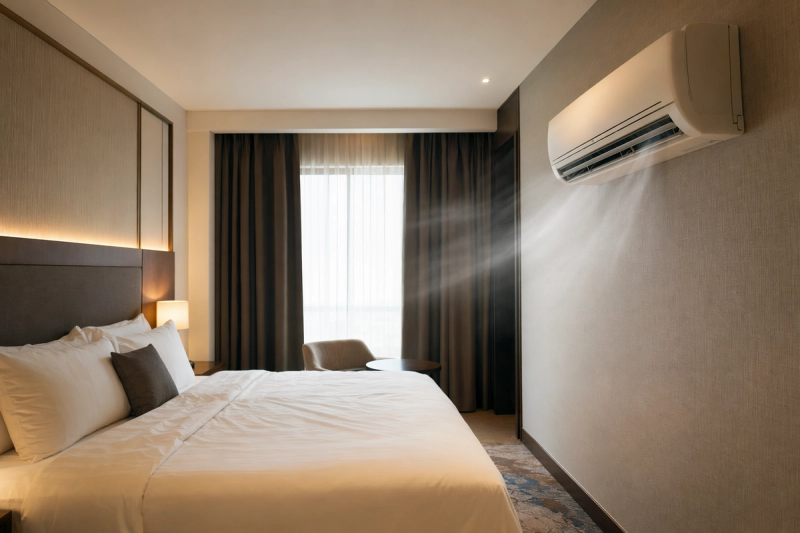
A musty hotel room AC smell usually means moisture is sitting somewhere it shouldn’t be. Could be a dirty filter, damp curtains, mould in the AC vent, clogged drain line, wet carpet, or just a room that has been shut for too long. In coastal places like Goa, Gokarna, Pondicherry, Kochi, Mumbai, and parts of Odisha or Bengal, humidity makes it worse. In hill stations too, especially during rains, rooms stay damp because sunlight hardly enters. And when you’re tired, hungry, and just want to sleep after train, cab, flight, everything, it’s tempting to ignore it. But before sleeping, do a few checks. Trust me, five minutes can save your night.
My Worst Musty AC Room Story, Because Obviously It Happened After a Long Journey
#This happened after a late arrival in Fort Kochi. I had taken a flight, then a cab through that sticky evening traffic, and by the time I reached the hotel my brain was only thinking of shower, appam, and sleep. The room looked decent, not luxury but clean enough. White bedsheet, small kettle, two sachets of tea, that standard hotel painting of coconut trees. I switched on the AC and went to wash my face. When I came back, the smell had spread like someone opened an old damp trunk. Not strong like sewage, not chemical, just that mouldy-cool air. I stood there doing the Indian guest calculation in my head: should I complain, will they think I’m making drama, is it too late, maybe it will go away?
I waited 15 minutes. It didn’t go away. My throat started feeling weird, maybe because I was already tired, maybe because I was imagining things, who knows. I called reception and the boy came with a room freshener. He sprayed it like he was fighting mosquitoes. For two minutes it smelled like lavender plus fungus, which is honestly worse. Finally I asked for another room. They first said full occupancy, then after a little polite pushing, suddenly one room was available on the next floor. That second room wasn’t perfect but it didn’t have that wet AC smell, and I slept properly. Since then, I’ve become slightly shameless about asking to change rooms. Not rude, but firm. There’s a difference.
First Thing: Don’t Lie Down and “See If It Gets Better”
#This is the main mistake. We enter, we’re tired, we switch on the AC and sit on the bed scrolling Swiggy or checking tomorrow’s itinerary. By the time we decide the smell is bad, we’ve already unpacked half the bag, taken bath, changed clothes, and mentally surrendered. So now I do a room check before anything else. I don’t unpack. I don’t open snacks. I don’t even take out my charger sometimes. I switch on lights, AC, fan if there is one, and just stand for a minute like some suspicious uncle inspecting a flat before rent.
- Switch on the AC and set it to a normal cool temperature, not freezing low immediately.
- Stand near the vent, but don’t put your face right into it, and notice if the smell becomes stronger.
- Check curtains, carpet, wall corners, ceiling near AC, and the wooden wardrobe if the room has one.
- Look for visible black, green, or grey patches near vents or damp walls.
- If the smell is sharp, mouldy, or makes your nose/throat uncomfortable, call reception before unpacking.
Sometimes an AC smells slightly stale for the first few minutes because the room has been closed. That can happen. But it should improve quickly once air moves. If it gets worse after the AC runs, or if the smell is coming directly from the vent, don’t treat it as normal hotel smell. It’s not incense from the lobby, boss.
Why Hotel ACs Smell Musty, Especially in Indian Weather
#India is not easy on hotel rooms. We have brutal humidity in coastal belts, dusty summers in North India, heavy monsoon in the West and Northeast, and sudden temperature changes in hill towns. Hotel ACs run for hours, then rooms stay closed, then guests keep wet towels on chairs, then housekeeping mops the floor and shuts the door. Moisture gets trapped. If filters are not cleaned regularly or the AC drain line is clogged, that damp smell starts. Split AC indoor units can collect condensation, and if airflow is poor, the inside can smell musty. Window ACs in older budget hotels sometimes have their own personality, and not a good one.
In places like Goa during monsoon, many small hotels and homestays stay partly occupied and rooms may not get daily sunlight. In Kerala, coastal Karnataka, Andaman, and Northeast India, humidity can make even good rooms feel damp if ventilation is poor. In Delhi, Jaipur, Agra, or Varanasi, dust can settle in filters and make the AC smell stale when it starts after long gaps. So it’s not always that the hotel is “bad”. But maintenance matters. A clean, aired-out room doesn’t smell like a wet storeroom.
Before Sleep Checklist: What I Actually Do Now
#Okay, practical part. If your hotel room AC smells musty and it’s already night, do this before you sleep. Not tomorrow morning. Not after adjusting. Before. I’ve used this routine in budget hotels, business hotels, beach stays, serviced apartments, and one very strange resort where the AC remote had more tape than buttons.
- Run the AC for 10 minutes with the room door open if it’s safe and allowed, or at least open the window for a bit if there is one. Many Indian hotel rooms don’t have openable windows now, especially city hotels, but if you can ventilate safely, do it.
- Turn on the ceiling fan or exhaust fan if available. Air movement helps you understand if the smell is in the AC or the whole room. In small rooms, airflow matters a lot, and for long stays I’ve found this Air Circulator Placement Guide: Where to Put It in a Small Room useful because one wrong corner and the room still feels dead.
- Check the AC filter area visually. Don’t dismantle hotel property, obviously, but if the front panel is already loose or filter is visible and black with dust, take a photo and show reception.
- Smell the bed linen and pillows. Sometimes the AC is blamed but the damp smell is from bedding stored badly. If pillow smells musty, ask for fresh linen immediately.
- Check bathroom drainage. A musty room smell can come from bathroom floor drain, not AC. Close the bathroom door for 5 minutes and see if the main room improves.
- If there is visible mould, heavy damp patches, or the smell stays after ventilation, ask to change rooms. Don’t negotiate with fungus at midnight.
When to Ask for a Room Change Without Feeling Guilty
#Indian travellers, especially middle-class ones like me, sometimes feel awkward complaining. We think the staff will judge us, or the hotel will say all rooms are same. But room smell affects sleep, and sleep affects the whole trip. If you’ve paid ₹1,500 or ₹15,000, you deserve a room that doesn’t smell unhealthy. Be polite, but be clear. Say, “The AC is giving a strong musty smell and I’m not comfortable sleeping here. Can you please shift me to another room?” Don’t say “thoda smell hai” if it’s actually bad. They’ll send room freshener and close the complaint.
If reception says no room available, ask them to send maintenance to inspect. Take photos or a short video if there is visible dampness, stained wall, water leakage, or dust blowing from vent. If you booked through an app, keep the chat or booking support option ready. Many hotels respond faster when things are documented. Not always, but often. Also, don’t accept a room freshener as the solution. It masks the smell, it doesn’t fix the damp AC. Same with agarbatti, perfume spray, or those strong lemon room sprays. For five minutes you feel okay, then the mustiness comes back with revenge.
Red Flags I Don’t Ignore Anymore
#A little stale smell that clears up is one thing. But some signs mean I will not sleep in that room unless they fix it or shift me. Visible mould around the AC vent is the biggest one. Damp wall behind curtains is another. Water dripping from indoor AC unit, wet carpet near the wall, swollen wooden flooring, or a wardrobe smelling like old wet clothes are also warning signs. If the room has no ventilation and the AC itself smells musty, it becomes worse because you’re breathing that same recycled air through the night.
If you have asthma, allergies, sinus issues, or you’re travelling with kids, parents, or someone with breathing sensitivity, be extra careful. I’m not giving medical gyaan here, but mouldy or damp environments can irritate people, and some people react faster than others. My mother gets a blocked nose almost instantly in damp hotel rooms. Me, I usually get a headache the next morning. Could be AC, could be poor sleep, could be travel tiredness, but why risk it when a room change is possible?
Budget Hotels, Mid-Range Stays, Resorts: Where This Happens Most
#People assume musty AC smell only happens in cheap hotels. Not true. I’ve seen it in low-budget lodges, yes, but also in boutique stays charging proper money. In many Indian cities, rough accommodation ranges can look something like this: budget rooms around ₹800 to ₹2,500, decent mid-range hotels around ₹3,000 to ₹7,000, and premium hotels or resorts higher than that depending on city, season, weekend, festival, and demand. Beach stays in Goa, Kerala backwaters, hill-station hotels in peak season, and city hotels near airports can jump a lot. Price does not always guarantee fresh air, sadly.
Budget hotels may have older ACs and less frequent deep cleaning. Mid-range hotels usually have better maintenance, but if occupancy is high, rooms may not get enough airing. Resorts near beaches and lakes fight humidity all year. Serviced apartments and vacation rentals can be better because you may get windows, balcony, washing area, and sometimes even a dehumidifier, but they can also smell damp if nobody stayed there for weeks. For longer stays, moisture control becomes a big deal, and this Dehumidifier Placement Guide: Where to Put It in Every Room makes sense if you’re in a rental or homestay where you can actually control the setup.
Season Matters More Than We Admit
#If you’re travelling during monsoon, expect more dampness. Western Ghats, Konkan coast, Kerala, Goa, Northeast, hill stations like Munnar, Coorg, Cherrapunji side, Darjeeling, even old parts of Mumbai and Kolkata can feel moist inside rooms. Best travel months depend on the destination, but for comfort, post-monsoon and winter months are usually better for many Indian places because humidity reduces and rooms feel fresher. Beach destinations are lovely in winter. Hill stations can be beautiful after rains, but check room ventilation before booking. Summer in North India brings another issue: ACs run nonstop and filters collect dust, so stale smell is common when maintenance is lazy.
Festival seasons, long weekends, school holidays, and wedding dates also affect room quality in a funny way. Hotels are full, staff is rushed, and room turnover becomes fast-fast. You may get a room that was cleaned but not properly aired. If you’re checking in late after a train or flight, you have less bargaining power because everyone is tired and rooms are occupied. So when possible, I prefer afternoon check-in. You can inspect, ask for a change, and still have time before dinner. At midnight, even your patience is sleeping.
How to Spot the Problem Before Booking, Not After Reaching
#Reviews are gold if you read them properly. Don’t just look at ratings. Search within reviews for words like “smell”, “damp”, “mould”, “AC”, “humidity”, “ventilation”, “no window”, “stale”, and “bathroom smell”. Indian reviewers are usually quite direct when something is wrong, and bless them for that. If three people mention damp smell, believe them. Also check room photos uploaded by guests, not only hotel photos. Look at walls near curtains, AC placement, windows, carpet, and bathroom corners. If every photo looks too edited and guest photos show dark rooms, be careful.
While booking, message or call the hotel and ask simple questions: Does the room have an openable window? When was the AC serviced? Is it a non-smoking room? Is there any dampness issue during monsoon? Some staff may give standard answers, but the way they respond tells you a lot. Also, if sleep quality matters to you, AC smell is not the only problem. Noise can ruin a trip equally. I’ve started checking both now, and this guide on How to Check if a Hotel Room Will Be Noisy Before Booking fits exactly into that pre-booking detective work.
What Not to Do, Even If You’re Desperate to Sleep
#Don’t spray half a bottle of perfume and sleep. I’ve done this, full confession, and woke up with a headache plus the room still smelled musty underneath. Don’t block the AC vent with a towel because it can mess with airflow and may cause more condensation. Don’t run the AC at the lowest temperature thinking cold air will kill the smell. Often it makes the room more damp, especially if airflow is poor. Don’t sleep with wet clothes drying inside a closed AC room unless you want to create your own mini rainforest. And don’t ignore water leakage near electrical points. That is not a “travel adjustment”, that is safety issue.
Also don’t fight with staff from the first sentence. I know, sometimes we’re irritated and hungry and the room is smelling like old basement, but shouting rarely helps. Start calm. If they don’t respond, escalate. Ask for duty manager. Use booking platform support. Keep proof. In India, a polite but firm tone works better than full angry mode in most hotels. Not always, but mostly.
My Small Hotel Room Fresh-Air Kit
#I don’t carry anything fancy, but over time my travel pouch has become slightly uncle-type practical. I carry a small pack of tissues, a light cotton stole or scarf, a tiny essential oil roll-on, basic allergy medicine that suits me, and sometimes a foldable travel hanger so wet clothes can dry in bathroom instead of on the chair. I also carry a small packet of camphor sometimes, especially during monsoon trips, but I use it carefully and never near open flame or hotel electronics. It helps with smell a little, but again, it is not a fix for mouldy AC. Just makes the bag smell less sad.
If I’m on a road trip and have space, I carry a small portable fan. Sounds extra, I know, but in homestays and older guesthouses, it helps circulate air. For flights or train trips, I won’t carry bulky things. Then the main tool is my mouth: call reception, ask clearly, don’t feel shy. Very advanced technology, haan.
Food, Local Nights, and Why Sleep Still Matters on a Trip
#This may sound like a side tangent, but bad hotel air ruins your travel mood. In Kochi, if I hadn’t changed that room, I would’ve skipped early morning walk near the Chinese fishing nets. In Goa, one damp room made me wake up late and miss a quiet breakfast at a small local place serving poi and omelette. In Kolkata, after a stale AC night, even good kathi roll didn’t hit properly because my head was heavy. Food, culture, hidden lanes, local markets, temple visits, beach sunsets, metro rides, auto negotiations, all of it depends on your energy. Sleep is not some luxury extra. It’s part of the itinerary.
Many Indian trips are packed tight. We take overnight trains, early flights, shared cabs to hill stations, ferries, buses, rented scooters, everything. Transport itself can be tiring. In coastal towns, you may spend the day outside in heat and humidity, then come back wanting one clean cold room. In mountain towns, you may return from a trek with damp shoes and cold clothes. The room needs to help you recover, not attack your nose. So yeah, hotel AC smell sounds like a small issue until it steals your next day.
If You’re Staying in a Homestay or Serviced Apartment
#Hotels are not the only places with musty AC. Homestays, Airbnb-style rentals, villas, and serviced apartments can have it too, especially if the property is opened only for guests and stays locked otherwise. The advantage is you might have more control. Open windows when you arrive, run exhaust fans, keep bathroom dry, don’t leave wet towels on bed, and ask the host for extra cleaning if the AC smells. In beach villas, check wardrobes and sofas too. Soft furnishings hold damp smell like anything.
For long stays, ask if the property has cross ventilation, sunlight, a balcony, or at least a drying area. If you’re working remotely from Goa, Himachal, Kerala, or Pondy for a few weeks, don’t choose only based on Instagram photos. Ask boring questions. Boring questions save money and mood. “Does the room get sunlight?” is honestly more useful than “Is the cafe nearby aesthetic?” Though yes, good coffee also matters, I’m not pretending to be saint.
A Simple Script You Can Use at Reception
#If you don’t know what to say, use this. I’ve used versions of it many times: “Hi, the AC in my room has a strong musty smell and it’s not clearing even after running for some time. I’m not comfortable sleeping here. Can you please send someone to check and arrange another room?” If they bring spray, say: “Thanks, but the smell seems to be from the AC or dampness, not just room odour. I’d prefer a room change if possible.” Keep your voice normal. You don’t need to over-explain your health history or make it dramatic.
If you booked prepaid and they refuse, message the booking platform with photos and a short note. If it’s a walk-in booking, ask them to show another room before you accept. I’ve also learnt to inspect the room before paying full amount at smaller properties, especially in offbeat places. In many family-run stays, people are kind and will help if you speak properly. In some places, they’ll act like they cannot smell anything. That is when you trust your own nose.
Final Thoughts Before You Switch Off the Lights
#A musty hotel room AC is one of those travel problems nobody talks about while posting sunset reels, but almost everyone has faced it. It’s common in India because our weather is intense, buildings vary so much, and hotel maintenance is not always consistent. But common doesn’t mean you have to sleep through it. Run the AC, ventilate if possible, check for dampness, smell the linen, look at vents, and ask for help early. If the smell stays or you see mould, change rooms. Simple.
I still adjust on trips. I’ll eat at a plastic-chair dhaba, take a bumpy bus, bargain badly with an auto driver and then laugh about it. But I won’t sleep in a room where the AC smells like monsoon trapped in a box. Travel is already unpredictable. Your room should be the one place where your body can relax. So next time you check in and that damp smell hits, don’t ignore it, yaar. Sort it before sleep, then go enjoy the city properly the next morning. And btw, if you like these real-world travel fixes and hotel survival type guides, I keep finding more useful reads on AllBlogs.in.