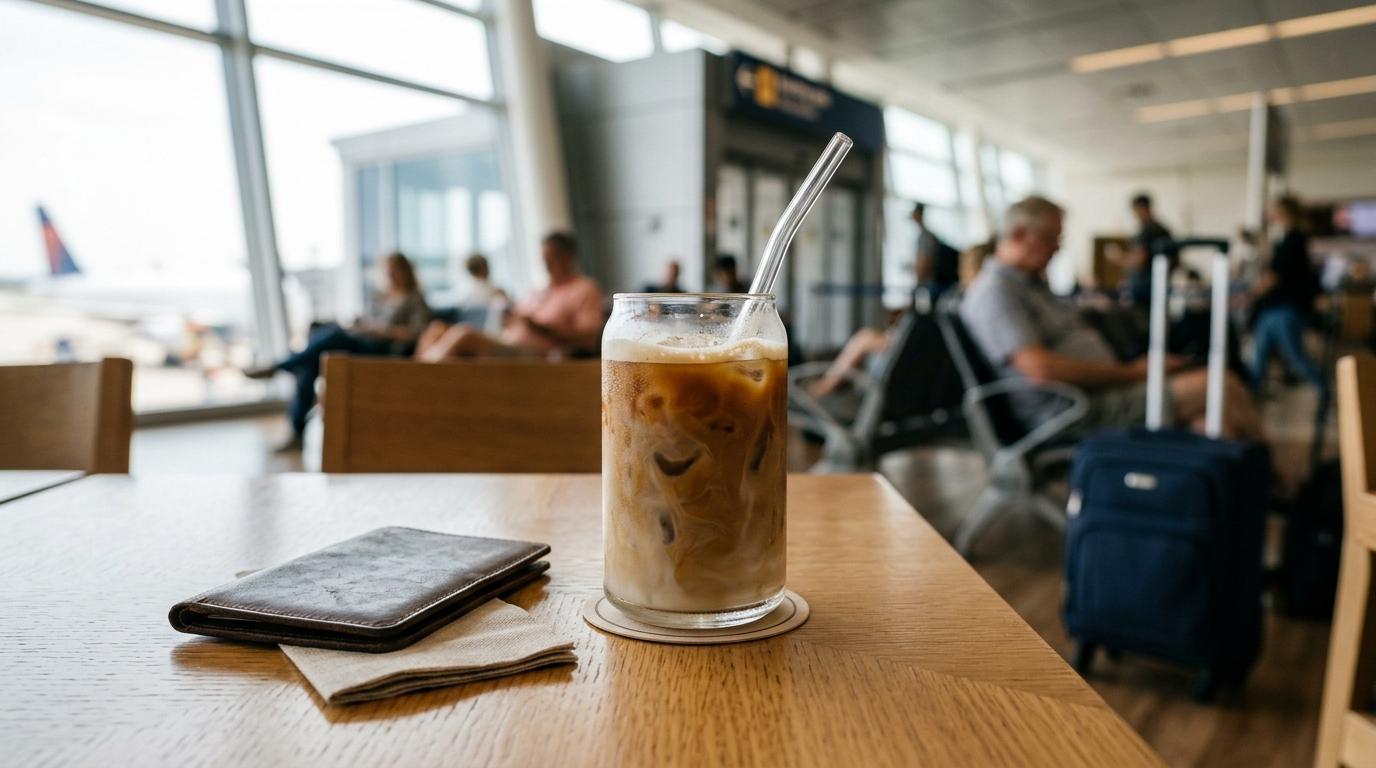
There’s something deeply satisfying about getting an iced coffee at the airport.
You’ve packed, rushed, queued, emptied your pockets at security, found your gate, and now you finally have a few minutes to breathe. A cold coffee feels like a small reward. Honestly, fair enough.
But an airport iced coffee before a flight is not quite the same as your usual iced coffee on the way to work. You’re about to sit in a dry cabin, maybe for hours, with limited space, limited bathroom access, and a stomach that may already be dealing with travel stress.
This does not mean airport iced coffee is “bad” or unsafe by default. Most of the time, it’s perfectly fine. The point is simply to order with a little more awareness than usual.
Before you buy one, do three quick checks: dairy, ice, and caffeine.
Quick answer summary
#If you’re already at the gate and just want the short version, here it is:
- Best option for most travelers: A sealed bottled cold brew, or a small black iced coffee from a clean, busy café.
- If you’re unsure about the ice: Ask for less ice or no ice.
- If you want milk: Avoid self-serve milk or cream that has been sitting out. Ask the barista to add milk from a refrigerated container.
- If caffeine affects you: Keep it small, especially before a long flight or red-eye.
- Skip iced coffee if: Your stomach already feels off, you have reflux, you’re dehydrated, you’re jittery, or you need to sleep soon.
A small, simple iced coffee can be a perfectly good pre-flight drink. A huge, milky, sugary, extra-strong one right before boarding is where things can get uncomfortable.
Why iced coffee hits differently at the airport
#Coffee is only part of the story. With iced coffee, you’re also dealing with:
- Ice quality and handling
- Milk or cream storage
- Caffeine strength
- Coffee acidity
- Sugar content
- Timing before boarding
- Your current hydration, stress, and stomach comfort
On a normal day, a large iced latte might be no big deal. On a flight, that same drink may feel heavier. You’re sitting still, cabin air is dry, and digestion can feel more noticeable when you’re stuck in one seat.
Travel stress matters too. Even if you don’t feel panicked, your body may still be in “airport mode.” You’ve rushed, waited, carried bags, maybe skipped breakfast, maybe slept badly. So if coffee sometimes gives you acidity, bloating, urgency, or jitters, it’s worth paying attention before you board.
The ice check: should you worry about ice in airport drinks?
#When people think about airport coffee safety, they usually think about the coffee. But for iced drinks, the ice deserves attention too.
Ice machines and ice bins need regular cleaning. Staff also need to handle ice properly, ideally with a scoop and clean hands. In a busy airport café, you can’t really know how often the ice machine is cleaned or how carefully the bin is managed.
That doesn’t mean airport ice is automatically unsafe. It just means ice adds another variable. And before a flight, especially a long one, fewer variables can be a good thing.
Use your eyes.
If the café looks clean, busy, and organized, you may feel comfortable ordering an iced drink. If the kiosk looks messy, the ice bin is uncovered, the counter is sticky, or the whole place feels chaotic, maybe choose something else.
A practical ice rule
#Ask for less ice or no ice if:
- You have a sensitive stomach
- You recently had stomach trouble
- You’re boarding a long-haul flight
- The café or kiosk looks poorly maintained
- You simply don’t want to take chances before sitting on a plane for hours
A sealed bottled cold brew from a refrigerated case is often the easiest option. It avoids the open ice bin completely.
The dairy check: milk, cream, and your stomach
#A dairy coffee before flying can be totally fine if you tolerate dairy and the milk has been stored properly.
But dairy brings two questions:
- Has it been kept cold and handled well?
- Will it feel good once you’re in the air?
Be careful with self-serve milk
#Some airport coffee shops keep milk, cream, or half-and-half at a self-serve station. If those containers are not properly chilled, or if they look like they’ve been sitting out for a long time, it’s better to avoid them.
You don’t need to inspect the counter like a food safety officer. Just use common sense.
Skip self-serve dairy if it looks:
- Warm
- Messy
- Uncovered
- Nearly empty and old-looking
- Like it has been sitting there all morning
Better options include:
- Asking the barista to add milk from a refrigerated container
- Using sealed single-serve creamer, if available
- Choosing black iced coffee
- Picking a sealed bottled coffee from the fridge
Dairy can feel heavier in flight
#Even when the milk is perfectly safe, a dairy-heavy drink may not feel great once you’re on the plane.
Large iced lattes, cream-based coffees, and blended drinks can feel heavy when you’re sitting still for hours. Add sugar, caffeine, and a rushed airport snack, and some people end up feeling bloated or acidic.
If dairy sometimes bothers you, the airport is probably not the best place to test your limits.
Consider ordering:
- A small iced latte instead of a large
- Less milk
- Black iced coffee
- Oat or almond milk, if you already know you tolerate it
- Water or a gentler drink if your stomach feels uncertain
One small note: don’t try a brand-new milk alternative right before boarding. Travel day is not the ideal time to discover that oat milk, almond milk, or soy milk doesn’t agree with you.
The caffeine check: helpful boost or bad timing?
#Caffeine before a flight can be useful. Maybe you have an early departure, a long connection, or a meeting after landing. A little caffeine can make travel feel easier.
But more is not always better.
Caffeine can make you feel:
- More awake
- More anxious
- More restless
- More acidic
- More likely to need the toilet
- Less able to sleep
Coffee can also trigger reflux or heartburn, especially if you drink it on an empty stomach. And cold brew can be stronger than it tastes, which is why it sometimes sneaks up on people.
The issue is not coffee itself. The issue is ordering a large, strong iced coffee when your body may actually need water, food, or rest.
A practical caffeine rule
#Choose a smaller coffee if:
- You haven’t eaten yet
- You already feel rushed or stressed
- Coffee gives you acidity
- You’re flying overnight
- You need to sleep soon
- You’ve already had coffee earlier in the day
- You get jittery or anxious from caffeine
If you mostly want the coffee ritual, not the caffeine hit, order a small. Or drink half and leave the rest. Yes, it feels wasteful, but sometimes that is better than regretting it halfway through the flight.
For more pre-flight drink ideas, you may also like AllBlogs’ guide to Indian Airport Tea and Coffee Before Flights.
Timing matters more than people think
#The same iced coffee can be a great idea at 8 a.m. and a terrible idea at 10 p.m.
Before you order, ask yourself:
- How long is the flight?
- Do I need to sleep soon?
- Have I eaten anything?
- Am I already dehydrated?
- Is my stomach calm today?
- Will I have easy bathroom access after boarding?
A small iced coffee 90 minutes before a short daytime flight may be completely fine. A large cold brew gulped at the gate before a red-eye may leave you wide awake, acidic, and quietly annoyed with yourself.
It happens. Most frequent travelers learn this lesson at least once.
Long flight and red-eye considerations
#Long flights and red-eyes deserve a stricter coffee check. Not because coffee is bad, but because the timing can work against you.
Before a long flight
#Before a long flight, avoid drinks that are very heavy, very sweet, or hard to digest. A large iced frappe may taste amazing in the terminal, but after three hours in a plane seat, it may not feel quite so charming.
Better choices before a long flight:
- Small black iced coffee
- Sealed bottled cold brew
- Iced coffee with less milk
- Iced Americano with less ice
- Water alongside coffee
- A light meal before or with your coffee
Be especially careful with strong cold brew if caffeine makes you anxious or restless.
Before a red-eye
#If you’re boarding late and hoping to sleep, iced coffee is usually not your friend.
Even if you think caffeine doesn’t affect you much, it can still make your sleep lighter or shorter. You may fall asleep later, wake more often, or arrive feeling much worse than expected.
For red-eyes, consider skipping caffeinated coffee entirely. If you want something cold before boarding, choose water or a non-caffeinated drink you trust.
If you’re comparing airport beverages, AllBlogs also covers practical pre-flight choices like Airport Fresh Juice Before a Flight and common Travel Day Hydration Mistakes.
What to order, modify, or skip
#Here’s a simple way to decide.
Order
#Sealed bottled cold brew
#This is one of the easiest choices if you want coffee without worrying about an open ice bin or self-serve milk. Just check that the bottle is sealed and properly chilled.
Small black iced coffee
#Simple usually works best before flying. If the café looks clean and well-run, a small black iced coffee is lighter than a large milk-heavy drink.
Iced Americano with less ice
#An iced Americano can be a good choice if you want something cold, simple, and not too sweet. Ask for less ice if you’re cautious.
Small iced latte with barista-added milk
#If dairy sits well with you, ask the barista to add milk from a refrigerated container. Keep the size modest. You don’t need the largest cup in the airport just because you’re traveling.
Modify
#Ask for less ice or no ice
#This is a sensible move if you have a sensitive stomach or if the café doesn’t look especially reassuring.
Skip self-serve dairy
#Avoid milk or cream that looks like it has been sitting out. Ask for refrigerated milk from behind the counter instead.
Go smaller
#A small coffee often gives enough of a lift without overwhelming your stomach or interfering with sleep later.
Reduce sugar
#Sweet blended drinks can feel heavy during travel. If you want sweetness, keep it moderate.
Drink water too
#If you’re having iced coffee, drink some water as well. Cabin air is drying, and coffee should not be your only fluid before boarding.
Skip
#Large blended iced frappes
#They’re often heavy, sweet, dairy-based, and full of ice. Not ideal before sitting on a plane for hours.
Milk-heavy drinks from a messy kiosk
#If the counter looks poorly maintained or the dairy setup does not look cold and clean, choose something else.
Extra-strong cold brew before a red-eye
#If sleep matters, skip it. Your future self will probably be grateful.
Coffee on an empty, acidic stomach
#If you already feel hungry, nauseous, or acidic, eat something gentle first or choose another drink.
For early departures, pairing coffee with a steady breakfast can help. See AllBlogs’ Early Morning Flight Breakfast guide for more travel-day food ideas.
Food safety and traveler stomach cautions
#Food safety while traveling is partly about standards, but it’s also about what you can see in the moment.
Before buying airport iced coffee, look around:
- Is the counter clean?
- Are milk containers refrigerated?
- Is the ice handled with a scoop?
- Are sealed drinks properly chilled?
- Does the place look organized?
- Are staff handling drinks in a clean, careful way?
If something feels off, skip it. There is usually another café, a bottled drink case, or at least plain water nearby.
Also, listen to your own travel stomach. Some people can drink a large iced coffee before boarding and feel completely fine. Others get reflux, cramps, urgency, or jitters from half a cup. Neither reaction is unusual.
Be more cautious if:
- You have reflux or frequent acidity
- You are prone to bloating
- Dairy sometimes bothers you
- Coffee makes you anxious
- You have a long flight ahead
- You are flying overnight
- You recently had stomach upset
This is general wellness guidance, not medical advice. If you have a health condition, food sensitivity, or strict dietary need, follow your clinician’s advice and choose the safest familiar option.
A simple pre-boarding coffee checklist
#Before you pay, ask yourself:
- Do I need caffeine, or do I just want the coffee ritual?
- Will this affect my sleep later?
- Does the dairy look properly chilled?
- Am I comfortable with the ice here?
- Have I had enough water today?
- Have I eaten enough to handle coffee acidity?
- Will this still feel like a good idea after two or six hours in a plane seat?
If you’re unsure, modify the order. Smaller, simpler, and less milky is usually the safer direction.
Final take: is airport iced coffee before a flight a good idea?
#Yes, airport iced coffee before a flight can be a good idea if you order it thoughtfully.
Choose a small, simple drink from a clean café. Be cautious with ice, avoid questionable self-serve dairy, and don’t overdo caffeine before a long flight or red-eye. If your stomach is sensitive, go for sealed bottled cold brew, black coffee, or just wait until after landing.
The best pre-flight drink is not always the most exciting one. It’s the one that helps you board feeling steady, hydrated, and comfortable.