Airport soup has a way of looking like the responsible choice.
It is warm. It feels lighter than a burger. It seems gentler than fries, pizza, or another sad bag of chips eaten while balancing your backpack on your knees.
And sometimes, soup really is a great airport meal.
But airport soup before a flight is also one of those foods that can go wrong fast. The wrong bowl can leave you thirsty, bloated, queasy, or trying to board a plane while holding a steaming cup of liquid you suddenly regret buying.
So the real answer is not “soup is good” or “soup is bad.”
It is: choose carefully.
Quick Answer
#Buy airport soup before a flight if it is hot, light, broth-based, and you have time to sit down and eat it in the terminal.
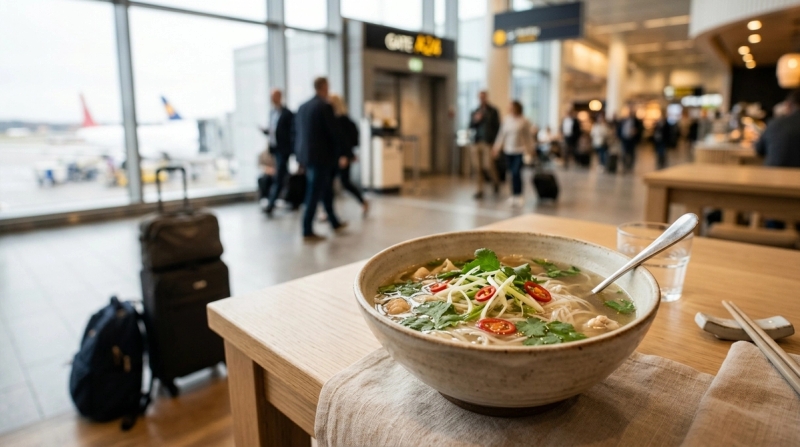
Sip carefully if it is ramen, pho, or another noodle soup, especially if the broth is salty, spicy, or served in a big splashy bowl.
Skip it if it is creamy, lukewarm, very salty, strongly scented, sitting in a tired-looking self-serve pot, or if boarding is about to start.
The best airport soup is usually something simple: chicken noodle, clear vegetable soup, light minestrone, or a mild broth with rice or noodles. It should be properly hot, not just warm, and you should finish it before you get in the boarding line.
The soups most likely to cause trouble are creamy chowders, heavy bisques, seafood soups, instant noodle cups, and anything you plan to carry onto the plane. Those bring more risk of spills, smells, thirst, bloating, and general “why did I do this?” energy once you are stuck in your seat.
When Airport Soup Actually Makes Sense
#Soup is not always a bad airport choice. In the right situation, it can be one of the better things to eat before flying.
You have time to sit down
#Soup is not walking food.
It is also not “I can totally eat this while speed-walking to gate B27” food, no matter how confident you feel in the lid.
If you have time to sit at a table, eat slowly, and let your stomach settle for a bit, soup can work well. This is especially true during a longer layover when you want something warm but not too heavy. If you are stuck in the terminal for a while, you may also like this guide to long layover meals at the airport.
A bowl of soup gives you a reason to slow down for ten minutes. That alone can feel good on a travel day. You get warmth, a little fluid, and something more satisfying than snack food without necessarily committing to a giant meal.
You are taking a short flight
#Before a short flight, a small broth-based soup can be just enough.
For a one- or two-hour flight, chicken noodle, vegetable soup, or a simple broth can take the edge off hunger without making you feel overly full. That is the sweet spot: comfortable, not stuffed.
The portion matters. A small bowl is very different from a giant airport-sized container of salty noodles and broth.
You want something warm but not greasy
#Airports can be weirdly cold. Travel days can also make you feel worn out in a way that regular days do not.
A warm bowl of soup can feel genuinely comforting when you are tired, chilly, or not in the mood for another dry sandwich.
This is where clear broth wins. It gives you warmth and some hydration, but it is usually easier to digest than cream-based soups, cheesy bowls, fried foods, or heavy entrées.
You are not bringing it onto the plane
#Soup makes the most sense when it stays in the terminal.
Eat it at a table. If it comes in a takeaway cup, keep the lid on between sips. Give yourself enough time to finish it before boarding starts.
Once you are in the boarding lane, soup becomes a liability. You are dealing with your bag, phone, boarding pass, coat, maybe a child, maybe a coffee, and now a cup of hot liquid too.
That is not a meal. That is a travel obstacle course.
When to Skip Airport Soup
#Sometimes soup sounds light, but it is still the wrong call before a flight.
Skip it if boarding is soon
#If your flight is boarding in 20 or 30 minutes, skip the soup.
Hot liquid, crowded gate areas, roller bags, last-minute announcements, and people lining up way too early do not mix well. You may burn your mouth, spill on yourself, or rush through something that really needs to be eaten slowly.
If boarding is close, choose something easier: a banana, plain crackers, a small yogurt if dairy works for you, a mild sandwich, or a protein box you can eat neatly at the gate. For more ideas, see this guide to the airport protein box before a flight.
Skip it if it is lukewarm
#Soup should be hot.
Not “kind of warm.” Not “maybe it was hot earlier.” Hot.
Food safety matters when you are about to sit on a plane with limited options and very little personal space. If soup is sitting in a self-serve container and looks neglected, crusted around the edges, barely steaming, or like people have been opening and closing the lid all day, choose something else.
You do not need to panic about every airport meal. Just use your eyes. Fresh, steaming soup from a busy counter is one thing. A sad vat of lukewarm soup at an unattended station is another.
Skip it if it is very creamy
#Creamy soups can be delicious, but they are not always flight-friendly.
Broccoli cheddar, clam chowder, loaded potato soup, creamy tomato bisque, and rich mushroom soup can all sit heavy. Cream, cheese, butter, and thick thickeners may hang around in your stomach longer than a clear broth.
For some travelers, that means bloating, gas, nausea, or just feeling too full once seated. Cabin pressure changes can make digestive gas feel more noticeable, and sitting still for hours does not help.
If dairy makes you feel puffy, gassy, or unsettled on the ground, do not test your luck at 35,000 feet.
Skip it if it smells strong
#This one is about you, but it is also about everyone around you.
Garlic-heavy broth, seafood soup, spicy ramen, onion-rich soup, and strongly seasoned stews can smell much stronger in an airplane cabin. Even if it tastes amazing, it may not be the kindest thing to bring near your seatmates.
A simple rule: if you would feel awkward opening it in a packed elevator, do not bring it onto a plane.
Skip it before a long-haul flight if it is salty or heavy
#Before a long flight, you want food that helps you stay comfortable for several hours.
Very salty soup can make you thirsty. Heavy soup can make you sluggish or bloated. Too much liquid right before boarding can also mean more bathroom trips, which is not ideal if the seatbelt sign stays on or you are in a window seat.
Soup before a long flight is not automatically a problem. It just needs to be light, moderate in size, and eaten early enough that your body has time to deal with it before takeoff.
Best and Worst Soup Types Before Flying
#Not all airport soups are equal. The base, salt level, dairy, toppings, temperature, smell, and packaging all matter.
Clear broth soups
#Best choice: usually buy
Clear broth soups are usually the safest category before flying.
Good options include:
- Chicken noodle soup
- Clear vegetable soup
- Simple broth with rice or noodles
- Light minestrone-style soup
- Mild miso-style broth, if it is not too salty
These soups are usually lighter than creamy bowls and easier to finish without feeling stuffed. They can also be soothing if your appetite is off or your travel day has been long.
What to watch for:
- Too much salt
- A greasy surface
- Huge portions
- Ingredients that look mushy or overcooked
- Soup that looks like it has been sitting too long
A good clear soup should look fresh, hot, and simple. If the first spoonful tastes aggressively salty, you do not have to finish the whole thing. A few sips may be enough.
Creamy soups
#Best choice: usually skip
Creamy soups are the comfort-food trap of airport dining.
They sound cozy. They may even look like the best thing on the menu. But before a flight, they are often heavier than you think.
Common examples include:
- Clam chowder
- Broccoli cheddar
- Creamy tomato bisque
- Loaded baked potato soup
- Cream of mushroom
- Seafood bisque
The issue is not that these soups are automatically unsafe. It is more about comfort. Dairy and rich fats can be harder to digest, especially when you will be sitting still for a while. They may also make bloating worse if you are sensitive to lactose or heavy foods.
If you really want one, keep the portion small and eat it well before boarding. But if your goal is to feel good on the flight, broth is usually the safer bet.
Ramen, pho, and noodle soups
#Best choice: sip with caution
Ramen, pho, and other noodle soups can be satisfying airport meals, especially if you are eating at a sit-down restaurant. They are warm, filling, and often much more appealing than another packaged snack.
But they come with a few travel problems.
First, they can be very salty. Broths, sauces, and seasoning packets often bring a lot of sodium, which can leave you thirsty and puffy during the flight.
Second, they can be messy. Long noodles, hot broth, chopsticks, spoons, bags, coats, and boarding announcements are not exactly a graceful combination.
Third, they can smell strong. Spicy, garlicky, seafood-based, or heavily seasoned broths are best eaten in the restaurant, not near the gate and definitely not onboard.
If you choose ramen or pho, eat it seated, go easy on the broth if it tastes salty, and leave yourself time before boarding.
Packaged soup cups and instant noodles
#Best choice: usually skip
Packaged soup cups seem convenient, but they are rarely the best pre-flight choice.
They are often salty, processed, and easy to spill once hot water is added. They also create a practical problem: you need hot water, a stable surface, time for steeping, and a safe way to carry or throw away the cup.
Do not plan on making instant soup on the plane. Tray tables are small, people shift around, and turbulence can happen with very little warning. Hot broth in a cramped seat is not worth it.
If you want a packaged airport snack, choose something easier to control, like crackers, fruit, plain nuts if they suit you, or a mild sandwich.
What Makes Airport Soup Safer or Riskier
#Airport soup is not automatically risky. It depends on how it is made, held, served, and eaten.
Safer airport soup usually looks like this
#Look for soup that is:
- Served properly hot
- Ladled by staff from a clean, active counter
- Broth-based instead of cream-based
- Mild in smell
- Moderate in portion
- Easy to eat while seated
- Fresh-looking, not thickened from sitting too long
- Not loaded with cheese, cream, oil, or heavy toppings
A busy counter is not a perfect guarantee, but fresh turnover is usually a good sign. So is a clean service area and staff who handle containers carefully.
Riskier airport soup usually looks like this
#Be cautious with soup that is:
- Lukewarm
- Sitting in an unattended self-serve pot
- Creamy, cheesy, or oily
- Very salty
- Strongly scented
- Served in a flimsy cup or with a loose lid
- Too hot to carry safely
- Too large to finish before boarding
- Something you would have to eat while walking
Be especially careful with soups that include seafood, heavy cream, or lots of meat if the station looks poorly maintained. Those ingredients are not always a problem, but they leave less room for error when food has been sitting too long or handled carelessly.
Soup Before Short Flights vs. Long Flights
#Your flight length matters. So does your digestion, your seat, and how soon boarding starts.
Before a short flight
#For a short flight, soup can be a good choice if you keep it light.
Choose:
- Small clear broth
- Chicken noodle soup
- Simple vegetable soup
- Mild miso-style broth
- A small noodle soup eaten well before boarding
Avoid:
- Large creamy bowls
- Spicy ramen right before boarding
- Anything that will make you very thirsty
- Soup you cannot finish in the terminal
For short flights, the goal is simple: take the edge off hunger without creating bathroom urgency, bloating, or spill stress.
Before a long flight
#For a long flight, be more selective.
Choose soup only if:
- You have plenty of time before boarding
- It is broth-based
- It is not too salty
- It is not too large
- You can eat it slowly while seated
Skip soup if:
- You are already bloated
- You are sensitive to dairy
- You have a window seat and hate getting up
- Boarding is about to start
- The only options are creamy, salty, or strongly scented
Before a long-haul flight, a balanced, mild meal is often more useful than a big bowl of soup. Think lean protein, gentle carbs, and something hydrating that will not smell, spill, or sit heavily.
How to Avoid Spills, Smells, Sodium, and Bloating
#Soup has four main travel problems: spills, smell, sodium, and digestion. If you can manage those, the decision gets much easier.
Spill risk
#Hot soup is one of the least forgiving airport foods.
To lower the risk:
- Eat it at a table, not while walking
- Keep the lid on between sips if it is in a cup
- Do not balance it on luggage
- Do not carry it into the boarding line
- Do not bring it onto the plane unless it is sealed and you truly need it
A sandwich can survive a bump. Soup usually cannot.
Smell risk
#Soup aroma travels fast.
Skip it, or finish it before boarding, if your soup contains:
- Seafood
- Lots of garlic
- Strong onions
- Heavy spice
- Fish sauce
- Strong curry flavors
- Intense chili oil
You may love the smell. The person next to you may absolutely not.
Sodium risk
#Airport soups can be very salty, especially broths, ramen, packaged cups, and stews.
Too much salt before flying can make you thirsty and uncomfortable. If the first spoonful tastes extremely salty, treat the soup as a few sips instead of a full meal. Drink water alongside it.
If you are choosing between a salty soup and a simpler meal, the simpler meal is probably the better travel choice.
Dairy and bloating risk
#Cream soups, cheesy soups, and soups finished with heavy dairy are more likely to bother sensitive stomachs.
Skip creamy soup if dairy tends to cause:
- Gas
- Bloating
- Cramping
- Nausea
- Urgency
This is not the time to “see what happens.” Flights are easier when your meal is predictable.
What to Choose Instead of Airport Soup
#If the soup options look bad, you still have plenty of decent pre-flight choices.
For early flights, a warm breakfast may make more sense than soup. Plain oatmeal, toast, fruit, or a simple egg option can be easier to manage. Here is a practical guide to what to eat, pack, or skip before an early morning flight.
If you want something fresh, juice can be tempting, but it needs some judgment too. Choose chilled, safely handled options and avoid anything that looks like it has been sitting out. Read more in this guide to airport fresh juice before a flight.
If you need a tidy, flexible meal, a protein box can work well. It gives you portion control, and you can stop eating when you feel satisfied instead of forcing down a full entrée. This guide explains when to buy, split, or skip an airport protein box.
Other simple options include:
- Banana
- Plain toast or bagel
- Rice bowl with mild toppings
- Simple turkey or chicken sandwich
- Crackers and cheese, if dairy sits well with you
- Yogurt, if you tolerate it well
- Fruit cup from a chilled case
- Plain oatmeal
- Mild salad with dressing on the side
The best pre-flight food is not always the healthiest-looking thing in the airport. It is the food that is safe, tidy, mild, and comfortable for your body.
What to Skip Right Before Boarding
#Right before boarding, skip anything hot, drippy, smelly, oversized, or hard to put away quickly.
That includes:
- Hot soup cups
- Creamy chowders
- Spicy ramen
- Seafood soups
- Instant noodle cups
- Greasy stews
- Soup with a loose lid
- Anything you need two hands to eat
- Anything you would be embarrassed to spill on a stranger
Also skip soup if you are traveling with young kids and already managing bags, strollers, jackets, snacks, and boarding documents. Even a “safe” soup becomes risky when your hands are full.
If you are hungry at the gate, choose something dry, mild, and easy to pause. A small sandwich, crackers, fruit, or a protein box is much easier to manage than a hot cup of broth.
Final Takeaway
#Airport soup before a flight can be a smart choice, but only when it is simple, hot, light, and eaten before boarding.
Buy the clear broth. Sip slowly. Watch the salt. Skip the cream. And try not to carry hot soup onto the plane.
If the soup looks tired, smells strong, or boarding is too close, choose something neater and more predictable. Your stomach, your shirt, and your seatmates will all be better off.