I went to Nagaland thinking I was reasonably adventurous with food. You know, the usual smug traveler confidence. I’ve eaten fermented stuff in a bunch of places, street food that scared my mother, weird broths, smoky meats, all that. Then Kohima kind of humbled me in the best way. The food here isn’t trying to impress anyone. It’s not plated for Instagram first and taste second. It’s direct, earthy, smoky, fermented, herbal, sometimes very spicy, sometimes surprisingly clean and simple. And in Kohima and nearby Kisama, where so many travelers base themselves during festival season, you can eat really, really well if you know what to look for.
Quick thing before we dive in: Nagaland cuisine is not one single thing. It’s a patchwork of tribal food traditions, family habits, seasonal ingredients, and local markets. Rice is central, obviously. Pork is everywhere and often glorious. Axone, anishi, bamboo shoot, perilla seeds, local greens, smoked meats, sticky rice, chillies that can knock your soul sideways... all of that shows up. Also, if you come during the Hornbill Festival period in Kisama, the food experience gets bigger, louder, more performative, but still rooted in real food culture if you make even a tiny effort to go beyond the first flashy stall.
First bite in Kohima, and yeah, I got obsessed pretty fast
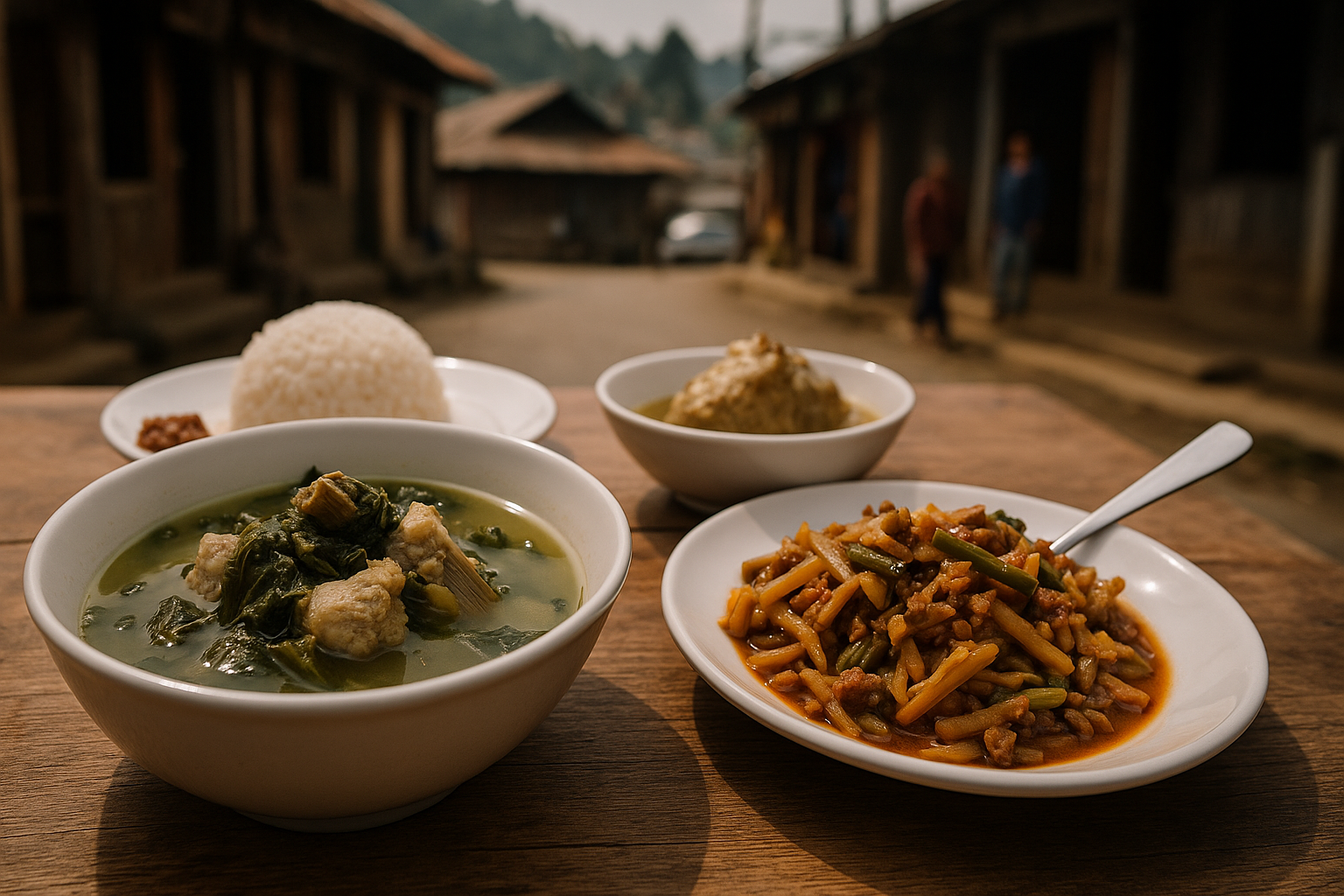
#My first proper meal in Kohima was one of those accidental wins. I’d landed via Dimapur road transfer tired, dusty, and honestly a bit cranky because hill travel always sounds romantic until your back starts complaining. I ended up in a local spot near the town center after asking, like, four people where I could get Naga food and not just generic fried rice and momo. What arrived was a simple plate, rice, pork with bamboo shoot, some boiled lai saag-type greens, a chutney, and a light broth. Nothing fancy. But the pork... man. Smoky, fatty, soft in places, chewy in others, with that sour bamboo edge that kind of creeps up on you. It was the sort of meal that makes you sit up straighter and stop looking at your phone.
Nagaland doesn’t feed you with fuss. It feeds you with memory, smoke, salt, fermentation and heat.
What to actually eat in Kohima and Kisama
#If this is your first trip, don’t overcomplicate it. Start with the classics and let your courage build. A lot of travelers panic when they see unfamiliar names on menus, but honestly, the food becomes way less intimidating once you understand the building blocks. Here’s what I kept seeing, ordering, or stealing off other people’s plates.
- Smoked pork with bamboo shoot — probably the safest and most iconic entry point, and still one of the best things you’ll eat
- Pork with axone — fermented soybean funk, deep and strong, one of those love-it-or-run-away dishes
- Galho — a comforting one-pot rice dish, almost like a Naga answer to congee/khichdi depending on who makes it
- Chicken or pork with anishi — sun-dried taro leaves, earthy and slightly mysterious tasting
- Fresh or smoked beef dishes in places that serve them, often with local herbs and chillies
- Chutneys with king chilli, tomato, fermented fish, or dry fish — tiny portions, huge attitude
- Sticky rice and millet-based local drinks at festival stalls, if available and if you’re curious
And yes, the famous raja mircha, often called ghost pepper in broader India travel writing, is very much part of the conversation. Don’t act brave for no reason. I did that once and spent ten minutes pretending I was “just warm from walking uphill.” I was not. I was seeing ancestors.
Best places to eat in Kohima, or at least the ones I’d send my friends to
#Restaurant scenes change, opening days change, chefs move around, and a lot of the best food in Northeast India still comes from low-key family-run places rather than slick listicle darlings. So I’ll say this the honest way: in Kohima, ask locals again when you arrive. Still, a few places and food zones are consistently useful for travelers.
The Naga Heritage village food area in Kisama, especially during the Hornbill Festival stretch, is the obvious one. Touristy? Sure. Worth it? Also yes. Different morungs and stalls let you sample dishes from various tribes and homes styles in one place. It can be crowded and a bit chaotic, but if you go earlier in the day, before everyone’s fully in festival mode, you can taste more carefully and talk to people cooking. I had one smoked pork plate there that was better than food I’ve had in some polished restaurants claiming to be ‘authentic regional cuisine’ in metro cities. No contest.
Back in Kohima town, I had good meals in local Naga kitchens and cafes around the main market and Midland side, plus a couple of mixed-menu places where the trick was simple, ignore the continental section and order the Naga specials. That’s usually the move. Hotels sometimes offer local platters too, and while hotel food can be hit or miss, it’s become more common, especially as food-focused travel has grown and more domestic travelers are specifically asking for indigenous cuisines rather than paneer butter masala everywhere they go. That trend, thankfully, is very 2026 and very real.
A few practical food stops and patterns that helped me
#- Kohima Local Market area for ingredient-spotting, smoked meats, dried fish, chillies, bamboo shoot, and conversation if you’re not shy
- Kisama during Hornbill for broad tasting opportunities, tribal food stalls, pork dishes, rice beer in permitted settings, and seasonal snacks
- Homestays and small guesthouses that serve dinner on request — honestly some of the best meals happen here, not on public lists
- Ask specifically for ‘local Naga thali’ or house specials if menus feel vague or too pan-Indian
That last one matters. More than once I almost ordered something boring because I was tired and indecisive, then the person serving casually said, ‘We also have smoked pork today,’ and suddenly the whole day improved.
Kohima market mornings are half the food experience
#I’m a huge believer that if you want to understand a place, go to the market before breakfast or at least before your brain fully wakes up. Kohima’s markets are not curated for outsiders. Which is exactly why they’re great. You see bundles of wild and cultivated greens, heaps of local beans, yam and taro, smoked meat hanging around like it owns the room, dried river fish, fermented ingredients, and chillies in shades that should honestly come with legal warnings. There’s a practical beauty to it. Nothing is there for show.
I remember stopping at one section where women were selling herbs and leaves I couldn’t identify at all. I asked too many questions, probably, and still got patient answers. One lady explained how a certain leaf is used in pork, another just laughed and said in effect, more or less, ‘You’ll know when you taste it.’ Fair enough. That’s also where I started noticing how little waste there seems to be in traditional food systems here. So much is smoked, dried, fermented, preserved, reused intelligently. In 2026, when everyone in food travel keeps talking about sustainability like it’s a new app feature, Nagaland’s food traditions feel like a reminder that low-waste, seasonal eating isn’t a trend. It’s just how people survived and cooked well.
Kisama during Hornbill Festival: fun, crowded, slightly overwhelming, totally worth doing for food
#If you’re in Nagaland in early December, you’re almost definitely going to Kisama. The Hornbill Festival has become one of India’s biggest cultural draws, and by now pretty much every travel creator on earth has posted some dramatic drone shot of it. Fine. The thing is, on the ground, the food part can still feel intimate if you slow down. People rush to the performances, but I spent a silly amount of time hovering near cooking fires and asking what was in the pot.
You’ll find smoked meats, boiled vegetables done in that very Naga way where simplicity is the point, sticky rice, dried fish condiments, chilli chutneys, local brews where served, and occasional fusion items because of course festivals evolve. In 2026 there’s definitely more polished food presentation at some stalls, more QR payment options, more pop-up coffee counters, and more younger chefs trying small twists on traditional ingredients. Some of that is cool. Some of it feels a little too eager. I had a smoked pork bao-ish thing that was... fine. But the straightforward pork with bamboo shoot at a plain stall nearby was ten times better and cheaper too.
That’s kind of my overall advice for Kisama: try one innovative thing if you want, because food scenes should evolve, but don’t skip the old-school plates. Those are the point. Culinary travel doesn’t mean chasing novelty every second. Sometimes it means respecting a bowl of broth and a piece of smoked meat that already got perfected ages ago.
Food trends in 2026 I noticed here, without the annoying buzzword overload
#A lot of travel writing now bangs on about immersive food tourism, hyperlocal dining, indigenous ingredient mapping, chef-led storytelling, blah blah. Usually I roll my eyes a bit. But in Kohima and Kisama, some of those trends are actually useful when they’re done right. Travelers are more interested in tribal cuisines by name now, not just ‘Northeast food’ as one giant category. That’s a good shift. More homestays and local hosts are offering pre-booked meals, cooking demos, market walks, and small food experiences. Digital payments are easier than they were a few years back in many places, though you should still carry cash because the hills do what they want.
I also noticed more younger local entrepreneurs packaging regional products, smoked meats, axone, chilli products, for travelers to take home. Some cafes are serving better coffee than they used to, which, thank God, because after a cold morning in Kohima I become useless without caffeine. There’s also a growing conversation around documenting indigenous recipes before they get flattened into generic ‘ethnic cuisine’ branding. I’m very into that, obviously. The best future for food tourism here isn’t making everything look like a metro-city bistro. It’s helping local food stay local while making it accessible enough that respectful travelers can learn from it.
A few things that surprised me about eating in Nagaland
#First, how often the simplest dishes ended up being my favorites. Not the richest, not the hottest, not the weirdest for bragging rights. Just simple food with good ingredients. Second, the role of smoke. It’s not just a flavor, it’s almost an atmosphere. Third, the way fermented things are used not as gimmicks but as daily logic. Axone gets all the attention because people like dramatic food words, but there’s a whole world of preserved and fermented tastes that shape meals quietly.
Also, this might sound odd, but Nagaland made me rethink what I count as comfort food. One rainy evening in Kohima I had galho that was warm, a little messy, deeply soothing, and exactly what I needed. Not flashy. Not photogenic under terrible yellow light. Just lovely. I think travelers sometimes chase the most extreme local dish because they want a story. I get it, me too, a bit. But some of my best food memories from Kohima are bowls and plates that would look almost boring on camera.
If you’re nervous about trying local food, here’s the non-heroic method
#- Start with smoked pork and bamboo shoot, or galho
- Ask for less chilli the first day, no shame in that
- Order one unfamiliar chutney instead of five
- Eat where local families are eating if possible
- Don’t confuse simple-looking food with bland food... huge mistake
- Keep an open mind about fermentation, but if axone hits too hard first time, that’s normal lol
Travel logistics that matter more than people admit
#Kohima is the practical base. Kisama is close enough for easy festival visits and food runs, especially if you’re there in Hornbill season. A lot of people still arrive via Dimapur and continue by road, though connectivity and traveler planning tools have gotten better in recent years. Book accommodation early if you’re going around the festival, seriously, because the whole region gets busy and the charming ‘I’ll just figure it out’ approach can backfire badly in December. Homestays are gold if you care about food. Hotels are convenient, yes, but homestays sometimes mean you’ll get home-cooked Naga dinners that are worth more than any polished itinerary.
One more thing, respect matters. Don’t photograph every stall and every person cooking without asking. Don’t make a face at ingredients you don’t understand. Don’t loudly demand non-spicy food and then complain that local food isn’t spicy enough, which I actually heard someone do and nearly lost my mind. Be curious, be humble, tip when appropriate, buy local products from local sellers, and listen more than you talk. Works in most places, but especially here.
What I’d eat if I had just 48 hours in Kohima and Kisama
#Okay, speed-run version. Day one morning, market wander in Kohima, tea, something small and local if you spot it. Lunch: smoked pork with bamboo shoot, rice, greens, chutney. Evening: try pork with axone or anishi chicken, depending on how brave/tired you are. Day two in Kisama, especially during festival season: graze. One pork dish from a tribal stall, one sticky rice item, one local chutney situation, one warm broth, maybe one contemporary/fusion snack if curiosity wins. Then finish with the plainest, most honest plate you can find. I know that sounds weirdly poetic, but I mean it. End with something rooted.
The best meal in Nagaland might not be the rarest one. It might just be the one cooked slow, served without explanation, and remembered forever.
So... is Nagaland a food destination? Absolutely. Maybe one of India’s most underrated.
#I came away from Kohima and Kisama feeling like Nagaland is still underappreciated by mainstream food tourism, which maybe isn’t the worst thing because overexposure ruins places fast. But if you travel for food, for real, not just for content, this place delivers. It has depth, identity, surprise, and a food culture that hasn’t been flattened into sameness. You do need a bit of openness. You might eat things you can’t neatly categorize. You might not get polished service or perfect menus. Great. That’s part of it.
What stayed with me most wasn’t just one dish, though the smoked pork situation came close. It was the whole feeling of eating in a landscape shaped by hills, cold evenings, market mornings, fire, fermentation, and people who know exactly what their food is, without needing to explain it to outsiders in trendy language. If you’re heading to Nagaland, go hungry, ask questions, carry cash, book early, and don’t waste all your time trying to find ‘safe food.’ The good stuff is right there. And yeah, if you want more messy, honest food-and-travel stories like this, have a look at AllBlogs.in.