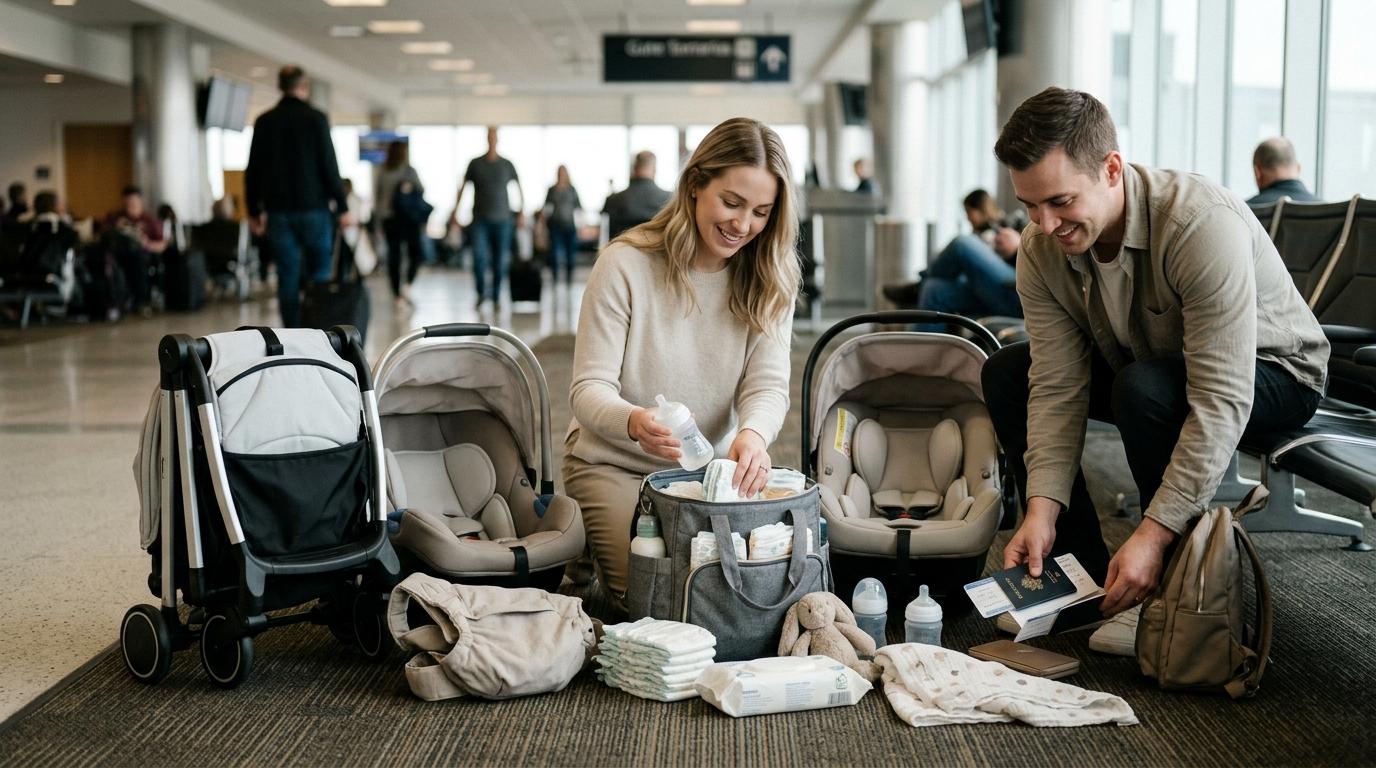
For a baby’s first flight, focus on a few essentials: a stroller you can gate-check, a comfortable baby carrier, a diaper bag that fits under the seat, feeding supplies you can declare at security, and the right documents. If you want the safest setup and your airline allows it, book a separate seat and use an aircraft-approved car seat.
1. Car Seat or Lap Infant: What Should You Choose?
#Most airlines allow children under 2 years old to travel on an adult’s lap, and many parents choose this option for short flights because it is usually cheaper than buying a separate seat.
From a safety point of view, however, a separate seat with an approved child restraint system is the stronger option. The FAA recommends that young children fly in an approved Child Restraint System, often called a CRS, in their own ticketed seat. The American Academy of Pediatrics also supports using the right child restraint during air travel.
In simple terms, a car seat gives your baby a secure place during the flight. Your arms are comforting, but they are not a proper restraint during sudden turbulence.
If your baby is flying as a lap infant
#If you decide to travel with your baby on your lap, read your airline’s infant policy before booking. Do not assume every airline follows the same rules.
Before you fly, make sure you:
- Add your infant to the booking in advance.
- Carry valid proof of age.
- Check the airline’s infant baggage or cabin baggage allowance.
- Keep diapers, wipes, feeding items and spare clothes under the seat.
- Follow cabin crew instructions during takeoff, landing and turbulence.
The main thing is to avoid surprises at the airport. Infant rules can vary by airline, route and aircraft.
If you book a separate seat and use a car seat
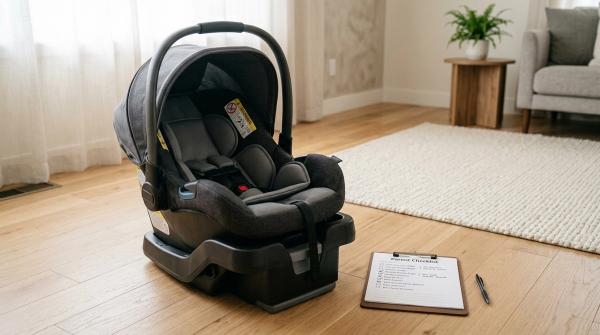
#If you are buying a separate seat for your baby and planning to use a car seat onboard, check everything before travel day.
Before you go, check for:
- A label showing that the car seat is certified for use in motor vehicles and aircraft.
- Aircraft installation instructions in the car seat manual.
- Weight and height limits that match your baby.
- A seat width that is likely to fit the aircraft seat.
- A harness that is working properly and adjusted correctly.
Car seats are usually placed in a window seat so they do not block another passenger’s way out. For infants, the car seat is usually installed rear-facing, as long as the seat’s limits allow it.
If you are unsure, call the airline before your flight. Ask whether child restraint systems are allowed on your route, whether there are aircraft-specific rules, and where the car seat can be placed.
2. Stroller, Baby Carrier and Diaper Bag: What You Actually Need
#Think of your baby travel gear as having three simple jobs.
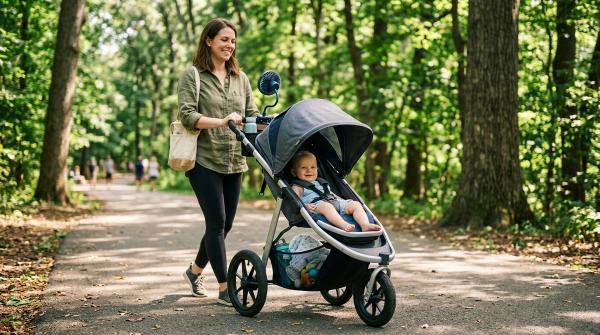
The stroller helps you move through the airport. The baby carrier keeps your hands free. The diaper bag holds everything you may need during the flight.
You do not need fancy gear. You need gear that you can manage while holding documents, listening for announcements, standing in a slow queue and soothing a tired baby.
Gate-checking the stroller
#Most airlines allow parents to use a stroller through the airport and hand it over near the boarding gate or aircraft door. This is called gate-checking.
At arrival, the stroller may be returned at the aircraft door, at the gate or at oversized baggage. It depends on the airport and airline process.
Ask the ground staff where you should collect it when you hand it over. That one question can save confusion after landing.
Why a baby carrier helps
#A baby carrier is especially useful once the stroller is folded and handed over. You still have to carry your baby, boarding pass, passport or ID, diaper bag and maybe another cabin bag. A carrier gives you both hands back.
This is especially useful in India, where some flights involve bus gates, tarmac boarding or stairs. Add summer heat or monsoon rain, and carrying a baby plus bags can get stressful quickly.
3. Diaper Bag Checklist for the Flight
#Your diaper bag should go under the seat in front of you. If it is in the overhead bin, it is much harder to reach when the seatbelt sign is on or the aisle is blocked.
Pack for the full door-to-door journey, not just the flying time. Include the ride to the airport, check-in, security, boarding, the flight, baggage claim and the ride after landing.
One small trick: pack a mini changing kit inside the diaper bag. Put one diaper, a small pack of wipes and a disposable bag into a pouch. Airplane bathrooms are tiny, and it is much easier to carry one small pouch than the whole diaper bag.
4. Feeding, Formula, Breast Milk and Security Screening
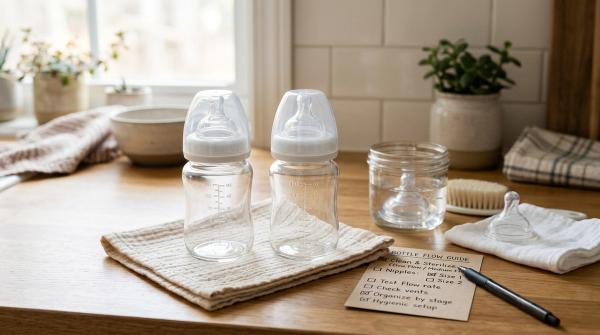
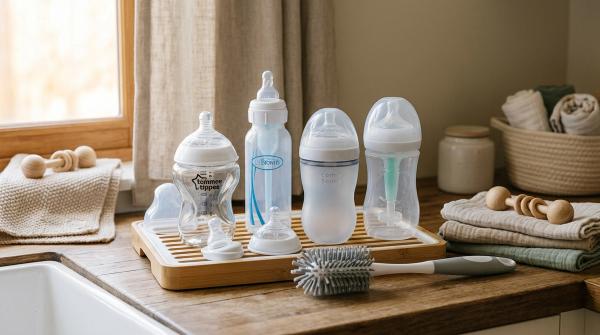
#Feeding supplies are one of the biggest concerns for parents at the airport. Baby feeding items are often treated differently from regular liquids, though rules can vary by country and airport.
In the United States, TSA guidance allows breast milk, formula, toddler drinks and baby food in reasonable quantities above the usual 3.4 ounce or 100 ml liquid limit. These items do not have to fit inside the standard small liquids bag. Ice packs and cooling accessories used for baby milk may also be allowed, though they may be screened separately.
At airports outside the United States, including India, security staff may follow local screening rules. The best approach is simple: declare baby liquids clearly and keep them separate for checking.
How to make security easier
#Before you reach the X-ray belt:
- Take bottles, milk, formula, water for mixing or baby food out of the diaper bag.
- Tell the security officer that you are carrying baby feeding supplies.
- Place them in a separate tray if asked.
- Allow a little extra time for screening.
Security staff may inspect containers or test liquids. Procedures can vary, so do not pack feeding items deep inside your bag.
Feeding during takeoff and landing
#Cabin pressure changes can bother some babies. Sucking or swallowing during takeoff and landing may help with ear pressure.
You can nurse, offer a bottle or use a pacifier if your baby takes one. Do not force a feed if your baby is asleep or not interested. Just keep the option ready.
5. India-Aware Notes: Air India, IndiGo, Documents, Heat and Monsoon
#If you are flying within India or from India, check your airline’s infant rules before you pack. It is not the most exciting task, but it can prevent problems at check-in.
IndiGo infant notes
#IndiGo defines infants as children above 3 days old and under 2 years old on the date of travel. IndiGo’s infant policy also says that infants travelling on an infant fare cannot occupy their own seat and must sit on an adult’s lap.
IndiGo also notes that there are limits on the number of infants allowed per aircraft, connected to safety equipment such as extra oxygen masks. This is why it is better to add your baby to the booking early instead of waiting until airport check-in.
Air India infant notes
#Air India has separate information for passengers travelling with infants and children. For very young infants, Air India may require extra documents or medical clearance depending on the baby’s age and situation. If you are travelling with a newborn, check the latest Air India infant rules before booking.
Documents for babies in India
#For domestic flights in India, airlines usually ask for proof of age for infants. Common documents include:
- Birth certificate
- Mother’s hospital discharge summary
- Vaccination certificate
- Passport
For international flights, your baby needs a passport and any destination-specific travel documents required for that route. Keep originals or airline-accepted copies in your cabin bag, somewhere easy to reach. Do not pack them in checked baggage.
Heat, monsoon and airport movement
#Indian airport travel can involve heat, humidity, rain, bus boarding and stairs. Pack with that in mind.
A few small choices can make a big difference:
- Dress your baby in breathable layers.
- Keep one light cover handy for cool aircraft cabins.
- Use waterproof pouches for documents and spare clothes.
- Use the baby carrier when boarding involves stairs or buses.
- Keep feeding supplies easy to reach in case of delays.
The goal is not to pack more. The goal is to pack in a way that makes the difficult moments easier.
6. Airport, Flight and Arrival Checklist
#At booking
#- Add your infant to the booking.
- Check whether your airline allows a separate seat and approved car seat.
- Review infant baggage, stroller and diaper bag rules.
- Confirm document requirements for domestic or international travel.
- If using a car seat onboard, check the car seat label and manual.
Two days before travel
#- Pack the diaper bag using the checklist above.
- Wash bottles, pacifiers and feeding items.
- Pre-measure formula if you use it.
- Keep baby documents with your own travel documents.
- Check the weather at your departure and arrival cities.
- Charge your phone and save airline support details.
At the airport
#- Arrive early, especially if this is your first flight with a baby.
- Get the stroller tagged if required.
- Keep your baby’s ID or age proof ready at check-in.
- Move feeding liquids and baby food to an easy-access part of the bag.
- Use the carrier if the terminal is crowded or your hands are full.
At security
#- Declare breast milk, formula, water for mixing and baby food.
- Place feeding items separately if asked.
- Stay calm if extra screening is needed.
- Repack liquids where you can reach them during the flight.
Boarding
#- Decide whether early family boarding will help or whether boarding later feels easier.
- Fold and hand over the stroller at the gate or aircraft door.
- Keep the baby carrier nearby.
- Put the diaper bag under the seat in front of you.
- Keep one feed, pacifier or comfort item ready.
During the flight
#- Follow crew instructions for holding your baby or using the car seat.
- Offer feeding or sucking during takeoff and landing if your baby wants it.
- Use the small changing kit for bathroom trips.
- Keep spare clothes within reach.
- Try not to worry too much about normal baby sounds. Most passengers understand more than you think.
On arrival
#- Let the rush pass if you need a slower exit.
- Check where the stroller will be returned.
- Refill water or feeding supplies after landing if needed.
- Do a quick diaper and clothing check before leaving the airport.
- Keep documents handy until you are fully outside airport checks.
Related AllBlogs Guides
#- Diaper Bag Checklist for First Outings
- Car Seat Buying Checklist for New Parents
- Baby Stroller Buying Checklist for New Parents
- Baby Carrier Buying Checklist for New Parents
- Can You Carry Ice Packs on Flights from India?