That first slap of Caspian wind... and why December Baku surprised me
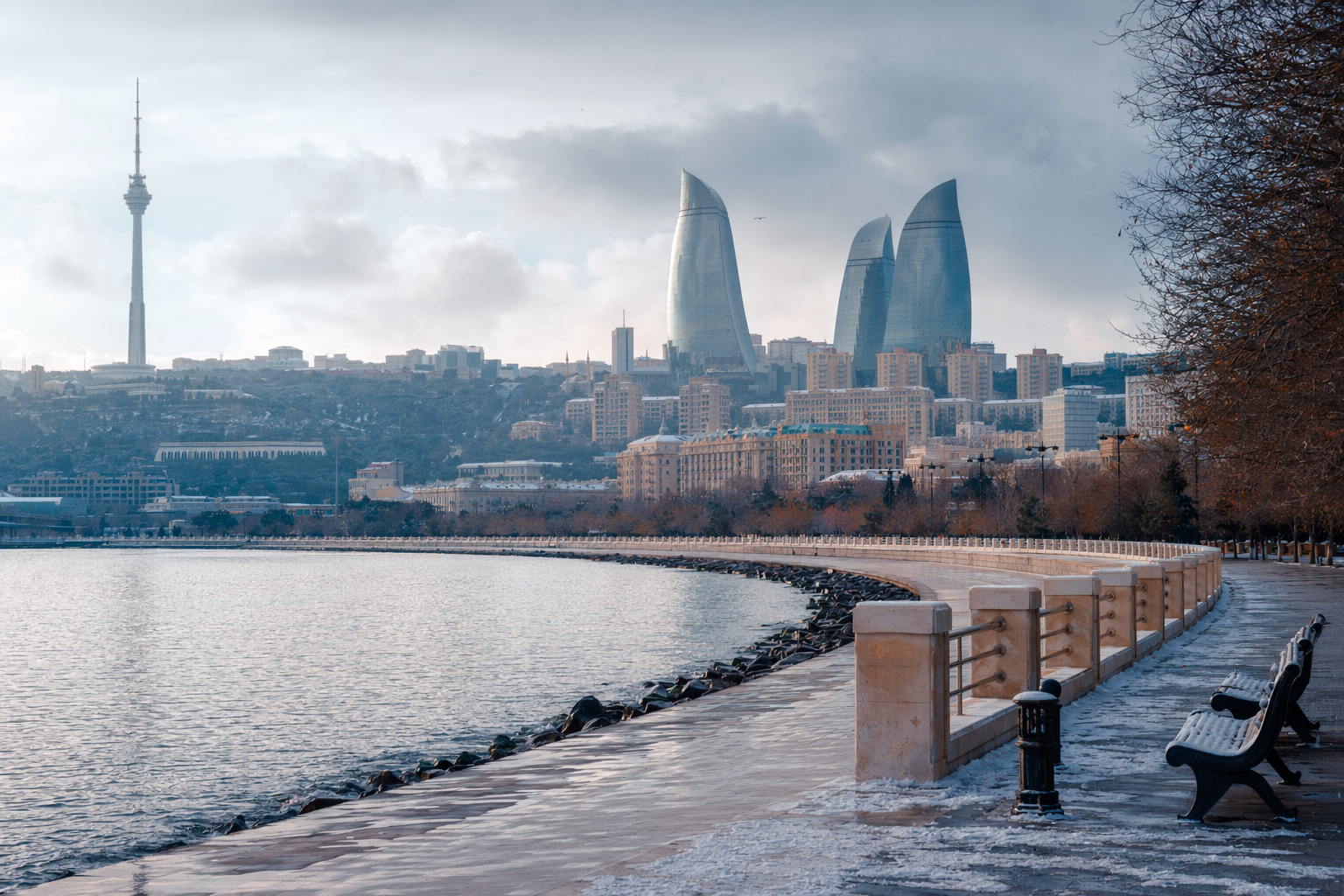
#Baku in December is not the cute winter postcard I had imagined from Instagram. I mean, yes, the Flame Towers look dramatic, Nizami Street glows nicely in the evening, and the Old City feels like a movie set when the sky turns grey. But the real main character is the wind. Arre, that wind. Coming from India, especially if you’re used to Delhi winters or Mumbai’s so-called winter, Baku’s December cold feels different because it doesn’t just sit on your skin, it enters from every gap in your jacket like it paid for the trip with you. I landed thinking, okay 8°C, manageable. Within 20 minutes outside the airport, I was negotiating with my scarf like it was a life-saving device.
But honestly, I liked it. December gives Baku a moody, cinematic vibe. The Caspian Sea looks steel-blue, cafes feel extra cosy, tourist crowds are thinner than summer, and hotel prices can be better if you book smart. It’s not peak sightseeing weather, but it is very much visit-worthy if you pack properly and plan your days around wind and daylight. This post is basically what I wish someone had told me before going: how cold it actually feels, what to wear, where to stay, how to move around, food that warms you up, and small Indian-traveller things like veg food, adapters, taxi apps, and whether you need thermals or not.
December weather in Baku: cold, windy, sometimes wet, rarely boring
#On paper, December in Baku usually sits somewhere around low single digits to about 10°C in the daytime. Nights can dip close to freezing, especially when wind is strong. Snow inside Baku city is not something you should expect like Kashmir or Himachal, but rain, drizzle, cloudy skies, and that icy wind chill are common enough that you should prepare for them. The phrase “City of Winds” is not just tourism branding. Baku really earns it, especially near the Boulevard, Highland Park, and open roads around the Caspian.
| December factor | What it feels like for an Indian traveller | My practical note |
|---|---|---|
| Day temperature | Usually chilly, not unbearable if layered | A good jacket plus sweater works most days |
| Night temperature | Can feel properly cold, especially after sunset | Don’t underestimate evening walks |
| Wind chill | This is the real problem | Cover ears, neck, hands. Seriously |
| Rain or drizzle | Possible, often annoying more than dramatic | Carry a compact umbrella or rain-resistant jacket |
| Snow | Possible in the region, less reliable in central Baku | Don’t plan Baku city expecting snowfall |
| Daylight | Shorter winter days | Start sightseeing earlier than your usual vacation laziness |
One mistake I made on the first evening was walking from Fountains Square toward the Boulevard after sunset wearing only a sweater and a medium jacket. Looked fine in the mirror. Felt stupid outside. The wind near the sea was cutting through my jeans and my hands were freezing because, obviously, I had packed gloves but left them in the hotel like a genius. So yes, the temperature number doesn’t tell the full story. Check the wind speed also, not just “weather 7 degrees” on your app.
Is December a good time to visit Baku?
#Yes, but with conditions. If your idea of a holiday is slow walking, cafe hopping, museums, Old City lanes, pretty lights, hot tea, and dramatic winter photos, December is lovely. If you want warm sunny walks, long outdoor day trips without shivering, and beachy Caspian vibes, then no, wrong month. For most Indian travellers doing a 3 to 5 day Azerbaijan trip, December works well because Baku’s main sights are easy to combine with indoor breaks. Plus, winter has its own charm around Nizami Street and Fountains Square, especially in the evenings when lights come on and everyone is dressed like they’re in a winter fashion reel.
Best months overall? I’d say April to June and September to October are more comfortable for first-timers because weather is milder and walking is easier. December is more atmospheric, less crowded, and sometimes better value. January and February can feel harsher. Summer can be hot and dusty in parts, though evenings are still nice. So if December is when your office leaves are approved, don’t overthink it. Just don’t pack like you’re going Dubai.
What to pack for Baku in December, from one overthinking Indian to another
#Packing is where Baku December can either become magical or miserable. You don’t need a huge snow expedition suitcase, but you do need proper layers. I carried one thermal top, sweaters, a padded jacket, jeans, socks, and sneakers. It was okay, but next time I’d add better gloves and maybe a windproof outer layer. The wind is more irritating than the cold itself, so a normal woollen sweater under a jacket is nice, but a wind-resistant jacket is even better.
- One warm jacket, ideally windproof or at least padded enough for 3–8°C evenings.
- Thermal innerwear if you feel cold easily. North Indians may laugh but trust me, the wind will humble everyone.
- Scarf or muffler, not optional. Covering your neck changes the whole experience.
- Gloves and a beanie, especially for Boulevard, Highland Park, Gobustan day trip, and night walks.
- Comfortable walking shoes with decent grip. Old City has cobbled lanes and winter drizzle makes some areas slippery.
- Lip balm, moisturiser, basic medicines, and a small umbrella or rain shell. Dry cold plus wind did weird things to my skin.
Also think about your day bag. In Baku I preferred a compact backpack because I was stuffing gloves, scarf, power bank, water bottle, and sometimes snacks from the market. A sling looks nicer in photos but can feel annoying over a puffy jacket. If you’re confused between backpack, sling, crossbody or tote, this breakdown on Best Travel Day Bag: Backpack vs Sling vs Crossbody vs Tote is actually useful before you start packing random bags at midnight.
For electronics, Azerbaijan generally uses European-style Type C and Type F plugs with 220V supply. Most Indian phone chargers and laptop chargers support 100–240V, but please check the tiny text on your charger instead of assuming. Usually you need a travel adapter, not a voltage converter, but appliances like hair straighteners can be tricky if they aren’t dual voltage. This guide on Travel Adapter vs Voltage Converter: Do You Need Both? explains it simply, and it saved me from carrying one useless heavy converter type thing.
Where to stay in December: location matters more than hotel drama
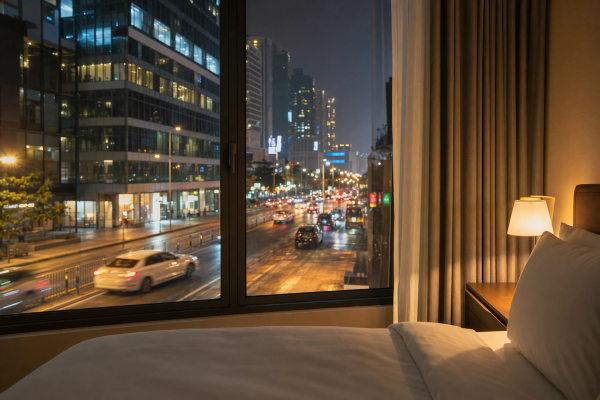
#For winter, stay central if your budget allows. I know outskirts hotels look tempting because you get bigger rooms for less money, but when it’s cold and windy, being able to walk back from dinner or quickly take a short cab is a blessing. The best areas for first-timers are around Nizami Street, Fountains Square, Sahil, Icherisheher, and 28 May. These keep you close to restaurants, metro, Old City, Boulevard, and shopping streets. In December evenings, I was very happy not having to travel 35 minutes just to get tea.
Typical accommodation ranges vary by season and booking timing, but roughly, hostels can start around USD 10–25 per night, budget hotels around USD 30–60, mid-range hotels around USD 60–120, and nicer 4 or 5 star stays can go from USD 120–200+ depending on location and brand. Apartments are also popular, especially for families or Indian groups who want more space and maybe a kitchen. Just check heating reviews carefully. In summer you check AC reviews, in Baku December you check heating like your life depends on it. Also see if lift is available, because some charming older buildings don’t have the most convenient setup.
Getting around Baku in winter: metro, Bolt, walking, and when not to be heroic
#Baku is easy to navigate compared to many big cities. The metro is clean, cheap, and useful for places like 28 May, Sahil, Icherisheher and Ganjlik. You’ll usually need a transport card for metro and buses. Taxis through apps like Bolt are widely used and quite affordable by Indian metro-city standards, though prices rise during peak hours or bad weather. I used taxis more at night because after a full day of walking in the cold, saving energy felt more important than proving I’m a hardcore traveller.
Airport to city is usually manageable by airport bus or taxi. Many travellers take the airport express bus toward central Baku if timing works, while families with luggage prefer app taxi or hotel transfer. If you land late at night, pre-plan it. Not because Baku is scary, but because fumbling with SIM, currency, and cold wind outside the terminal is not the welcome ceremony anyone wants. For SIM cards, you can buy local options at the airport or in the city, and eSIMs also work for many phones. Wi-Fi is common in hotels and cafes, but maps on mobile data make life much easier.
Safety, visa, money and those boring things that save your trip
#Baku felt safe to me as an Indian traveller, including evening walks around central areas. Families, solo travellers, and couples from India visit quite comfortably. Of course, use normal city sense: don’t flash cash, keep your phone secure in crowded places, avoid random unofficial taxi bargaining at the airport, and don’t wander into empty dark lanes just because Google Maps says “2 minutes faster”. Tourist areas are generally well-policed and locals were polite, sometimes a little reserved but helpful when asked.
For Indians, Azerbaijan e-visa is commonly used and is usually applied online before travel, with standard and urgent processing options depending on the system at that time. Still, visa rules can change, so verify before booking flights. Also, if you’re planning overland travel, double-check land border rules because they have changed in recent years and many visitors simply fly in and out of Baku. Carry travel insurance, hotel bookings, return ticket, and some proof of funds, not because someone will definitely ask, but because immigration paperwork is one area where being overprepared is better.
Currency is Azerbaijani Manat, AZN. Cards work in many hotels, cafes, and restaurants, but keep some cash for small shops, markets, taxis if needed, and tiny bakeries where you suddenly want something warm. Money exchange is available in central areas, and ATMs are common. I found Baku not exactly dirt cheap, but good value compared with Western Europe or Dubai. A casual meal can be reasonable, coffee can be similar to Indian cafe prices or higher depending where you sit, and fine dining can get expensive fast. Basically, your budget depends on whether you eat local or accidentally enter fancy places every night.
Food in December: hot tea, qutab, soups, and Indian cravings
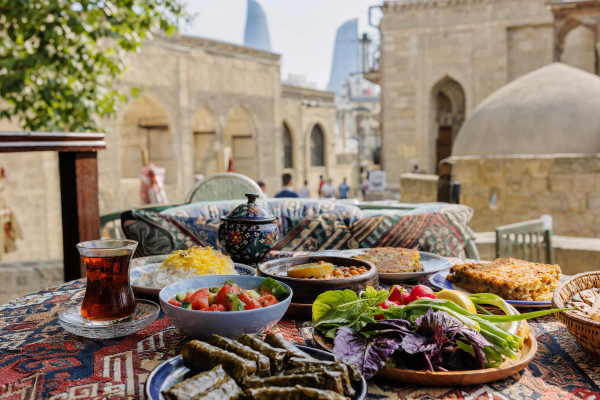
#Azerbaijani food suits winter so well. Lots of warm bread, grilled meat, soups, rice dishes, herbs, pickles, and tea. If you eat non-veg, you’ll have a pretty good time with kebabs, plov, dolma, dushbara, piti, and saj. Qutab became my quick snack obsession. It’s like a thin stuffed flatbread, sometimes with greens, pumpkin, meat, or cheese. Very comforting when you’re cold and don’t want a full heavy meal. Their tea culture is also beautiful: black tea served in pear-shaped glasses, often with jam or sweets. Sitting indoors after a windy walk with hot tea felt like therapy, no exaggeration.
Vegetarian food is possible but needs a bit more planning. You can find salads, lentil soup sometimes, mushroom dishes, cheese, breads, potato items, pumpkin qutab, and Georgian or Turkish restaurants with more options. Indian restaurants exist in Baku too, especially around central tourist areas, and yes, after two days I did crave dal-chawal type comfort. For strict vegetarians or Jains, communicate clearly because “vegetarian” may still be interpreted loosely in some places. Use translation apps and confirm no meat stock, no fish, no chicken broth. It’s not impossible, just don’t assume like we do in India where veg/non-veg is usually understood instantly.
Sightseeing that works well in December
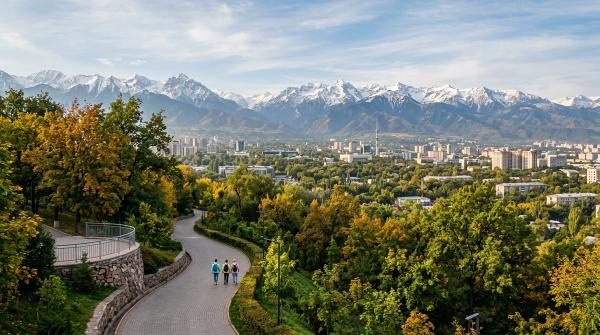
#Start with Icherisheher, the Old City. It’s compact, beautiful, and moody in winter. The Maiden Tower, Palace of the Shirvanshahs, small souvenir shops, stone lanes, and little cafes make it perfect for half a day. Go in the morning or early afternoon when light is better and lanes are less slippery. From there, walk toward Fountains Square and Nizami Street for food and shopping. The Boulevard is lovely but windier, so go prepared. Highland Park gives one of the best views of the Flame Towers and city skyline, especially around sunset, but again, wear layers because the open height catches wind like mad.
Heydar Aliyev Center is excellent for a colder day because the architecture is stunning and you can spend time indoors. Even if you don’t go inside for every exhibition, the outside curves are worth seeing. Carpet Museum is another nice winter-friendly stop. Yashil Bazaar is fun if you like local markets, dried fruits, nuts, spices, pomegranates, saffron, and those small food discoveries that don’t show up in glossy reels. I bought dried fruit there and then finished half of it in the hotel room like a proper Indian uncle.
For day trips, Gobustan and mud volcanoes are popular, along with Ateshgah Fire Temple and Yanardag burning mountain. In December, these trips are doable but dress warmer than you think because open landscapes get cold and windy. Mud volcano routes can be rough depending on weather, so book with a reliable driver or tour. If it has rained, shoes can get dirty. Don’t wear your fancy white sneakers unless you want Azerbaijan mud as a permanent souvenir.
A realistic winter plan, without stuffing 25 things in one day
#Baku looks small on a map, but winter slows you down. You’ll take more cafe breaks, you’ll walk slower in wind, and you may not feel like leaving the hotel early if the morning is grey. My advice: don’t create a military itinerary. Do Old City plus Nizami plus Boulevard one day. Do Heydar Aliyev Center plus museums or shopping another day. Keep Gobustan or Ateshgah/Yanardag as a separate half-day or full-day depending how relaxed you want it. If you’re short on time, I’ve also put together a more practical companion route here: Baku in December: Weather, What to Wear, Food Stops, and a Realistic 2-Day Winter Plan. That one is better if you want day-by-day flow with food stops and less overthinking.
Btw, if you’re visiting around late December, central Baku often has festive lights, New Year decorations, seasonal pop-ups or winter market-style setups in popular public areas, though the exact scale changes. Nizami Street and Fountains Square feel lively, especially evenings and weekends. It’s not like Europe’s massive Christmas markets, so don’t go expecting that exact thing, but the atmosphere is cheerful. Locals dress well, cafes are busy, and the whole city gets a polished winter look. I found it quite romantic, in a cold-nose, numb-fingers way.
Small cultural things I noticed as an Indian traveller
#Baku feels like a mix of Europe, Central Asia, Turkey, and its own Azerbaijani personality. It’s modern but still traditional in pockets. People may not always smile randomly the way Indians do, but when you ask for help, many are kind. English is spoken in hotels and tourist places, but not everywhere, so a translation app helps. Russian is still understood by many older locals. Azerbaijani is the main language, and even saying salam or thank you in local style gets a warmer reaction sometimes.
Dress-wise, Baku is stylish and fairly relaxed in central areas. You’ll see women in coats, boots, makeup, the whole vibe. Indian travellers won’t feel out of place, but winter layering matters. For mosques or religious places, dress modestly. For nightlife, Baku has bars, lounges, and restaurants, especially central, but I’d still say keep your common sense switched on with late-night taxis and drinks. Also, smoking is more common in some places than what you may be used to, so if you’re sensitive, ask for non-smoking sections where available.
My final packing checklist for December Baku
#- Passport, e-visa print or soft copy, insurance, hotel booking, return flight details, and card plus some cash.
- Thermal top, sweater or fleece, windproof jacket, jeans or warm trousers, wool socks, gloves, scarf, beanie.
- Comfortable shoes, preferably not brand new. Baku is very walkable but cobblestones and drizzle can be annoying.
- Power bank, universal adapter, phone with offline maps, and maybe an eSIM or local SIM plan.
- Basic medicines from India, lip balm, moisturiser, sunglasses for bright cold days, and a small umbrella.
One extra tip: leave some luggage space. Baku is good for souvenirs like carpets if budget allows, tea glasses, ceramics, scarves, spices, saffron, dried fruits, jams, and small evil-eye style gifts. Indian families will understand this problem. You go with 15 kg, come back with “just few small things” and suddenly your suitcase zip is doing pranayama.
So, would I recommend Baku in December?
#Yes, I would. Not blindly, but yes. Baku in December is for travellers who enjoy winter moods, city walks, architecture, warm food, museums, and that slightly dramatic feeling of standing near the Caspian while the wind tries to rearrange your face. It’s not the easiest season, and it’s definitely not a light-jacket destination. But with the right packing, central stay, and flexible itinerary, it becomes a memorable trip. For Indian travellers especially, it’s a nice change from the usual Dubai-Thailand-Bali circuit, and flights can be fairly convenient depending on your city and connection.
If I go again in December, I’ll pack better gloves, stay near Fountains Square or Sahil, take more slow cafe breaks, and not argue with the wind because the wind always wins. That’s my biggest Baku lesson. Plan smart, layer properly, eat qutab when cold, keep your taxi app ready, and don’t rush every attraction like a checklist. Let the city be a little moody. That’s where its charm is. And if you want more real travel notes like this, with practical planning and not too much fancy brochure talk, I keep finding useful reads on AllBlogs.in.