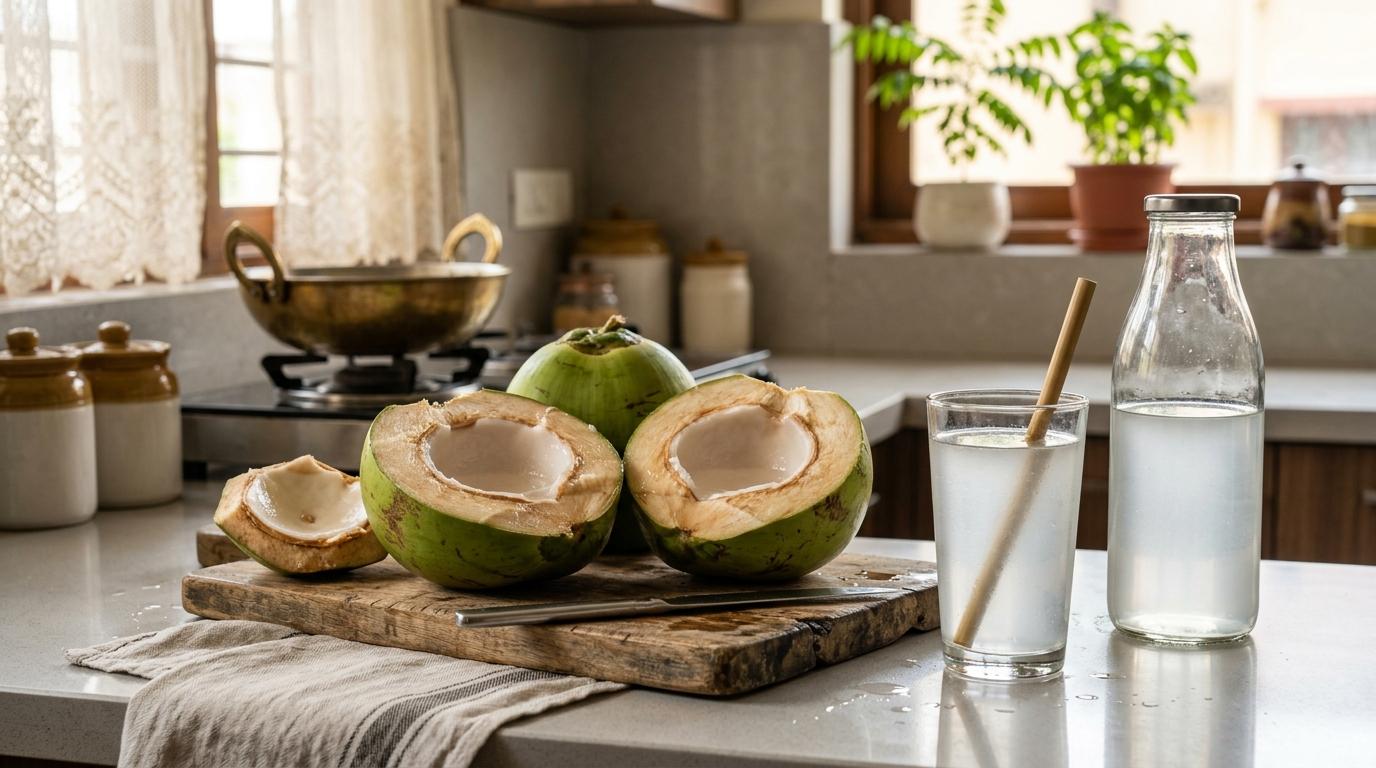
You pick up a fresh nariyal pani on the way home. Or you open a chilled tetra pack at work, take a few sips, and then life happens. Calls, cooking, kids, meetings, traffic, errands.
A few hours later, you see the half-finished coconut water and think: Is this still okay to drink?
Here’s the honest answer: once coconut water is opened, treat it like a fresh, perishable drink. It is not like plain bottled water. It can spoil faster than you expect, especially in Indian summer heat and monsoon humidity.
This guide keeps things simple: how long opened coconut water can stay outside, how to store it safely at home or office, what to do while travelling, and when it is better to throw it away.
If you are comparing summer hydration options, you may also like our guide on Coconut Water vs ORS vs Electrolyte Drinks for Summer.
Quick answer
#So, can coconut water stay outside after opening?
Only for a short time.
As a cautious food safety rule, opened coconut water should not be left unrefrigerated for more than about 2 hours. In very hot weather, keep that closer to 1 hour.
And honestly, in Indian conditions, the 1-hour rule is often safer. Think hot kitchens, office desks near laptops, crowded commutes, school bags, gym bags, parked cars, and humid monsoon days.
Once opened, coconut water should be:
- Finished soon after opening, ideally within an hour in hot weather
- Refrigerated quickly if you want to save it
- Consumed within 24 to 48 hours if kept properly chilled
- Thrown away if it was left out all afternoon, overnight, or inside a hot car or bag
Packaged coconut water may be safe at room temperature before opening if the label says so. But after opening, it needs refrigeration, just like fresh coconut water.
Why opened coconut water spoils quickly
#Coconut water looks clean and harmless, so it is easy to assume it can sit around for hours. But once it is opened, things change.
Inside a sealed pack or intact coconut, the water is protected. Once the coconut is cut or the pack is opened, it comes in contact with air, hands, knives, straws, cups, bottle caps, and the surrounding temperature.
That is when spoilage can begin.
Opened coconut water is delicate because:
- It has natural sugars: These can support the growth of bacteria and yeast once the drink is exposed.
- It is a moisture-rich liquid: Warm, sweet liquids are easier for microbes to grow in.
- It is exposed to air: Air can affect the taste, smell, and colour.
- Indian weather is often warm and humid: Bacteria and yeast grow faster in hot kitchens, cars, bags, and office spaces.
- It is often handled repeatedly: Drinking from the bottle, reusing a straw, or touching the cap can add more contamination.
So, coconut water storage is not just about keeping the taste fresh. It is about keeping the drink safe.
Fresh coconut vs packaged coconut water
#Fresh coconut water and packaged coconut water are different before opening. But after opening, the safety rules are almost the same.
Fresh coconut water
#Fresh coconut water from a tender coconut is best consumed immediately after cutting.
Once the coconut is opened, the water may touch the knife, the outer shell, the vendor’s tools, the air, or the glass it is poured into. If you bring fresh coconut water home, pour it into a clean, covered container and refrigerate it quickly.
Do not leave fresh coconut water sitting for hours on the kitchen counter, dining table, balcony, or in a steel tumbler. It may look normal, but that does not always mean it is safe.
Packaged coconut water
#Tetra packs, cans, and bottles are often processed and sealed so they can stay at room temperature before opening. But this protection does not continue once the pack is opened.
After opening:
- Refrigerate the leftover coconut water
- Close the cap tightly, or transfer it to a clean bottle
- Finish it within 24 to 48 hours
- Follow the label if it gives a shorter storage time
Also check the pack before opening. If the label says “keep refrigerated,” then it should be stored in the fridge even before opening.
Safe timing and storage rules for home, office, travel and monsoon
#Here is how to handle opened coconut water in everyday situations.
At home
#If you open a tetra pack, bottle, or fresh coconut at home and do not finish it:
- Pour the leftover coconut water into a clean, airtight container.
- Put it in the fridge as soon as possible.
- Keep it chilled until you drink it.
- Finish it within 24 to 48 hours.
Avoid keeping it in an open glass in the fridge. It can pick up smells from other foods and is more exposed to contamination. A clean glass bottle, stainless-steel bottle, or food-safe container with a lid is better.
If you like your drinks at room temperature, pour out only what you want to drink. Do not leave the whole bottle outside to “remove the chill.” In summer, that small habit can make the drink risky.
At the office
#Office desks are a very common danger zone for coconut water.
You open a tetra pack during a meeting, sip half, keep it near your laptop, and forget about it until evening. It happens. But it is not a good idea.
For safer office use:
- Open it only when you are ready to drink
- Finish it within about an hour if there is no fridge
- Use the office fridge if you want to save the rest
- Do not drink directly from the pack if you plan to store leftovers
- Keep the cap closed between pours
If your office fridge is always crowded, smells bad, or does not cool properly, buy a smaller pack that you can finish in one sitting.
In school tiffins and children’s bottles
#Be extra careful with children.
Do not pack opened coconut water in a school bottle unless it will stay cold and be consumed soon. Children may not notice early signs of spoilage, and sometimes they drink without checking.
If you want to send coconut water:
- Send a sealed pack if the child can finish it soon after opening
- Avoid sending leftover coconut water from the previous day
- Do not mix coconut water with cut fruit and leave it warm for hours
- Teach children not to drink it if it smells sour or tastes fizzy
When in doubt, throw it away.
During travel
#Travel makes coconut water harder to manage because temperatures change quickly. A drink that starts cold at home can become warm in an auto, bus, train platform, office bag, or parked car.
For travel:
- Carry unopened packaged coconut water when possible
- Open it only when you plan to finish it
- If opened, keep it in an insulated bottle or cooler bag
- Do not leave opened coconut water in a parked car
- Avoid saving half-finished packs for later during long travel days
For road trips, it is safer to carry unopened packs and chill them when needed, instead of carrying opened coconut water for many hours.
During summer
#In summer, be stricter.
If opened coconut water has been sitting outside for more than 1 hour in very hot conditions, it is better not to drink it.
Be especially careful when coconut water is:
- Kept near a window
- Left in a car
- Carried in a backpack
- Served at outdoor events
- Poured into glasses and left uncovered
Ice can help keep a drink cool, but unsafe ice can create a new problem. If you often add ice to summer drinks, read How to Make Safer Ice Cubes for Indian Summer Drinks on allblogs.
During monsoon
#Monsoon brings humidity, power cuts, waterlogging, and more chances of poor storage. Opened drinks need extra care during this season.
For monsoon coconut water safety:
- Refrigerate leftovers quickly
- Keep containers covered
- Avoid street-side coconut water if the cutting area or tools look unclean
- Do not use questionable ice
- Throw away coconut water that smells sour, looks odd, or has been left out too long
For broader rainy-season kitchen habits, see Safe Drinking Water in Indian Monsoon.
Spoilage signs
#Time matters, but it is not the only thing to check. Always look at, smell, and taste carefully, especially if the coconut water was stored after opening.
Throw it away if you notice:
- Sour, sharp, vinegar-like, or alcoholic smell
- Fizzy or fermented taste
- Unusual thickness or slimy texture
- Swollen pack, leaking bottle, or damaged seal
- Mould near the cap, rim, straw hole, or container lid
- Strange cloudiness that was not there earlier
- Any off taste, even if the smell seems normal
A quick note on pink coconut water: fresh coconut water can sometimes turn pink because of natural oxidation. Pink colour alone does not always mean it is spoiled.
But if it was left out too long, smells sour, tastes fizzy, looks thick, or you are unsure how it was stored, discard it.
Do not try to boil and reuse spoiled coconut water. If it seems off, it is not worth saving.
Common mistakes
#Leaving it on the counter after opening
#This is the most common mistake. Opened coconut water is not plain water. If it sits outside for hours, especially in warm weather, throw it away.
Thinking packaged coconut water stays safe after opening
#A sealed tetra pack may be shelf-stable before opening. Once opened, it becomes perishable. It belongs in the fridge.
Drinking from the bottle and saving the rest
#If you drink directly from the bottle or pack, bacteria from your mouth can enter the remaining liquid. If you plan to save some, pour a serving into a glass and refrigerate the rest immediately.
Keeping it in the fridge for too many days
#The fridge slows spoilage. It does not stop it forever. Opened coconut water is best finished within 24 to 48 hours.
Carrying opened coconut water in a bag all day
#A half-finished bottle in an office bag, school bag, gym bag, or travel backpack can warm up quickly. If you cannot keep it cold, finish it soon or throw it away.
Ignoring the label
#Some products need refrigeration even before opening. Some labels may also give a shorter “consume within” time after opening. Always follow the label.
Using unsafe ice
#Even clean coconut water can become unsafe if you add ice made from unsafe water. This is especially important in summer and monsoon.